
At Danushka Gems & Minings, one of the most important parts of our work is not only sourcing natural gemstones, but also helping buyers understand the real potential of rough material before any cutting decision is made. This journey shows exactly why experience, honest discussion, and careful planning matter in the gemstone trade.
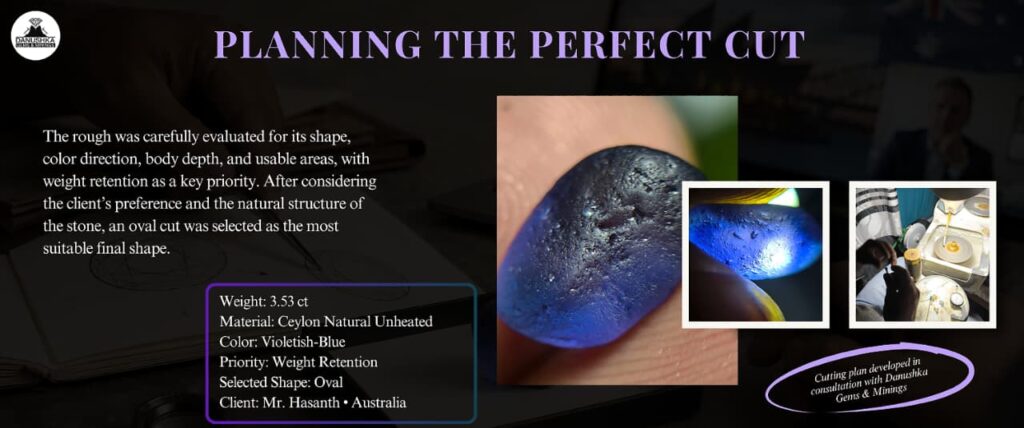
The story begins with a Facet Grade Ceylon Natural Unheated Violetish-Blue Sapphire rough weighing 3.53 ct and measuring 9.7 × 6.7 × 4.8 mm, sourced from Bibilegama village around mining in Sri Lanka. The rough showed a natural alluvial shape, attractive violetish-blue body color, very good transparency, and an excellent lustered appearance. From the beginning, it was clear that this stone had strong cutting potential, but as always with rough sapphire, the final result could only be estimated through careful evaluation.
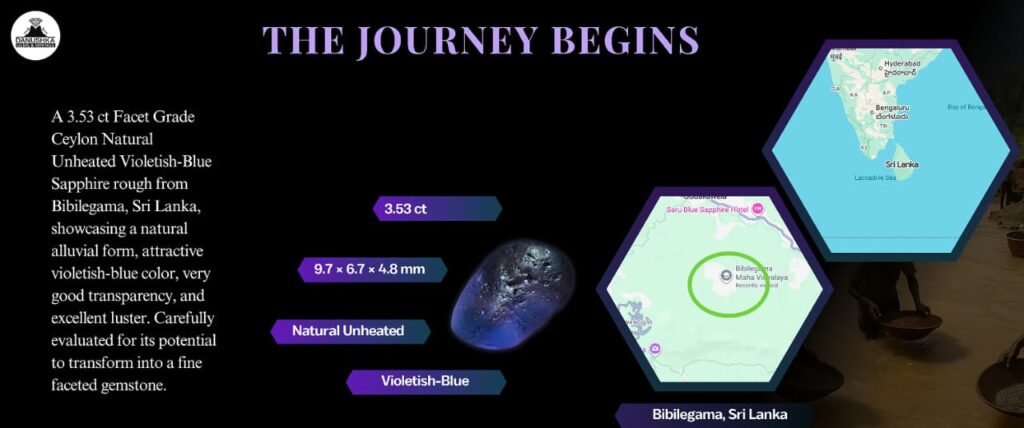
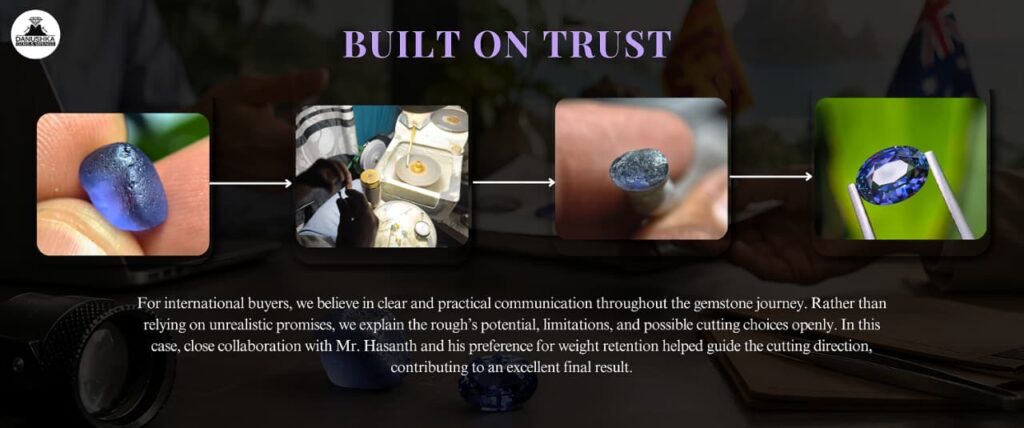
This stone was purchased by Mr. Hasanth from Australia, and during the discussion with Danushka Gems & Minings, the cutting plan was considered carefully. One of the main priorities from the buyer’s side was weight retention. After reviewing the rough shape, color direction, body depth, and usable areas, we discussed the best possible shape for the final gem. Based on the structure of the stone and the client’s preference, we decided that an oval cut would be the best direction.
At the rough evaluation stage, our practical working estimate for the final stone was around 1.50 ct. This was a careful and realistic estimate based on what could normally be expected after removing surface areas, shaping the gem, and maintaining proper proportions. In percentage terms, a 1.50 ct finish from 3.53 ct rough equals about 42.49% weight recovery. That was our safe expectation.
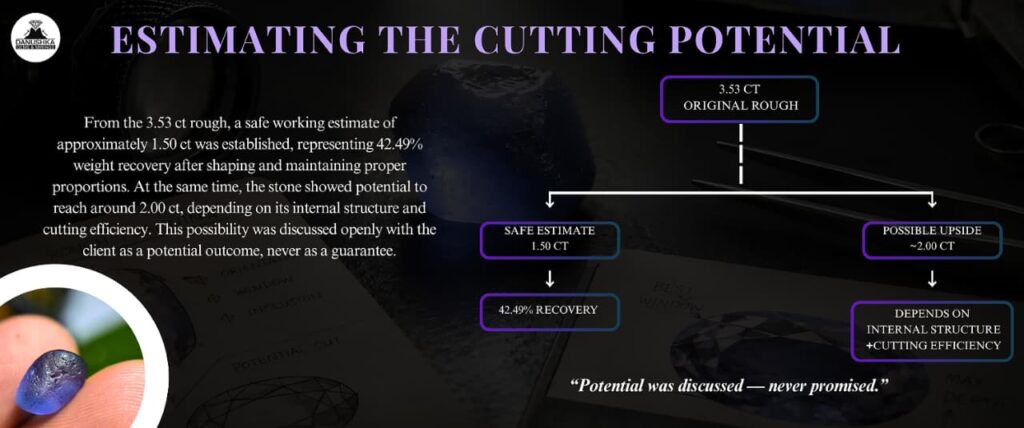
However, we also shared with the client that the stone appeared to have a possibility of reaching around 2 ct, depending on how the internal structure behaved during cutting and how efficiently the shape could be planned. That possibility was discussed honestly, but we did not present it as a guarantee. This is an important part of professional gemstone handling: rough should be discussed with optimism, but never with unrealistic promises.
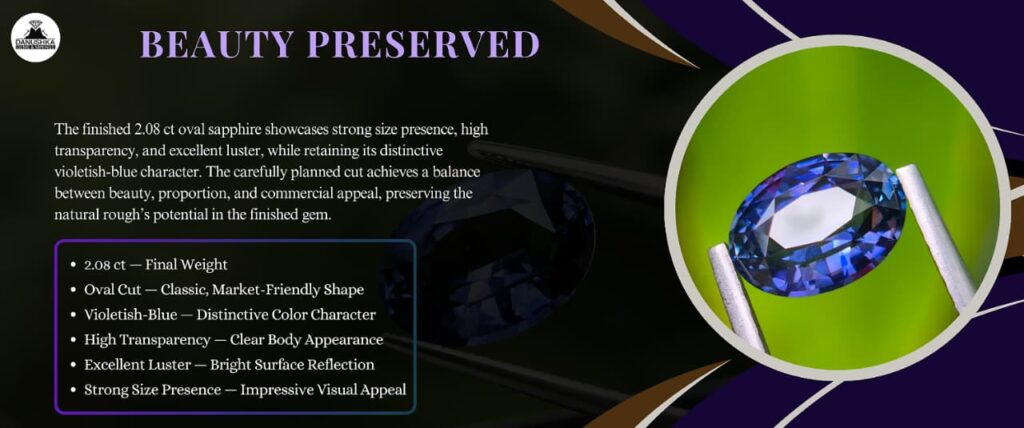
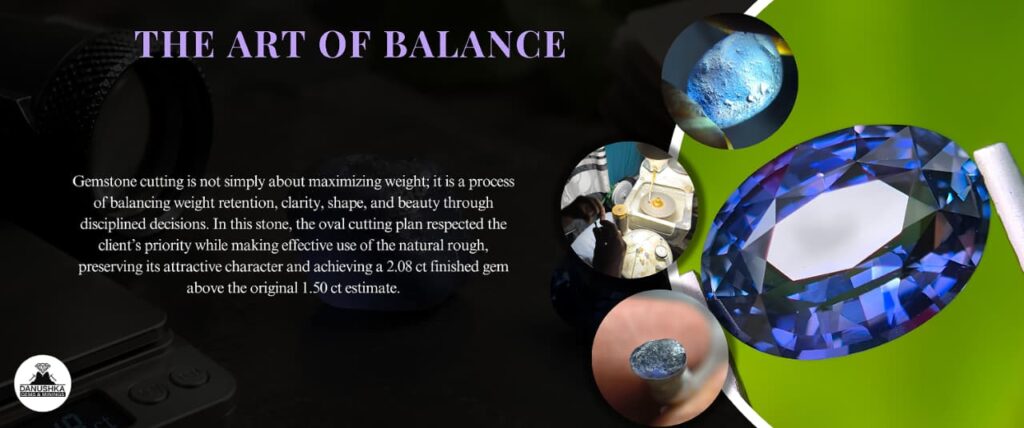
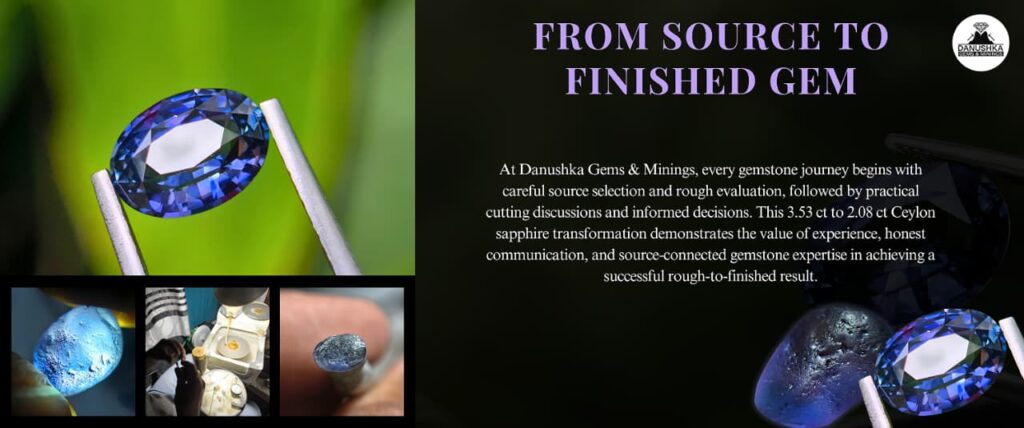
After the cutting process, the result was a finished 2.08 ct violetish-blue sapphire measuring 8.7 × 6.5 × 4.4 mm. For us, this was a very satisfying result because the final gem achieved not only a beautiful finished appearance, but also a stronger-than-estimated weight outcome. From the original 3.53 ct rough, the final 2.08 ct stone represents an actual weight recovery of approximately 58.92%.
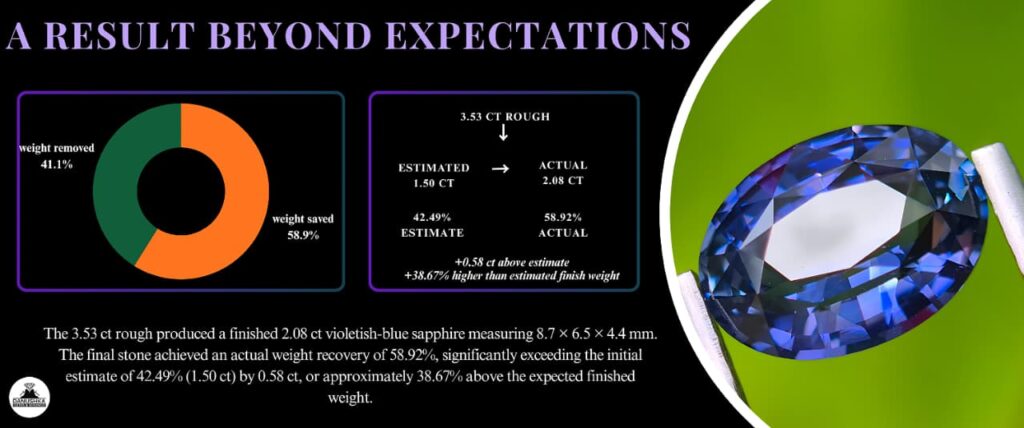
That number is important. Compared with our initial working estimate of 42.49% recovery, the final result improved significantly. In direct comparison, the achieved finished weight was 0.58 ct more than the original 1.50 ct estimate. That means the final result was about 38.67% higher than our estimated finish weight. In other words, the stone exceeded expectations while still allowing for a good cut and pleasing final shape.
This kind of result highlights why rough sapphire cannot be judged only by its outside appearance. A stone may look simple at first, but factors such as internal transparency, orientation, shape balance, and cutting discipline can make a major difference. In this case, the alluvial rough shape gave good potential, and the cutting plan was handled with weight as an important priority while still aiming for a finished gem that would remain attractive and commercially practical.
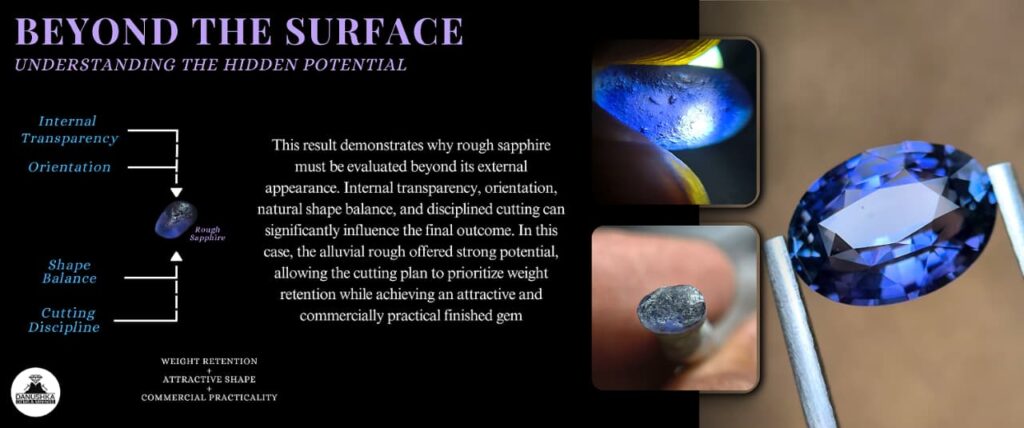
The finished sapphire shows the benefit of that decision. At 2.08 ct, it retains a strong size presence, while the oval shape gives it a classic and market-friendly appearance. The stone remains transparent, with an excellent lustered body, and the violetish-blue character continues to give the gem individuality. This is the type of stone that demonstrates how a thoughtful cutting journey can preserve both beauty and value from natural rough.
For international buyers, this journey also reflects the type of communication we believe in at Danushka Gems & Minings. We do not want clients to buy rough based only on hope. Instead, we try to explain the likely possibilities, the limits, and the cutting choices in a practical and trustworthy way. In this case, the discussion with Mr. Hasanth was open and clear. His preference for weight retention helped guide the cutting direction, and the final outcome showed that careful collaboration between buyer and source can lead to an excellent result.
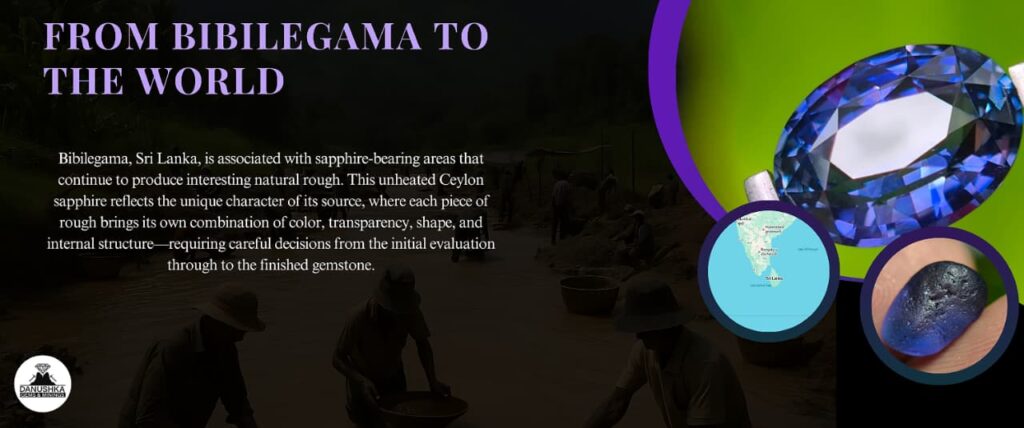
Bibilegama village around mining in Sri Lanka continues to produce interesting sapphire material, and this stone is a good example of the source-connected character of Sri Lankan gem rough. Natural unheated sapphire rough from such areas often carries strong interest not only because of origin, but also because each stone presents a unique decision-making process from rough to finished gemstone.
This sapphire journey is also a reminder that gemstone cutting is not only about removing weight. It is about making disciplined choices. Sometimes a cutter must sacrifice more weight for clarity or shape. Sometimes the best outcome comes from preserving body and using the natural outline wisely. In this stone, the result proved that a careful oval plan could respect the client’s priority, protect the beauty of the material, and still deliver a finished gem above the original estimate.
At Danushka Gems & Minings, we are proud to be part of these journeys—from source selection to rough evaluation and from cutting discussion to final result. This 3.53 ct to 2.08 ct transformation is a practical example of why experience, honest communication, and source-connected gemstone work matter in the real trade.
If you are looking for natural sapphire rough, rough-to-finished gemstone projects, or practical source-based discussions before cutting, we are always happy to share real information from the field and help buyers make informed decisions.
FAQ – Bibilegama Violetish-Blue Sapphire Rough-to-Finished Journey
1. What was the original weight of the sapphire rough?
The original Ceylon natural unheated violetish-blue sapphire rough weighed 3.53 ct.
2. What were the rough measurements before cutting?
The rough measured 9.7 × 6.7 × 4.8 mm.
3. Where was this sapphire sourced from?
The sapphire was sourced from Bibilegama village around mining in Sri Lanka through Danushka Gems & Minings.
4. Was the sapphire heated?
No. The stone was presented and cut as a natural unheated sapphire according to the provided information.
5. Who purchased the rough sapphire?
The rough stone was purchased by Mr. Hasanth from Australia.
6. Why was an oval shape selected?
After discussion with the buyer, the oval shape was selected because the natural alluvial form of the rough showed good potential for this direction. The buyer also wanted to prioritize weight retention while maintaining attractive cutting and overall appearance.
7. What was the original estimated finished weight?
Our practical working estimate was approximately 1.50 ct. From a 3.53 ct rough, this would represent around 42.49% weight recovery.
8. Did you think a 2 ct finished stone was possible before cutting?
Yes. During evaluation, we explained that a result around 2 ct might be possible because of the rough shape and usable body. However, we kept the official working estimate at approximately 1.50 ct because rough cutting results should never be guaranteed in advance.
9. What was the final finished weight?
The finished oval sapphire weighs 2.08 ct.
10. What are the finished measurements?
After cutting and polishing, the sapphire measures 8.7 × 6.5 × 4.4 mm.