
At Danushka Gems & Minings, some of the most interesting gemstones are not defined by one fixed color. Their real character becomes visible only through careful observation, cutting, and comparison under different lighting conditions. This natural sapphire from Endana village around mining in Sri Lanka is a good example of how a rough stone can reveal a noticeably different visual balance after faceting.
The journey began with a 5.77 ct Facet Grade Natural Ceylon Sapphire rough measuring 12.15 × 8.5 × 5.4 mm. The stone was presented as natural and unheated, with no treatment, and showed an attractive color-shifting character from blue toward violet and pink tones depending on the light source and viewing conditions.
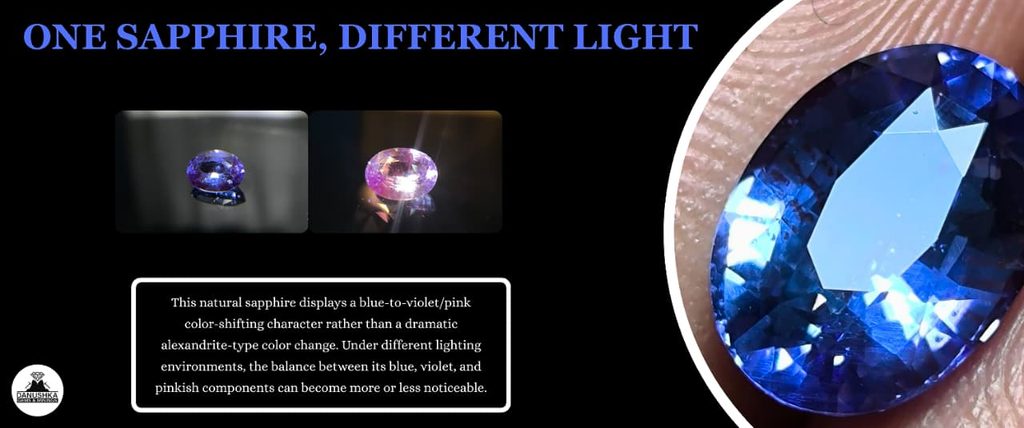
Even before cutting, the rough had strong visual interest. Its body showed a noticeable violet influence, together with blue areas and warmer pinkish reactions under different lighting. The material also had the transparency and usable structure needed for professional faceting, making it an interesting candidate for a carefully planned transformation.
Understanding the Rough Before Cutting
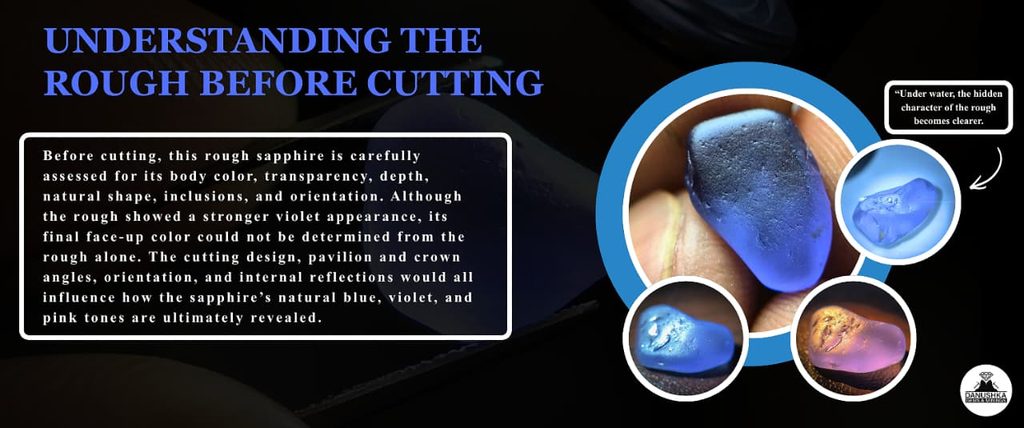
A rough sapphire should never be judged only from one photograph or one direction.
Before cutting, several factors must be considered together: body color, transparency, depth, natural shape, inclusions, orientation, and how light travels through the stone. This becomes even more important with a color-shifting sapphire because different orientations can emphasize different components of the stone’s natural color.
In rough form, this sapphire showed a stronger violet appearance. That did not automatically mean the finished stone would face up predominantly violet. Once a sapphire is cut, the pavilion angles, crown, facet arrangement, orientation, and internal reflections can redistribute the way color is seen by the eye.
This is one of the reasons gemstone cutting can produce results that are difficult to predict perfectly from rough material alone.
Why an Oval Step Cut Was Selected
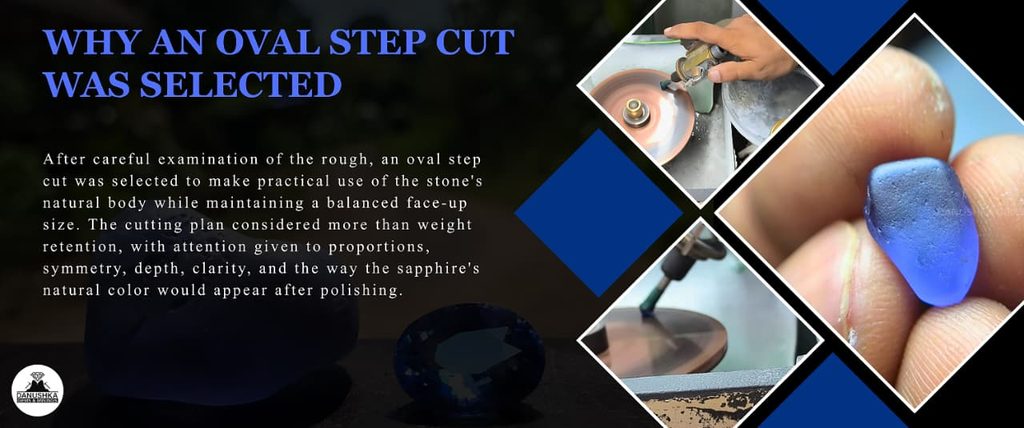
After studying the rough, the stone was planned as an oval step cut.
The oval outline provided a practical way to use the natural body of the rough while maintaining a balanced face-up size. The step-style facet arrangement also gave the stone a more structured visual appearance and allowed the natural color to be observed through broader internal reflections.
For this type of material, the goal was not simply to retain the maximum possible weight. The cutting decision needed to balance several priorities: preserving usable size, maintaining clean areas, controlling depth, improving symmetry, and allowing the sapphire’s color to present itself naturally after polishing.
A heavier finished stone would not necessarily have been a better result if the proportions, brilliance, or color presentation were compromised.
The Finished Sapphire
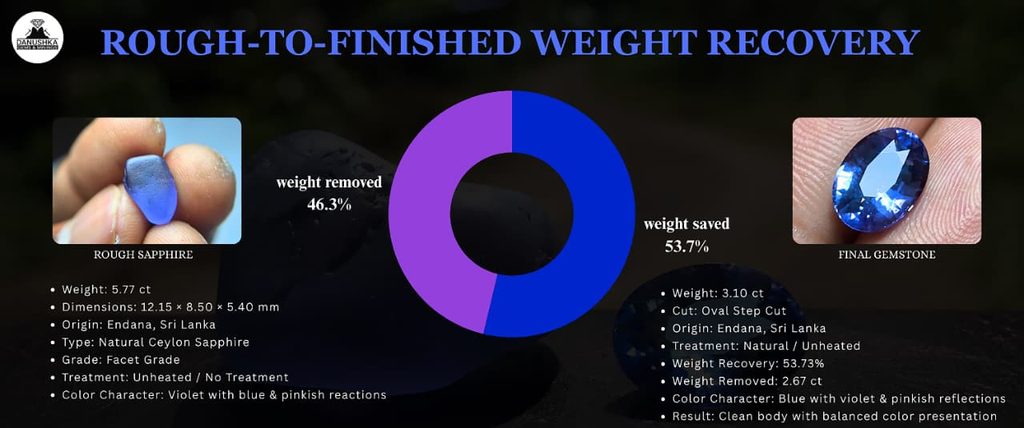
After cutting and polishing, the sapphire finished at 3.10 ct as a very clean, fine-quality oval step-cut gemstone.
From the original 5.77 ct rough, the final 3.10 ct weight represents approximately 53.73% weight recovery. The cutting process removed around 2.67 ct, equal to approximately 46.27% of the original rough weight.
For natural sapphire, this is a meaningful recovery, especially when the final result achieves a clean body, balanced outline, and attractive color presentation.
The most interesting part of the transformation was the change in the visual balance of the color.
In rough form, the violet component appeared stronger. After cutting, however, the finished gemstone showed a much stronger blue face-up appearance, while violet and pinkish tones remained part of its lighting-dependent character.
This is an important practical example of why the color of rough sapphire cannot always be translated directly into the final appearance of a faceted stone.
Why Did the Blue Become Stronger After Cutting?
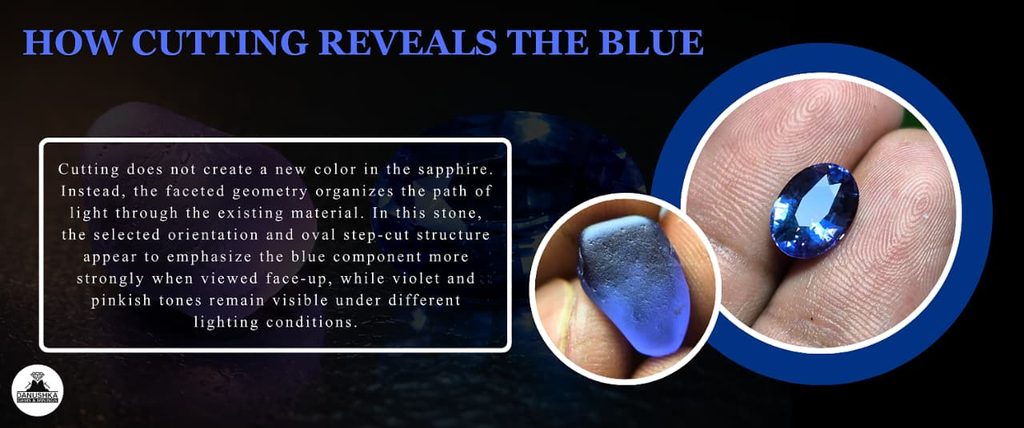
Cutting does not create a new color in the sapphire. Instead, it changes how light travels through and reflects inside the existing material.
Before cutting, irregular rough surfaces scatter light in many directions. Natural skin, uneven thickness, surface texture, and irregular geometry can emphasize some color zones while hiding others.
Once the stone is faceted, the optical path becomes much more organized. Pavilion and crown facets redirect light through specific areas of the sapphire before returning it to the viewer.
In this case, the selected orientation and finished oval step-cut geometry appear to emphasize the blue component more strongly than the violet component when viewed face-up.
This is exactly the kind of result that makes rough-to-finished gemstone work so educational. The final appearance is not simply a polished version of what was visible in the rough. It is the result of natural chemistry interacting with orientation and cutting geometry.
Color Shift Versus Fixed Color
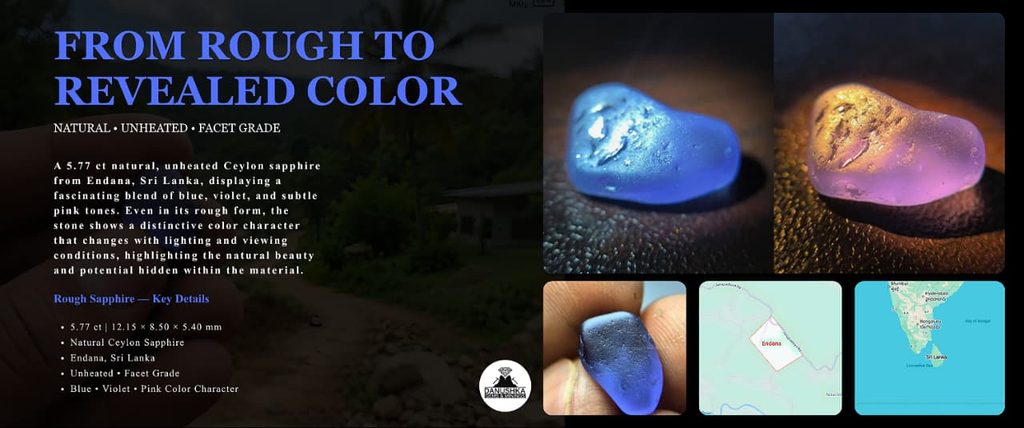
This sapphire is best described as having a blue to violet/pink color-shifting character.
The term “color shift” is appropriate when the visible color balance changes under different lighting environments but does not necessarily show the dramatic complementary color change associated with classic alexandrite-type behavior.
Under one light source, the stone may appear more strongly blue. Under another, violet or pinkish components may become more noticeable.
When presenting a color-shifting gemstone professionally, lighting conditions should always be considered. Camera white balance, background, exposure, and light temperature can also influence photographs, so direct observation under controlled lighting remains important.
Natural and Unheated Character
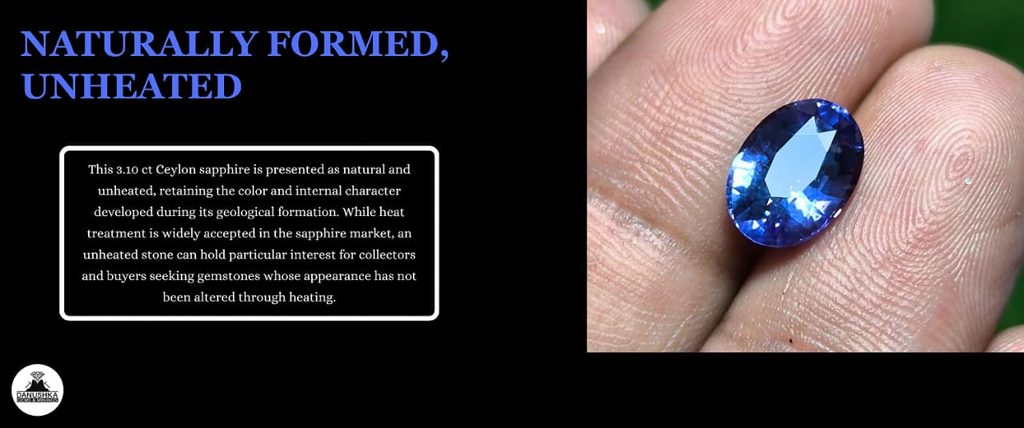
Another important part of this gemstone’s identity is its unheated status,
Heating is widely accepted in the sapphire market, but an unheated stone retains the color and internal character created naturally during geological formation. For collectors and buyers who specifically seek untreated gemstones, this can add another level of interest.
From Endana Rough to Finished Sapphire
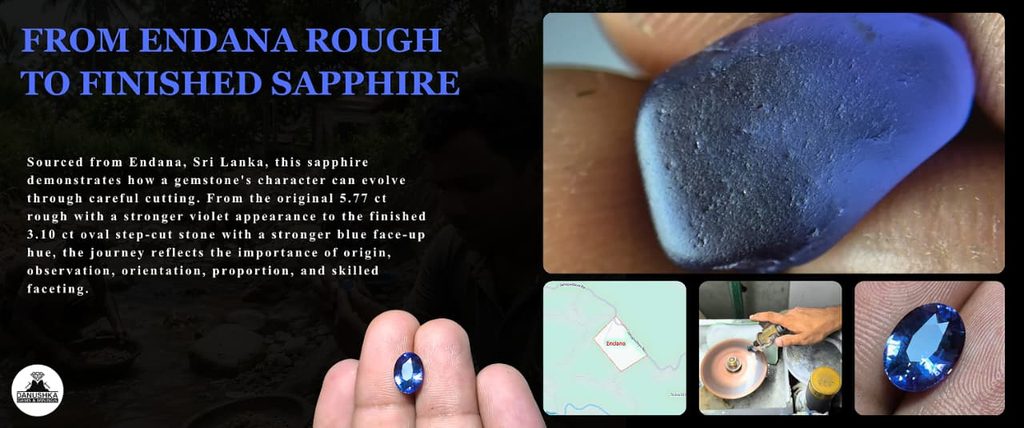
This sapphire was sourced from Endana village around mining in Sri Lanka, continuing the source-connected approach of Danushka Gems & Minings.
For us, the important part of a gemstone journey is not only the final polished result. It is understanding what happened before that stage: where the rough came from, how it looked in its original condition, what cutting decisions were made, how much weight was retained, and how the visual appearance changed after faceting.
In this case, the story is especially interesting because the finished sapphire did not simply preserve the exact dominant appearance of the rough.
The rough leaned more strongly toward violet. The finished gemstone presented a stronger blue hue. The violet and pink character remained, but the balance changed.
That is real gemstone cutting.
A Practical Example of Why Rough Evaluation Matters
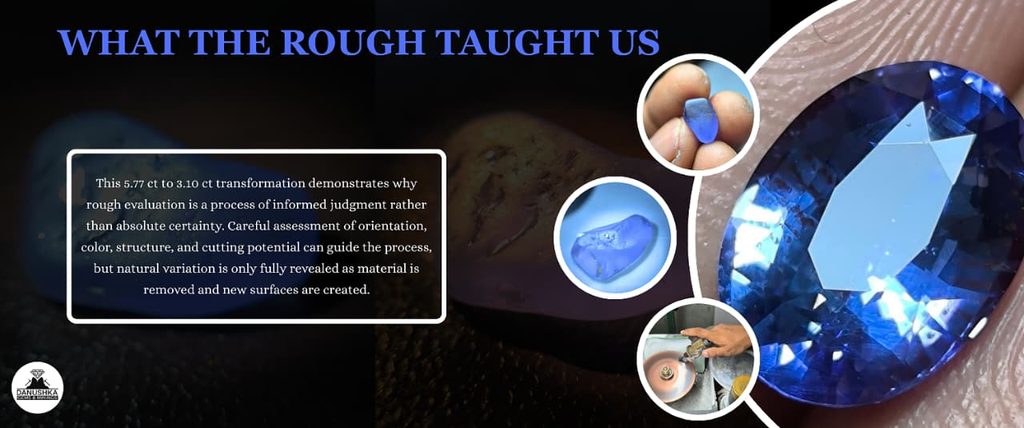
For buyers, cutters, and dealers, this stone is a useful reminder that rough evaluation is based on probability, not certainty.
A good cutter can study orientation and anticipate possible outcomes, but natural gemstones still contain variables that cannot always be fully understood until material is removed and new surfaces are exposed.
This is why Danushka Gems & Minings prefers to describe cutting potential carefully rather than promise a specific finished color or exact recovery before the process begins.
The transformation from 5.77 ct rough to 3.10 ct finished sapphire demonstrates how thoughtful orientation and controlled cutting can produce a strong final result while preserving more than half of the original rough weight.
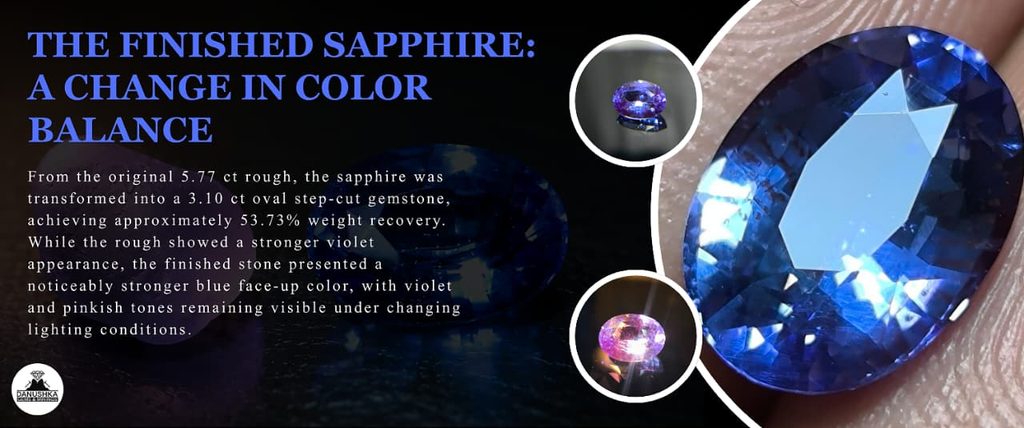
The finished gemstone now presents as a clean, attractive oval step-cut sapphire with a stronger blue face-up appearance and a distinctive violet-to-pink response under different lighting.
For us, that is what makes rough-to-finished gemstone work meaningful: every stone teaches something different about color, structure, cutting, and the way nature responds when careful craftsmanship is added.
At Danushka Gems & Minings, these are the journeys we want to document—not only the polished gemstone, but the real transformation from source-connected rough to finished gem.