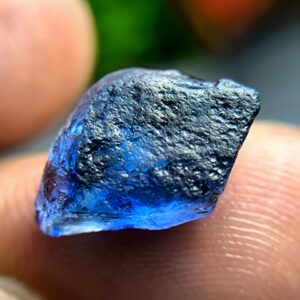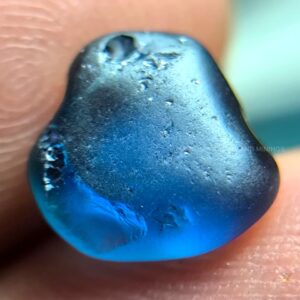
| Weight | 2.10 ct |
|---|---|
| Dimensions | 7.4 × 7.6 × 3.5 mm |
| Grade | Facet Grade |
| Variety | Sapphire Rough |
| Mining Location | elahera village around mining in Sri Lanka |
| Treatment | unheated |
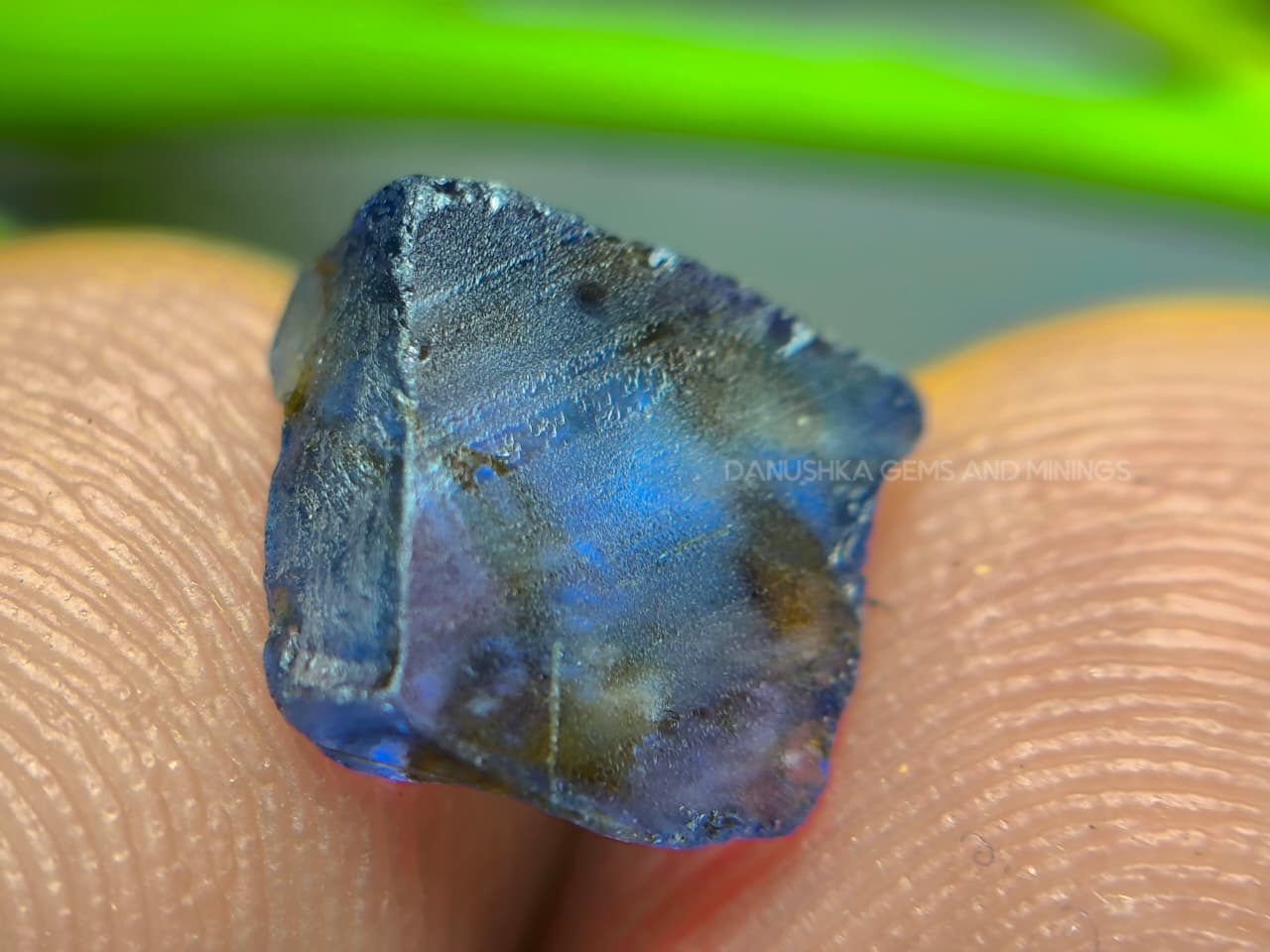
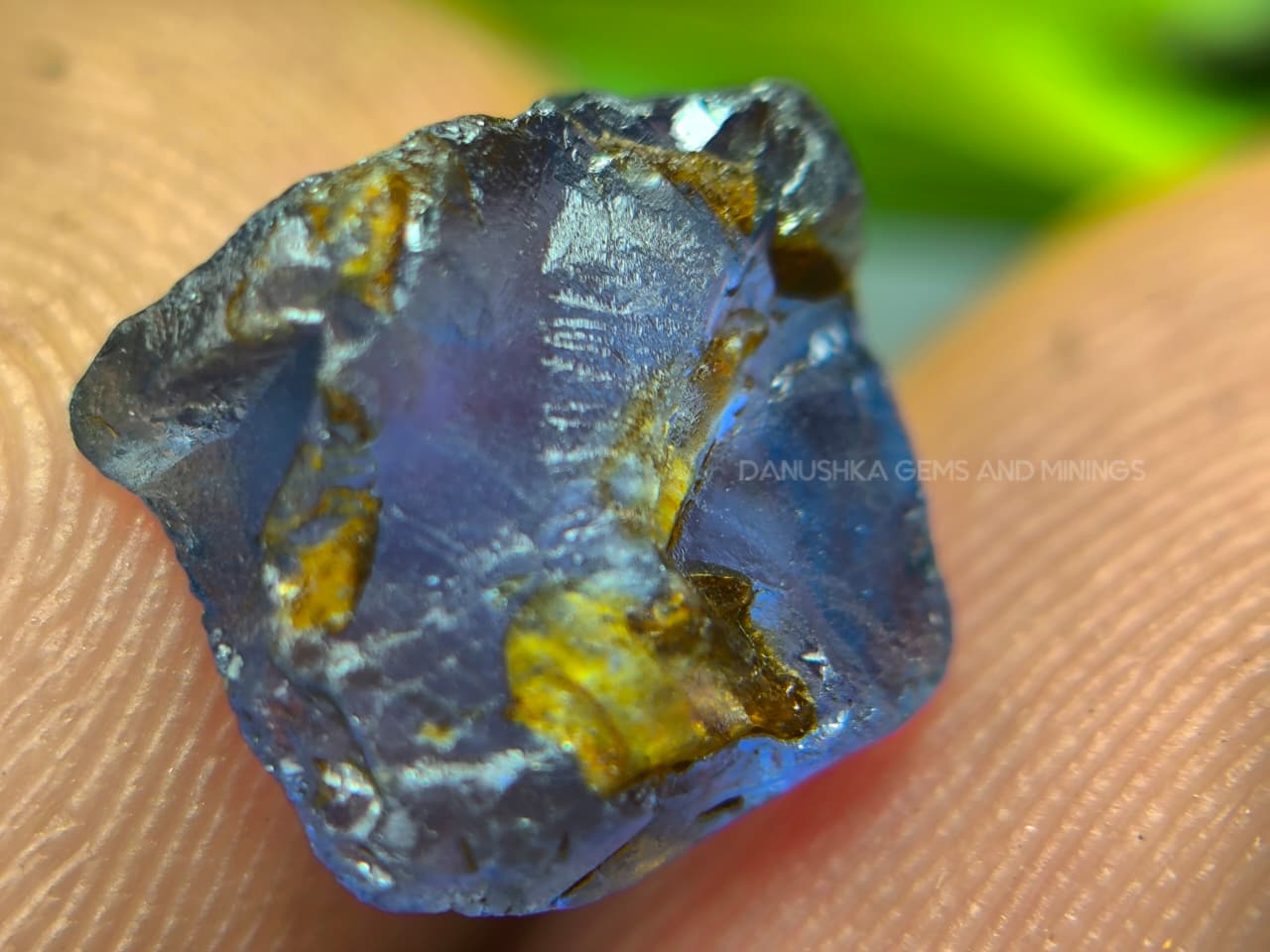
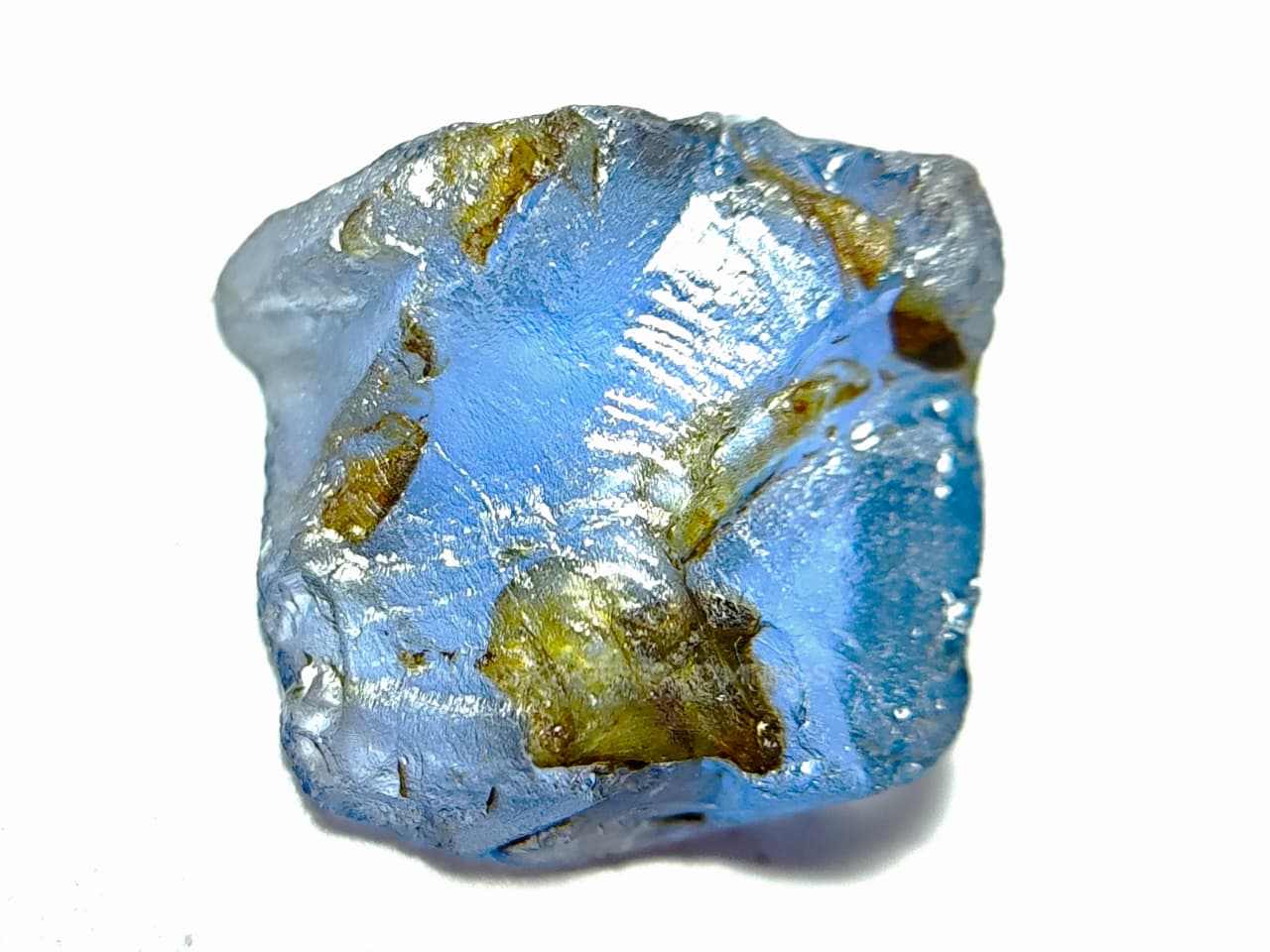
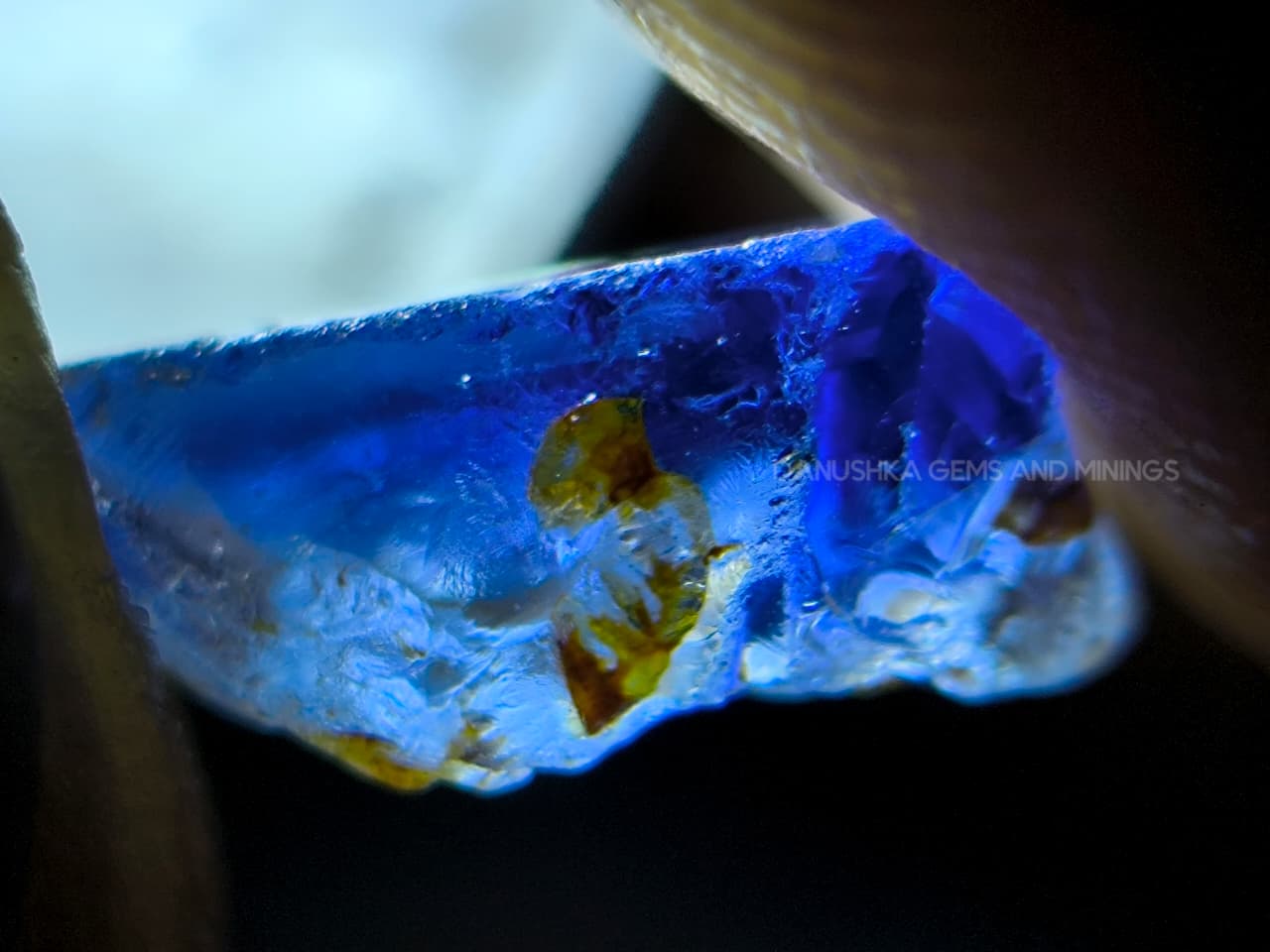
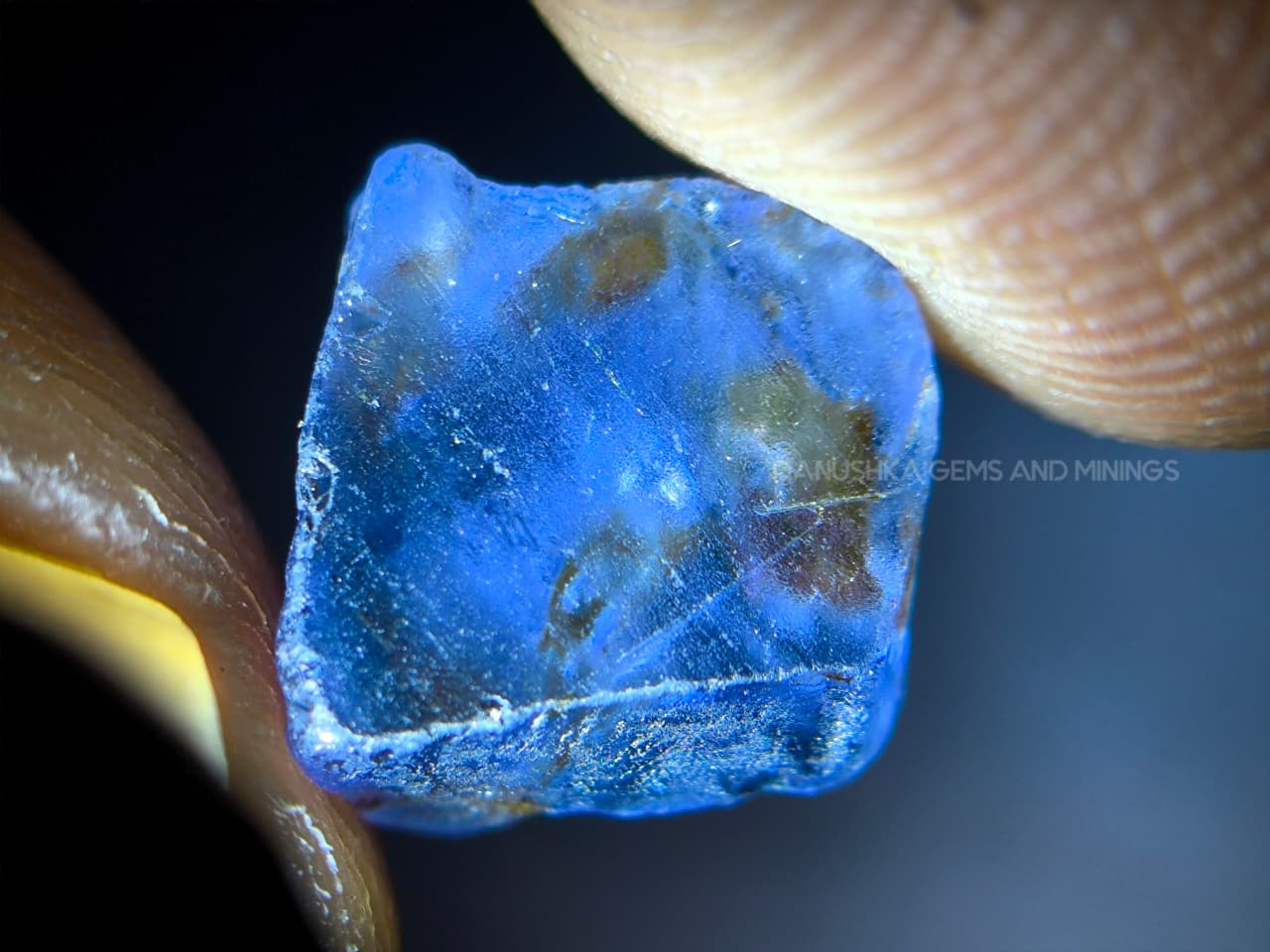
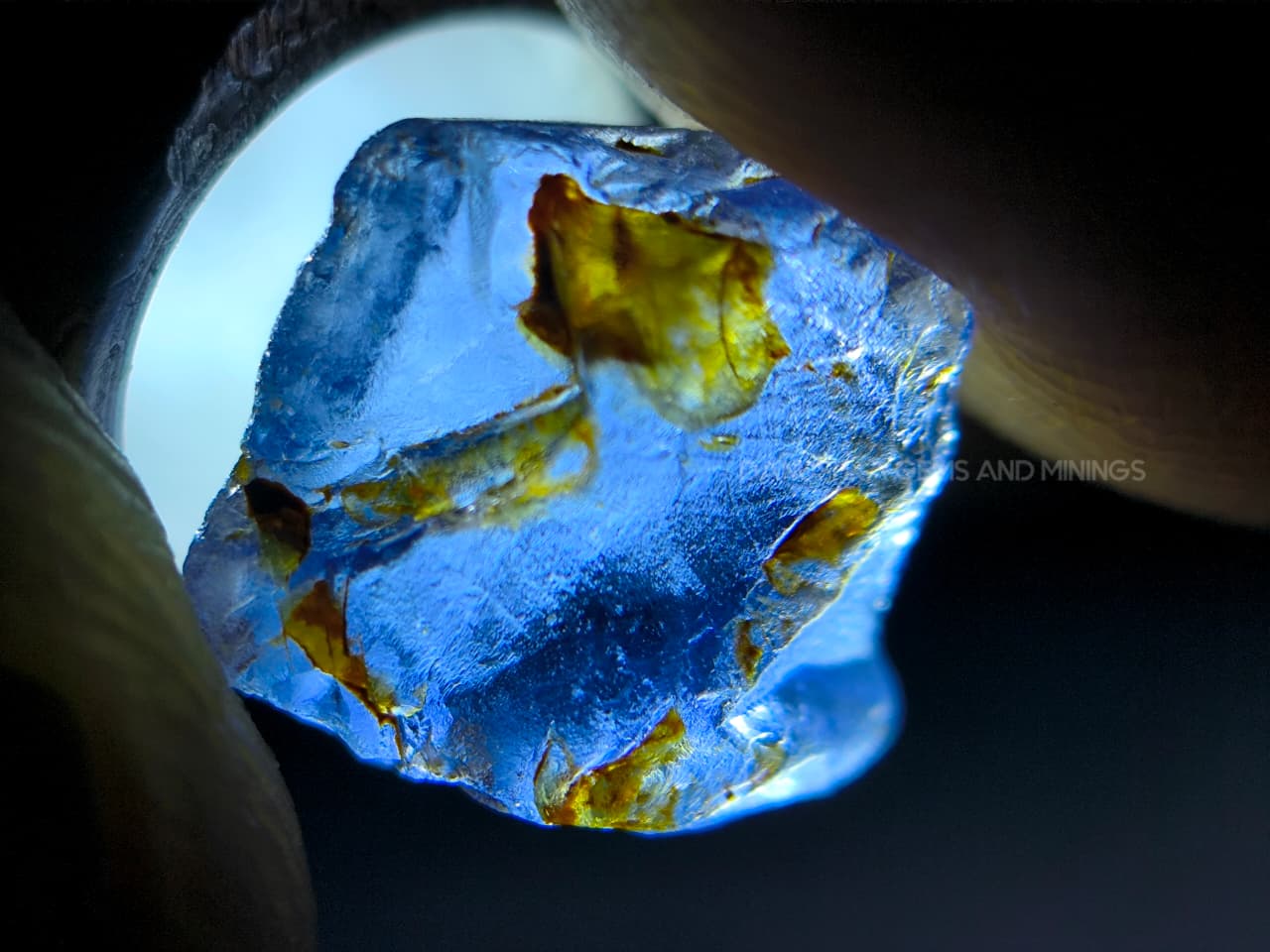
2.10 ct Elahera Blue Sapphire Rough: Why a Flat Natural Sapphire Can Need a Completely Different Cutting Idea
Spread the Love
At Danushka Gems & Minings, some rough sapphires immediately suggest a familiar oval, cushion, pear, or emerald-style cut. Others require a completely different way of thinking. This 2.10 ct Facet Grade Ceylon Natural Unheated Blue Sapphire rough, measuring 7.4 × 7.6 × 3.5 mm, is one of those stones.
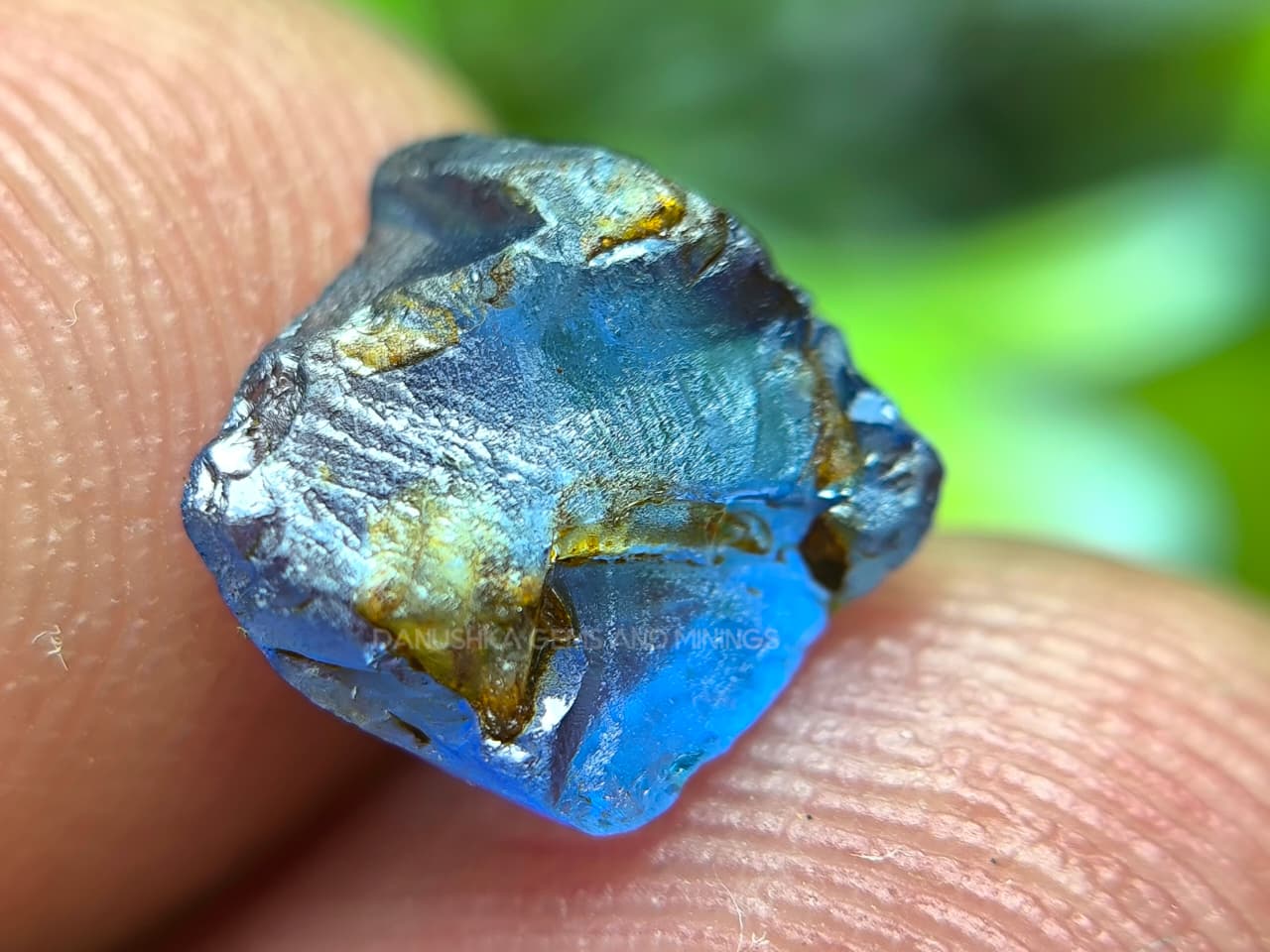
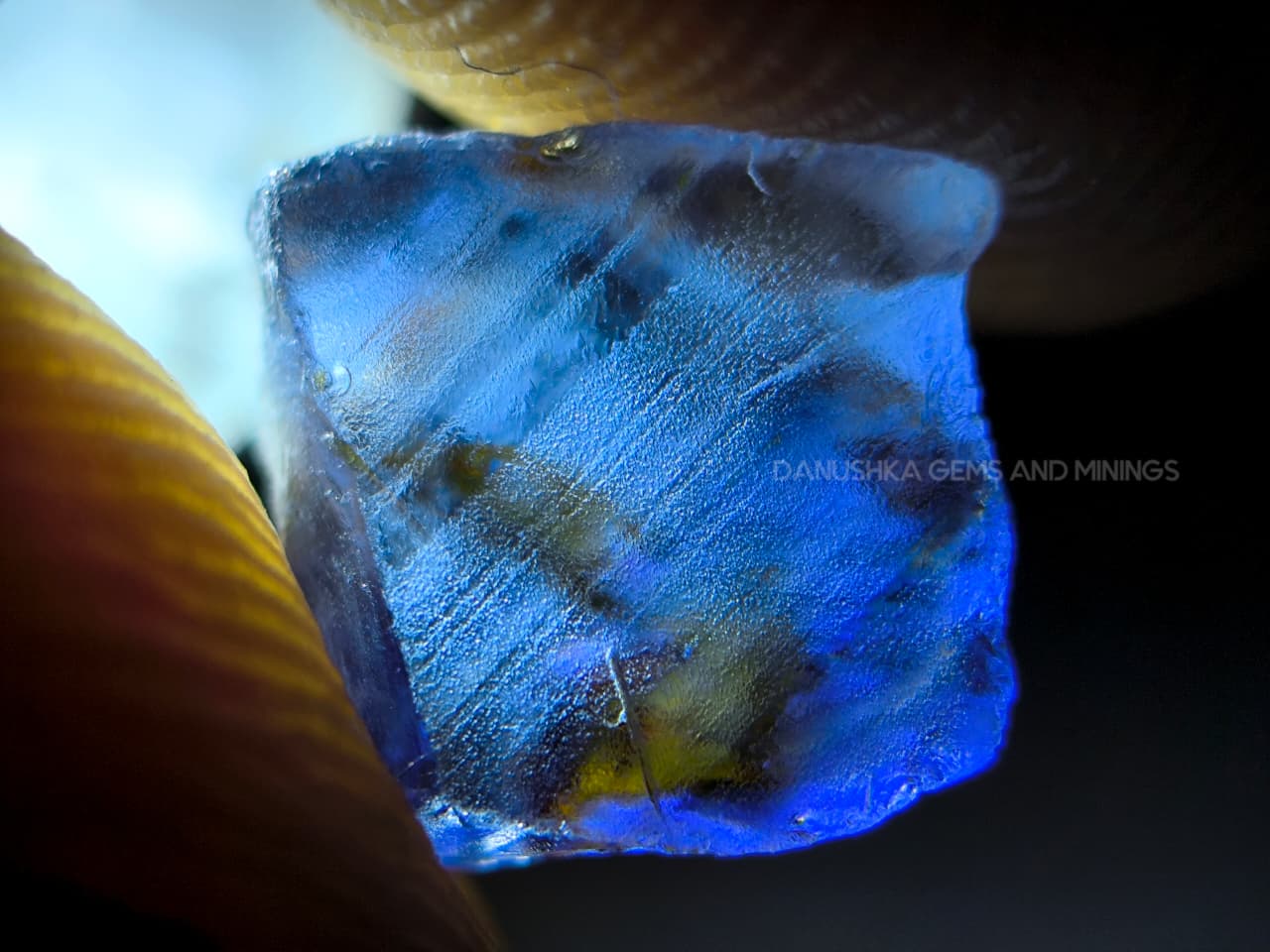
The sapphire comes from Elahera village around mining in Sri Lanka, an important source area for Ceylon sapphire rough. It shows an attractive natural blue body and is presented as an unheated stone. However, the most interesting part of this rough is not simply its color. It is the relationship between its face-up dimensions and its relatively shallow 3.5 mm depth.
A Rough Sapphire That Cannot Be Planned Only by Shape
At approximately 7.4 × 7.6 mm across but only 3.5 mm deep, this sapphire has a broad, relatively flat natural form.
That changes the cutting discussion.
A conventional sapphire design normally requires enough depth to build a suitable pavilion beneath the girdle. If a cutter simply tries to force a traditional deep pavilion into shallow rough, too much face-up size may need to be removed. On the other hand, if the cutter keeps the stone too shallow while following an ordinary design, the finished gemstone may have weaker light return or develop a visible window.
For this reason, rough sapphire should not be evaluated only by asking, “Which standard shape fits?”
Sometimes the better question is:
“What design can be created specifically for the natural geometry of this particular rough?”
Originally Selected for a Custom Pendant Design
When I selected this 2.10 ct Elahera blue sapphire rough, my own idea was to create a custom pendant-focused gemstone.
A pendant gives a cutter more freedom than some traditional ring designs. The stone does not always need to follow the typical proportions expected from a conventional calibrated gemstone, especially when the goal is to preserve individuality and work creatively with a naturally shallow piece of rough.
Instead of sacrificing too much material simply to produce a standard oval or cushion, I wanted the cutting plan to respect the broad natural face of the sapphire.
However, one of the interesting parts of gemstone work is that another experienced cutter may look at the same rough and see something completely different.
For a stone like this, several creative possibilities can be considered: a low-profile custom faceting arrangement, unconventional pavilion geometry, double-sided faceting, a tableless or near-tableless concept, asymmetric artistic faceting, or a pendant-oriented design where both sides of the gemstone contribute to the visual effect.
These are design possibilities, not promised outcomes. The final direction should only be chosen after examining the rough from every angle, checking its inclusions, color concentration, surface features, usable depth, and structural stability.
Why Custom Cutting Can Be More Appropriate
The purpose of custom gemstone cutting is not simply to make something unusual.
A good custom design should solve a real problem presented by the rough.
In this Elahera sapphire, the challenge is limited depth relative to the width of the stone. Instead of cutting away a large portion of the face to obtain conventional pavilion depth, a thoughtful design may use a greater proportion of the original natural outline.
This can potentially help balance several objectives:
preserving a meaningful face-up presence,
working within the available 3.5 mm depth,
controlling possible windowing,
retaining attractive blue color,
using the cleanest areas effectively,
and creating a gemstone suitable for an individual pendant design.
Weight retention is important, but it is not the only target. The finished gemstone must still look intentional, balanced, and visually attractive.
Blue Color and Orientation
Blue sapphire rough can also change significantly in appearance depending on orientation.
Before cutting, the cutter must examine how blue color travels through the body of the stone. Rotating the rough can reveal differences in tone, transparency, color concentration, and internal features.
The final face-up appearance cannot be guaranteed from rough alone because cutting changes the optical paths inside the sapphire. Facet angles, orientation, polish, and the relationship between the two sides of the gemstone can all influence how much blue is returned to the viewer.
That is why this stone is particularly interesting as a cutting project. It is not simply about turning rough into a conventional polished gem. It is about finding the design that works with what nature has provided.
Natural Unheated Elahera Sapphire
The stone is presented as a natural unheated sapphire, meaning no heat treatment has been applied.
For this project, that natural character is important because the cutting plan must work with the color, structure, and internal characteristics already present in the rough.
Elahera sapphire material can show many different appearances, and no two pieces should be expected to behave identically. Every rough stone needs individual evaluation before cutting.
From Limitation to Design Opportunity
A shallow gemstone rough can initially look difficult because traditional proportions may not fit comfortably inside it.
But difficult rough does not necessarily mean poor rough.
Sometimes unusual proportions become the reason to create an unusual gemstone.
This 2.10 ct Elahera blue sapphire is a good example. Its 7.4 × 7.6 mm face provides a useful visual spread, while its 3.5 mm depth challenges the cutter to think beyond a normal sharp pavilion.
At Danushka Gems & Minings, this is one of the parts of gemstone work we enjoy most: finding natural rough at the source, understanding its limitations, discussing different possibilities with cutters, and allowing each individual stone to guide the final design.
Sometimes the most interesting gemstone is not produced by following a standard diagram.
Sometimes it begins when the cutter looks at the rough and says, “There may be another way.”
Frequently Asked Questions
The natural blue sapphire rough weighs 2.10 ct.
It measures approximately 7.4 × 7.6 × 3.5 mm.
The stone comes from Elahera village around mining in Sri Lanka.
No. It is presented as a natural unheated Ceylon blue sapphire.
Yes. The stone is presented as Facet Grade natural sapphire rough.
Its face-up dimensions are relatively broad compared with its 3.5 mm depth, giving it a naturally shallow profile that may not suit a conventional deep pavilion.
A poorly matched shallow design could potentially produce weak light return or windowing. The actual result depends on orientation, facet angles, refractive behavior, and the final design.
A conventional design might require reducing a significant amount of the stone's face-up size to obtain suitable depth. A custom design may use the available rough more intelligently.
The rough was selected with the idea of producing a custom pendant-oriented gemstone.
The cutter is studying more individual possibilities that may better use the low-depth form, potentially including unconventional or double-sided faceting. The final design has not yet been confirmed.