| Weight | 15.10 ct |
|---|---|
| Dimensions | 14.1 × 12.2 × 9.1 mm |
| Color | yellow |
| Cut / Form | Natural Rough |
| Treatment | Natural Unheated |
| Variety | Yellow Sapphire |
| Species | Corundum |
| Origin | Marapana village around mining in Sri Lanka |
| Country | Sri Lanka |
| Quality Grade | Excellent Facet Grade |
| Product Type | Rough |
15.10 ct Unheated Ceylon Yellow Sapphire Rough – Excellent Facet Grade, Marapana
15.10 ct unheated Ceylon yellow sapphire, excellent facet-grade rough.
SKU
DG00859
Categories Sapphire Rough, Yellow Sapphire
Tags Ceylon Yellow Sapphire, Facet grade rough, natural sapphire rough, Sri Lanka Gemstone, Unheated sapphire
Spread the Love
Stone Identity & Quality
This 15.10 carat natural unheated Ceylon yellow sapphire rough originates from Marapana village around mining in Sri Lanka.
Measuring 14.1 × 12.2 × 9.1 mm, the stone is identified as excellent facet-grade rough, intended for professional gemstone cutting and polishing.
Yellow sapphire is a variety of the mineral species corundum, chemically composed of aluminium oxide (Al₂O₃). Like other natural sapphires, it has a Mohs hardness of 9, making it suitable for many types of fine jewelry when properly cut and set.
The material is presented in its original rough condition, allowing cutters and gemstone buyers to examine its natural shape, color distribution, surface characteristics and internal features before deciding on a cutting plan.
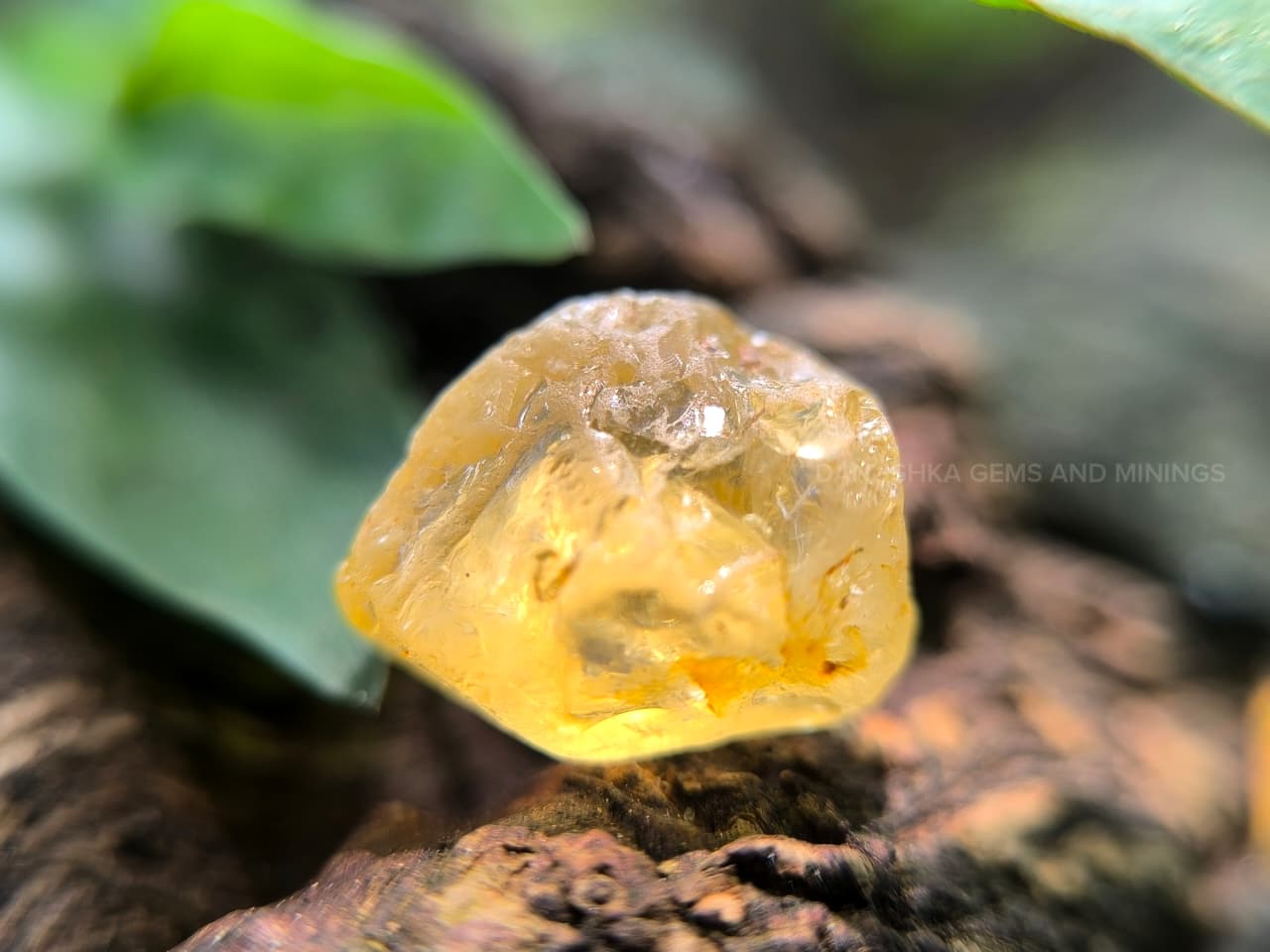
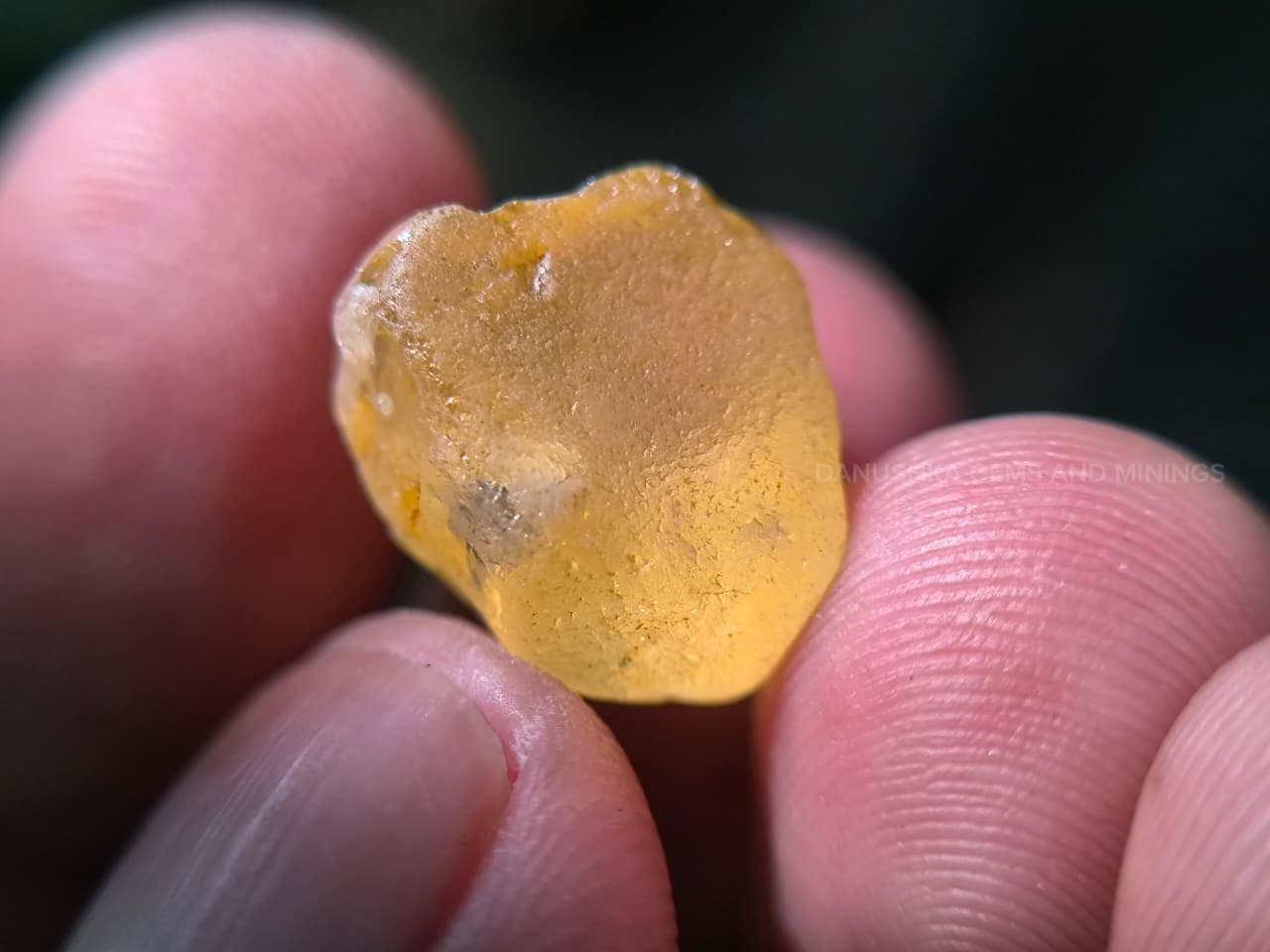
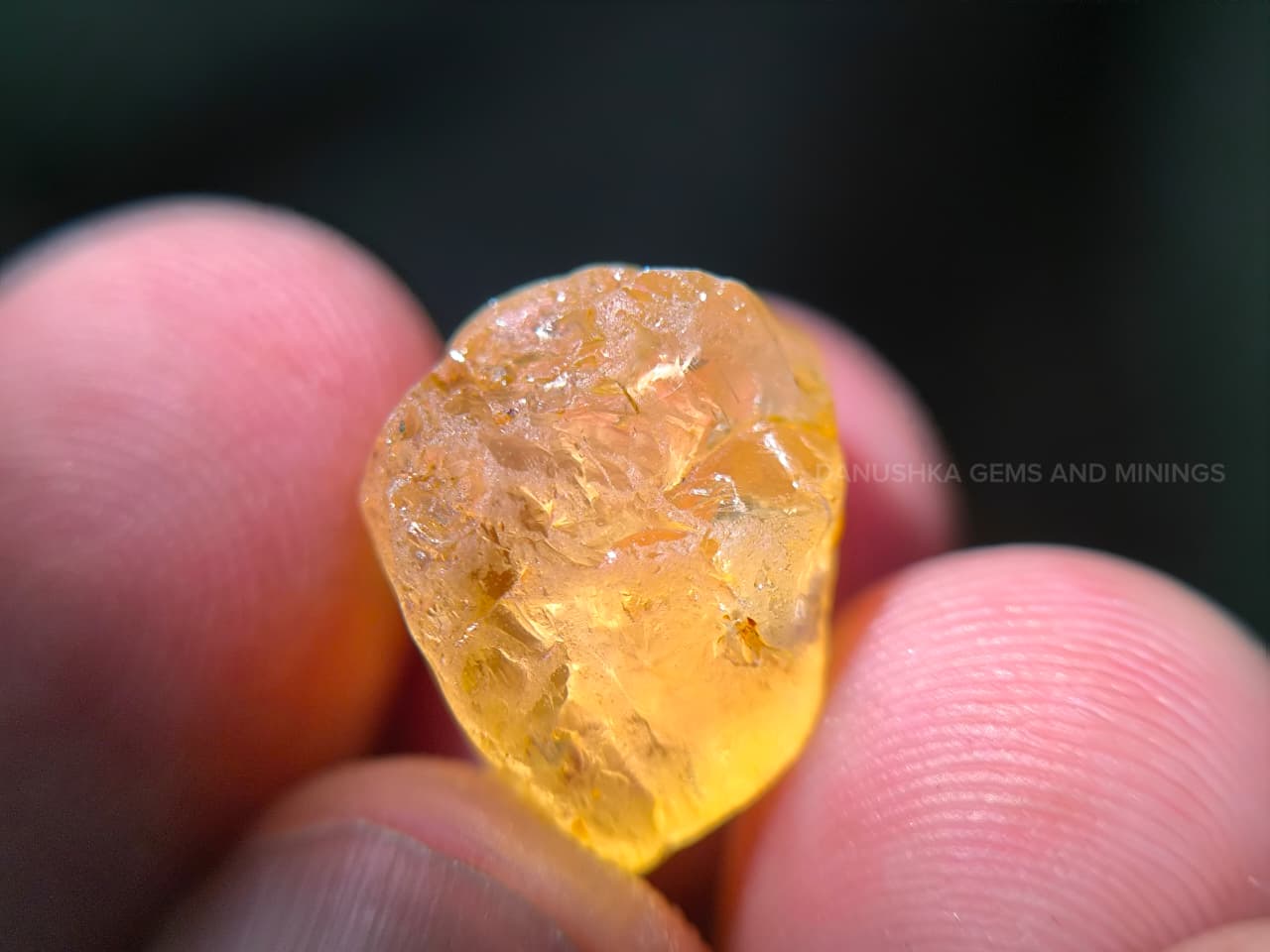
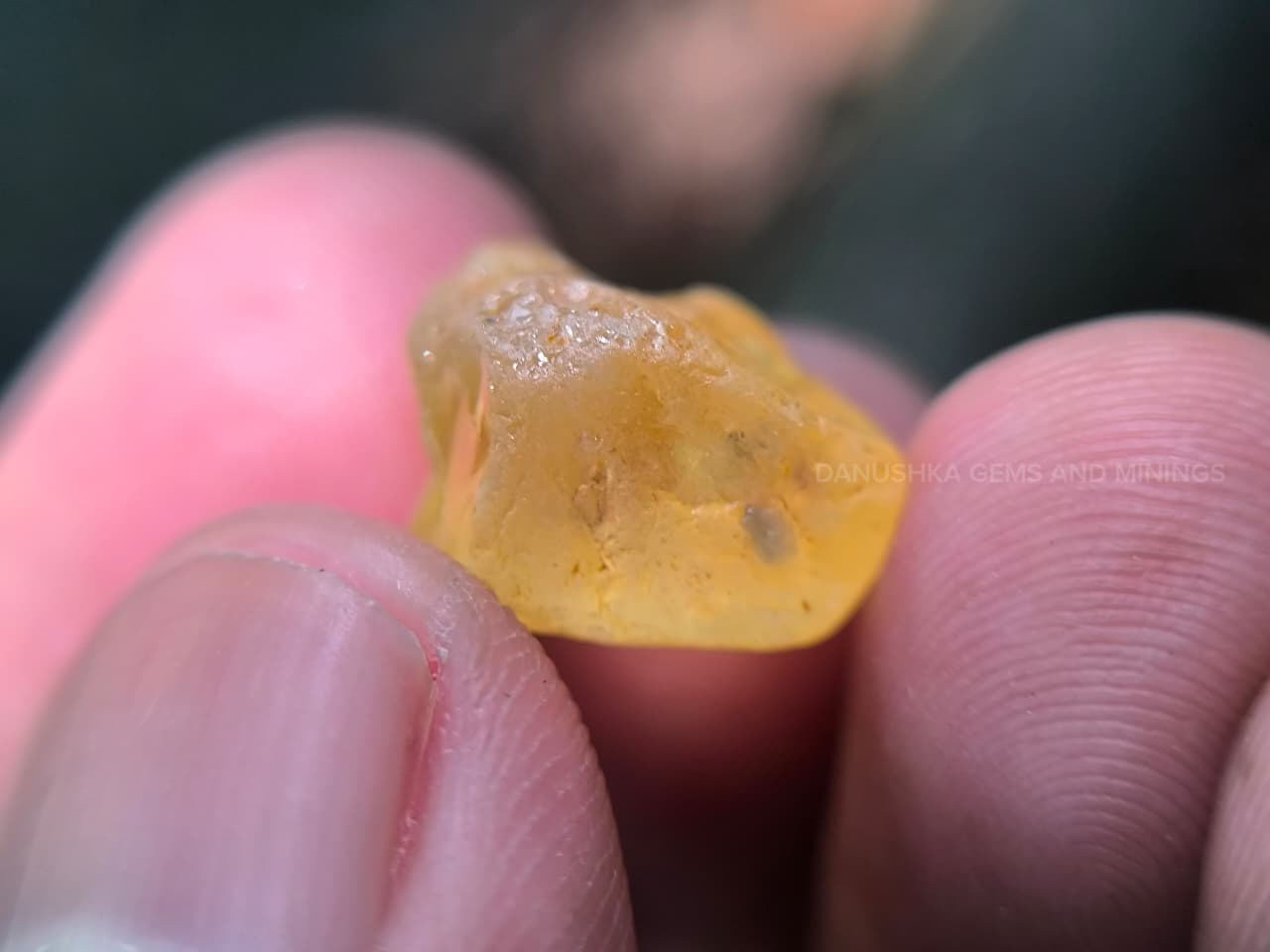
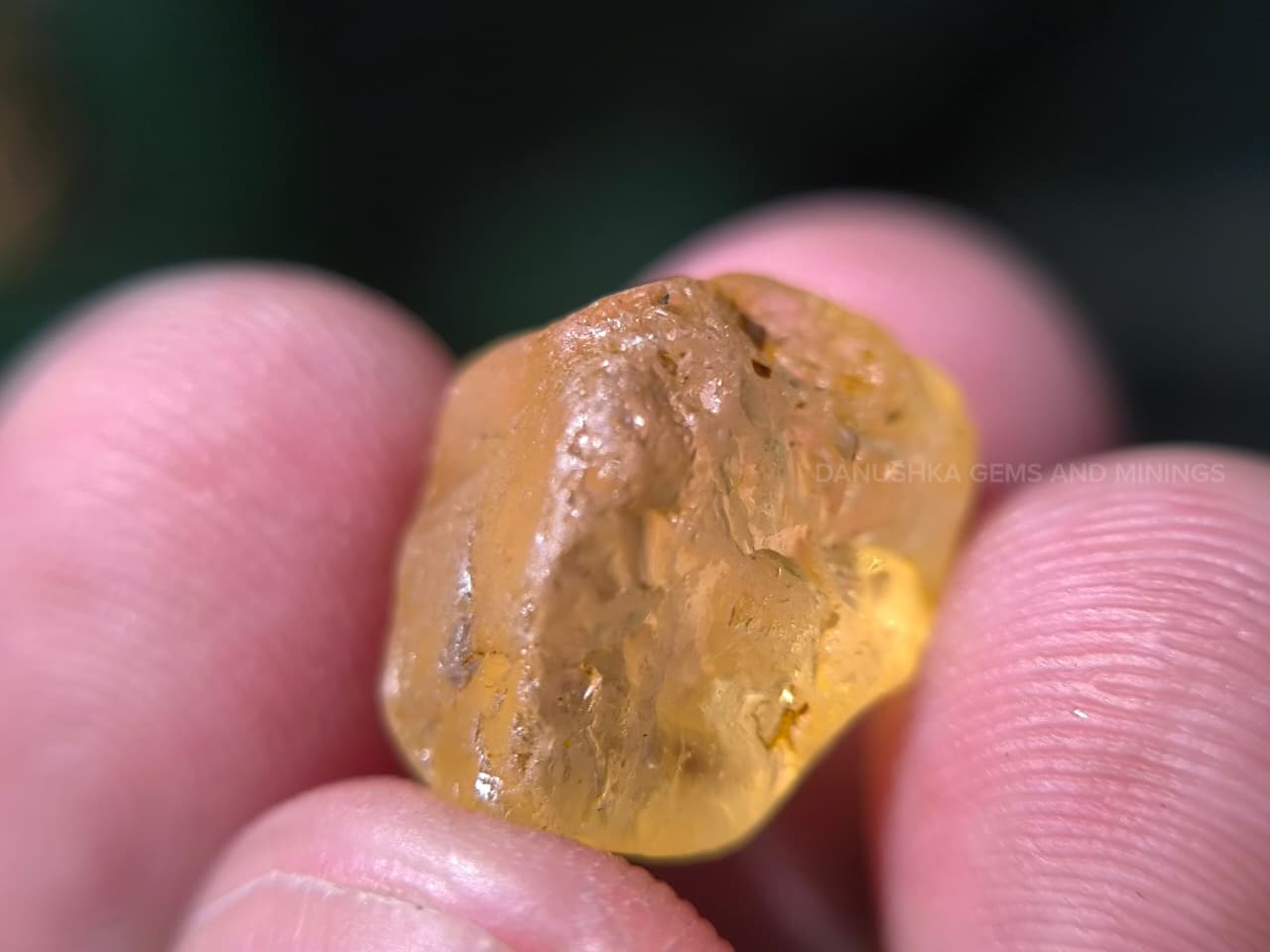
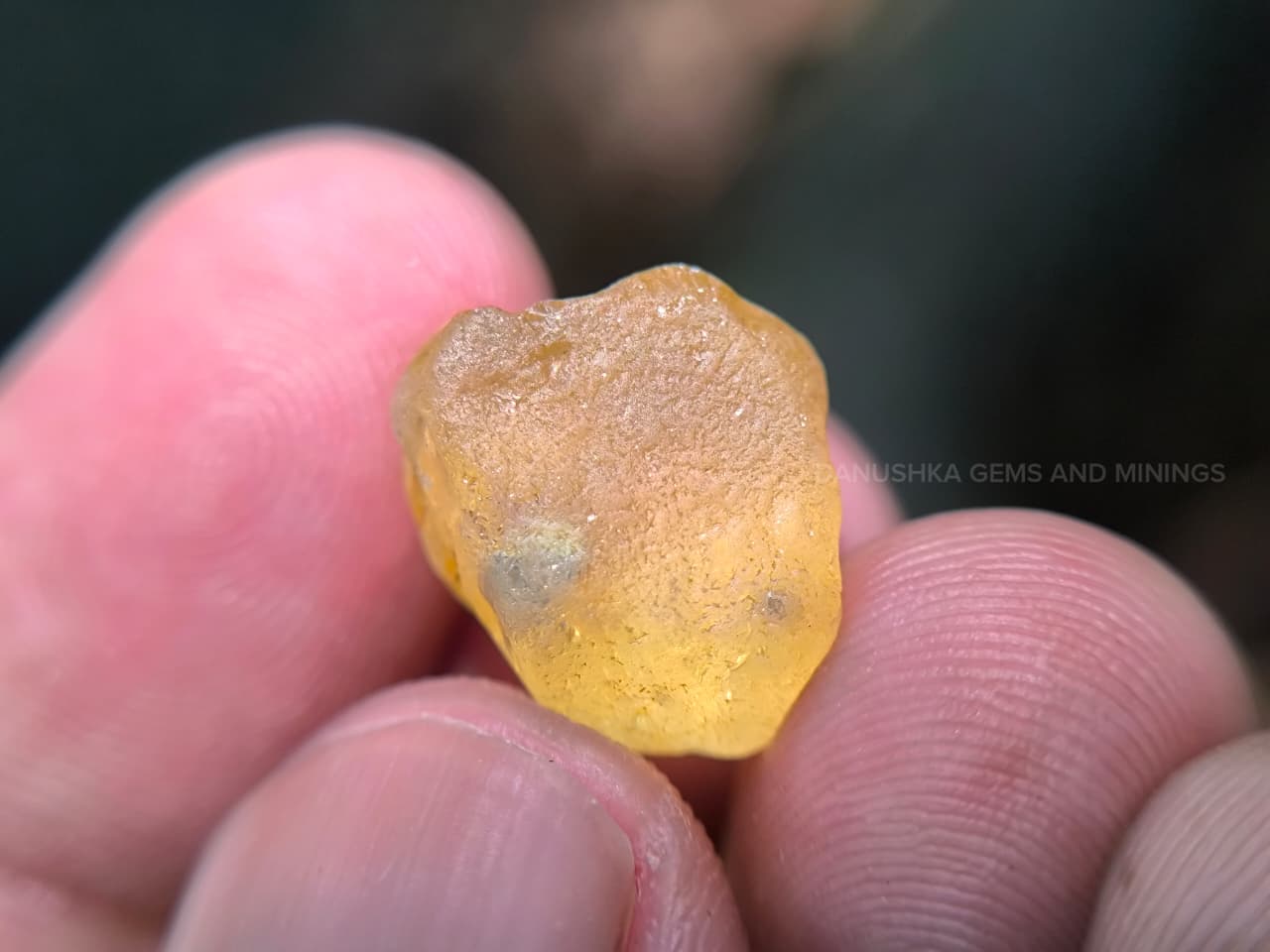
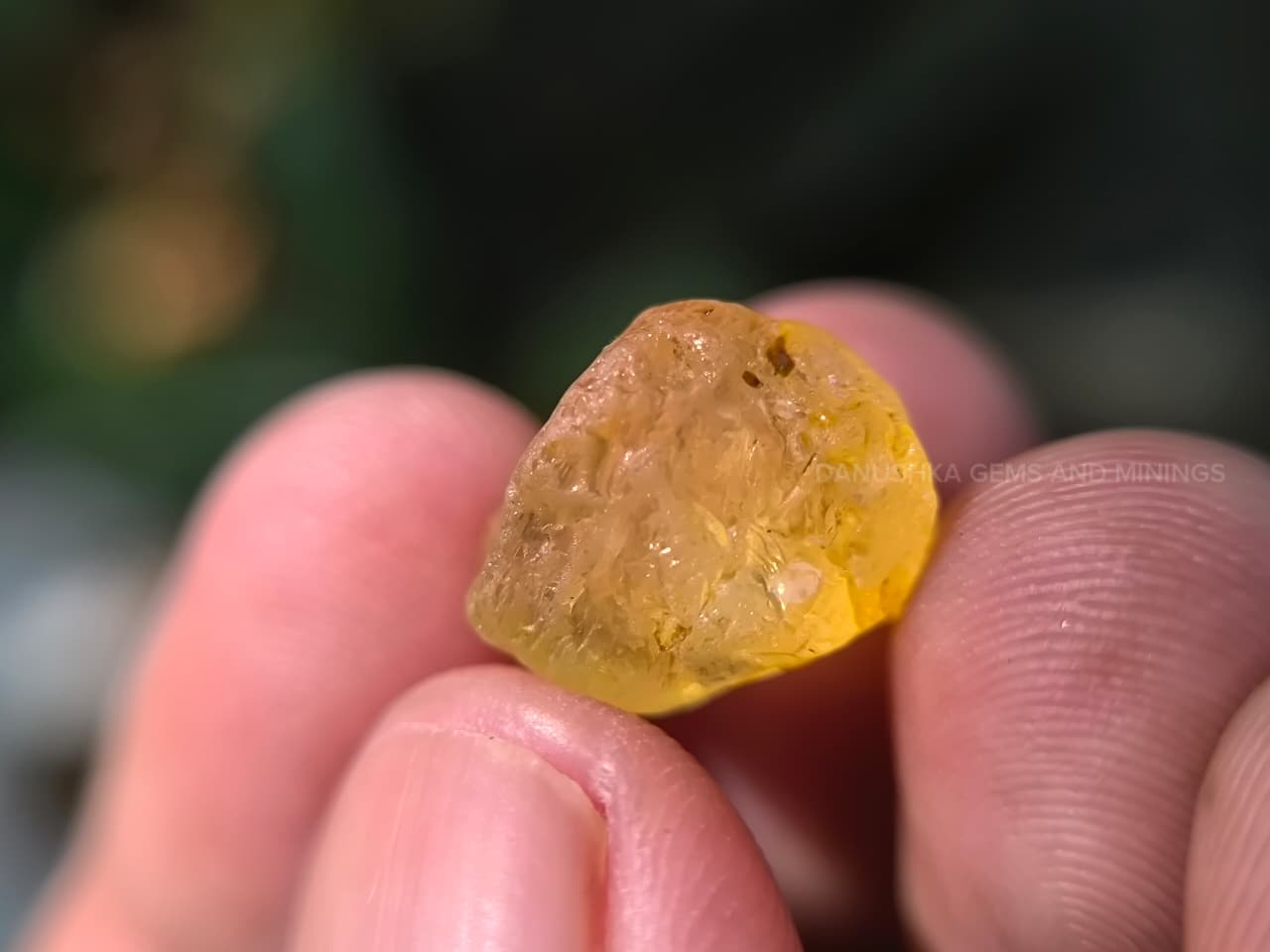
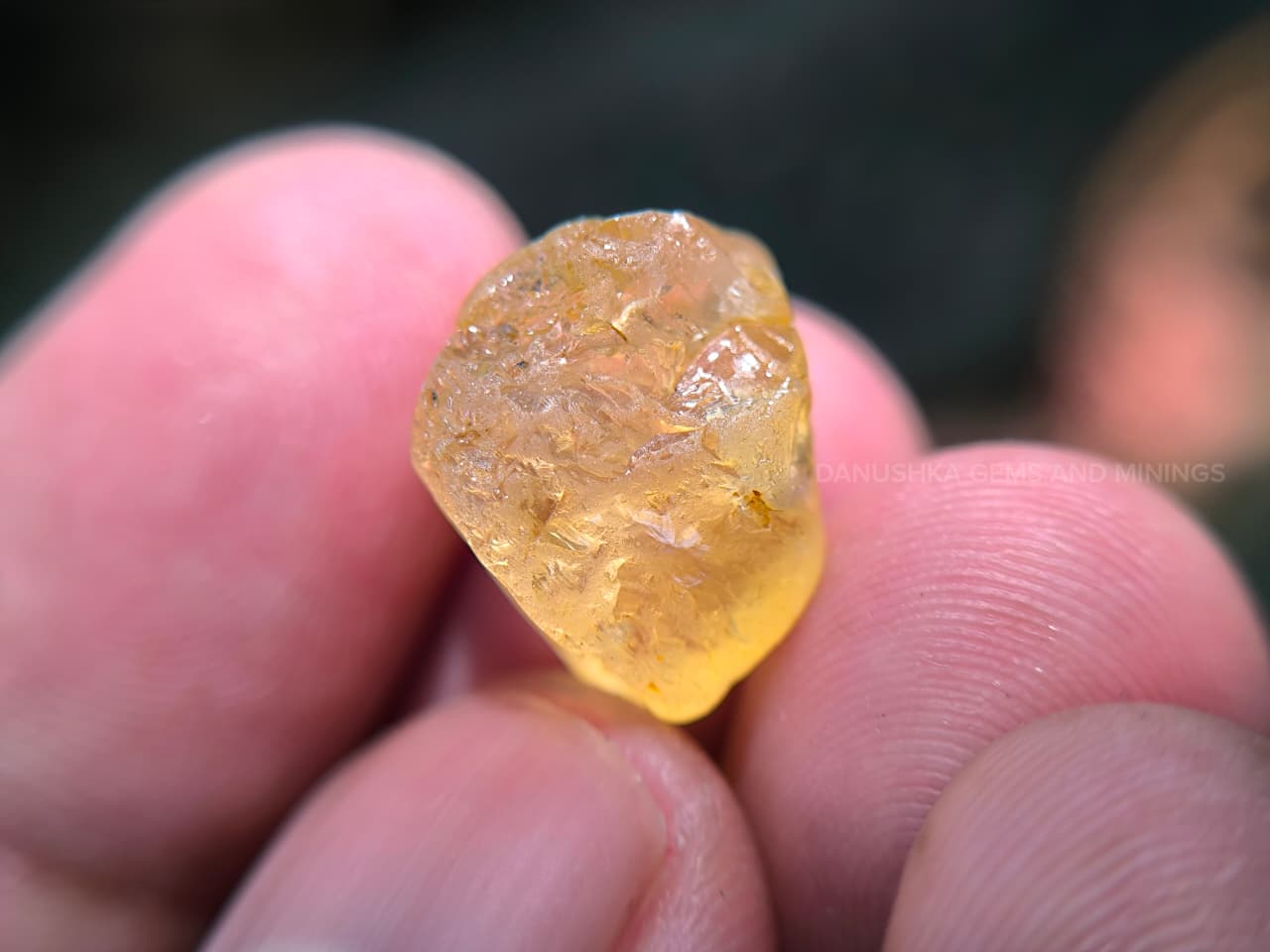
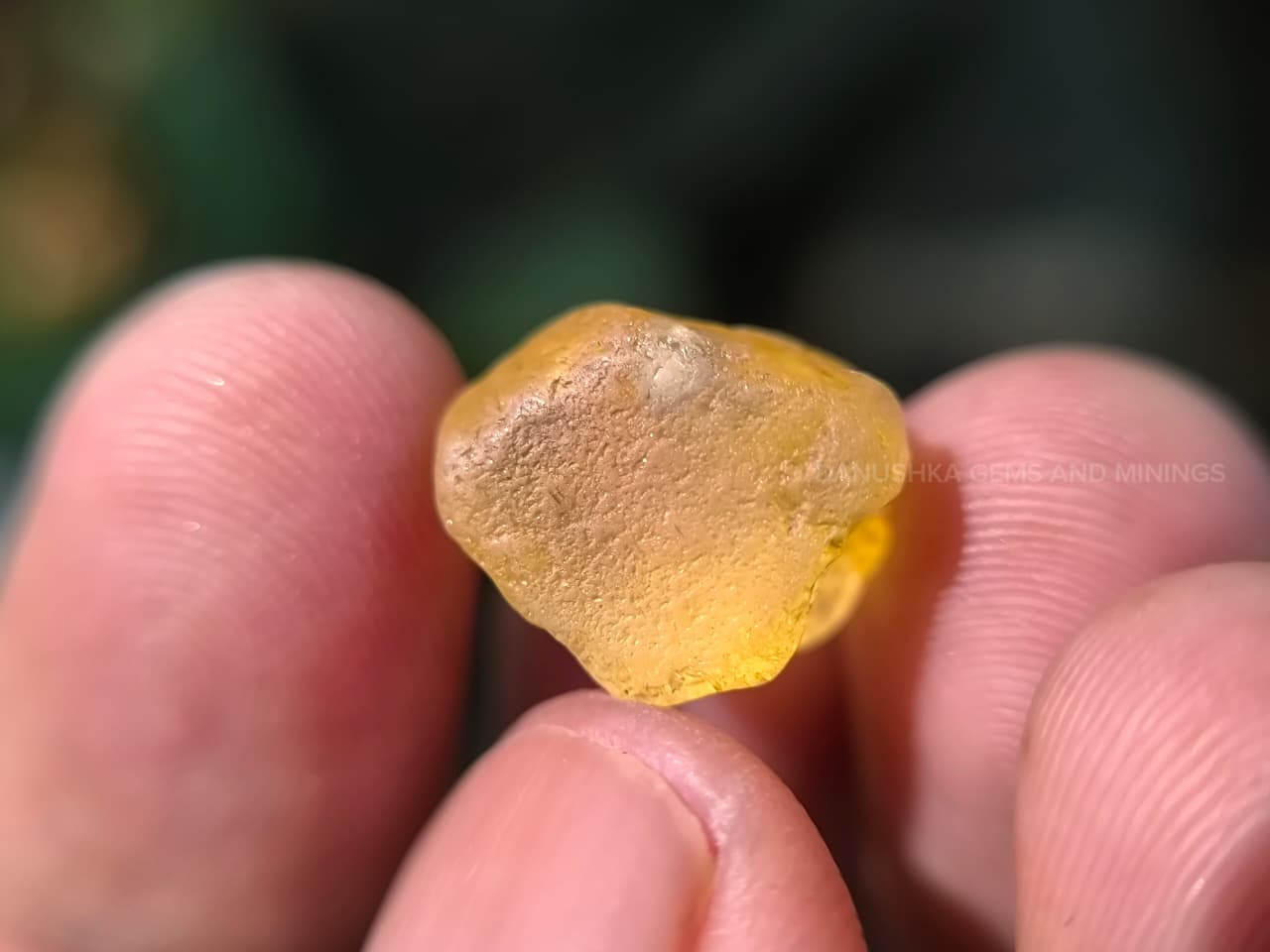
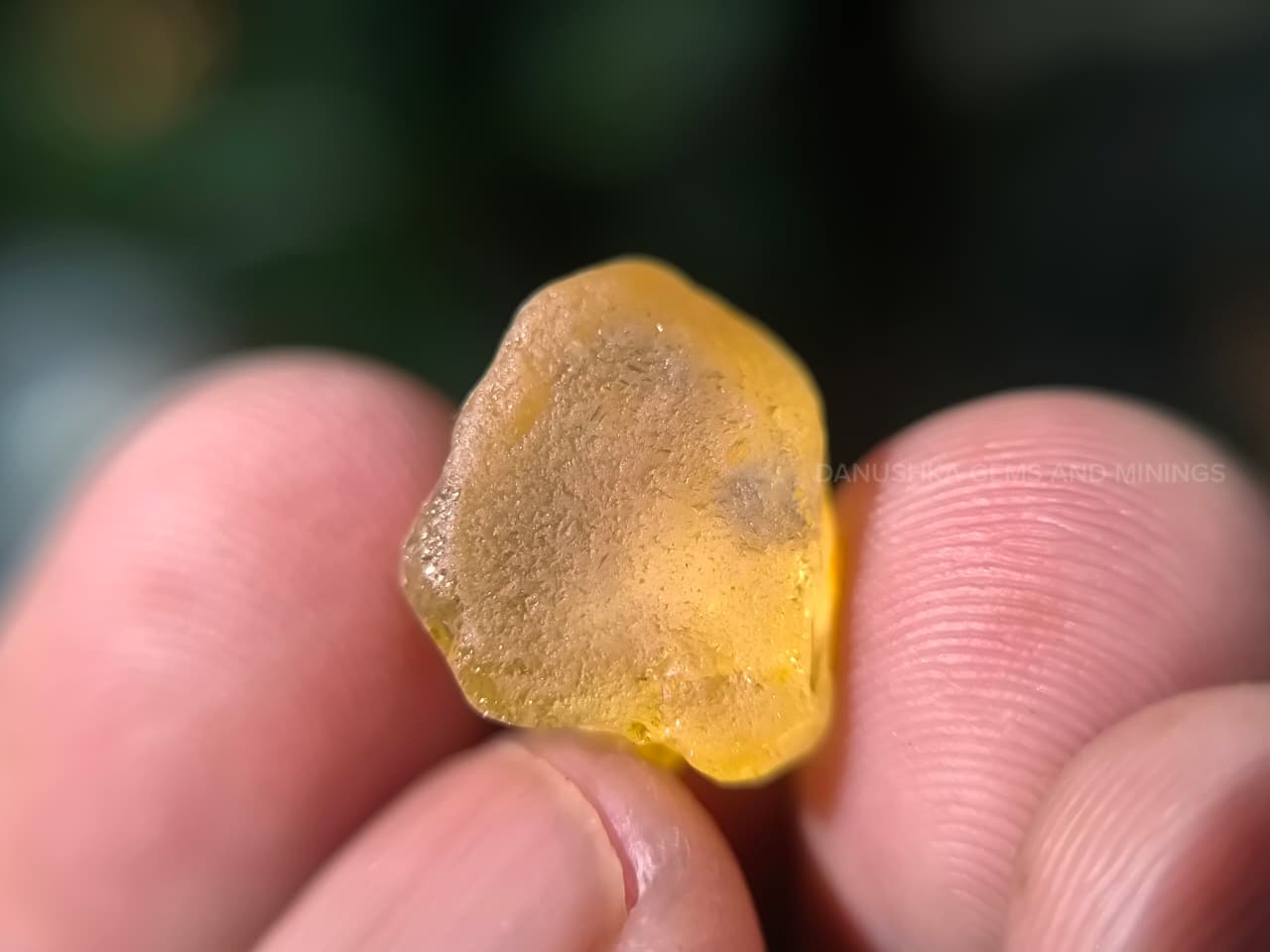
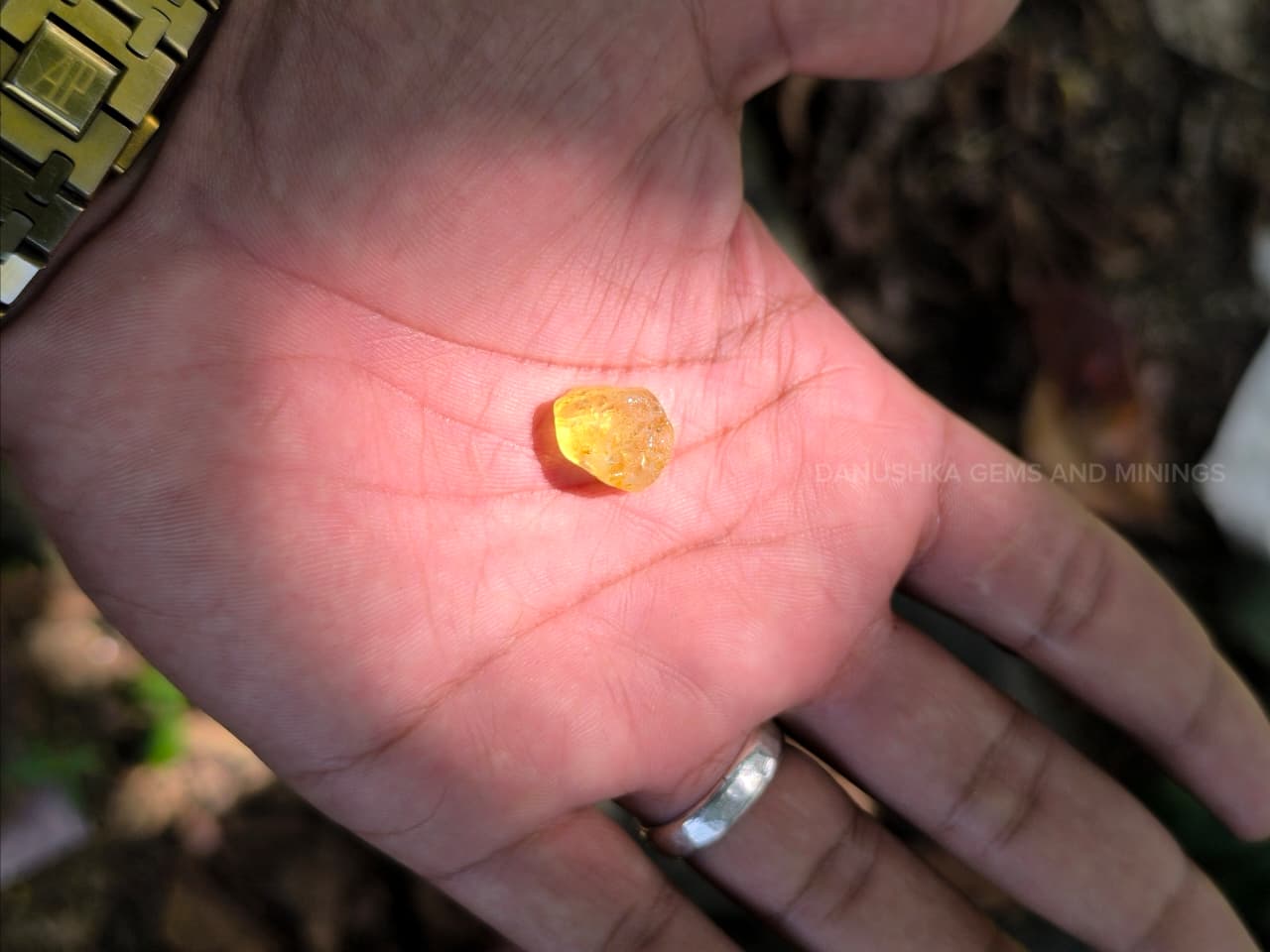
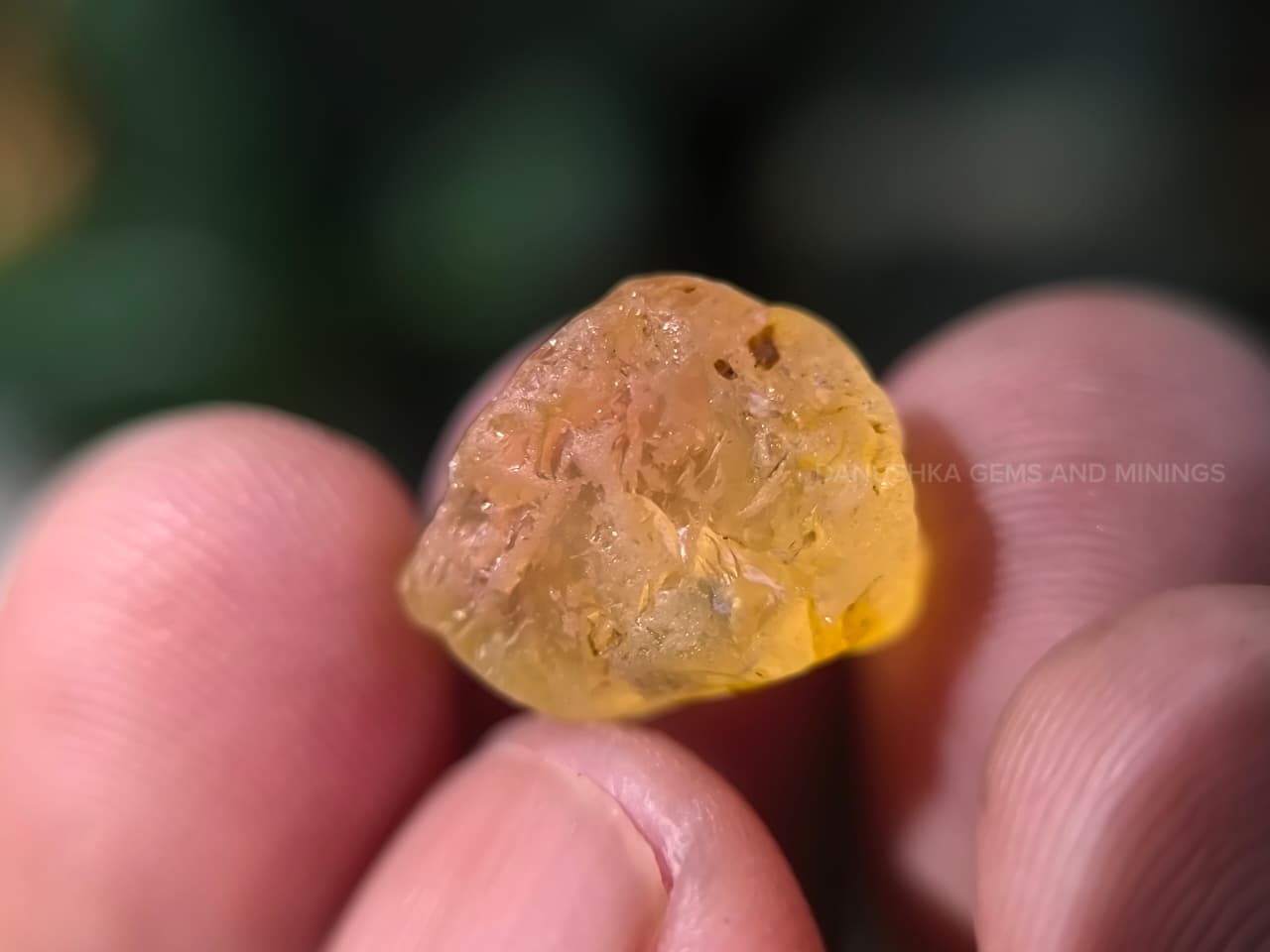
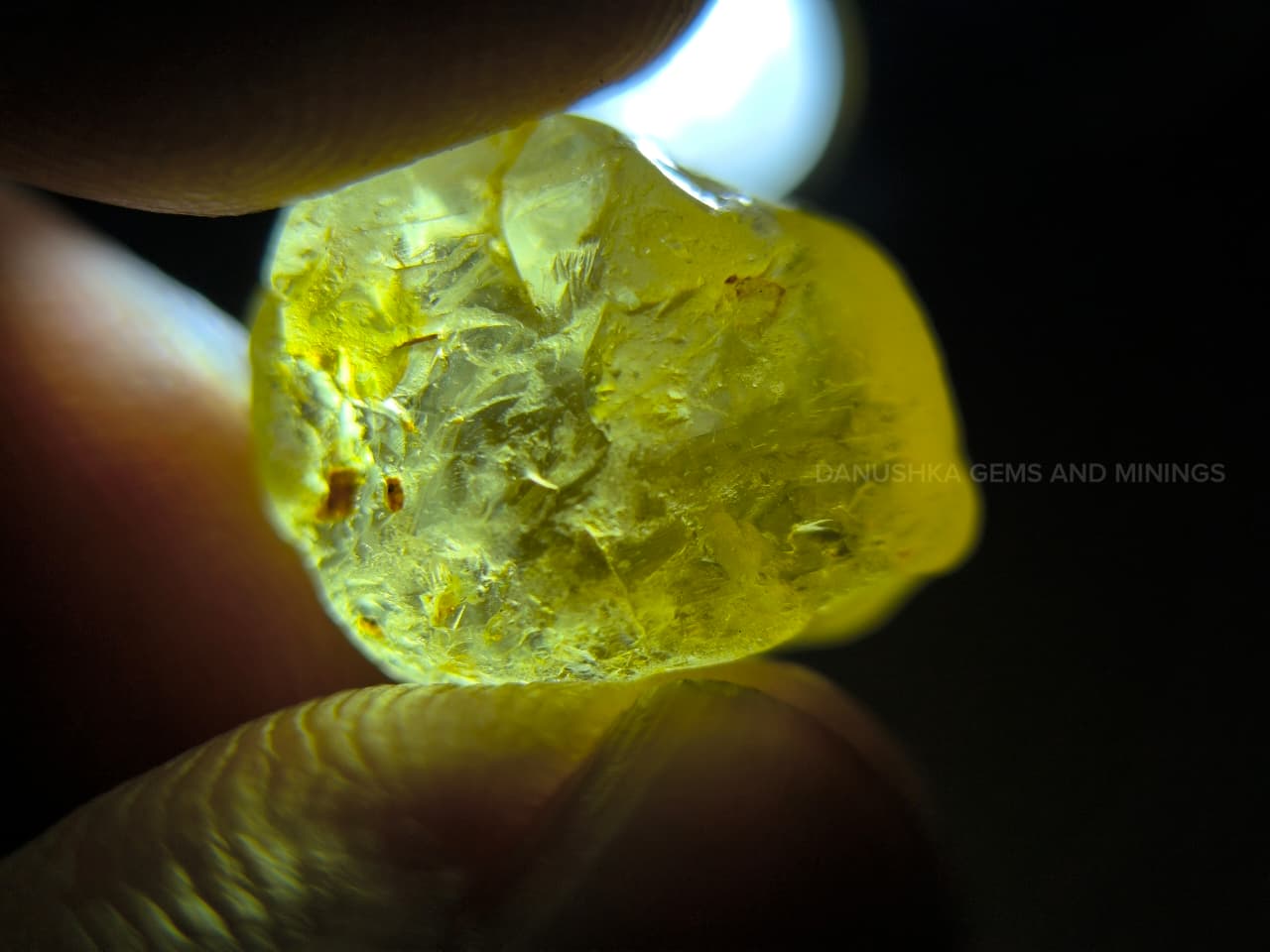
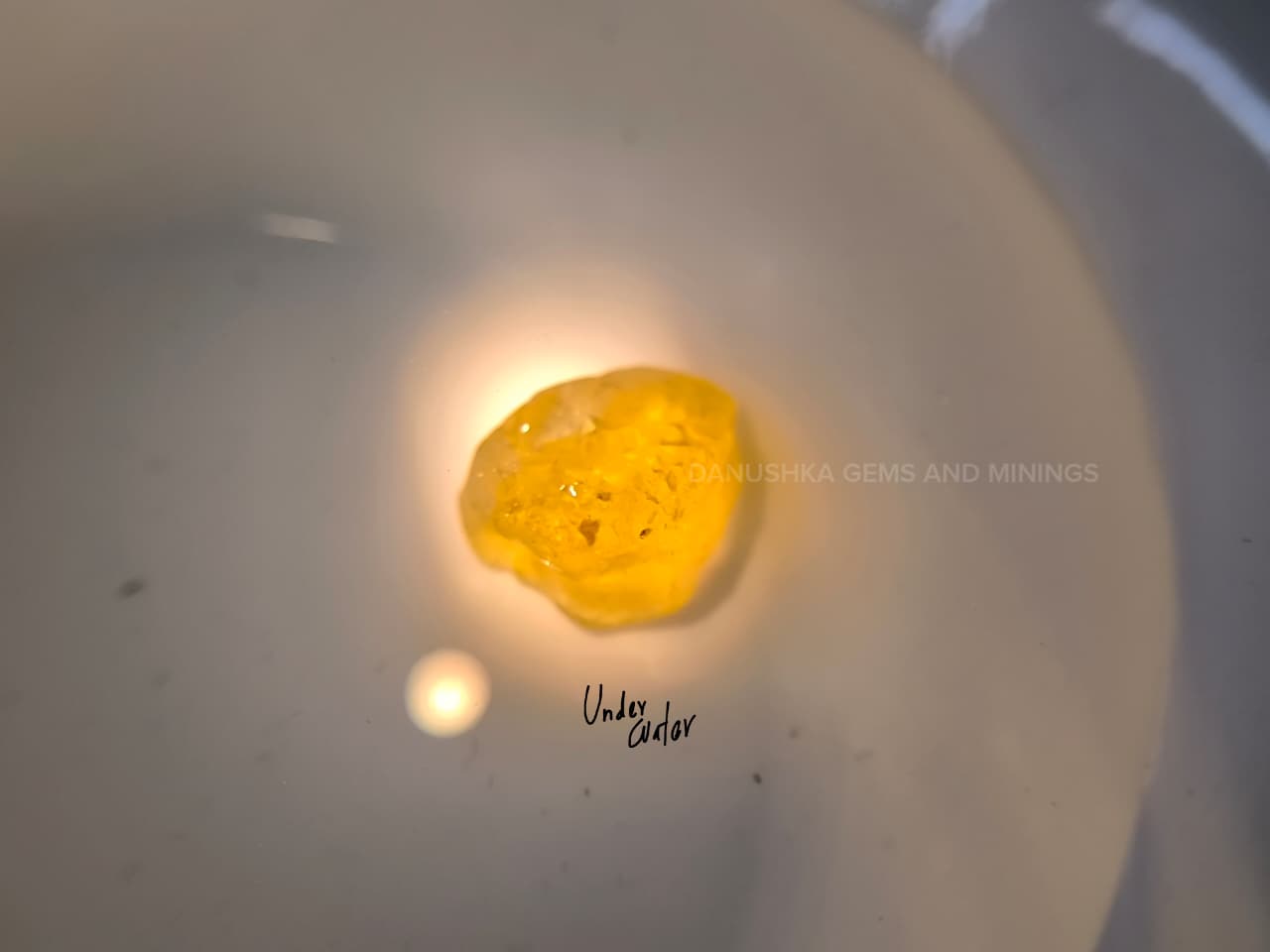
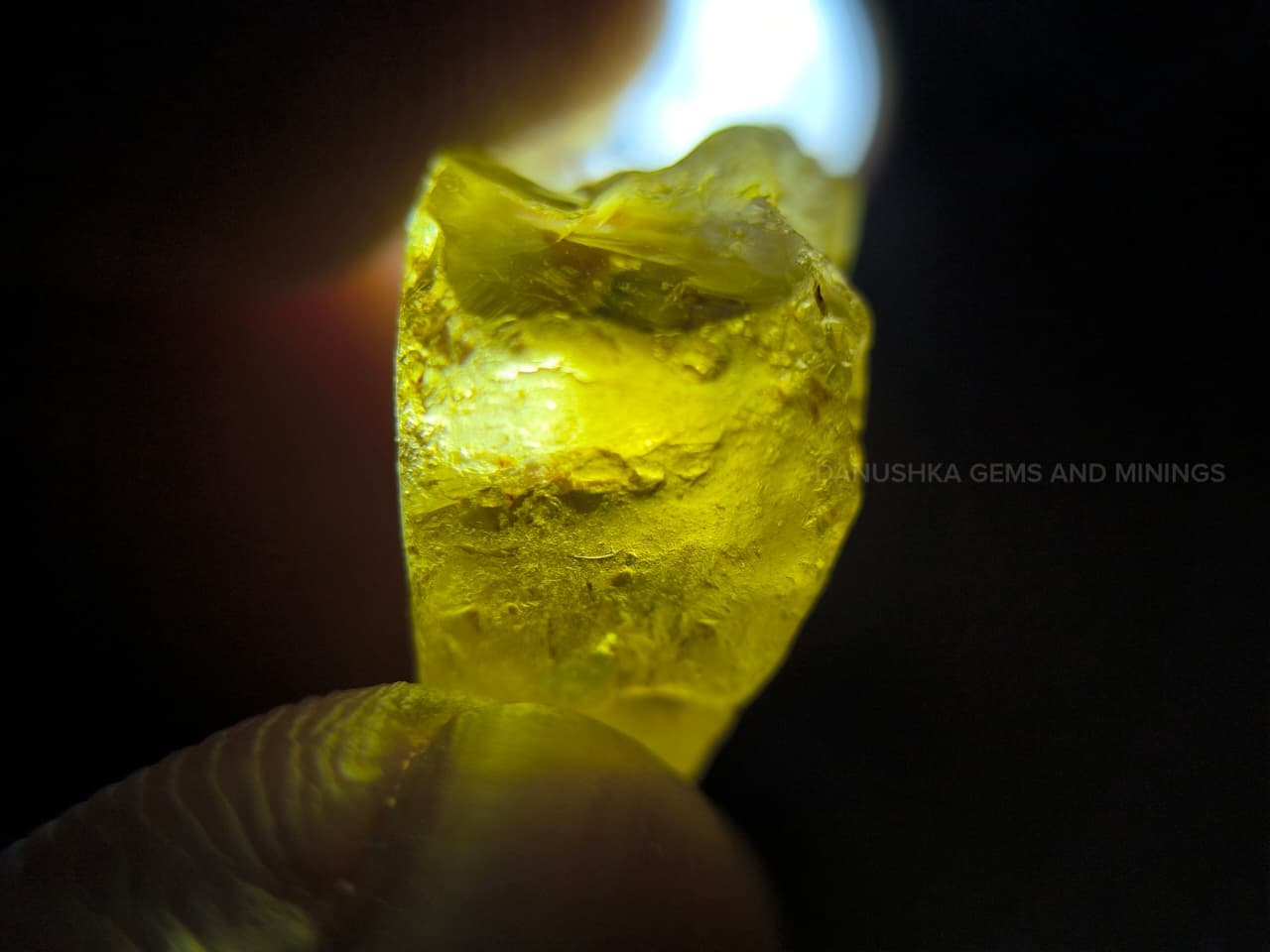
The supplied photographs show a golden-yellow appearance, particularly under strong illumination, with areas of transparency and visible internal features.
The final quality of a polished gemstone will depend on professional evaluation, orientation, cutting decisions and the material remaining after removal of unsuitable areas.
The treatment disclosure is Natural Unheated.
Color & Visual Characteristics
The primary visual characteristic of this sapphire is its warm yellow body color.
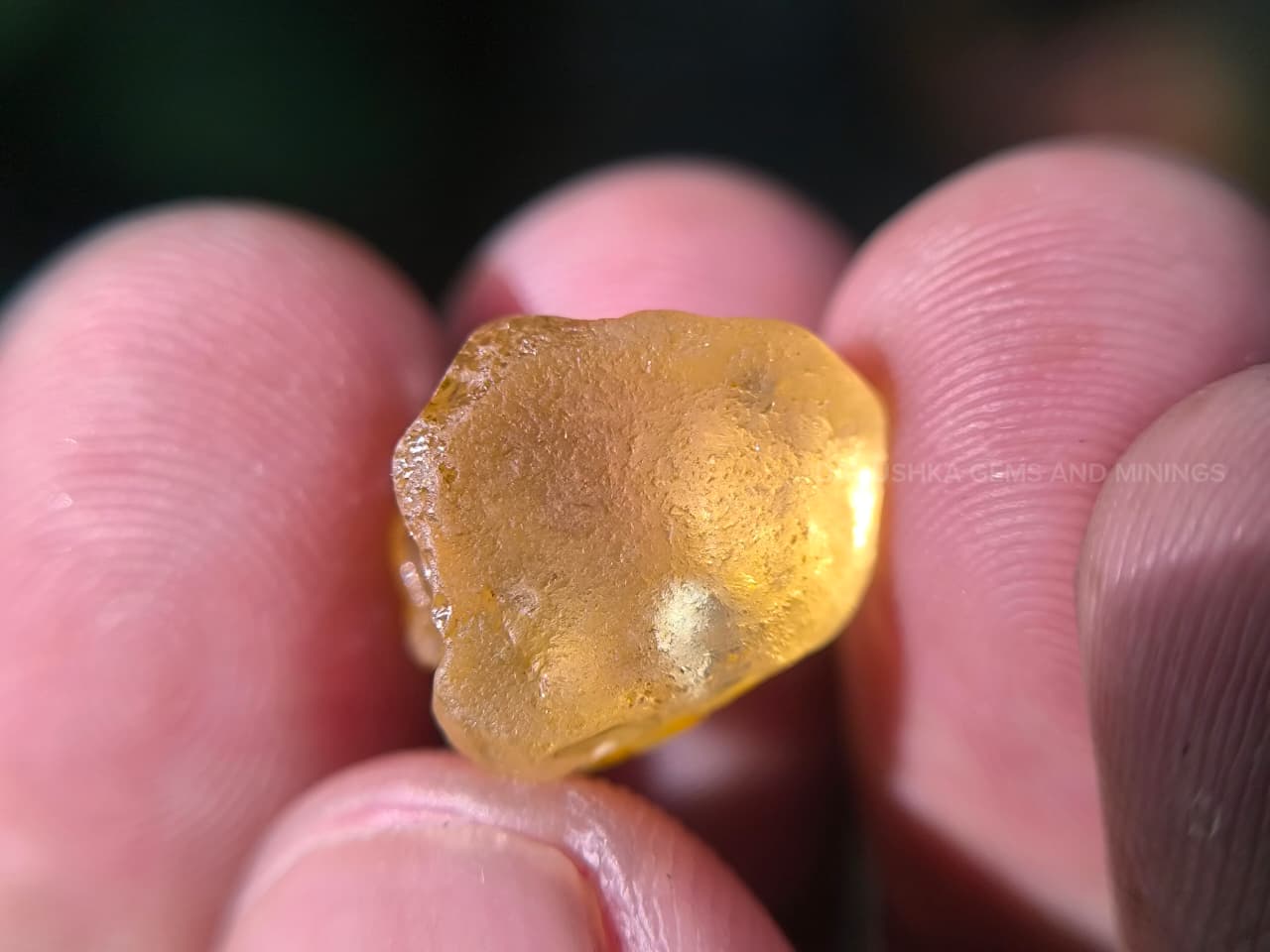
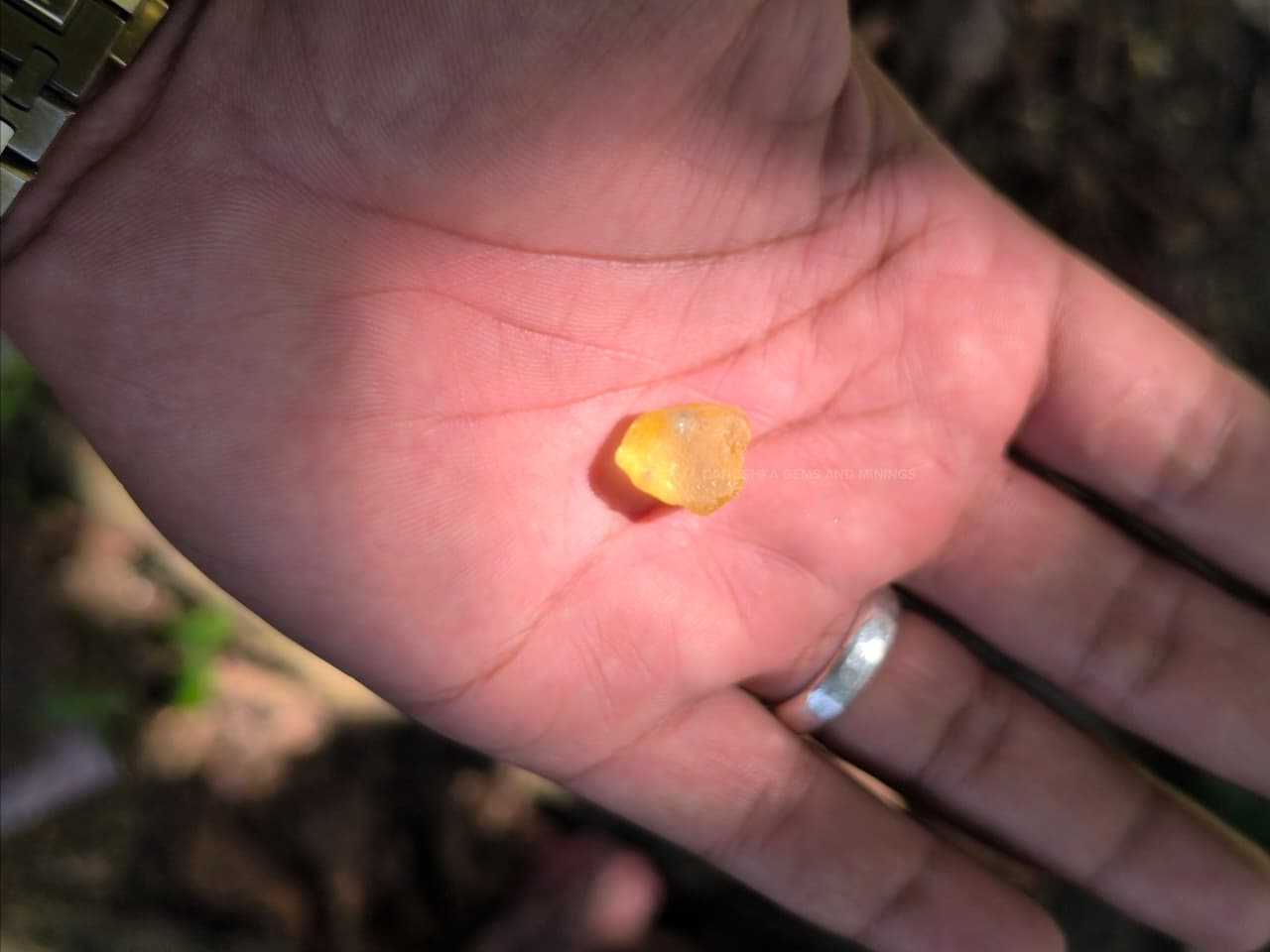
Under the photographed lighting, the rough displays tones ranging from soft golden yellow to brighter yellow, with some areas appearing slightly amber or honey-colored.
The stone’s appearance changes with the direction and intensity of illumination.
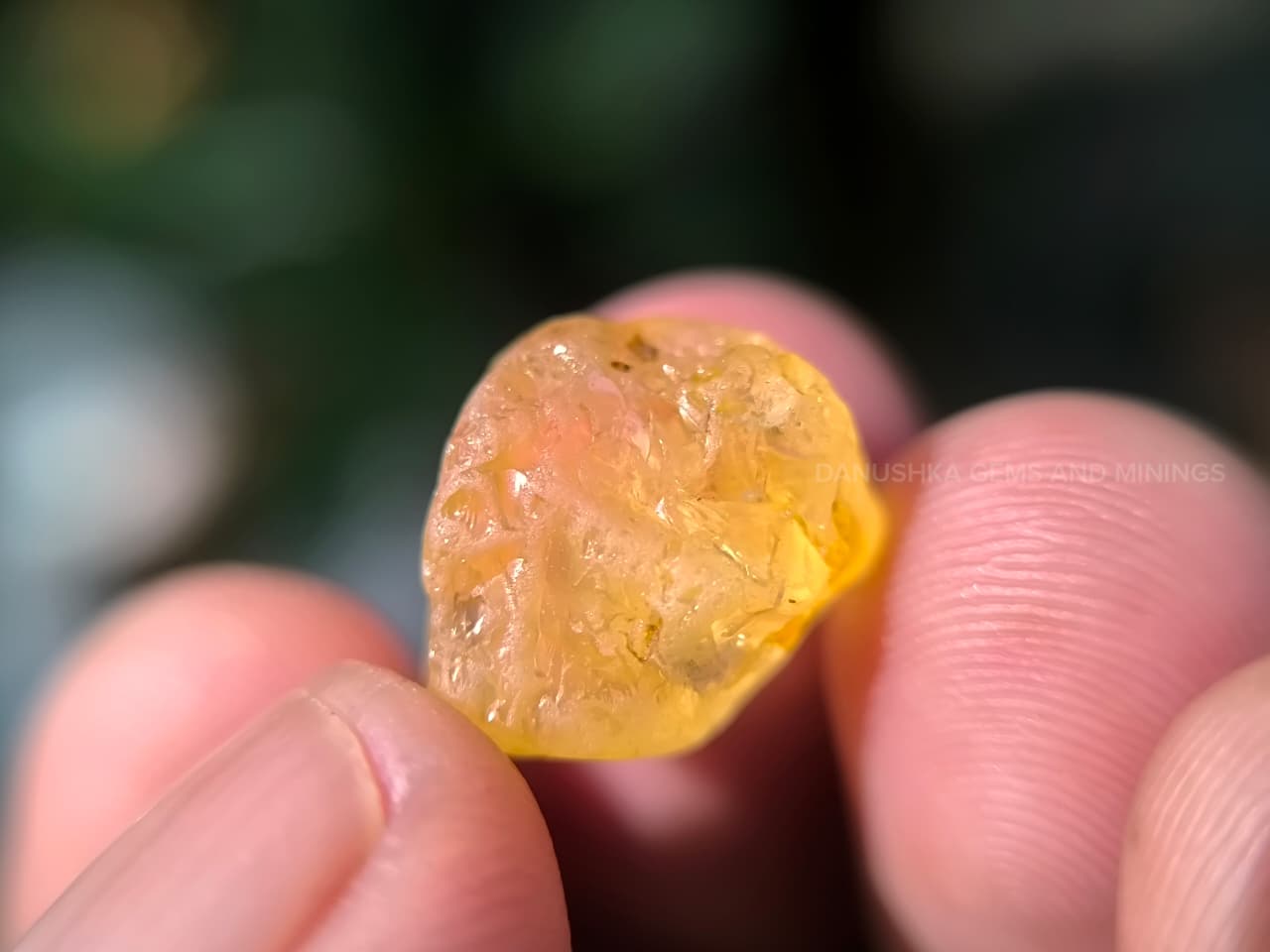
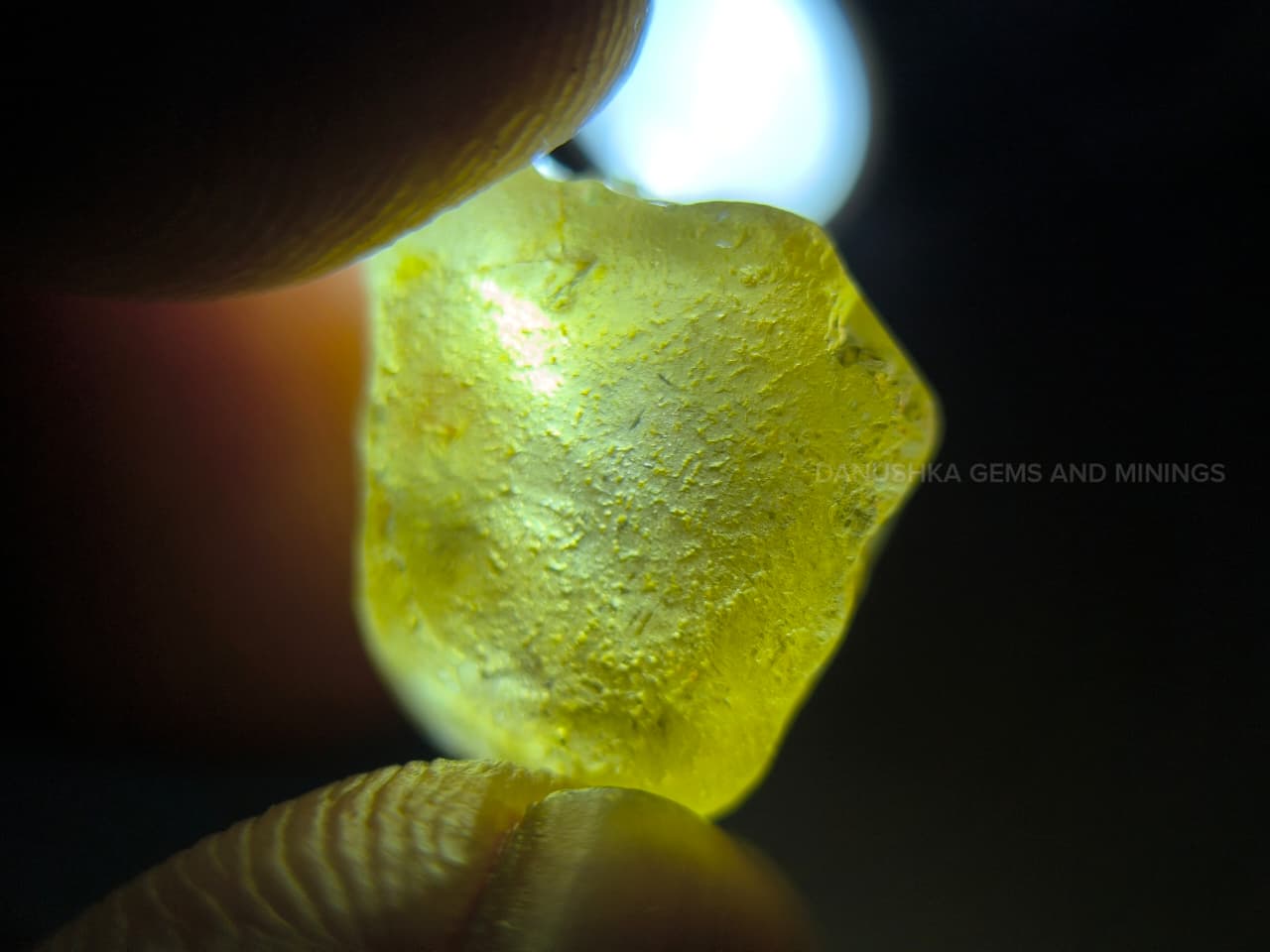
In the photograph taken on the palm, the sapphire displays a warm yellow glow, while the close-up photographs show more of its natural surface texture and internal characteristics.
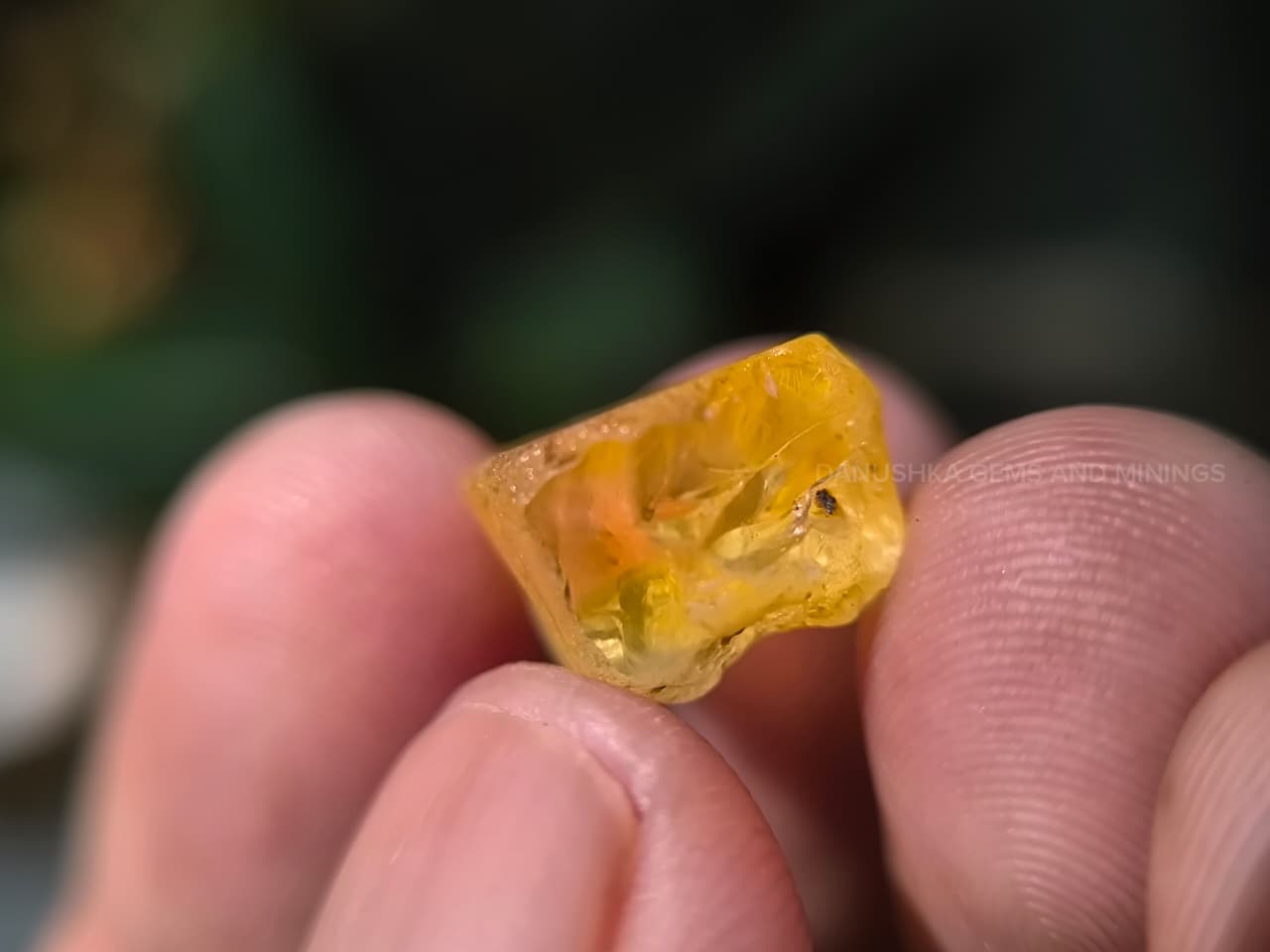
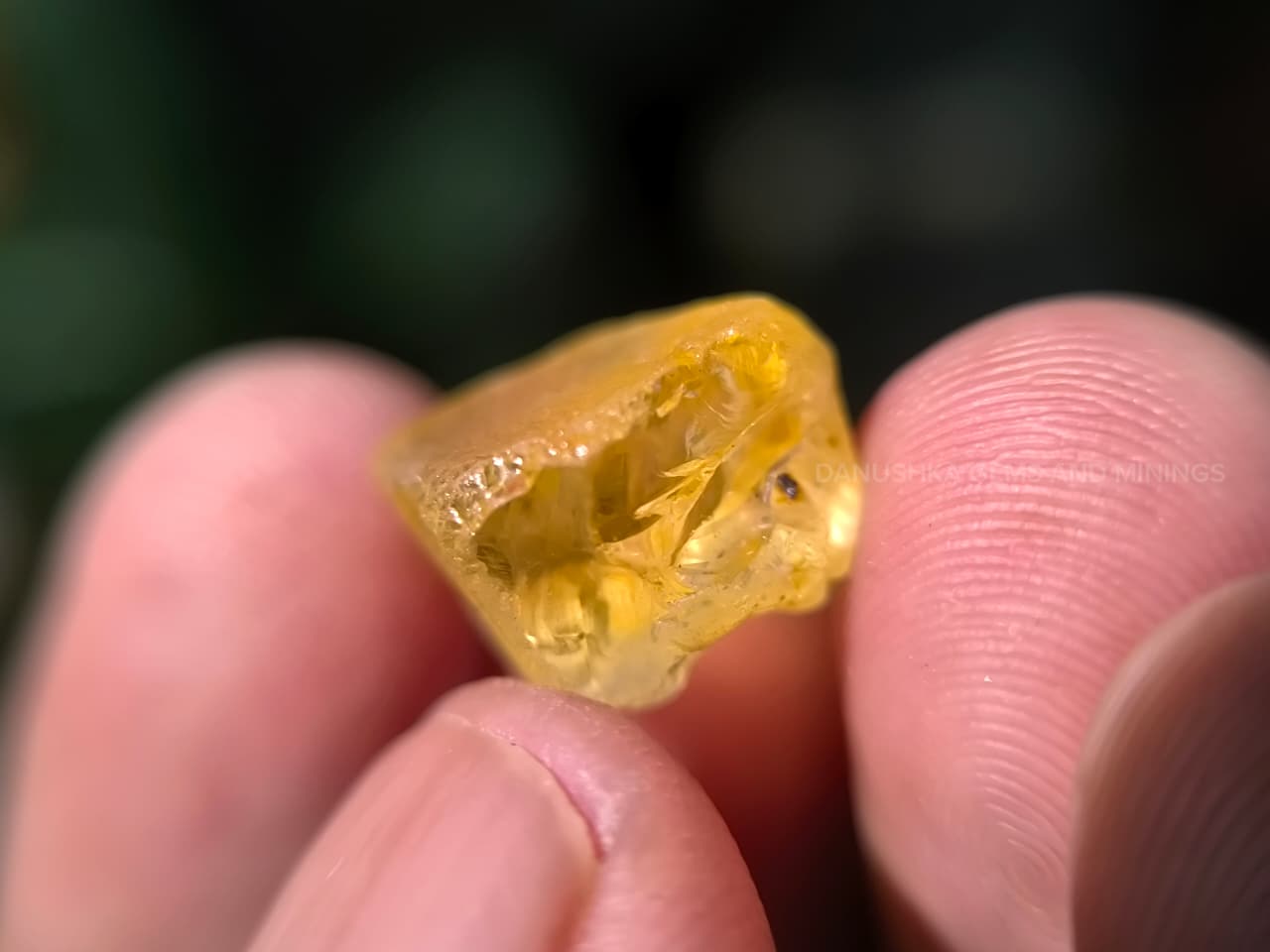
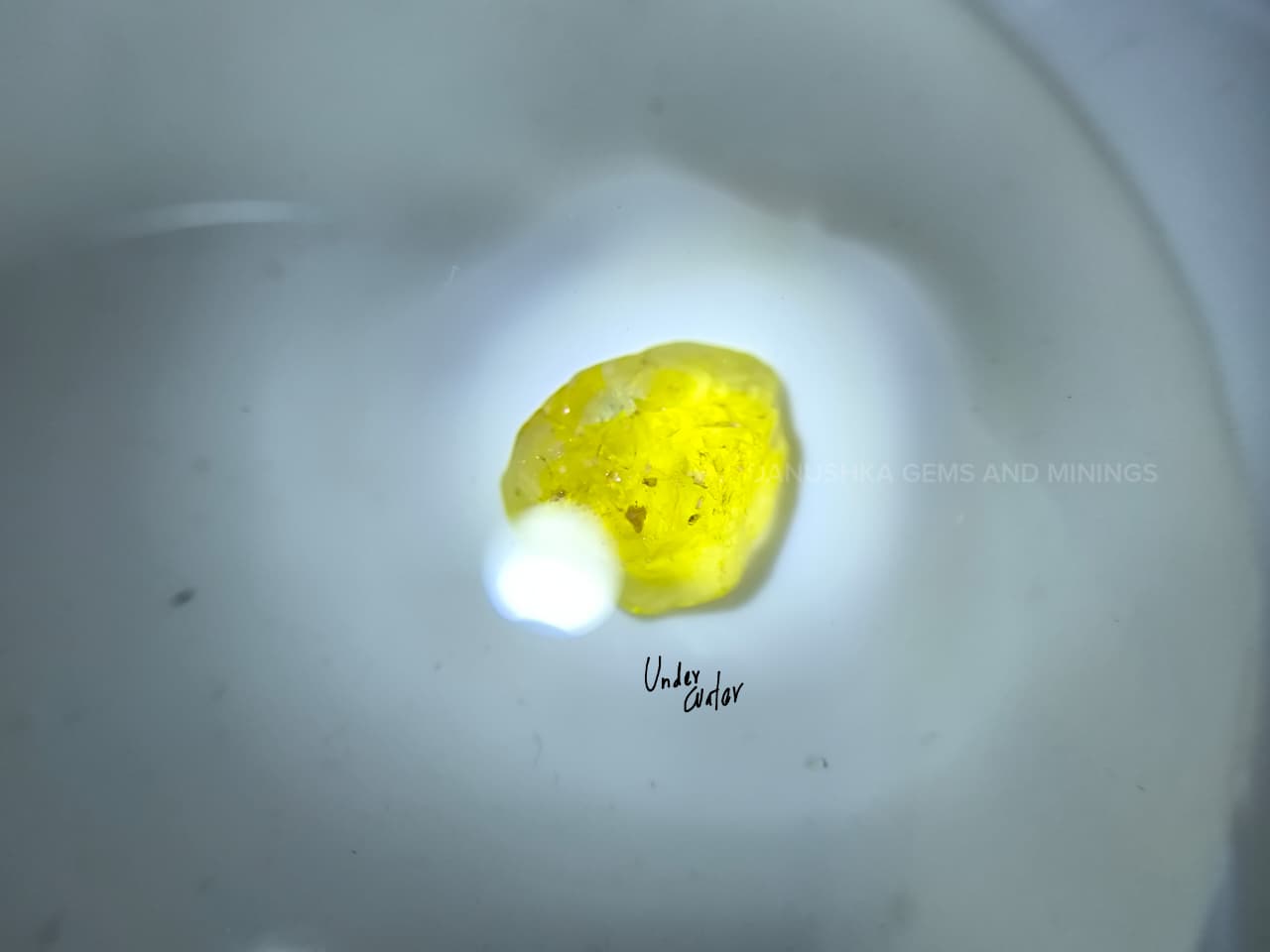
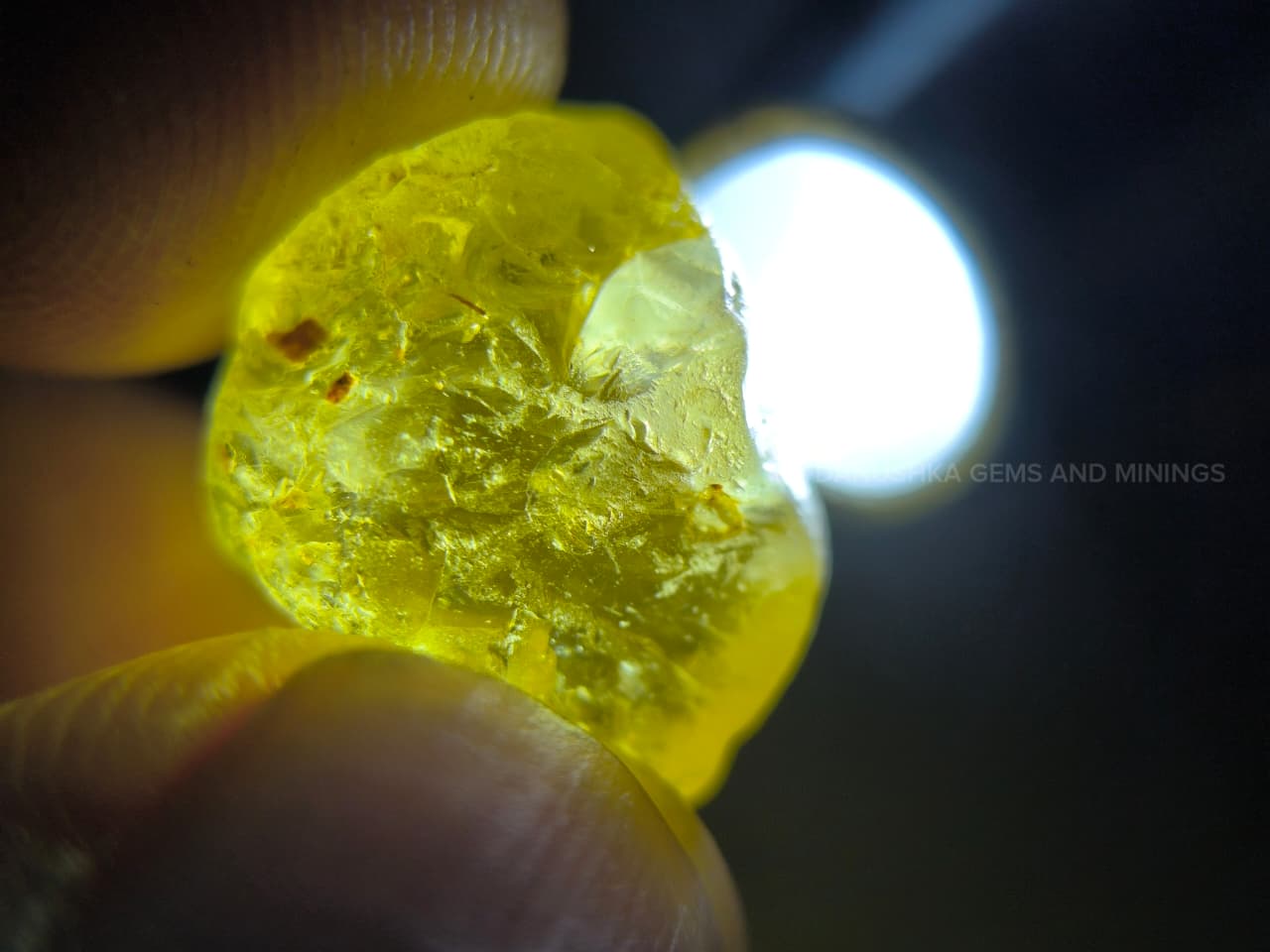
Under concentrated transmitted light, the material becomes brighter and more luminous, allowing the viewer to observe differences in transparency throughout the rough.
These differences are influenced by the stone’s natural shape, surface condition, internal features and lighting arrangement.
The photographs do not establish a color-change phenomenon.
In general gemology, yellow coloration in natural sapphire is commonly associated with iron-related color mechanisms and, in some cases, color centers. The precise cause of color in this individual stone has not been laboratory determined.
For faceting, the cutter should evaluate how the yellow color is distributed throughout the rough.
The direction of the finished gemstone, pavilion depth and overall proportions can influence the final appearance.
An appropriate cutting plan should aim to present the natural yellow color effectively while managing the stone’s internal features.
Internal & External Features
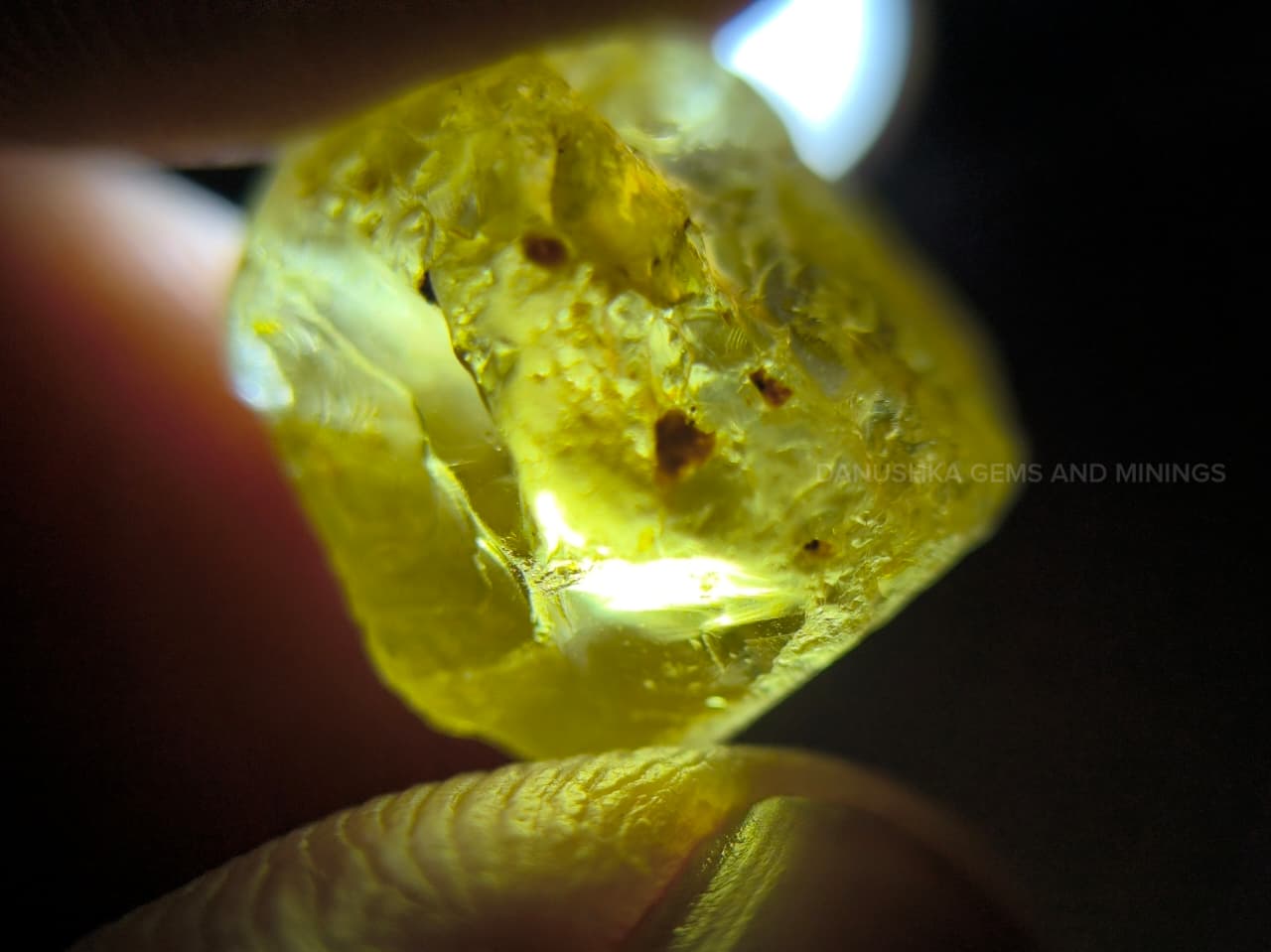
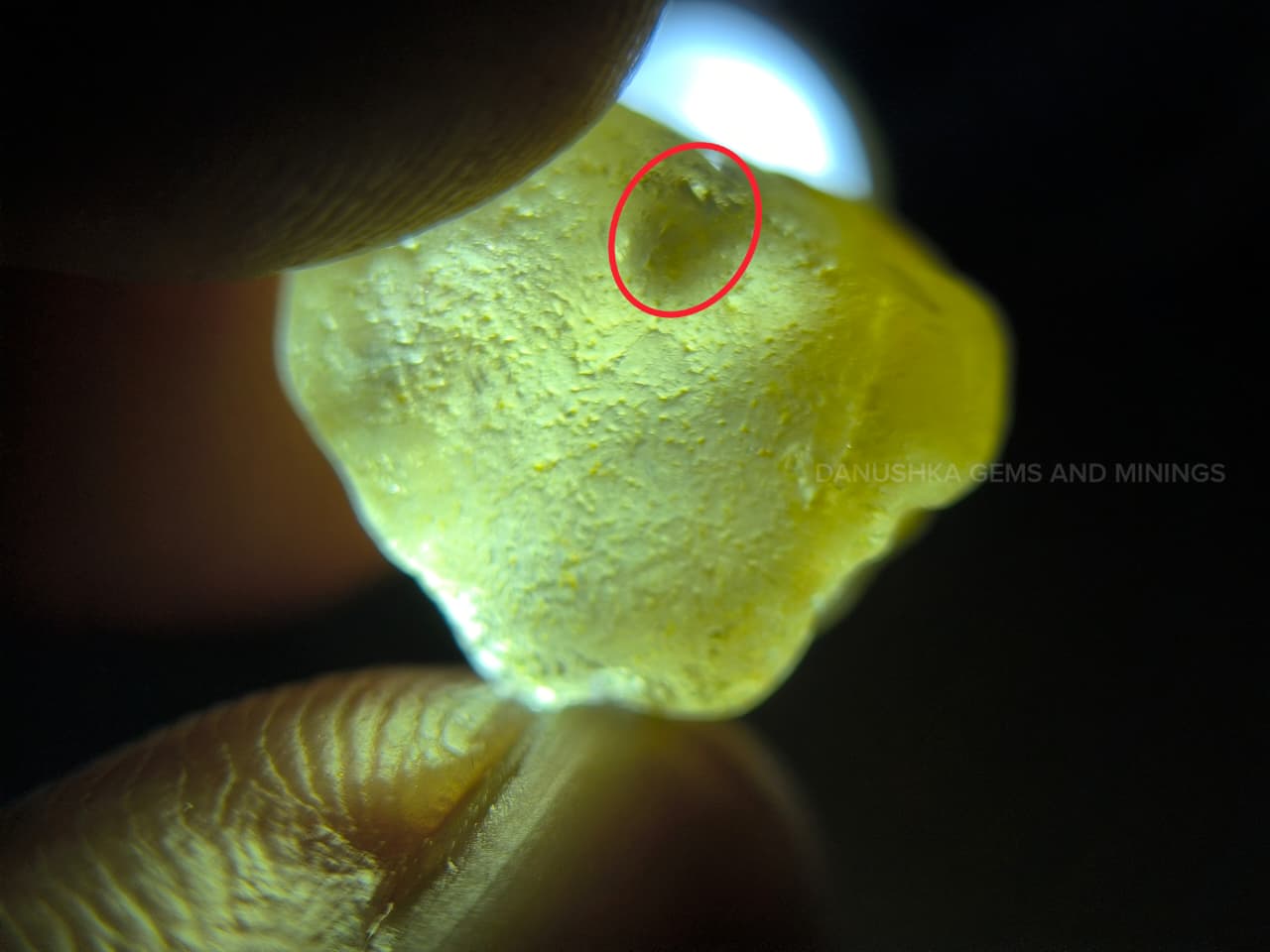
The sapphire retains its natural rough exterior, with irregular surfaces, small depressions and areas of uneven texture visible in the photographs.
Some portions appear relatively transparent when illuminated, while others display internal reflections and light-scattering features.
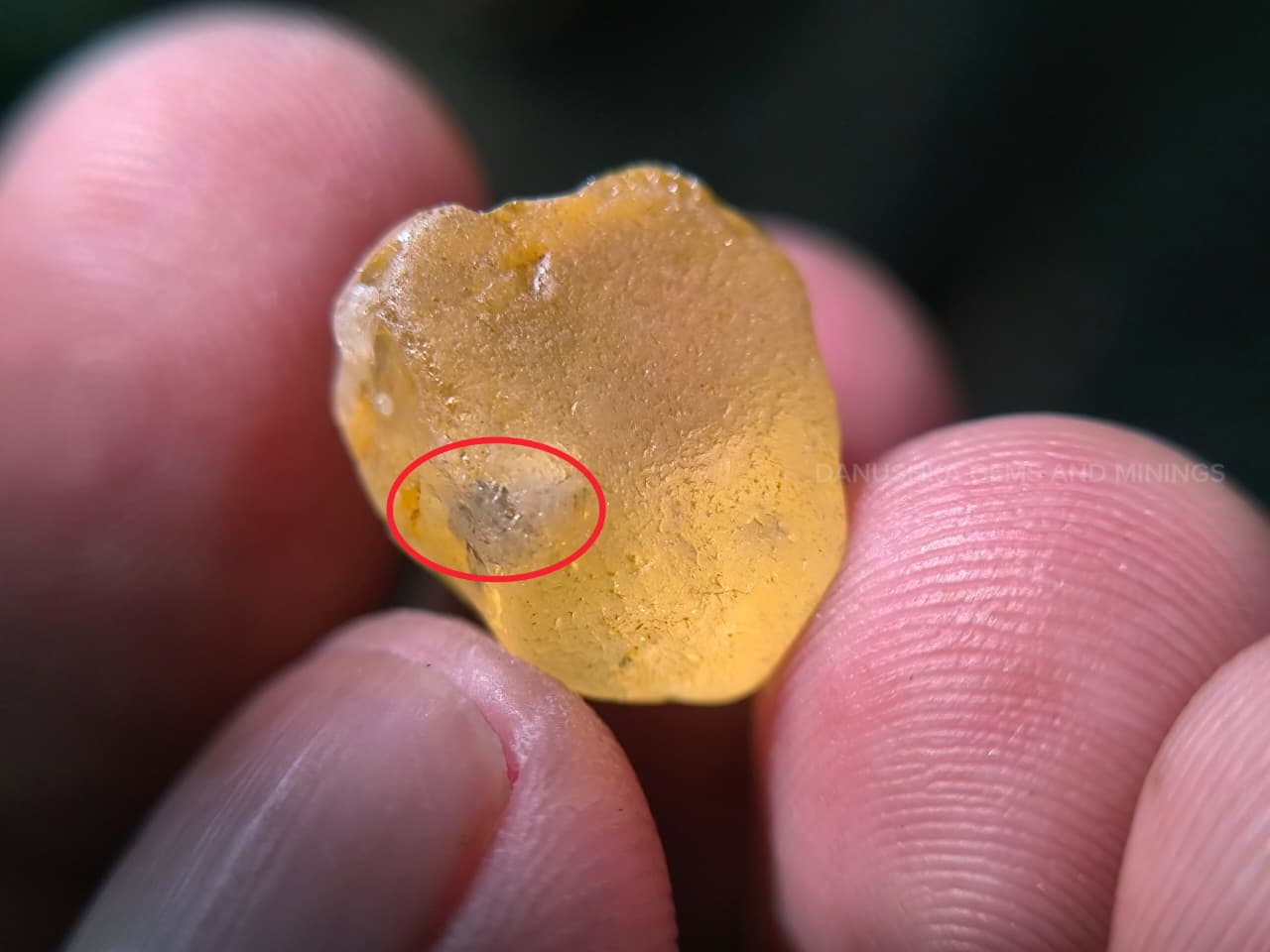
The close-up images also show several darker internal or near-surface features.
One localized feature has been specifically highlighted with a red circle in the supplied photographs.
Its appearance suggests an area requiring closer examination before cutting,
A separate transmitted-light image shows additional darker spots and reflective areas within the rough.
These characteristics should be evaluated using suitable magnification and lighting before the stone is preformed.
For a professional cutter, identifying the depth and position of such features is important because they may influence the choice of cutting orientation.
Some characteristics may be removed during preforming, while others may remain within the finished gemstone.
The final clarity cannot be determined from the supplied photographs.
Although the stone has been classified as excellent facet-grade rough, that designation should not be interpreted as a guarantee of a particular finished clarity grade.
Cutting Potential – Excellent Facet-Grade Yellow Sapphire Rough
This 15.10 ct natural yellow sapphire has been identified as excellent facet-grade rough.
Its measurements of 14.1 × 12.2 × 9.1 mm provide a substantial starting body for professional cutting evaluation.
However, successful faceting depends on more than the original rough weight.
The cutter must examine the stone’s natural geometry, color distribution, internal features and the position of any fractures or inclusions.
Rough orientation and color presentation
The first consideration is determining how the sapphire should be oriented to present its yellow body color effectively.
Sapphire can exhibit direction-dependent optical characteristics, and cutting orientation may influence the perceived color and brightness of the finished stone.
The cutter should evaluate the rough under different lighting conditions and from multiple directions before selecting the table position.
Evaluating the usable cutting body
The photographs show areas of transparency as well as visible internal and surface features.
A professional cutter should determine how much of the rough can be used while avoiding or minimizing potentially problematic characteristics.
The localized feature highlighted in the photographs deserves particular attention.
Its position relative to the proposed table, girdle and pavilion may influence the eventual cutting plan.
Shape and design considerations
The irregular natural outline does not establish a particular finished gemstone shape.
Depending on the actual internal structure and orientation, a cutter may consider different faceting designs.
The choice should be made after examining the material rather than selecting a shape based only on its external dimensions.
The cutting plan should consider visual balance, color distribution, pavilion proportions and practical weight retention.
Depth and weight retention
At 9.1 mm in measured rough depth, the stone provides material for evaluating different faceting arrangements.
Nevertheless, not all of this depth will necessarily remain in the finished gemstone.
Material must be removed during preforming, shaping, faceting and polishing.
Additional losses may occur if internal features or surface irregularities need to be removed.
For this reason, no finished carat weight or recovery percentage is guaranteed.
Professional lapidary evaluation
The excellent facet-grade classification makes this sapphire relevant to professional cutters looking for natural yellow corundum rough.
The best approach is to examine the stone individually and establish a cutting plan that balances its natural color, usable body, internal characteristics and finished appearance.
Custom cutting can be arranged where suitable.
Origin & Source Story
This yellow sapphire originates from Marapana village around mining in Sri Lanka.
Marapana is associated with the wider gemstone-producing landscape of the Ratnapura region, an area internationally recognized for its long history of sapphire and other gemstone production.
Sri Lanka, historically known as Ceylon, has supplied natural gemstones to international markets for centuries.
Its gemstone-producing areas are known for a wide range of corundum colors, including blue, yellow, pink, purple, green and mixed-color sapphires.
Yellow sapphire has an established place within the Sri Lankan gemstone trade, both as faceted jewelry material and as rough purchased by professional cutters and dealers.
At the source-market level, rough sapphires are commonly examined using concentrated light, magnification and practical cutting experience.
Experienced buyers consider the stone’s color, transparency, internal characteristics, available depth and expected cutting difficulties before making purchasing decisions.
Danushka Gems & Minings works within this source-connected environment, visiting gemstone-producing villages and maintaining relationships with local miners, mine owners, gemstone buyers and source dealers.
Our work focuses on evaluating each gemstone according to its individual characteristics.
For this 15.10 ct yellow sapphire, the combination of its natural yellow appearance, excellent facet-grade classification and original unheated condition makes professional faceting evaluation the primary objective.
Treatment, Cutting & Certification Notes
Treatment Status: Natural Unheated
This 15.10 ct Ceylon yellow sapphire is supplied as natural unheated rough.
No heat treatment.
Heat treatment is widely used within the sapphire industry to modify or improve certain color and clarity characteristics, but not all sapphire material requires treatment.
Natural unheated sapphires are an established category within the international gemstone market.
The treatment status of this particular stone is based on the direct source disclosure and has not been independently verified through a laboratory report yet.
Professional gemological testing may be arranged where suitable.
Cutting Status: Natural Rough
The sapphire has not yet been faceted.
Its original weight is 15.10 ct, and the finished weight will depend on cutting orientation, removal of unsuitable material, faceting design and polishing.
No finished shape or recovery percentage has been established.
Custom cutting may be arranged following professional evaluation.
Certification
Independent gemological certification may be arranged where appropriate, with any future findings dependent on the laboratory’s examination.
Why This Stone Is Interesting
This 15.10 ct Ceylon yellow sapphire rough is particularly relevant to gemstone cutters and dealers interested in natural unheated sapphire material.
Its excellent facet-grade classification, warm yellow appearance and substantial rough dimensions provide a starting point for professional faceting evaluation.
The visible internal features also make the stone an example of why rough gemstone assessment requires more than judging color or external shape.
For jewelers and designers, the material offers the possibility of developing a custom-cut yellow sapphire, subject to the final cutting outcome.
For collectors and gemstone enthusiasts, the rough illustrates the original condition of a natural Sri Lankan sapphire before lapidary processing.
Source & Ethical Position
Danushka Gems & Minings is built around practical gemstone sourcing, careful evaluation and direct engagement with Sri Lankan gemstone-producing communities.
Our approach involves traveling through source areas, maintaining relationships with local gemstone participants and assessing rough stones individually.
We recognize that each gemstone has different characteristics and cutting requirements.
Rather than relying only on external appearance, we consider color, internal features, cutting orientation and realistic finished potential.
Treatment disclosure and accurate origin information are important parts of this process.
For gemstones suitable for professional cutting, we can help arrange lapidary work and certification services where appropriate.
We do not guarantee cutting recovery, finished clarity or treatment outcomes without proper evaluation.
Our objective is to connect natural gemstones from Sri Lankan source areas with buyers, cutters, jewelers and collectors through practical knowledge and transparent presentation.
Frequently Asked Questions
Yes. The stone is supplied as natural unheated yellow sapphire rough. Independent laboratory confirmation can be provided on request.
It comes from Marapana village around mining in Sri Lanka, within the country's established gemstone-producing region.
The stone is classified as excellent facet-grade rough. Its final cutting suitability, shape and recovery should be determined through professional examination.
The original rough weighs 15.10 ct and measures 14.1 × 12.2 × 9.1 mm.
Professional cutting and independent gemological certification may be arranged where suitable. The finished weight, clarity and laboratory findings cannot be guaranteed in advance.