
Introduction
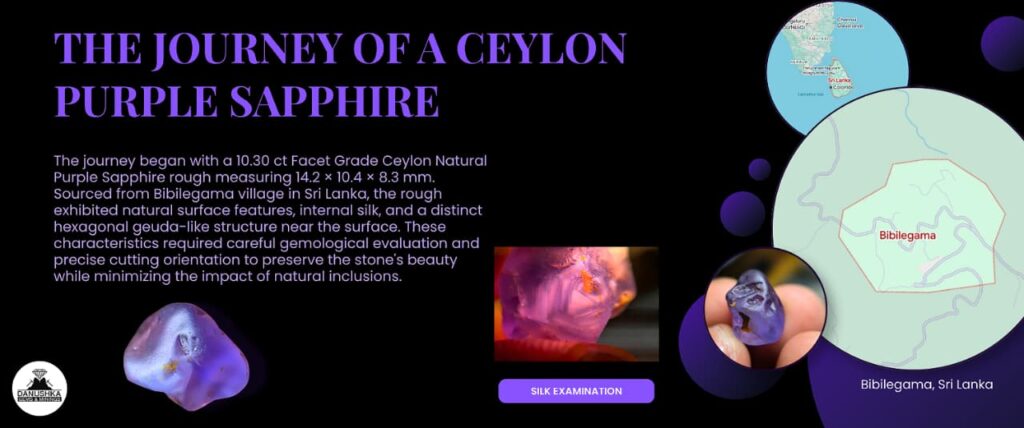
This gemstone journey began with a Facet Grade Ceylon Natural Purple Sapphire rough weighing 10.30 ct and measuring 14.2 × 10.4 × 8.3 mm. The rough sapphire was sourced from Bibilegama village around mining in Sri Lanka, an area known within Sri Lankan gem trading for natural alluvial sapphire material.
At first inspection, the rough showed a strong purple body color with a visible purple to pink visual shift under incandescent and fluorescent lighting. The stone also showed areas of internal silk and geuda-like structure near the surface, including a noticeable hexagonal silk/geuda feature. Because of this, the cutting process needed careful planning. This was not a stone to cut quickly only for weight. It needed correct orientation, surface removal, color direction study, and discussion between the buyer, cutter, and Danushka Gems & Minings.
The customer from the Netherlands purchased this sapphire as rough, and the stone was later finished through Danushka Gems & Minings’ cutting process. The final result became a 4.10 ct natural unheated octagon purple sapphire, measuring 8.9 × 7.5 × 6.1 mm, with excellent cutting and a rich purple face-up appearance.
Rough Sapphire Details Before Cutting
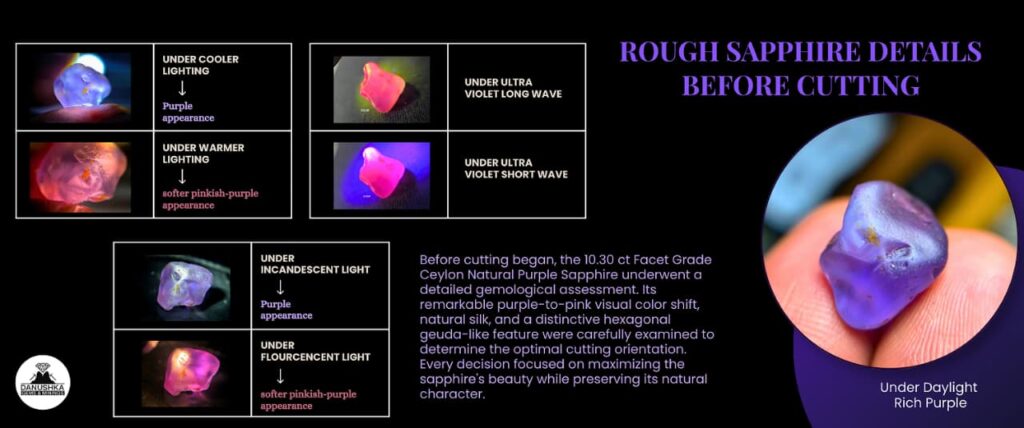
The original rough weighed 10.30 ct and measured 14.2 × 10.4 × 8.3 mm. It was presented as facet-grade Ceylon natural purple sapphire rough, with unheated treatment status and clear cutting potential.
The color was one of the most important features of this rough. Under different light sources, the stone showed a purple to pink visual color shift. In some lighting, the purple appeared stronger and richer, while under other light the stone showed a softer pinkish-purple feeling. This kind of visual behaviour can make cutting more interesting, but it also creates responsibility for the cutter. The final orientation must support the best face-up color, not only the heaviest finished weight.
The rough also showed natural surface features, internal silk, and a geuda-like zone near the surface. One important area was the hexagonal silk/geuda feature, which needed to be studied carefully before preforming.
Gemological and Practical Examination
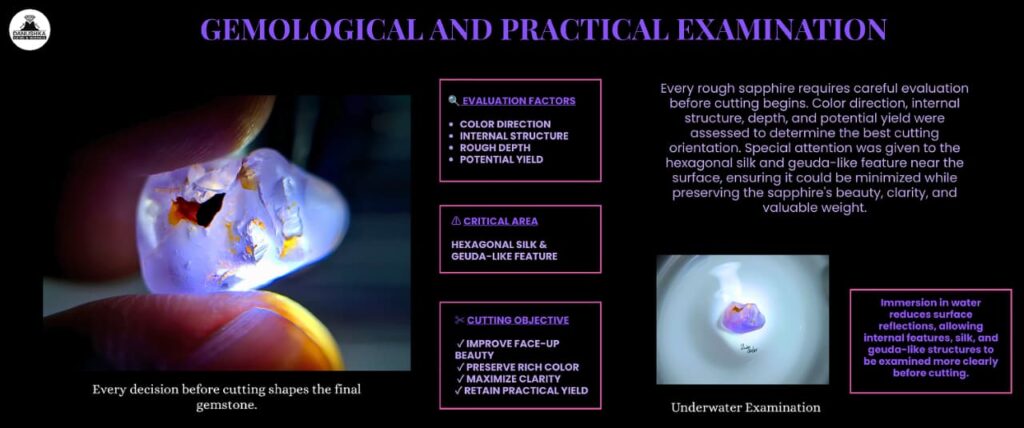
Before cutting, the stone was examined carefully for color direction, internal structure, depth, and possible yield. The main question was how to remove the weaker or problematic surface area while keeping enough depth and body color for a beautiful finished gem.
The hexagonal silk/geuda area near the surface was an important point. If left in the wrong position, it could affect the final clarity, face-up beauty, or polish result. The cutter had to study whether this area could be removed during preforming without losing too much useful weight.
This type of rough evaluation is very different from buying a finished sapphire. With a cut stone, the final color, clarity, shape, and weight are already visible. With rough sapphire, every decision affects the final result. The seller must describe the rough honestly, the buyer must understand the risk, and the cutter must make the best practical decision from the natural material available.
Cutting Decision: From Cushion Idea to Octagon Shape
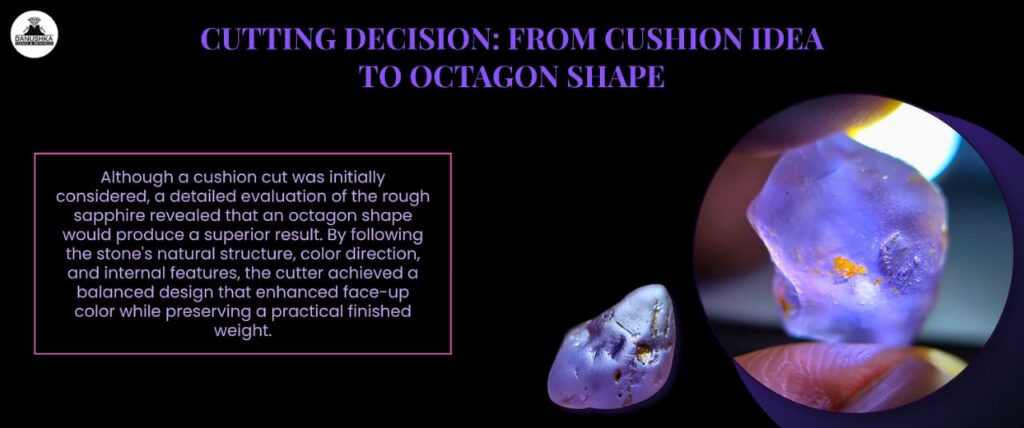
At the beginning, a cushion shape could have been considered because of the rough body. However, after careful examination and discussion with the cutter, the final decision changed. During preforming, the stone’s natural shape, internal structure, color direction, and surface features showed that an octagon shape would be a better result.
This is a normal part of rough sapphire cutting. The best shape is not always decided before the first stage of cutting. Sometimes the stone itself guides the final shape after surface removal and orientation study. In this case, the cutter followed the stone’s natural structure instead of forcing a cushion shape.
The octagon shape helped balance the body color, preserve a practical finished weight, and position the richer purple color more effectively in the finished sapphire.
Cutting Process and Responsibility
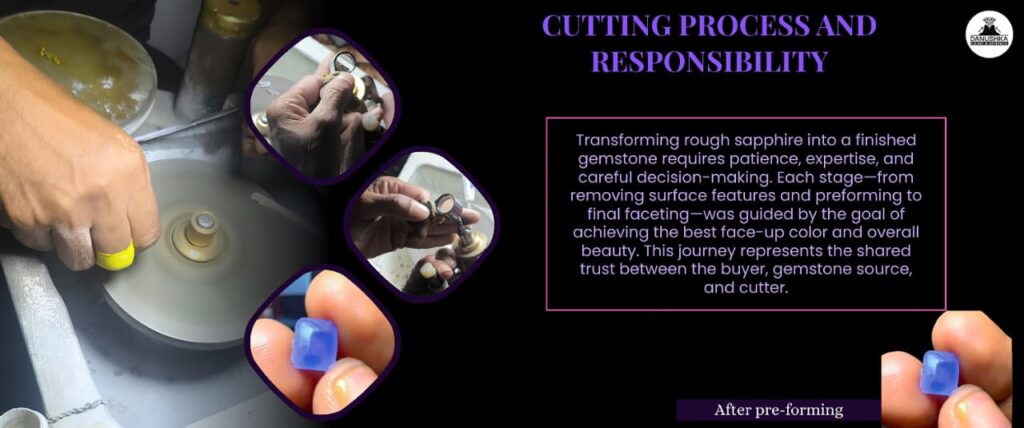
The cutting process required careful step-by-step handling. The cutter had to remove the near-surface geuda/silk area, study the internal body, and direct the stone toward the best face-up color. Each stage of preforming and faceting had to be handled with patience.
This is why rough-to-finished gemstone journeys are built on trust. The buyer from the Netherlands purchased the stone as rough, understanding that cutting carries uncertainty. Danushka Gems & Minings handled the stone with source-connected knowledge and cutting coordination, while the cutter made the technical decisions needed to bring out the best result.
Rough gemstone buying is not only about price and carat weight. It is a shared journey of observation, risk, planning, and practical decision-making.
Final Finished Sapphire Details
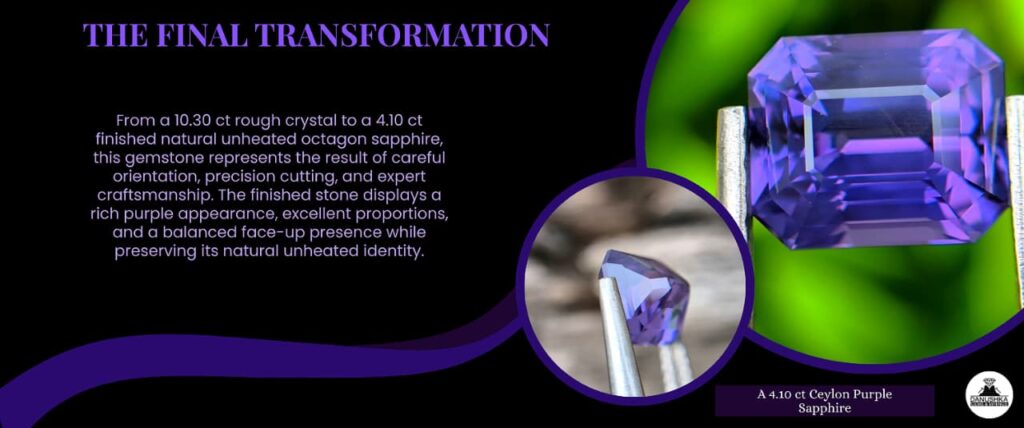
After cutting and polishing, the original 10.30 ct purple sapphire rough became a finished 4.10 ct natural unheated purple sapphire, measuring 8.9 × 7.5 × 6.1 mm.
The final gemstone was cut as an octagon with excellent cutting quality. The finished sapphire shows a rich purple appearance, good face-up presence, and attractive light performance. The final result reflects the importance of correct preforming, orientation, and cutter judgement.
The stone remained in its natural unheated condition, preserving its original identity from rough to finished gemstone.
Cutting Result Summary
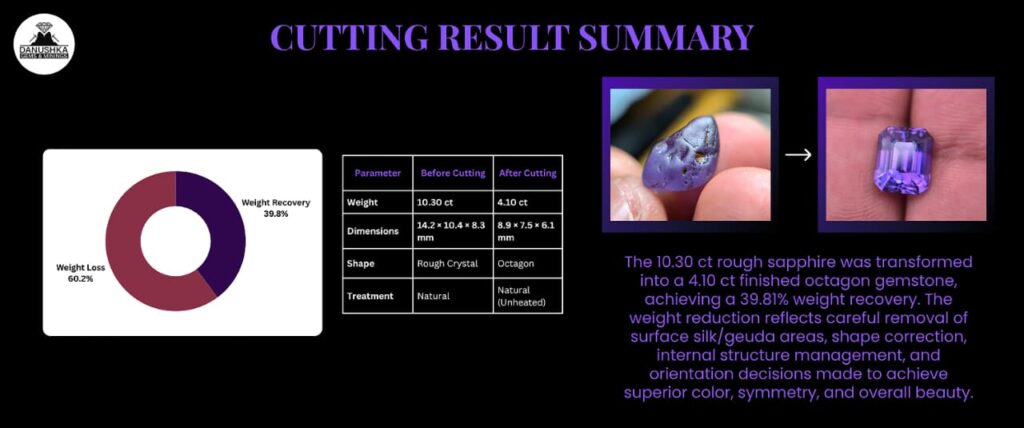
Stage Weight Measurements
Before Cutting 10.30 ct 14.2 × 10.4 × 8.3 mm
After Cutting 4.10 ct 8.9 × 7.5 × 6.1 mm
Weight Recovery 39.81% —
Weight Loss 60.19% —
Final Shape Octagon —
Treatment Unheated —
A 39.81% recovery is understandable for a sapphire rough where the cutter needed to remove near-surface silk/geuda areas, correct the shape, manage internal structure, and orient the best color. In rough cutting, weight loss is normal when the goal is not only maximum carat weight, but better beauty, symmetry, durability, and face-up appearance.
Source to Final Owner Journey
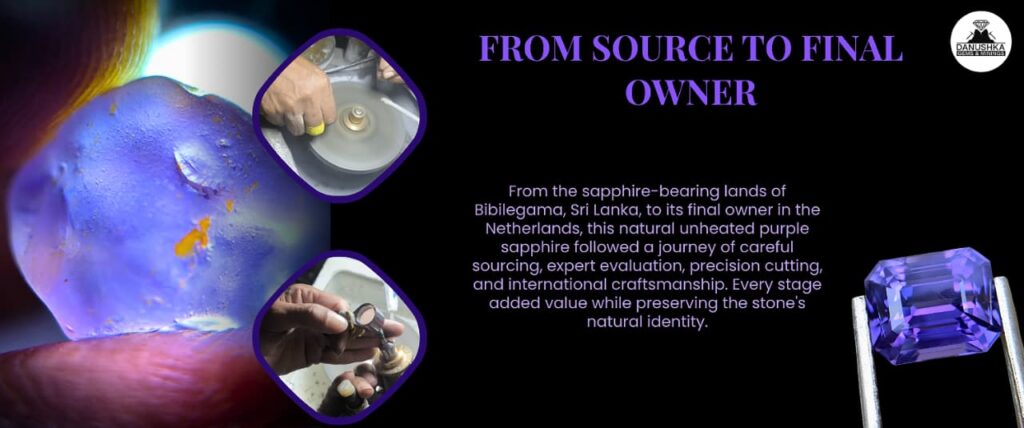
This sapphire began its journey in Bibilegama village around mining in Sri Lanka. From the source area, it was evaluated as a natural unheated purple sapphire rough with facet-grade potential. The rough showed strong visual interest, but it also needed professional planning because of its internal silk, geuda-like surface area, and color behaviour under different light sources.
The customer from the Netherlands bought the stone in rough form. After purchase, Danushka Gems & Minings worked with the cutter to study the rough carefully and decide the best direction. The cutting decision changed from the possible cushion idea to an octagon after practical examination and preforming.
The final 4.10 ct octagon purple sapphire now represents the complete journey: from Sri Lankan source rough to a finished gemstone prepared for an international buyer.
Why This Cutting Journey Matters
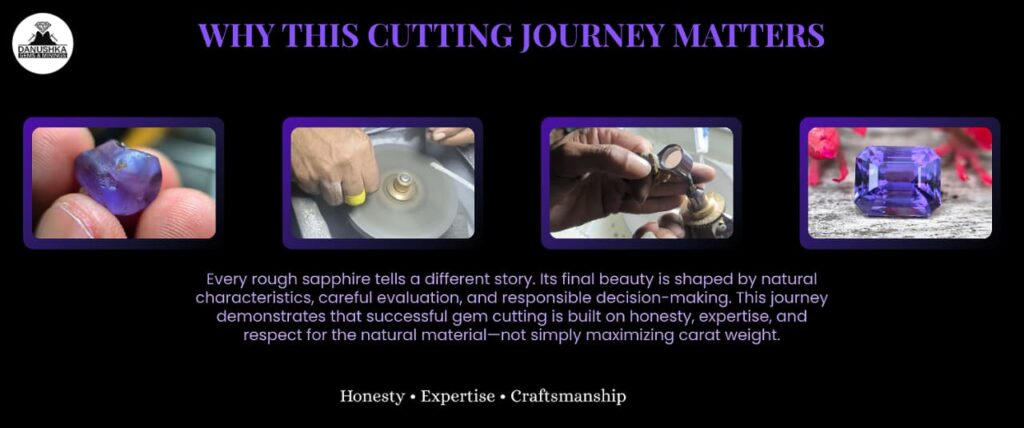
This journey shows the real nature of rough sapphire buying. A rough stone can have beautiful color and strong potential, but the final result depends on what is inside the stone. Internal silk, zoning, shape, depth, surface marks, and color direction all affect the final outcome.
This is why honest communication is important. The buyer should understand that rough cutting has risk. The seller should explain the rough clearly. The cutter should make decisions based on the stone, not only on the desired shape or weight.
In this case, the finished stone became a rich purple octagon sapphire because the process followed the natural material. The result was not forced. It came from careful examination, practical cutting, and good communication.
Conclusion
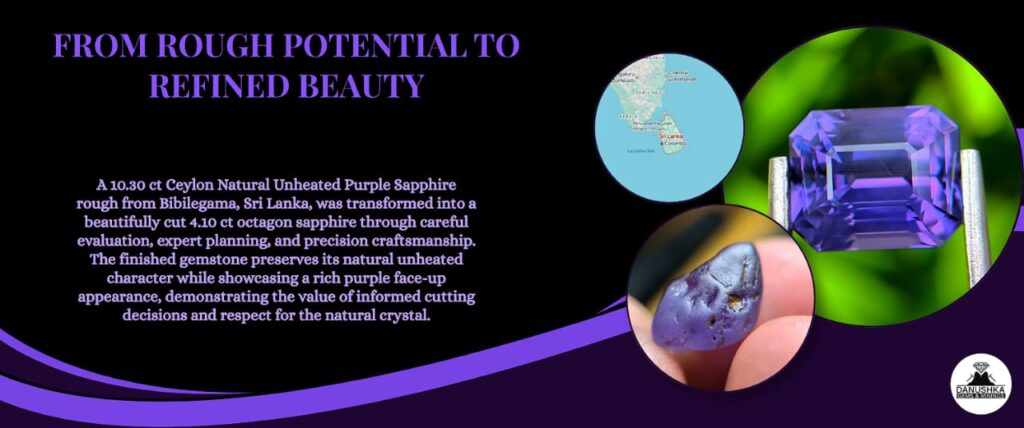
This 10.30 ct Ceylon Natural Unheated Purple Sapphire rough from Bibilegama village around mining in Sri Lanka was carefully cut into a 4.10 ct octagon purple sapphire. The rough showed purple to pink visual color shift, surface silk/geuda features, and strong cutting potential. After discussion with the cutter and the customer from the Netherlands, the stone was preformed and finished as an octagon instead of a cushion shape. The final result shows rich purple color, excellent cutting, and natural unheated character.
FAQ Section
1. What was the original weight of this purple sapphire rough?
The original rough sapphire weighed 10.30 ct before cutting.
2. What were the original rough measurements?
The rough measured 14.2 × 10.4 × 8.3 mm.
3. Where was this sapphire rough sourced from?
This sapphire rough was sourced from Bibilegama village around mining in Sri Lanka.
4. What was the treatment status of the sapphire?
The sapphire was kept in its natural unheated condition.
5. What color did the rough sapphire show?
The rough showed a purple to pink visual color shift under incandescent and fluorescent lighting.
6. What internal feature was important during cutting?
The stone showed a hexagonal silk/geuda-like area near the surface, which needed careful examination and removal during preforming.
7. Why was the final shape changed from cushion to octagon?
After preforming and cutter examination, the stone’s natural shape, color direction, and internal features made an octagon shape a better practical decision than forcing a cushion shape.
8. What is the final finished weight?
The finished sapphire weighs 4.10 ct.
9. What are the final measurements?
The finished octagon sapphire measures 8.9 × 7.5 × 6.1 mm.
10. What was the cutting recovery percentage?
The recovery was 39.81% from rough to finished gemstone.
11. How much weight was lost during cutting?
The stone lost 6.20 ct, equal to 60.19% of the original rough weight.
12. Is 39.81% recovery normal for sapphire rough?
Yes, it can be practical when the cutter must remove surface features, silk/geuda areas, shape limitations, and orient the best color.
13. Who bought this sapphire rough?
The stone was purchased by a customer from the Netherlands as rough and later finished through Danushka Gems & Minings.
14. Is buying sapphire rough riskier than buying a cut stone?
Yes. Rough buying carries more risk because the final weight, clarity, color, and shape can only be confirmed after cutting.
15. What makes this finished sapphire special?
The finished sapphire preserved its natural unheated identity and became a rich purple octagon after careful planning, preforming, and cutting.