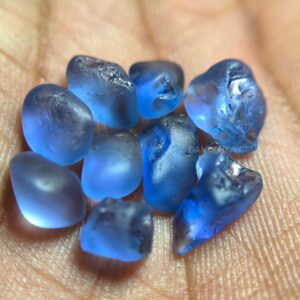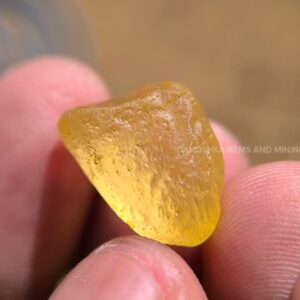
| Weight | 48.95 ct |
|---|---|
| Parcel 01 Weight | 23.80 ct – Yellow Sapphire |
| Parcel 02 Weight | 25.15 ct – Pink, Purple & Bicolor Sapphire |
| Weight Range | Yellow 1.30–2.05 ct; Pink/Purple/Bicolor 0.80–1.80 ct |
| Pieces | 35 total – 15 Yellow, 20 Pink/Purple/Bicolor |
| Color | Yellow, Golden Yellow, Pink, Violet, Purple, Bicolor |
| Cut / Form | Natural Rough |
| Treatment | Natural Unheated |
| Variety | Yellow Sapphire; Pink, Purple & Bicolor Ottu Sapphire |
| Species | Corundum |
| Origin | Ratnapura and Pelmadulla gemstone-producing areas, Sabaragamuwa Province, Sri Lanka |
| Country | Sri Lanka |
| Quality Grade | Facet Grade |
| Product Type | Two Rough Gemstone Parcels / Combined Collection |
48.95 ct Natural Unheated Ceylon Yellow, Pink & Purple Sapphire Rough – 35 Facet-Grade Pieces from Sri Lanka
48.95 ct unheated Ceylon mixed sapphire rough, 35 pieces in two parcels.
Spread the Love
STONE IDENTITY & QUALITY
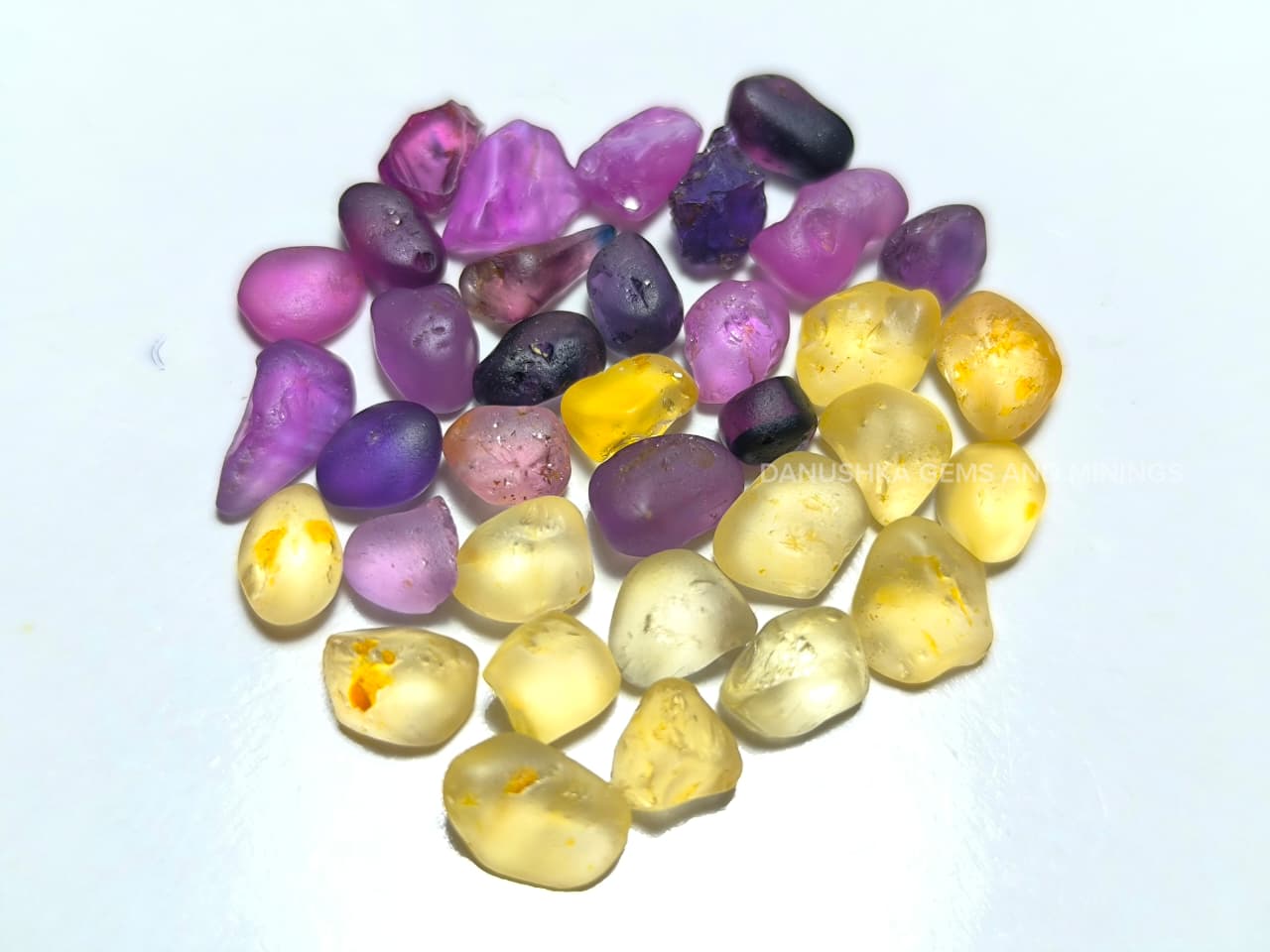
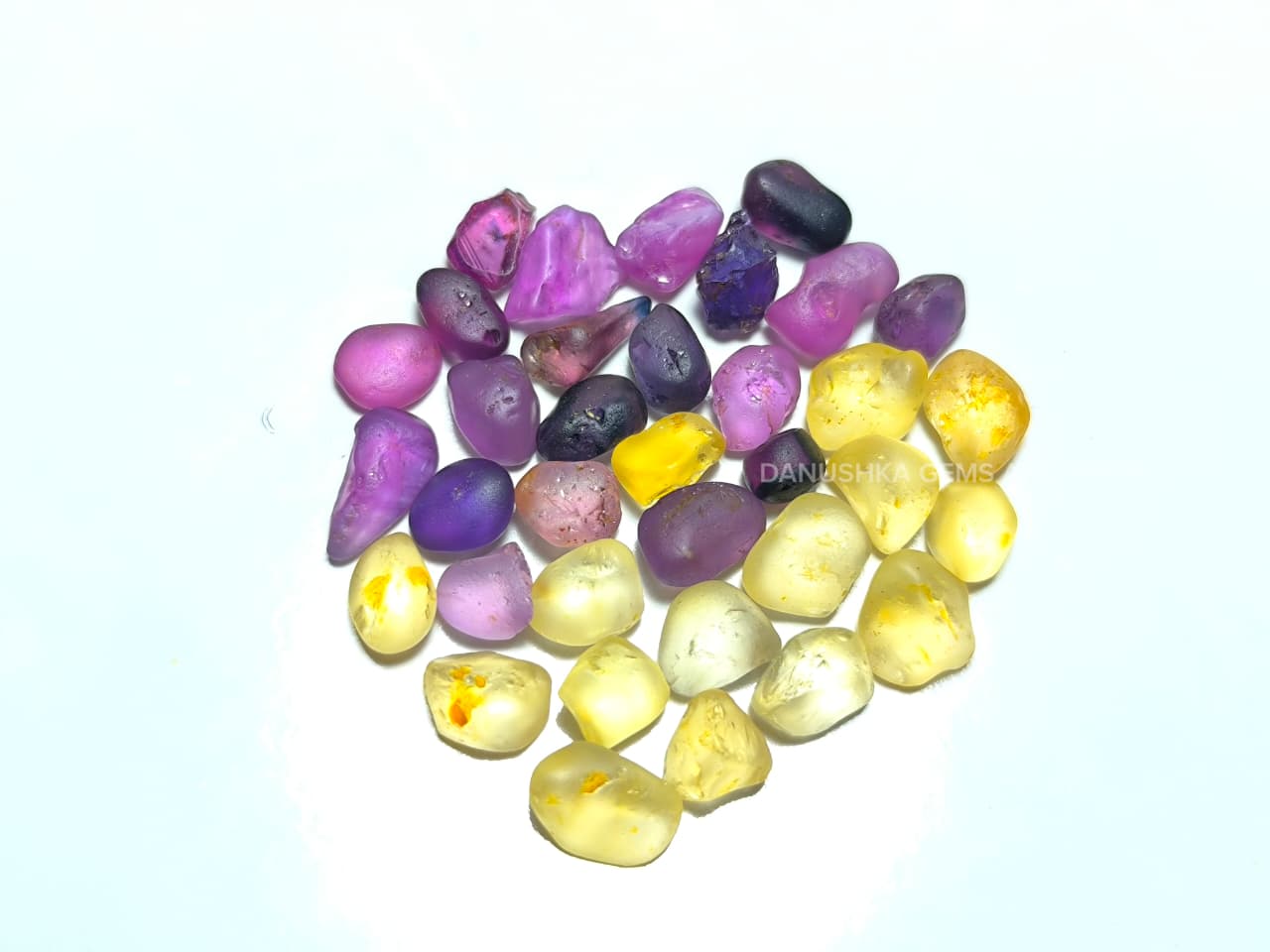
This combined natural unheated Ceylon sapphire rough collection consists of two separate facet-grade parcels, with a total weight of 48.95 carats across 35 individual gemstones.
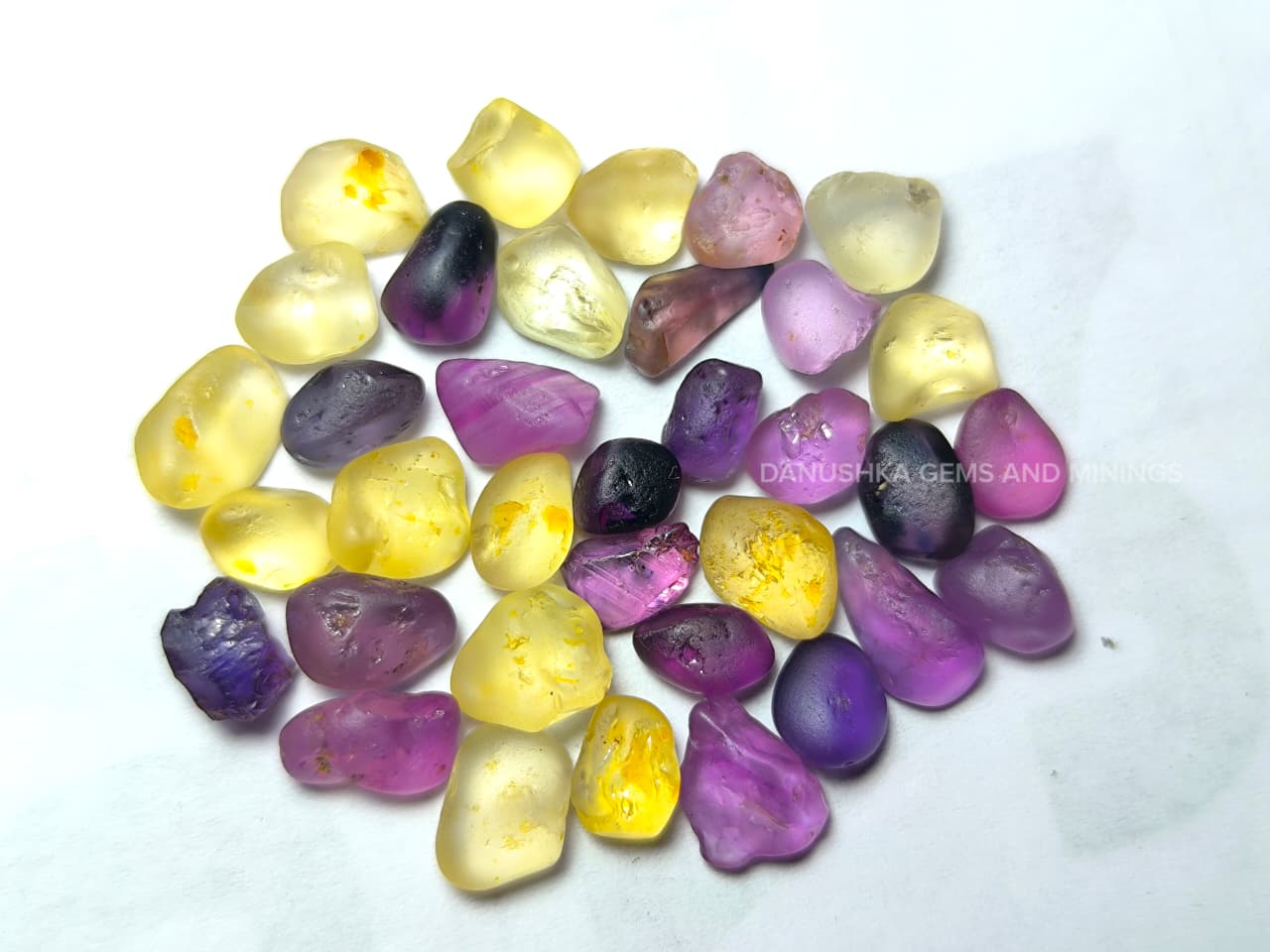
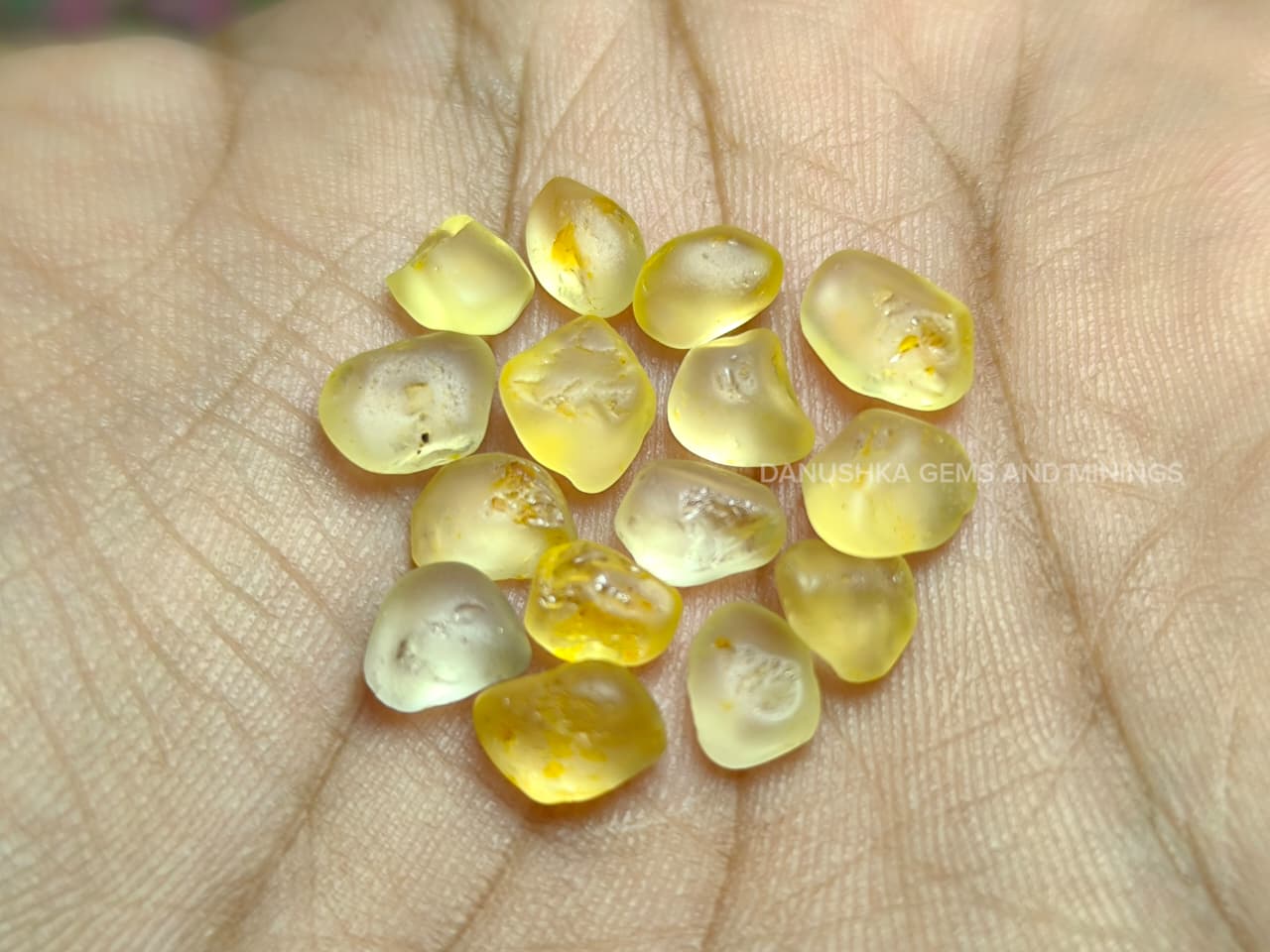
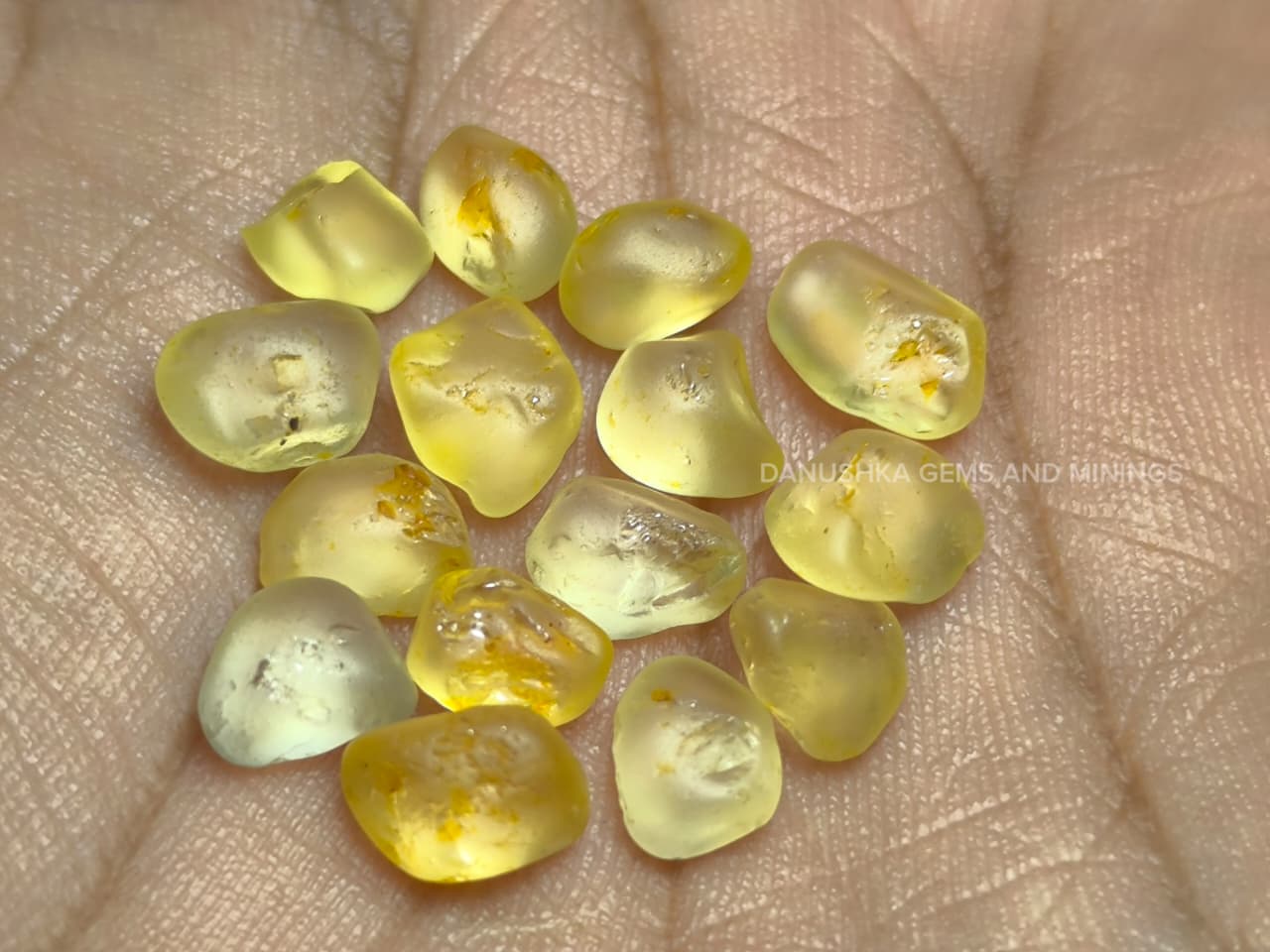
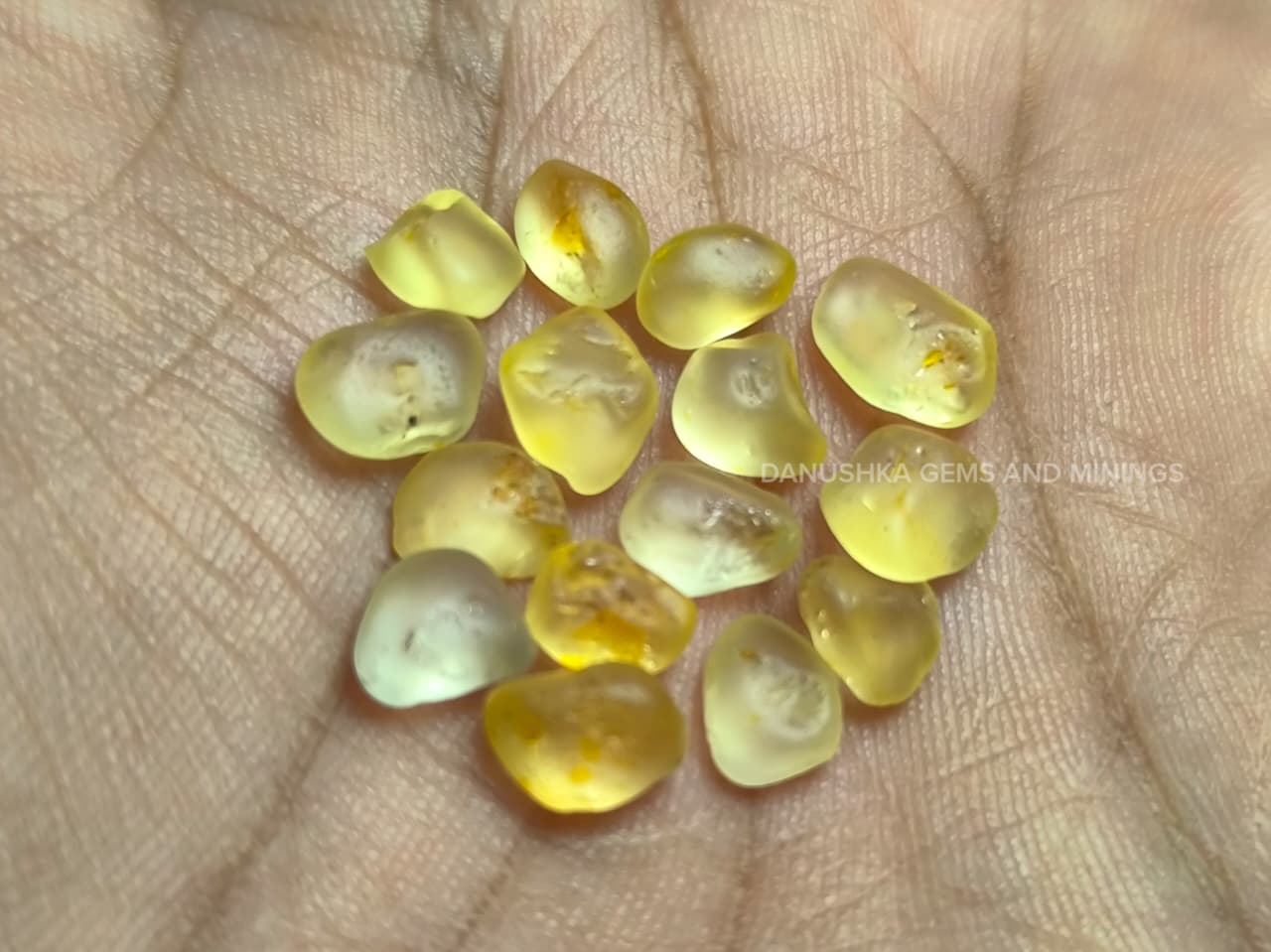
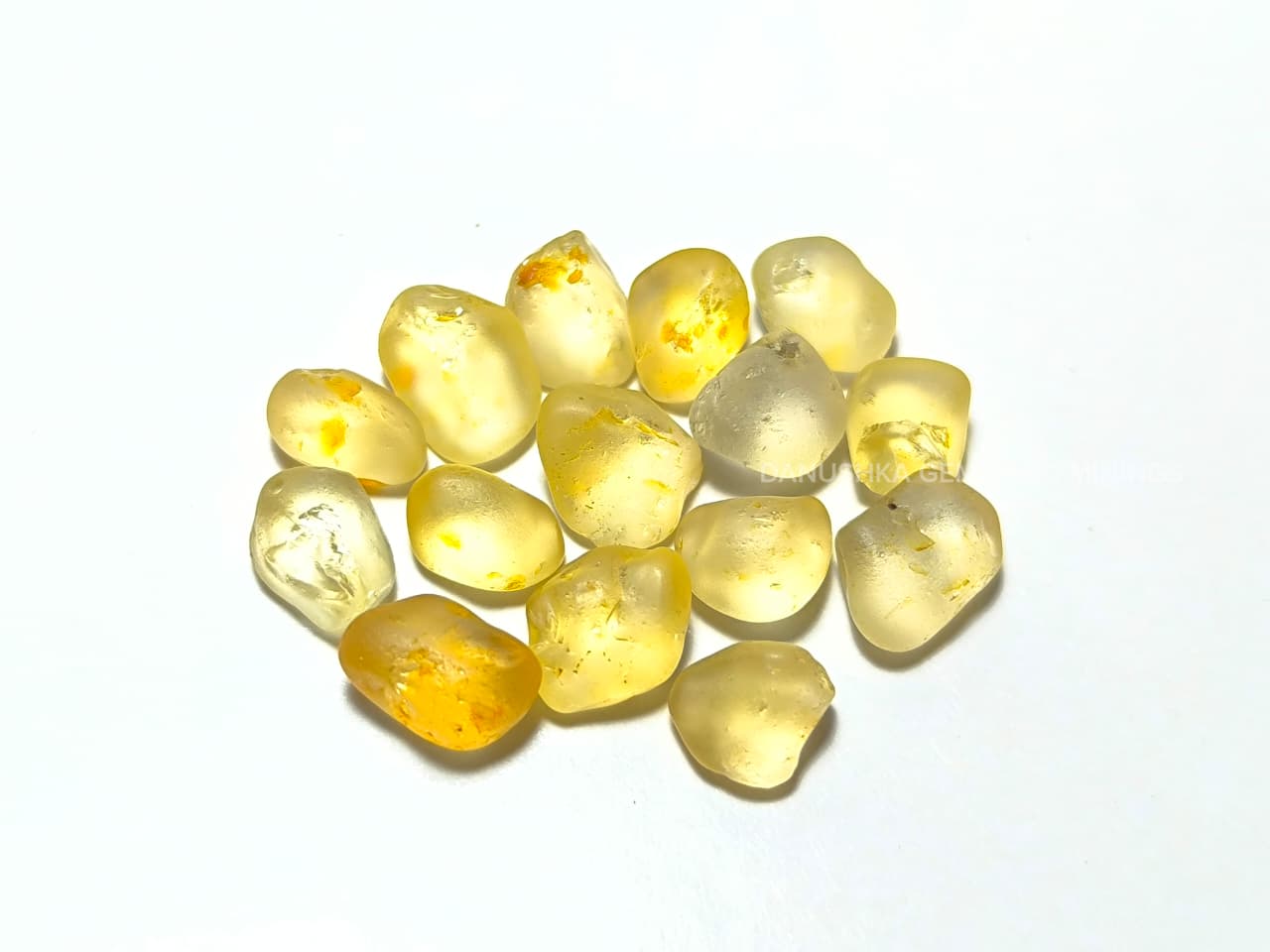
The first collection contains 15 natural yellow sapphire rough pieces weighing 23.80 carats. Individual weights range from approximately 1.30 to 2.05 carats.
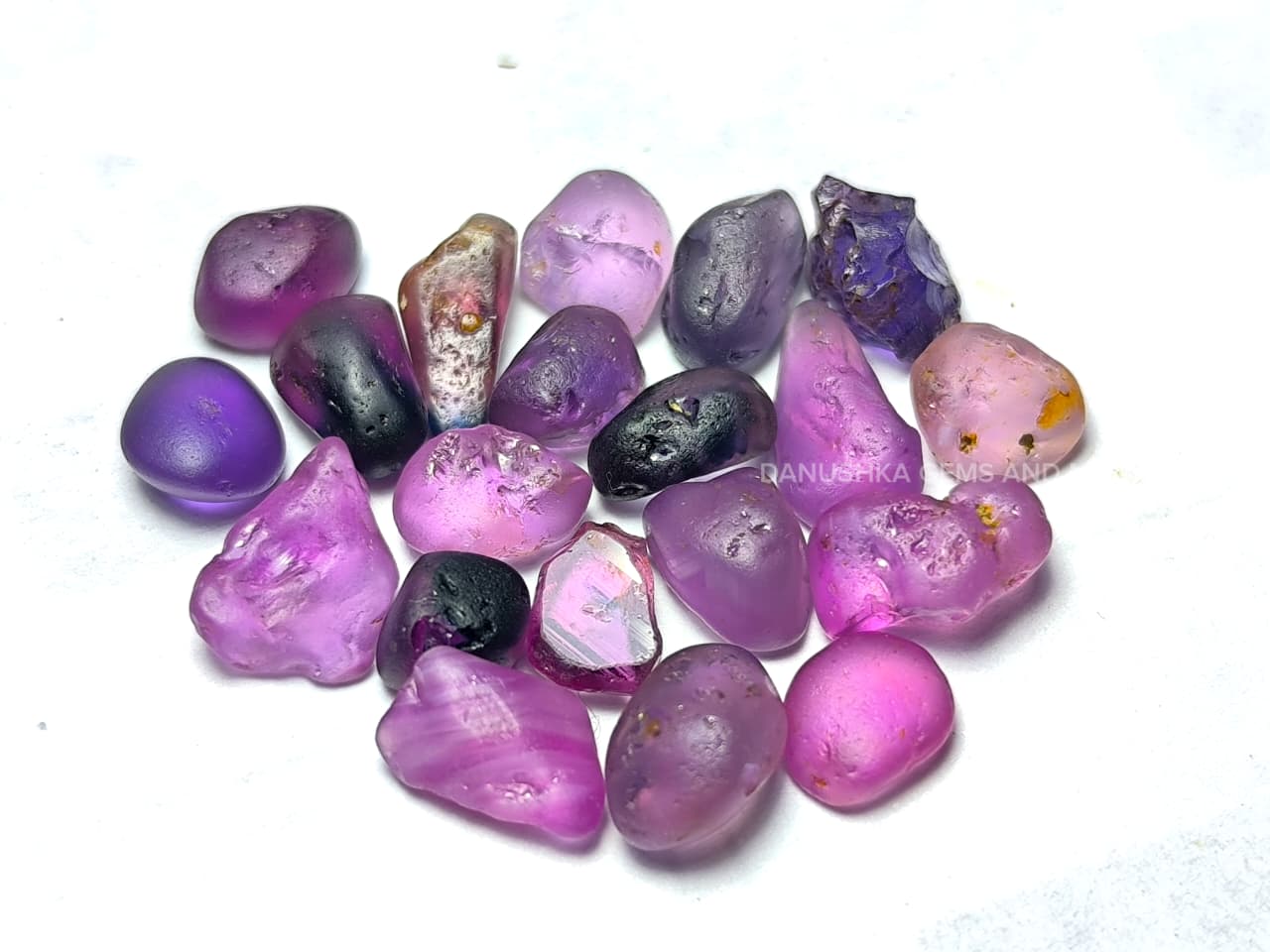
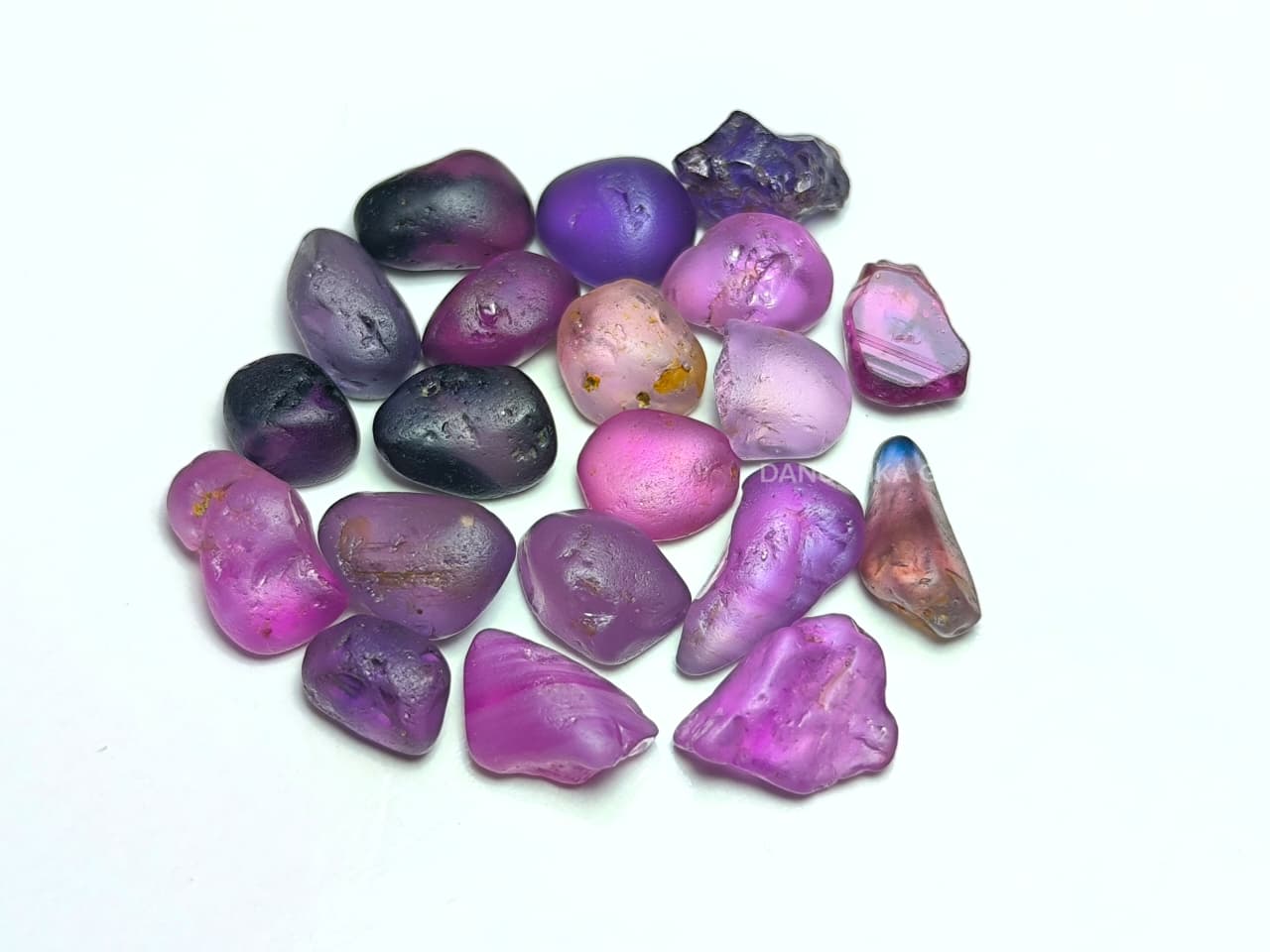
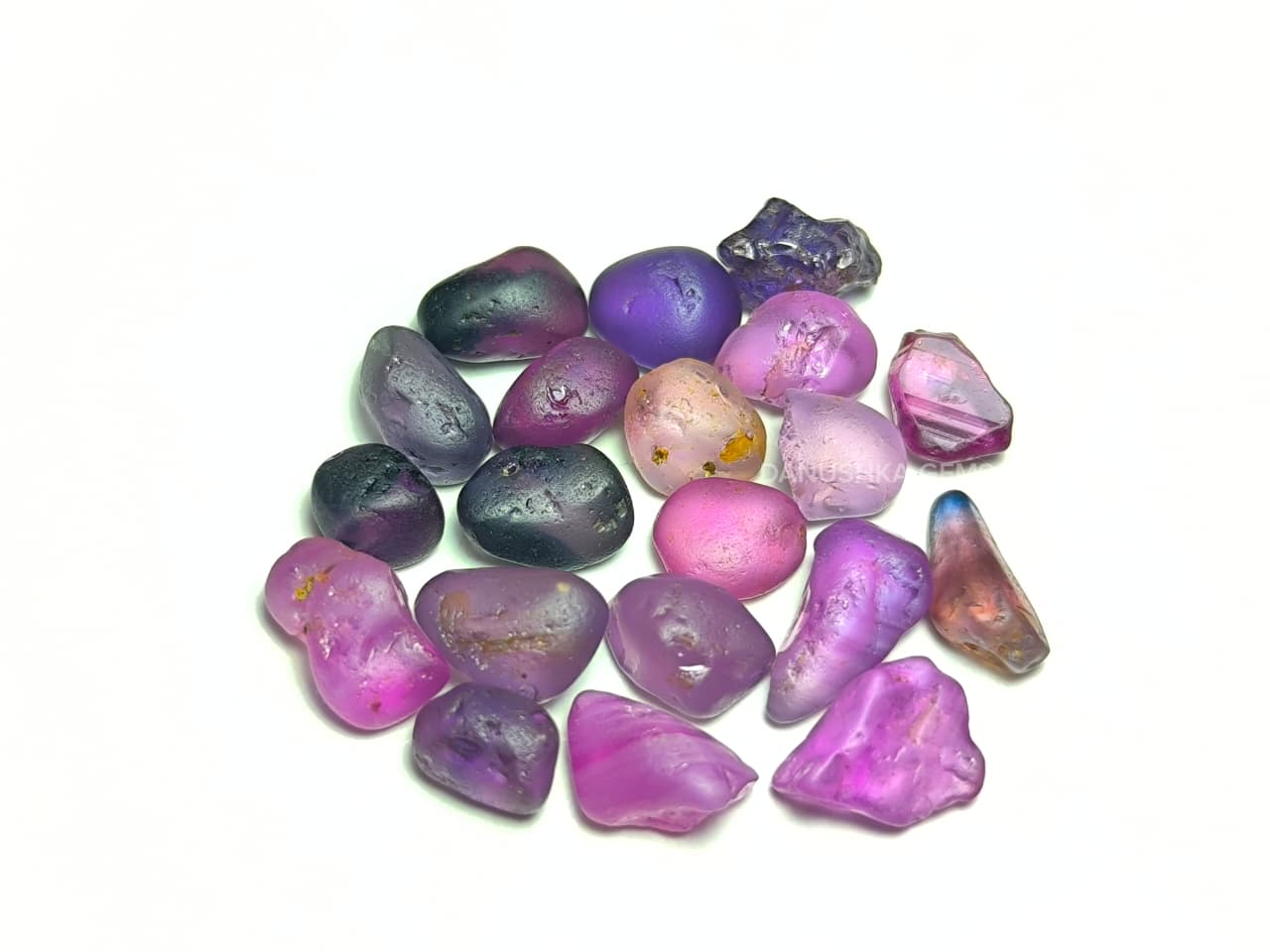
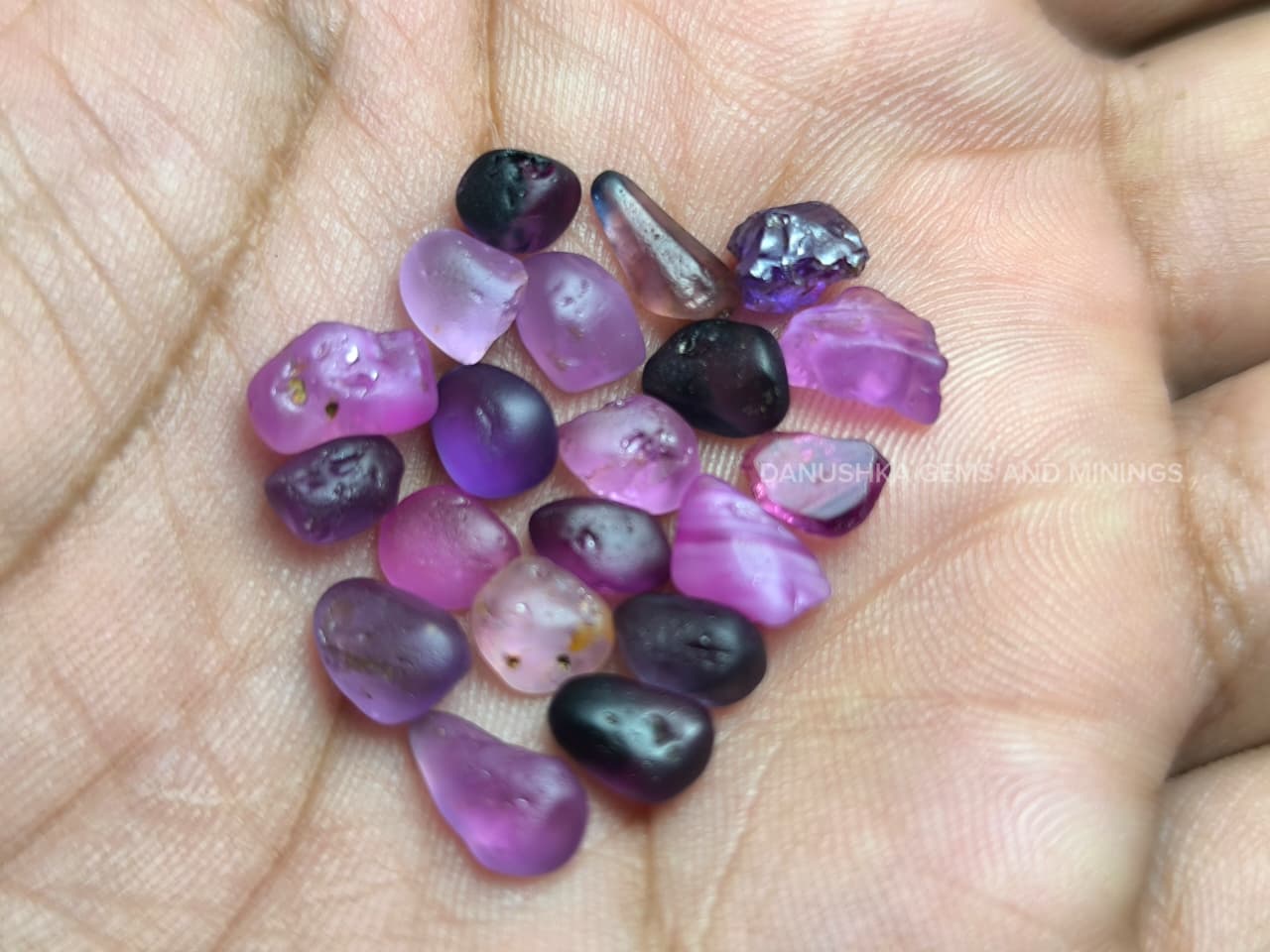
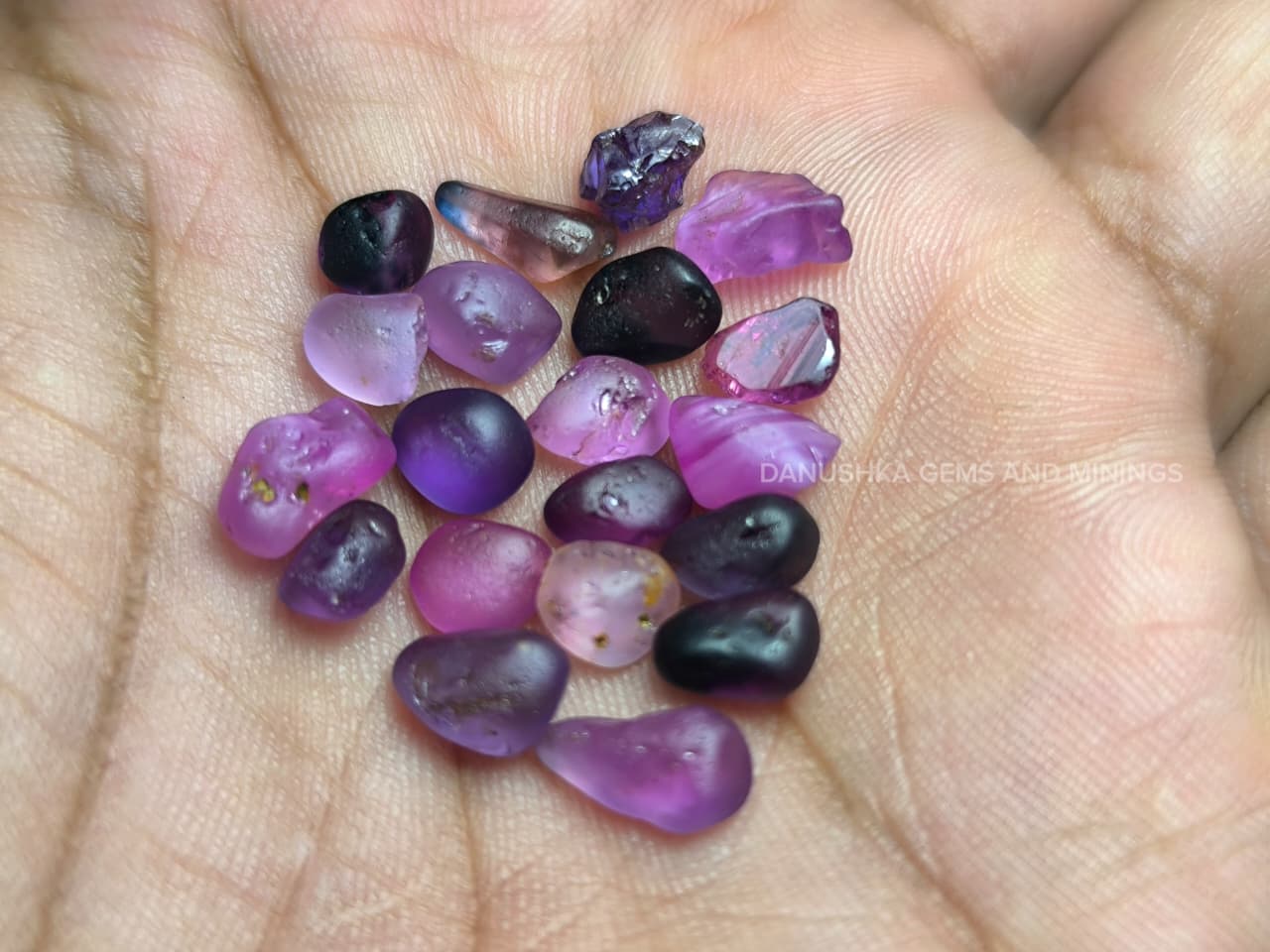
The second collection contains 20 natural pink, purple and bicolor sapphires, including ottu-type rough material, weighing a combined 25.15 carats. Individual pieces range from approximately 0.80 to 1.80 carats.
Both collections originate from Ratnapura and Pelmadulla gemstone-producing areas and surrounding mining villages in Sri Lanka’s Sabaragamuwa Province.
Although the two parcels display different colors, they belong to the same mineral species: corundum.
Corundum has the chemical composition aluminium oxide, Al₂O₃, and crystallizes in the trigonal crystal system. Its hardness of 9 on the Mohs scale makes sapphire particularly useful for many types of jewelry after suitable cutting and setting.
Natural sapphire occurs in a broad range of colors because of trace elements and crystal defects within its structure.
These are general mineralogical properties of sapphire, not individual laboratory measurements of the stones in these collections.
COLOR & VISUAL CHARACTERISTICS
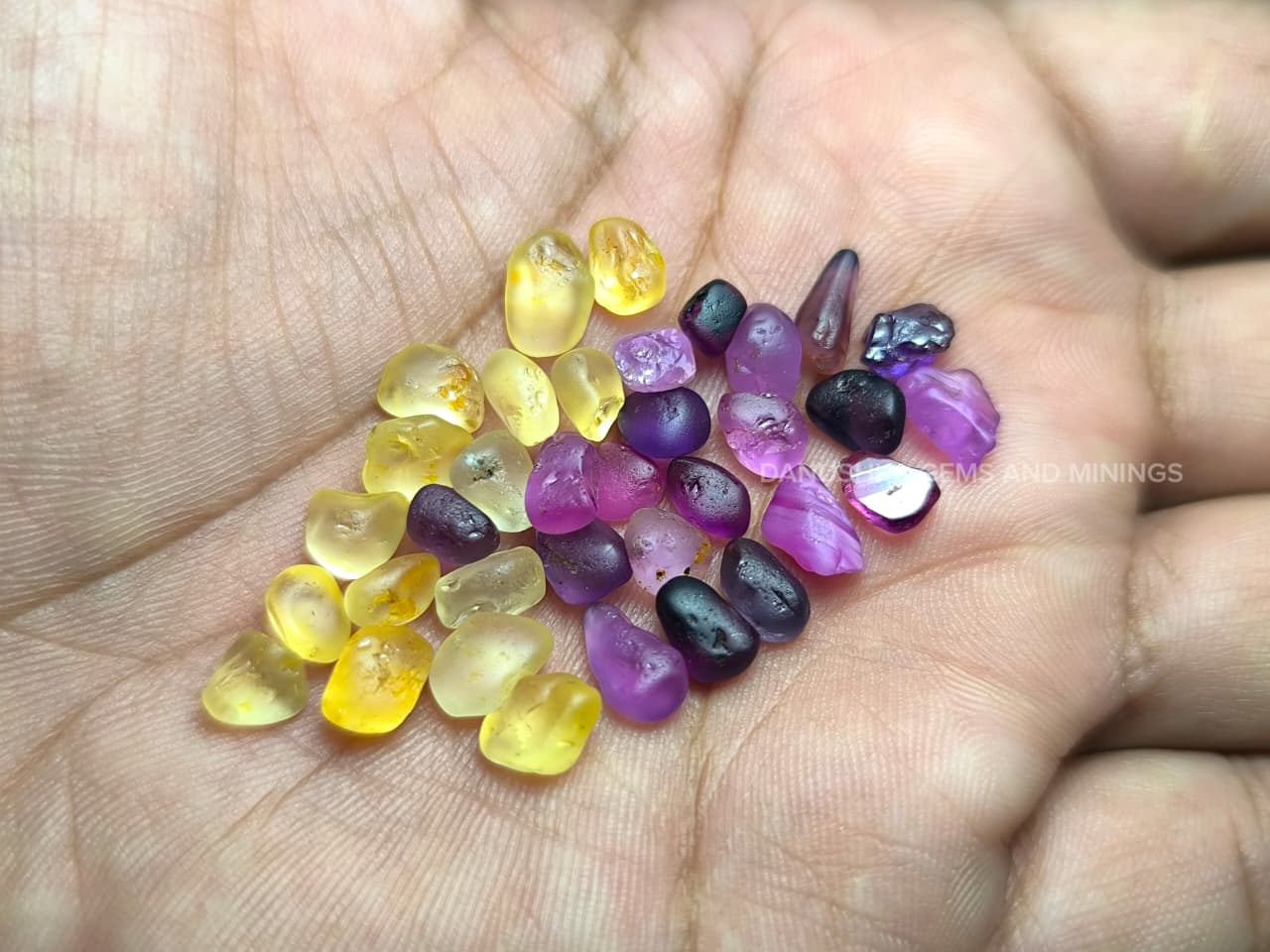
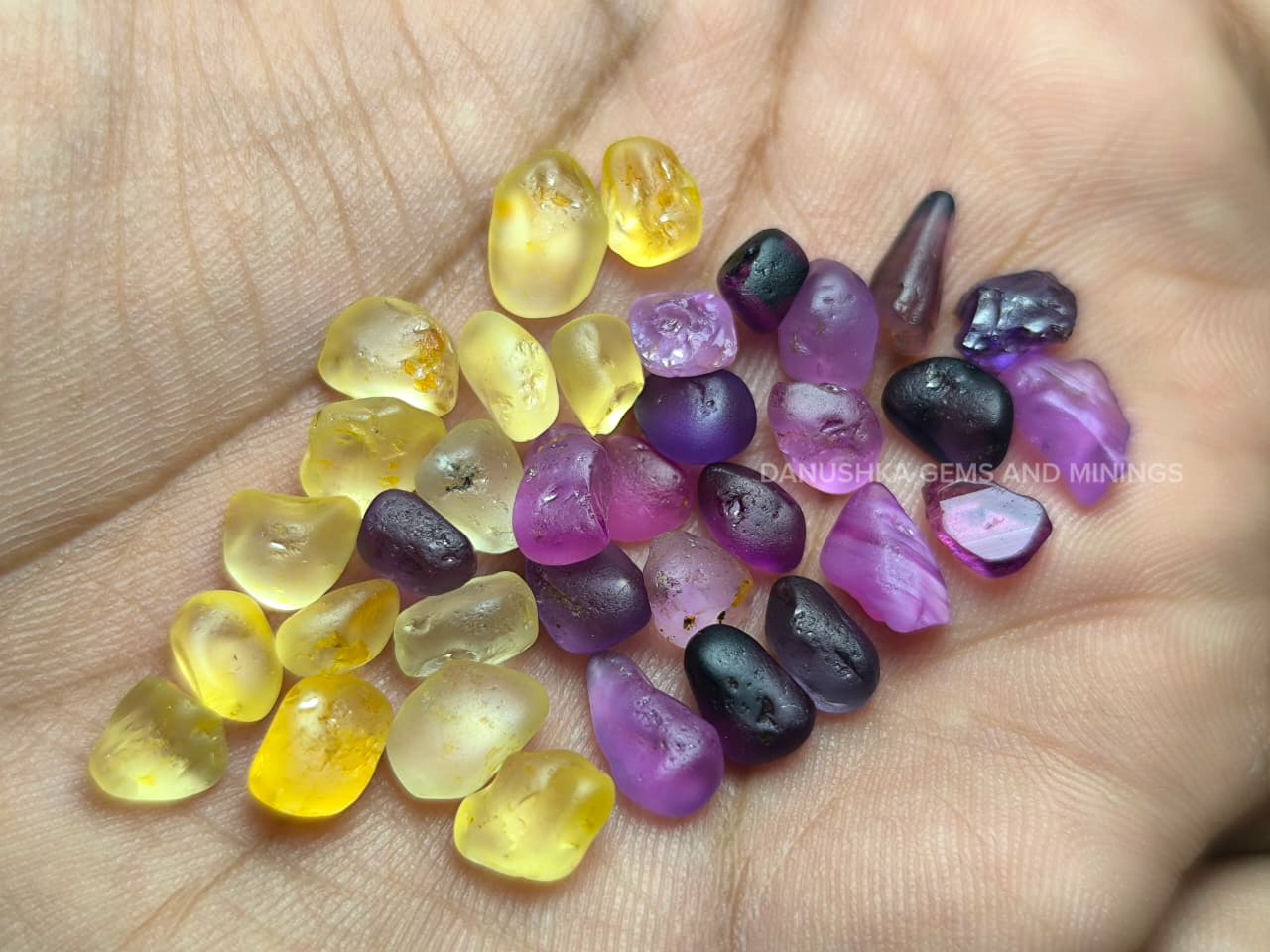
The most noticeable feature of this combined collection is the contrast between its yellow and pink-purple sapphire material.
The 23.80 ct yellow sapphire parcel displays pale lemon-yellow, light golden-yellow and warmer yellow appearances.
Some pieces show lighter areas where illumination passes through the rough, while others display more concentrated yellow zones.
The second parcel contains pink, purplish-pink, lavender, violet, purple and darker mixed-color appearances.
The supplied photographs show a mixture of color intensities and natural surface textures. Some rough stones appear relatively uniform in color, while others contain contrasting areas.
This color diversity creates different considerations for gemstone cutters.
Yellow sapphire color may result from iron-related absorption and defect-related color mechanisms, while pink sapphire coloration is commonly associated with chromium. Purple and violet appearances can involve additional combinations of chromophores and crystallographic orientation.
The exact color-causing mechanisms of the individual stones have not been determined by chemical analysis.
A gemstone cutter must consider how these colors will appear after orientation, shaping and polishing.
A rough stone that appears bright under direct illumination may look different after cutting, depending on its internal characteristics and the selected facet arrangement.
For bicolor material, the relationship between differently colored areas is especially important.
The cutter may need to balance the appearance of multiple colors or select a direction that emphasizes the most attractive usable portion.
INTERNAL & EXTERNAL FEATURES
Both collections consist of natural rough material with individually different external shapes, surface textures and internal appearances.
Several pieces show rounded or irregular contours, with natural surface imperfections visible in the photographs.
Some areas appear more transparent under illumination, while others show reduced transparency or visible internal features.
These characteristics must be studied individually.
Before cutting, a lapidary should examine each sapphire under suitable lighting and magnification to determine the available depth, color distribution, possible fractures, inclusions and usable cutting area.
It is particularly important not to judge a rough sapphire solely by its external size.
Two sapphires weighing almost the same can produce very different finished results because of differences in internal features, available material and cutting orientation.
The collection has not been assigned individual clarity grades.
CUTTING POTENTIAL – TWO COLOR GROUPS, DIFFERENT CHALLENGES
Both parcels are classified as facet-grade sapphire rough.
However, they require different cutting considerations because of their natural shapes, color characteristics and internal features.
For the yellow sapphire parcel, careful orientation may help bring out a pleasing face-up yellow appearance while retaining suitable depth and proportions.
The natural outlines of individual stones can influence whether particular shapes are practical.
Oval, cushion or other faceted designs may be considered where the individual material allows.
For the pink, purple and bicolor ottu parcel, color distribution becomes a particularly important factor.
Some stones may contain visually contrasting areas, creating opportunities to evaluate designs that display more than one color.
However, an attractive bicolor rough appearance does not guarantee a similarly attractive bicolor finished gemstone.
During faceting, some material must be removed, and the selected orientation may change which color is most visible.
The cutter must balance four practical considerations: weight retention, color, clarity and cutting quality.
The objective is not simply to preserve the maximum number of carats.
A finished gemstone also requires suitable crown and pavilion proportions, symmetry and adequate depth for its chosen design.
For smaller rough pieces, excessive material removal can greatly reduce the final weight.
Each of the 35 sapphires should therefore be evaluated individually before cutting.
No specific cutting recovery or finished weight is guaranteed for either parcel.
UNDERSTANDING OTTU IN SRI LANKAN GEMSTONE TRADING
The term ottu is used in Sri Lanka’s traditional gemstone trade to describe certain corundum rough materials with characteristic internal or external appearances.
It is a local trade classification rather than a separate mineral species.
Ottu material may show distinctive color areas, patches or structural appearances that experienced Sri Lankan rough buyers recognize during examination.
The term may also arise in discussions about professional heat-treatment evaluation, depending on the individual material.
However, the presence of ottu-type characteristics does not guarantee any particular heating result.
For this collection, the supplied description is natural unheated pink, purple and bicolor ottu sapphire rough.
Its natural condition is an important part of how the material is being presented.
ORIGIN & SOURCE STORY
The combined collection comes from the Ratnapura and Pelmadulla gemstone-producing areas and surrounding mining villages in Sri Lanka.
Both areas belong to Sabaragamuwa Province, an important region in the history of Ceylon gemstone sourcing and trading.
At Danushka Gems & Minings, our daily business is closely connected with the gemstone-producing villages of Sri Lanka.
Rather than relying only on established gemstone markets, we regularly travel through source areas, build relationships with miners, mine owners and local source dealers, and examine rough material before deciding how it should be handled.
These relationships help us understand the practical character of gemstones from different mining regions.
We believe that knowing where a gemstone was sourced adds meaningful information to its journey.
For these two parcels, Ratnapura and Pelmadulla are the supplied sourcing areas.
Individual mine locations and village assignments for each stone have not been specified.
Our approach is to communicate the information that is known rather than add unsupported details.
TREATMENT, CUTTING & CERTIFICATION NOTES
Both parcels are presented as natural unheated Ceylon sapphire rough.
The yellow sapphire parcel contains 15 pieces totaling 23.80 ct.
The pink, purple and bicolor ottu sapphire parcel contains 20 pieces totaling 25.15 ct.
Although both are natural corundum, their cutting possibilities need to be evaluated independently.
No individual laboratory certification details have been supplied for these rough stones.
Gemological examination and certification can be considered for selected pieces where suitable.
Custom cutting and further assessment may also be discussed depending on individual material characteristics.
Any future certification findings, final clarity grades or finished gemstone weights would depend on the actual stones and the work performed.
WHY THESE TWO SAPPHIRE COLLECTIONS ARE INTERESTING
Combining these two parcels creates a collection of 35 natural unheated Ceylon sapphires with different colors, weights and cutting considerations.
The yellow parcel offers material for evaluating yellow sapphire cutting orientation and color presentation.
The pink-purple parcel introduces more varied color appearances, including bicolor and ottu-type rough.
For gemstone cutters, the collections provide opportunities to compare how different sapphire colors and natural rough shapes influence faceting decisions.
For dealers, jewelry designers and collectors, the combination offers several natural sapphire color groups within one collection.
For gemstone enthusiasts, it is also an opportunity to observe the differences between rough stones before any cutting or polishing takes place.
SOURCE & ETHICAL POSITION
At Danushka Gems & Minings, we believe gemstone sourcing should involve more than simply purchasing and reselling stones.
Our work connects us with Sri Lankan gemstone-producing communities, where we regularly evaluate rough material and maintain relationships with people involved in mining and local sourcing.
We focus on practical gemstone knowledge, transparent treatment disclosure and realistic cutting expectations.
Some rough stones are suitable for cutting, while others require more careful consideration.
We do not promise finished weights, clarity grades or treatment results before individual evaluation.
Our business depends on understanding each stone’s natural character and making responsible decisions about its next stage.
These two natural sapphire collections reflect that approach: 48.95 carats of yellow, pink, purple and bicolor Ceylon rough, connected to Sri Lanka’s gemstone-producing areas and ready for further professional evaluation.
Danushka Gems & Minings – From the Source to Your Hands.
Frequently Asked Questions
The collection contains two separate parcels: 15 yellow sapphires weighing 23.80 ct and 20 pink, purple and bicolor ottu sapphires weighing 25.15 ct. Together, they total 48.95 ct across 35 pieces.
Yes. Both parcels are presented as natural unheated Ceylon sapphire rough.
The source areas are Ratnapura and Pelmadulla gemstone-producing areas and surrounding mining villages in Sri Lanka's Sabaragamuwa Province.
Ottu is a traditional Sri Lankan gemstone trade term applied to certain corundum rough appearances. Both parcels are classified as facet grade, but each stone requires individual evaluation before cutting.
No. The final weight and appearance depend on the individual stone's shape, color distribution, usable depth, inclusions and selected cutting design.