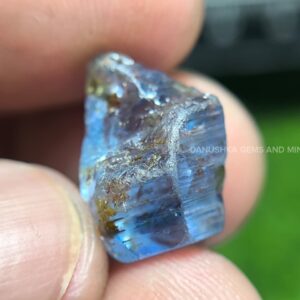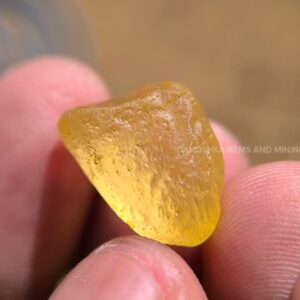
| Weight | 32.10 ct |
|---|---|
| Dimensions | 17.4 × 18.3 × 18.3 mm |
| Flat-Edge Face Dimensions | 18.5 × 13.1 mm |
| Color | Soft Bluish, Milky Appearance Under Photographed Lighting |
| Cut / Form | Natural Rough |
| Treatment | Natural Unheated |
| Species | Corundum |
| Origin | Bibilegama village around mining in Sri Lanka, Sabaragamuwa Province |
| Country | Sri Lanka |
| Product Type | Rough |
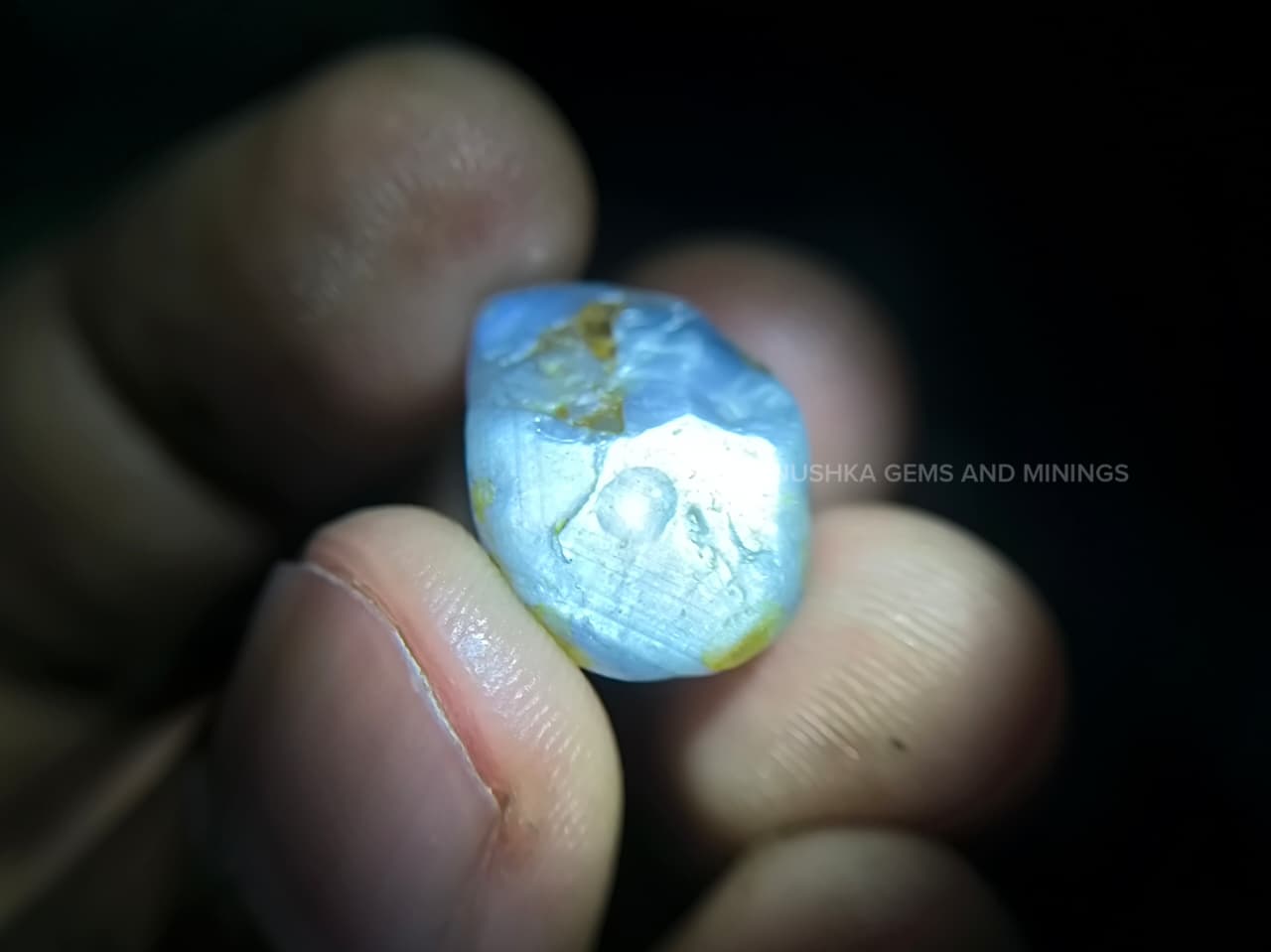
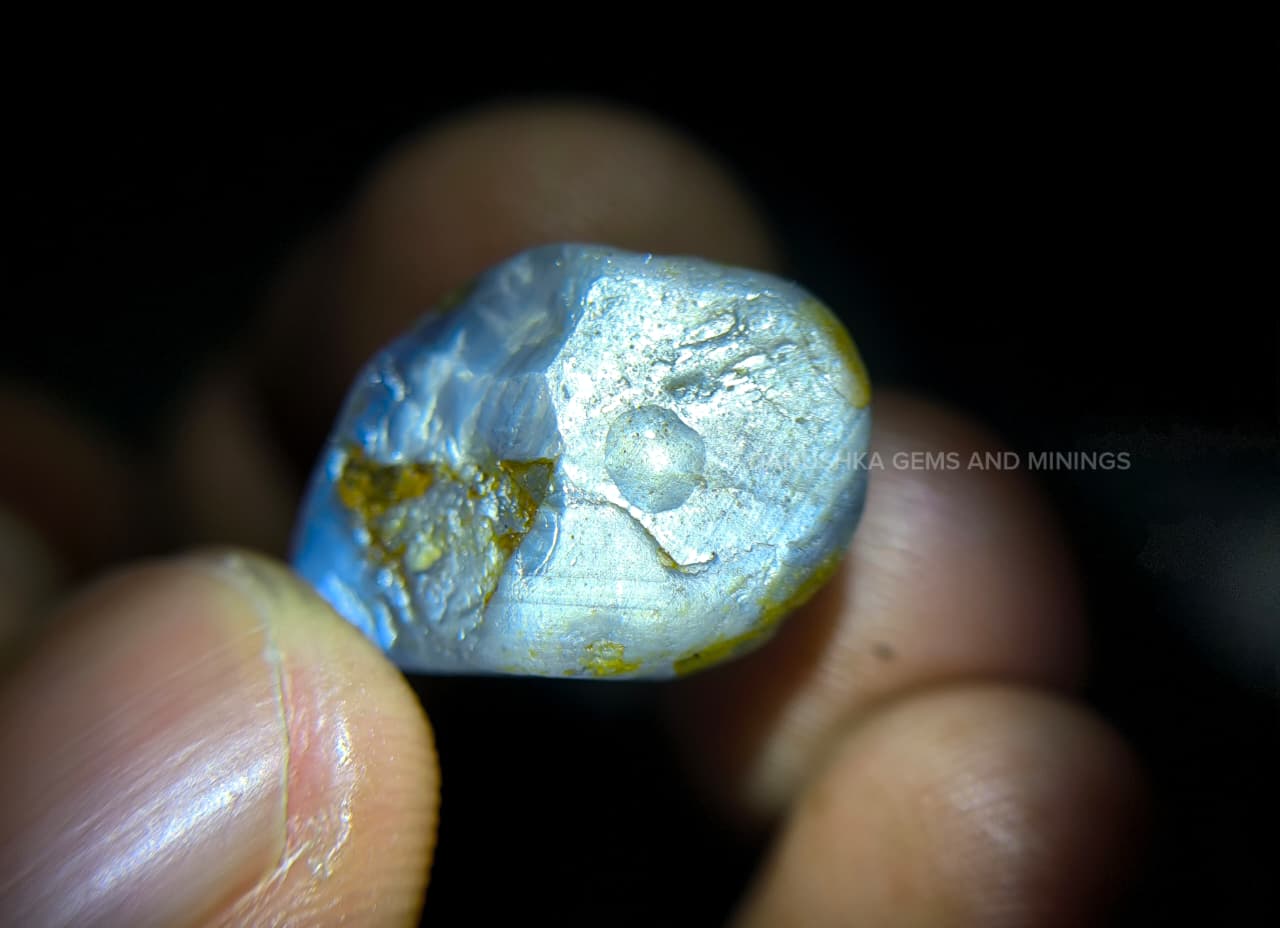
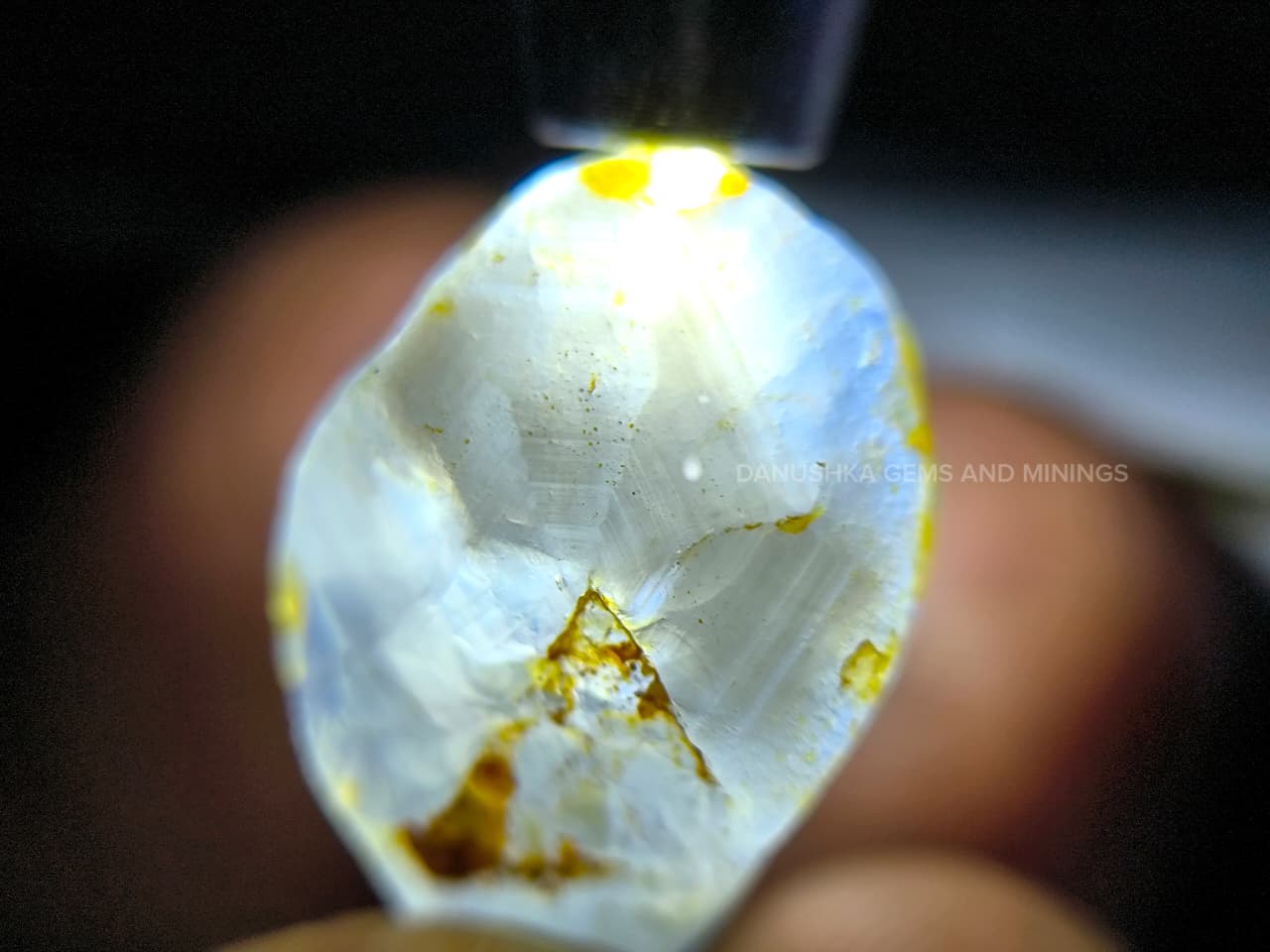
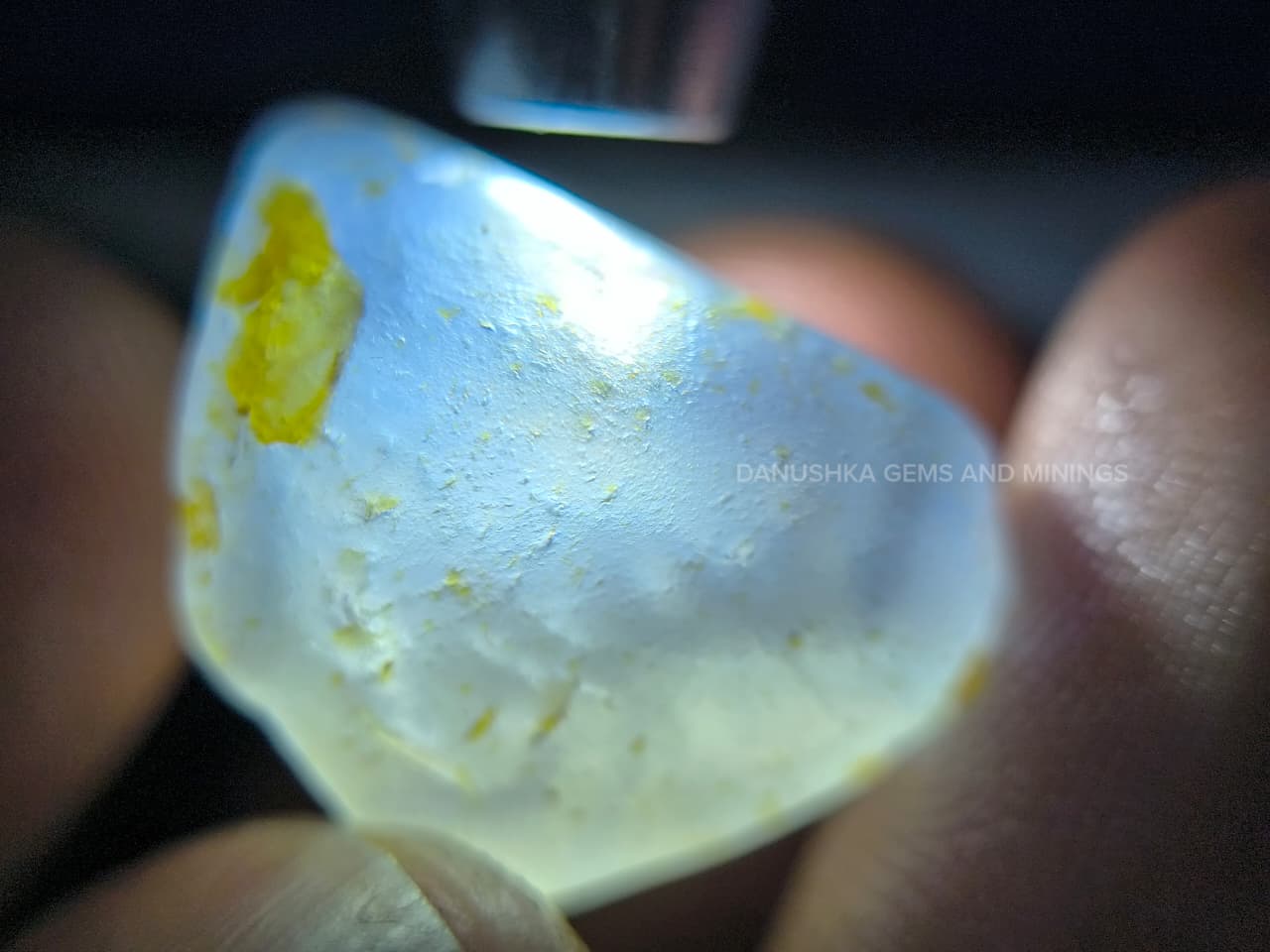
32.10 ct Unheated Ceylon Six-Ray Star Sapphire Rough – Bibilegama
32.10 ct unheated Ceylon six-ray star sapphire rough from Bibilegama.
SKU
DG00861
Category Sapphire Rough
Tags Aru Nul Sapphire, Ceylon Star Sapphire, Natural Unheated Sapphire, Six-Ray Star Sapphire, Sri Lanka Gemstone
Spread the Love
STONE IDENTITY & QUALITY
This 32.10 carat natural unheated Ceylon star sapphire rough comes from Bibilegama village around mining in Sri Lanka, Sabaragamuwa Province. The rough measures 17.4 × 18.3 × 13.4 mm, with a separately measured broad flat-edge face of 18.5 × 13.1 mm.
The material is identified for six-ray star sapphire cutting, with specialist cabochon work recommended over conventional faceting. In Sri Lankan gemstone terminology, this type of sapphire is known as “Aru Nul,” referring to six threads or rays.
Sapphire belongs to the mineral species corundum, composed primarily of aluminium oxide (Al₂O₃), with a Mohs hardness of 9. These are general mineralogical properties rather than individual laboratory measurements.
Its current treatment disclosure is Natural Unheated. The strength and symmetry of the potential finished star have not yet been established.
COLOR & VISUAL CHARACTERISTICS
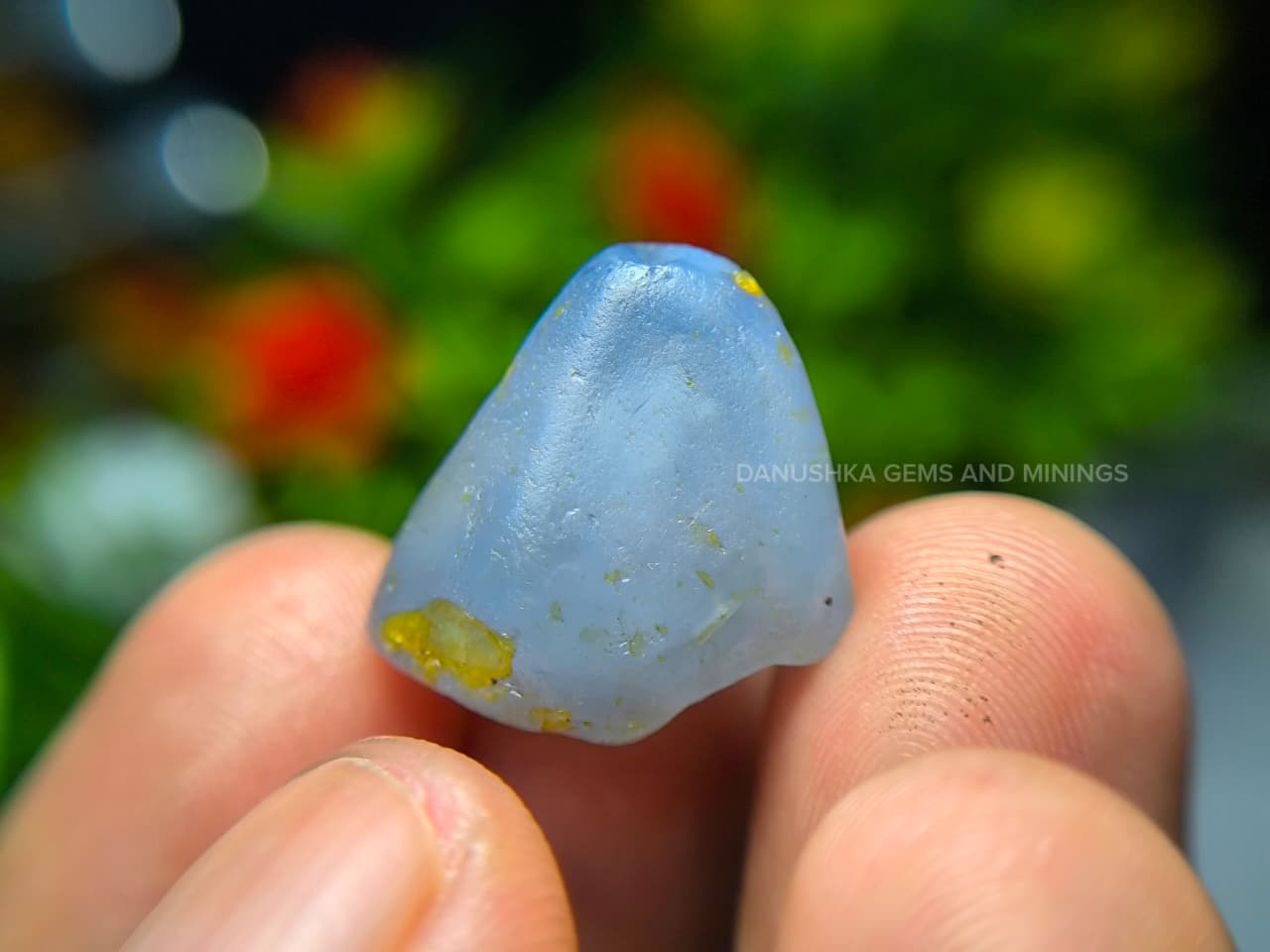
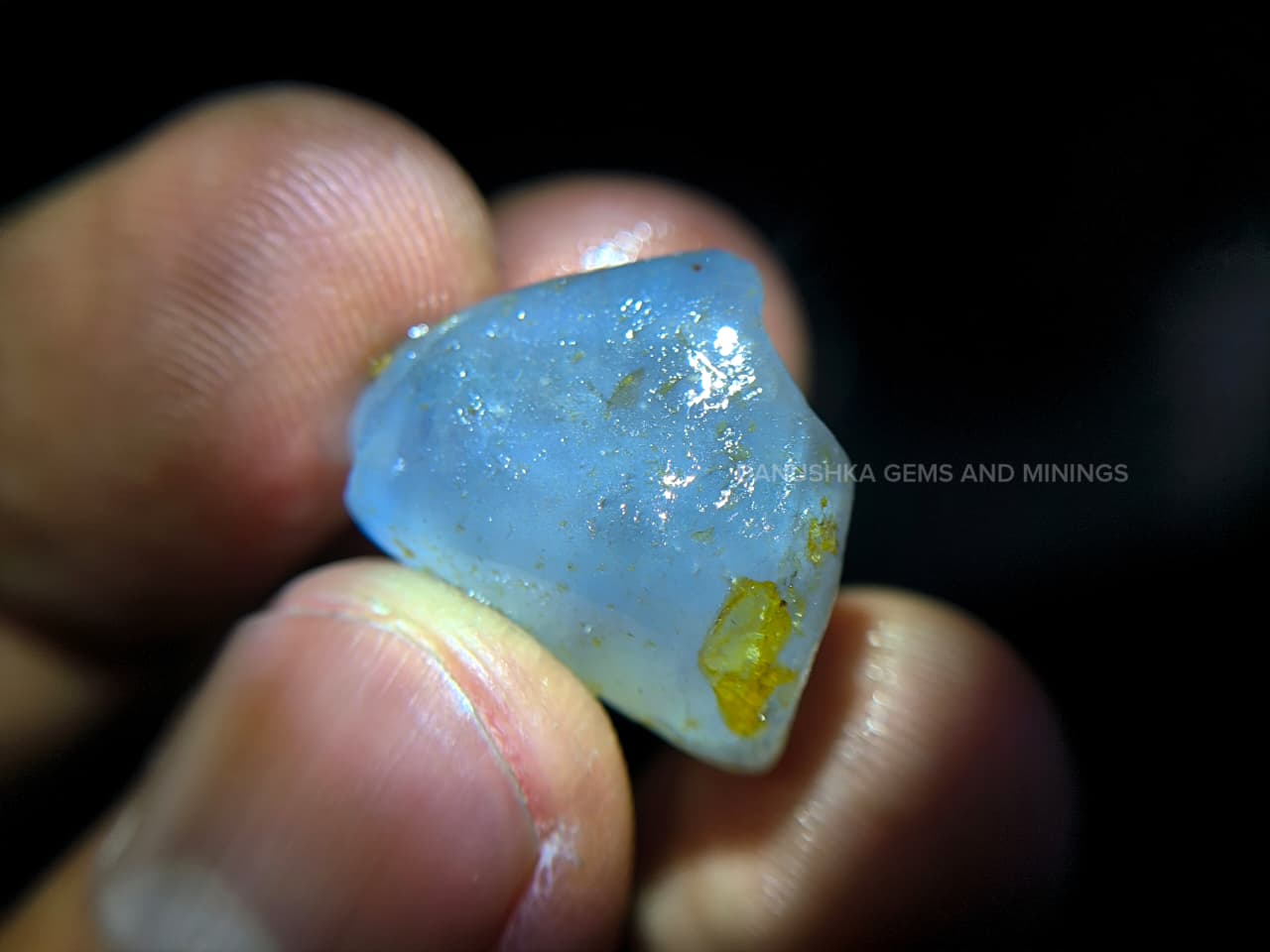
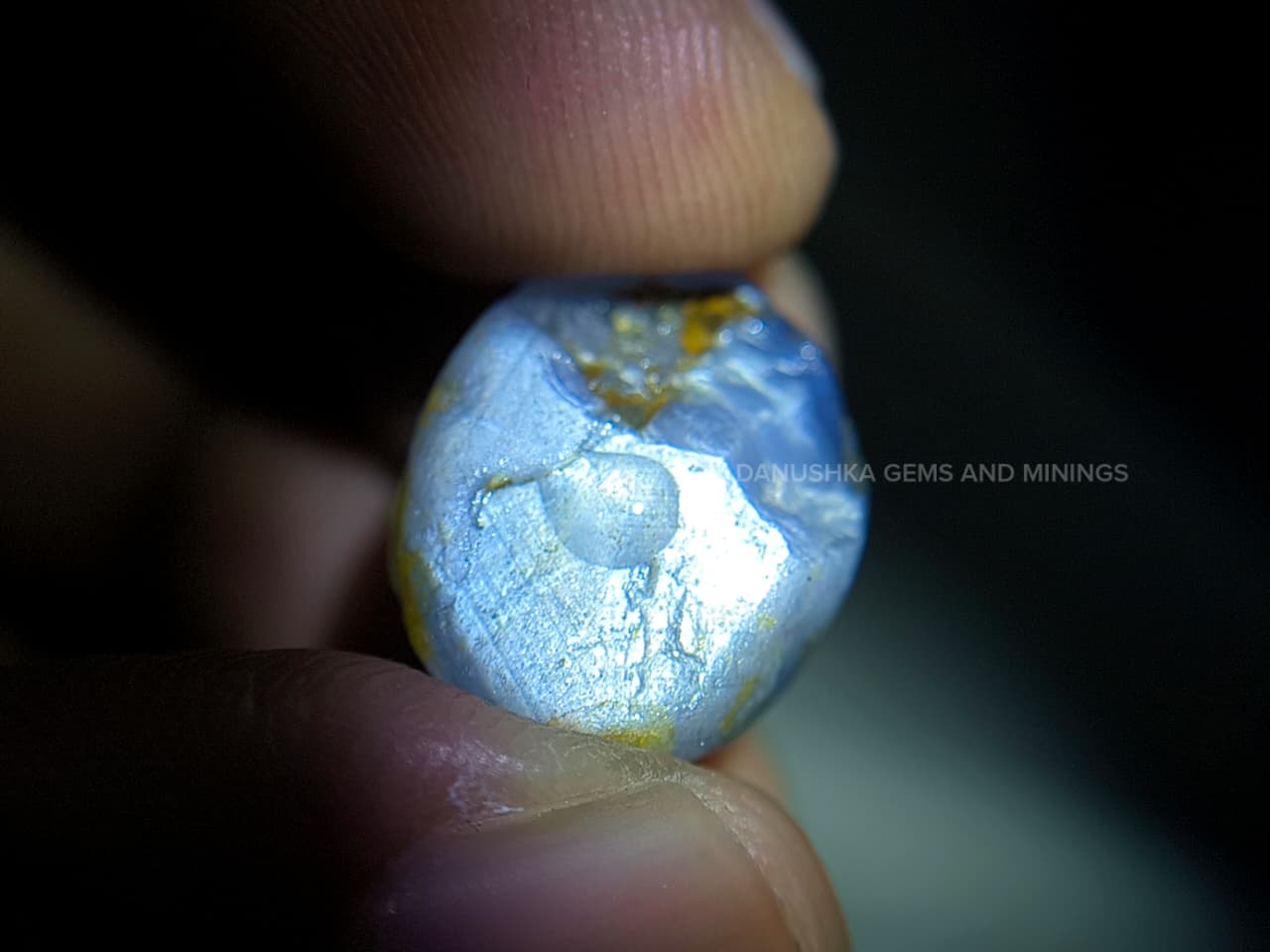
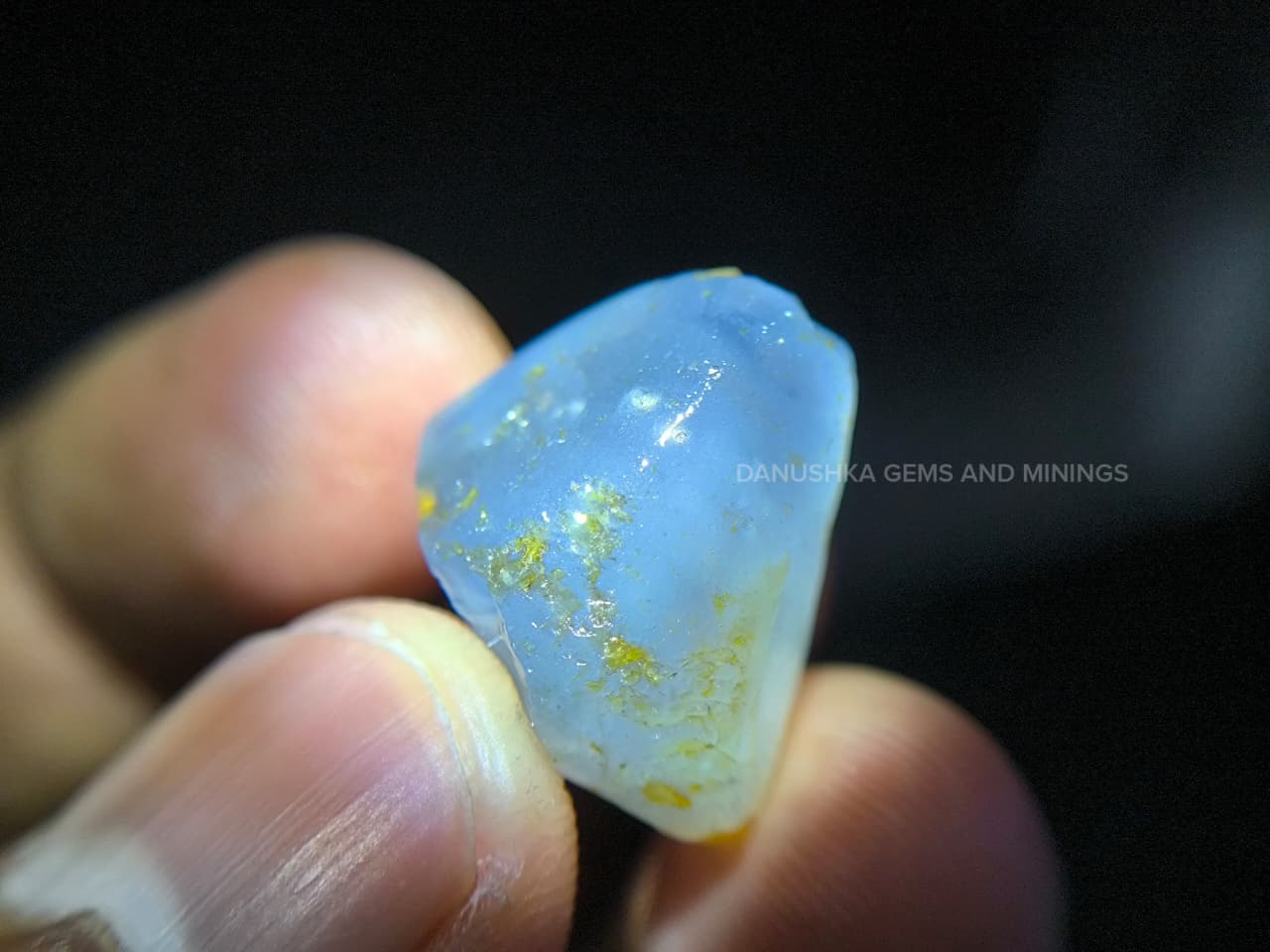
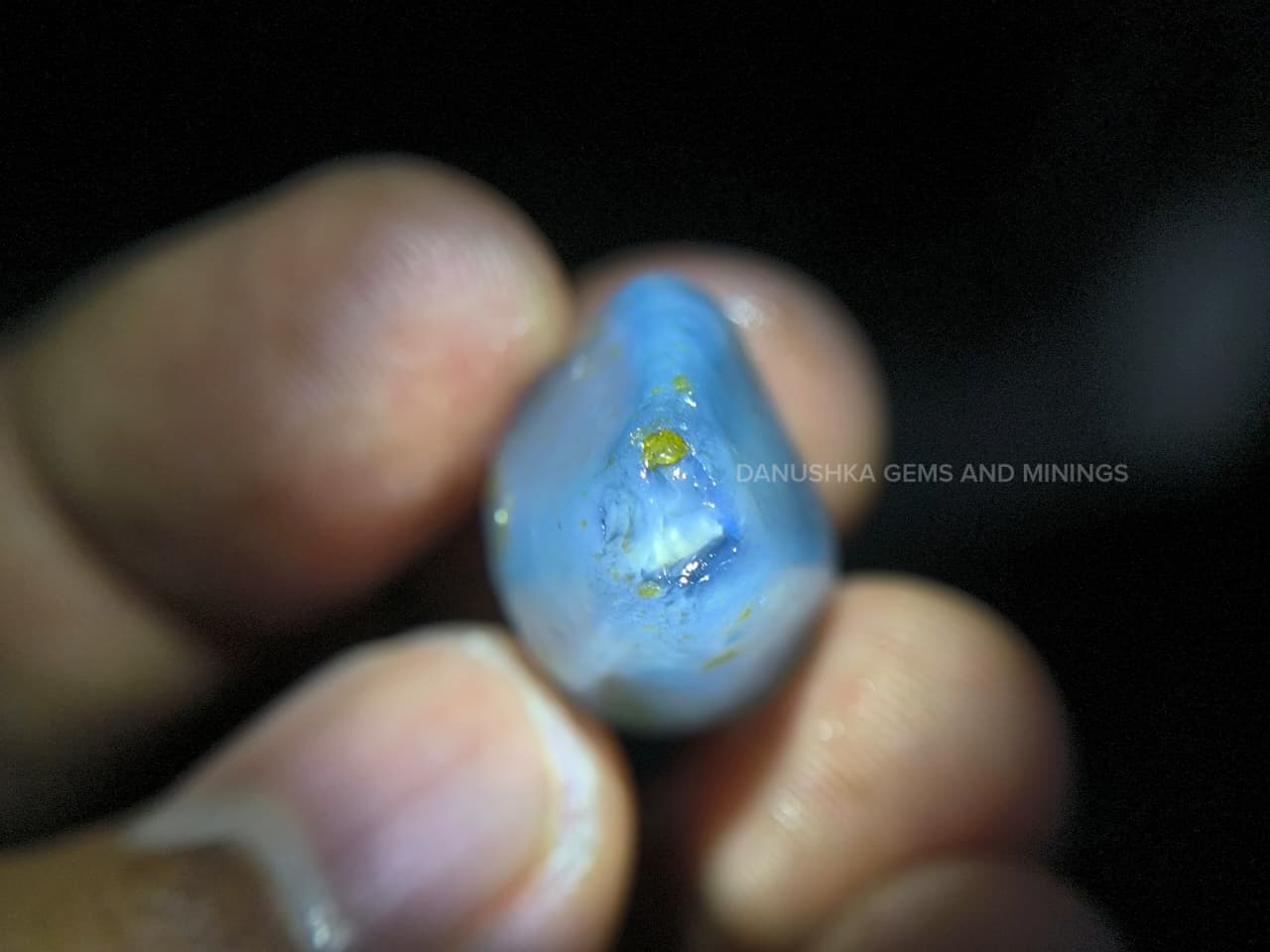
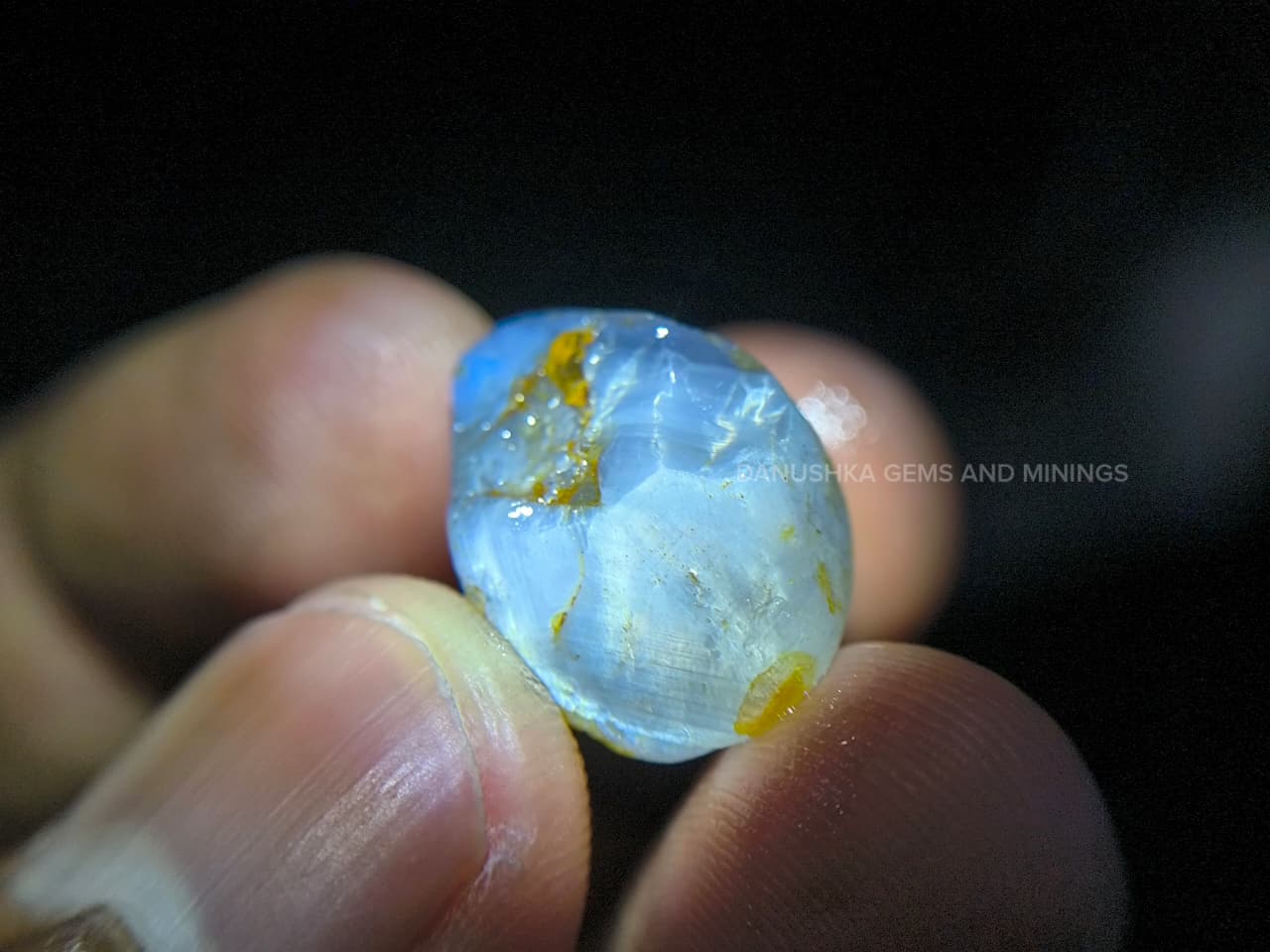
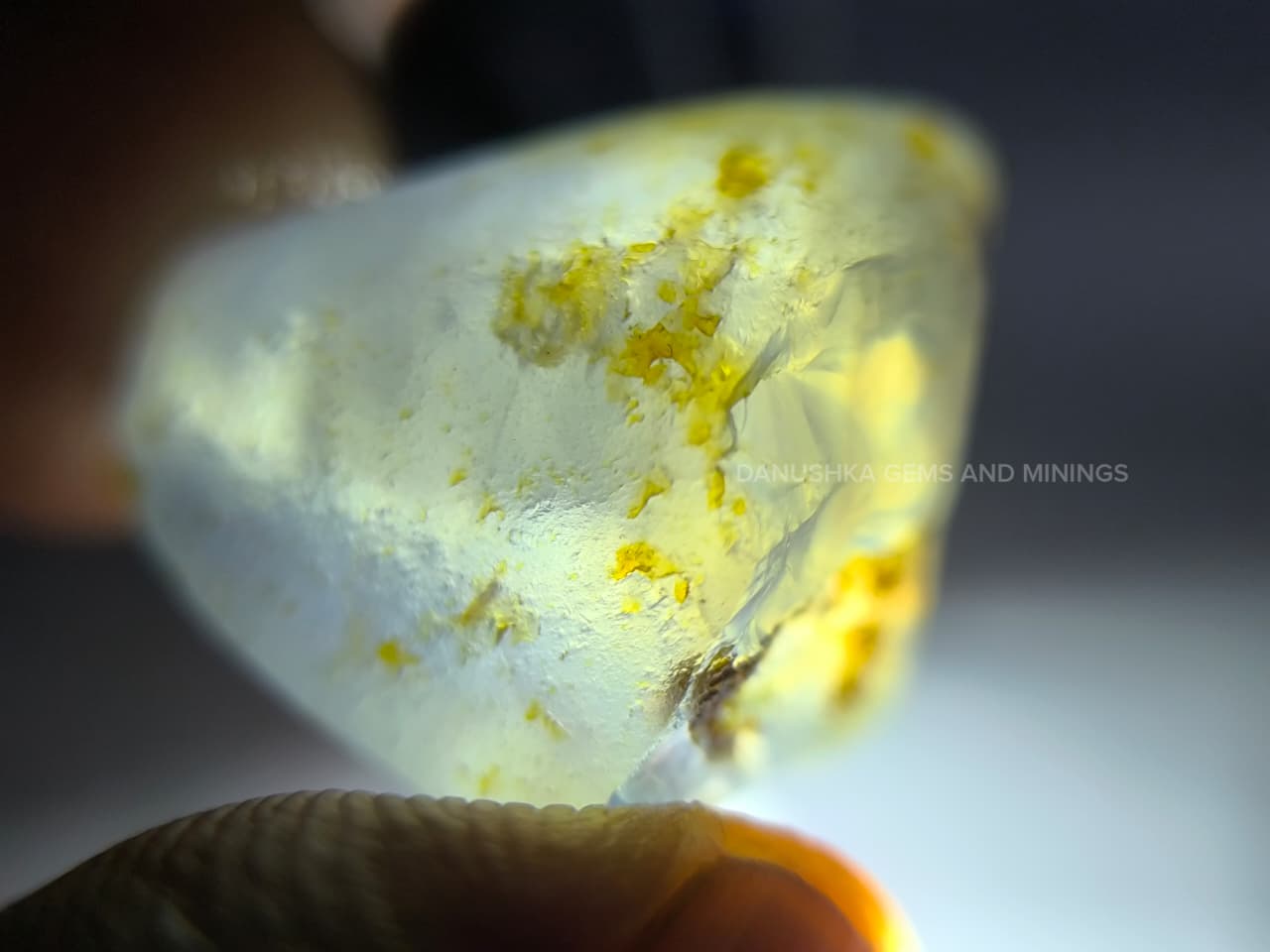
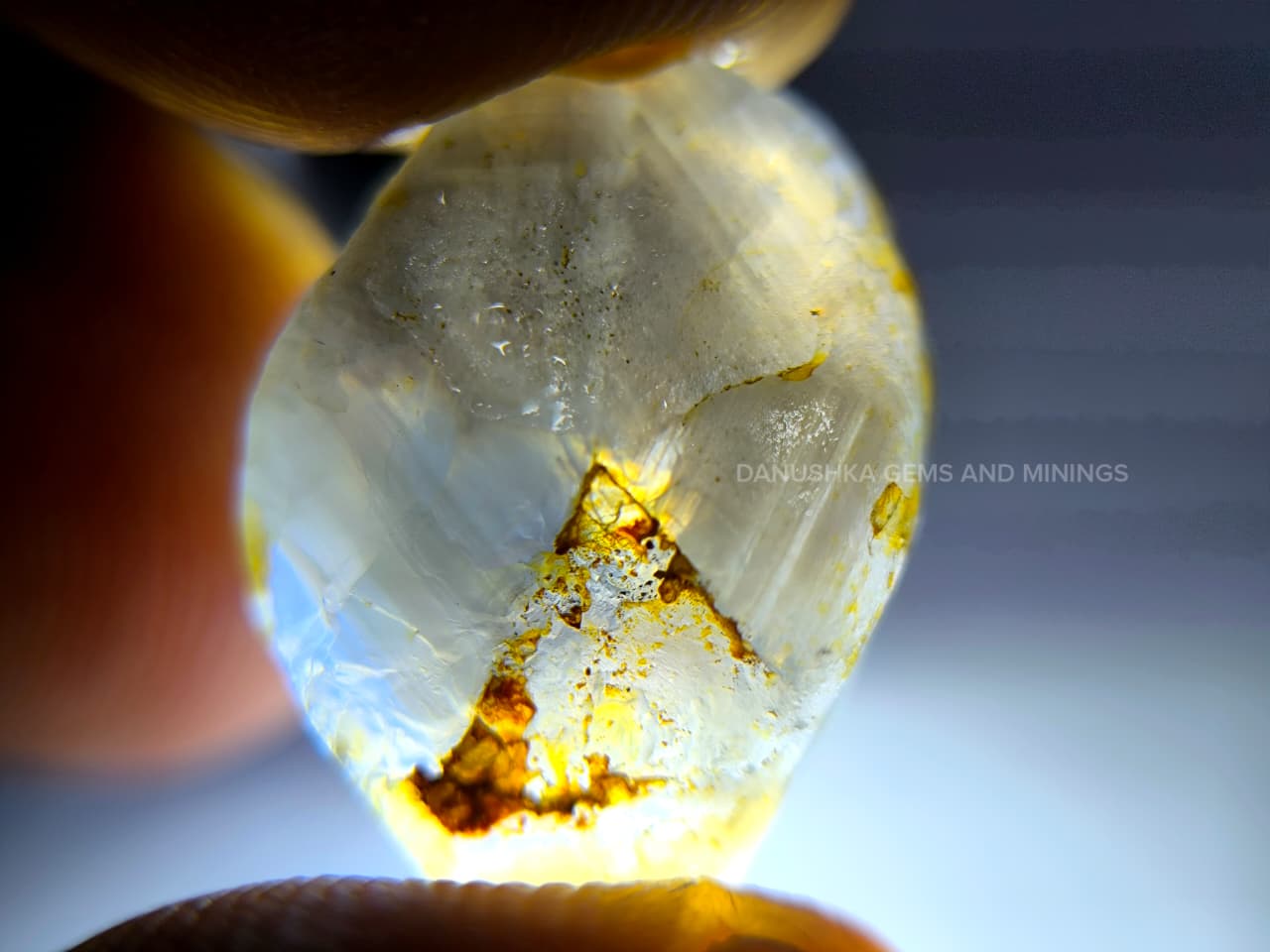
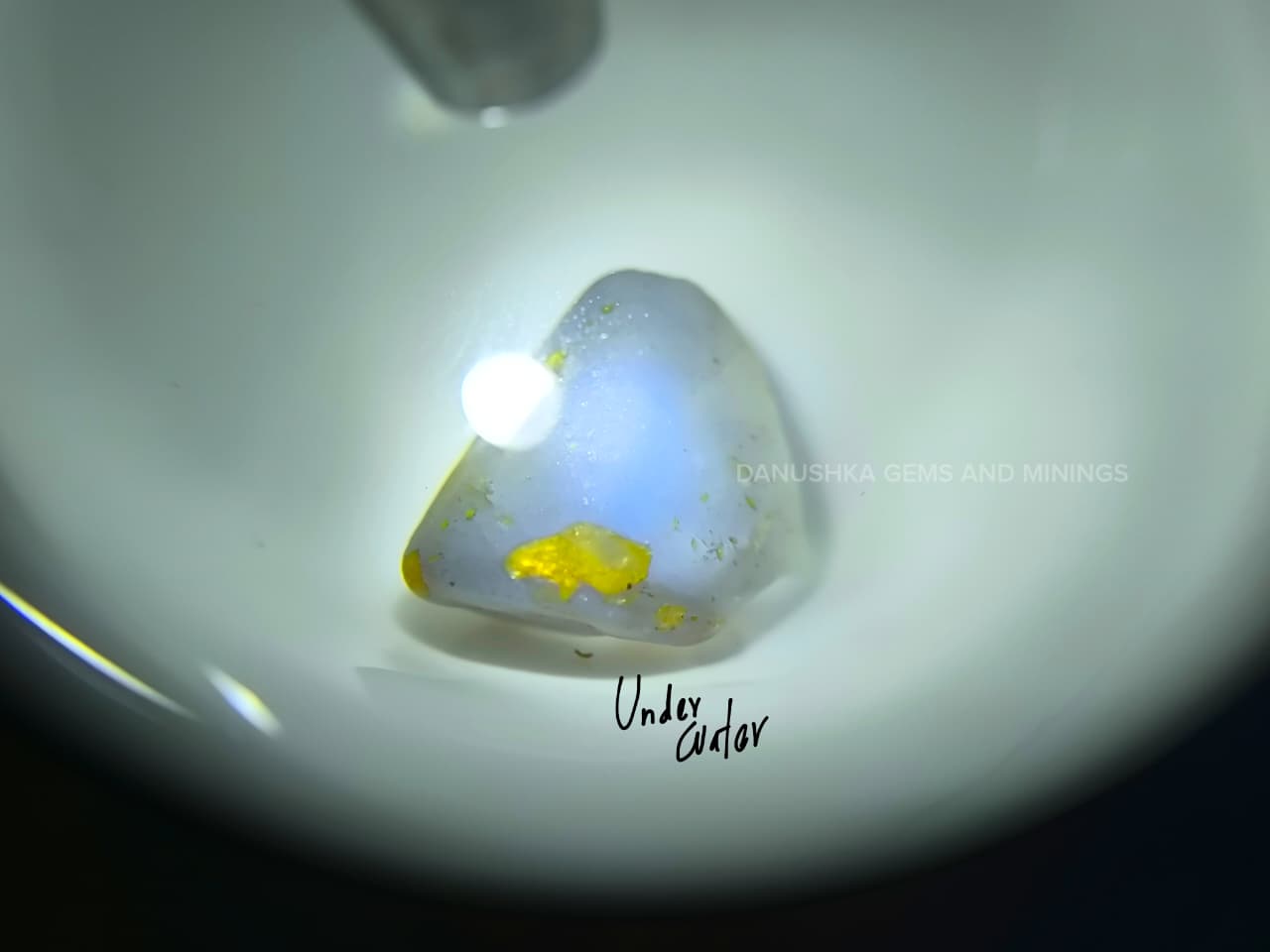
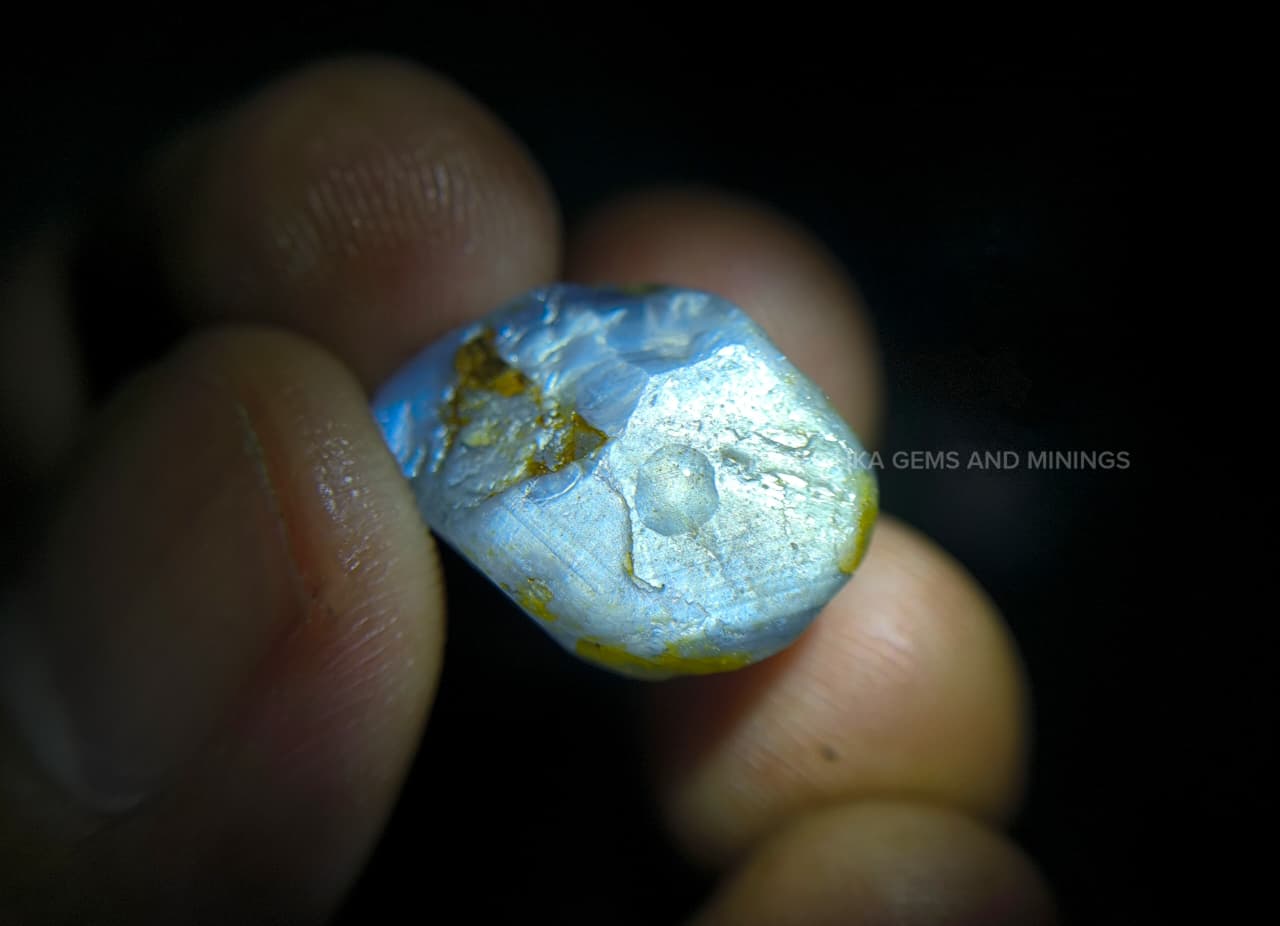
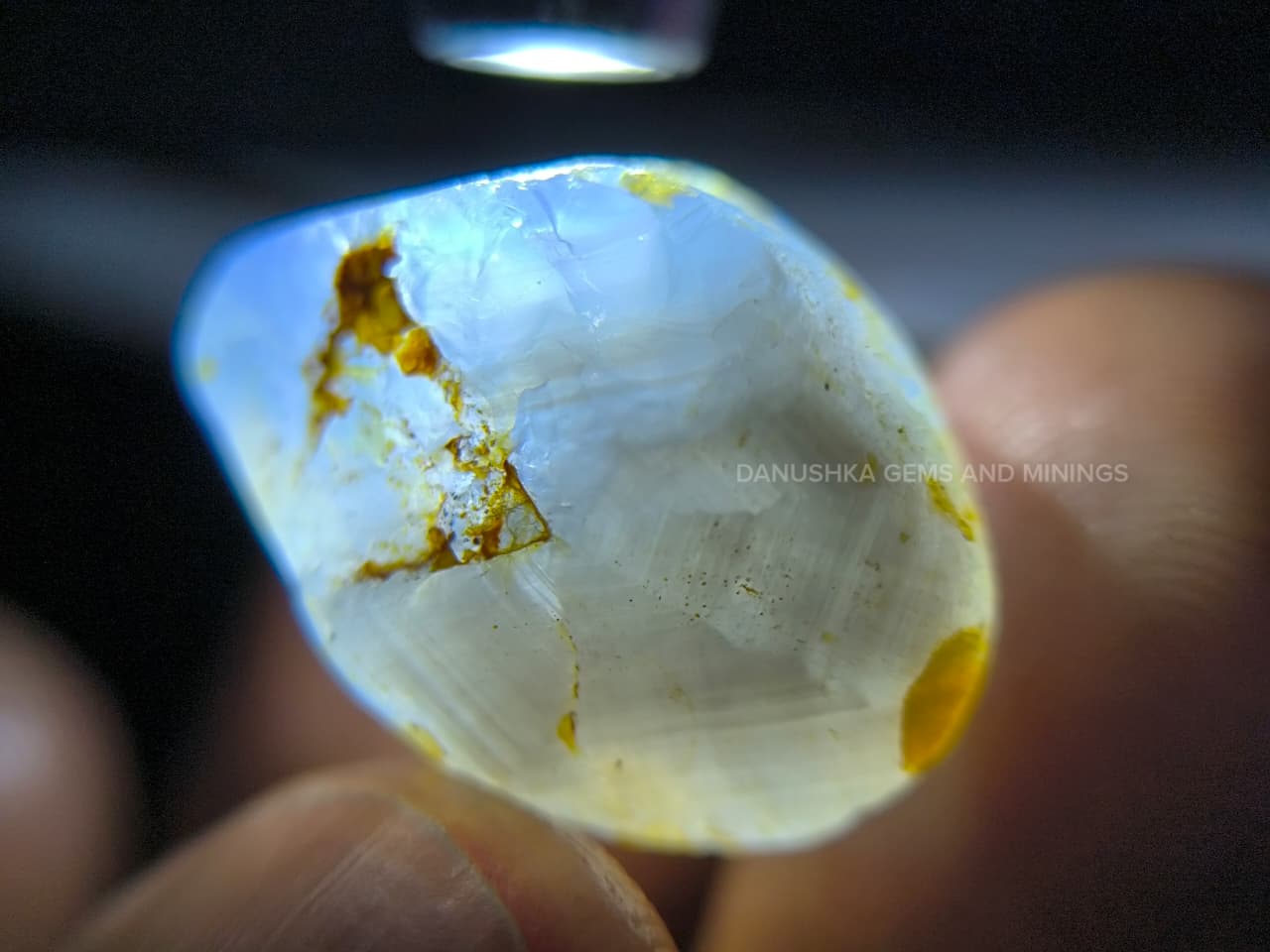
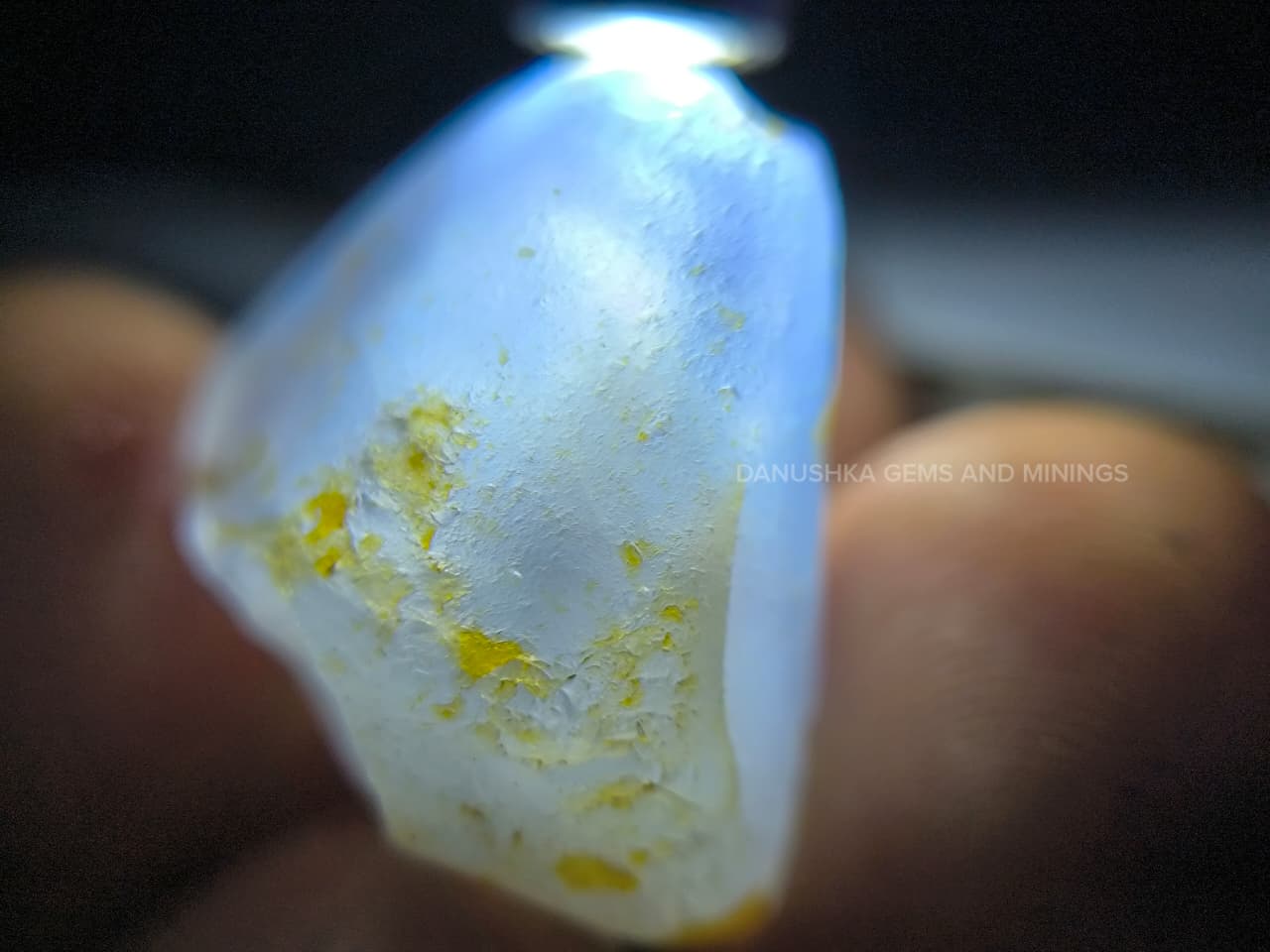
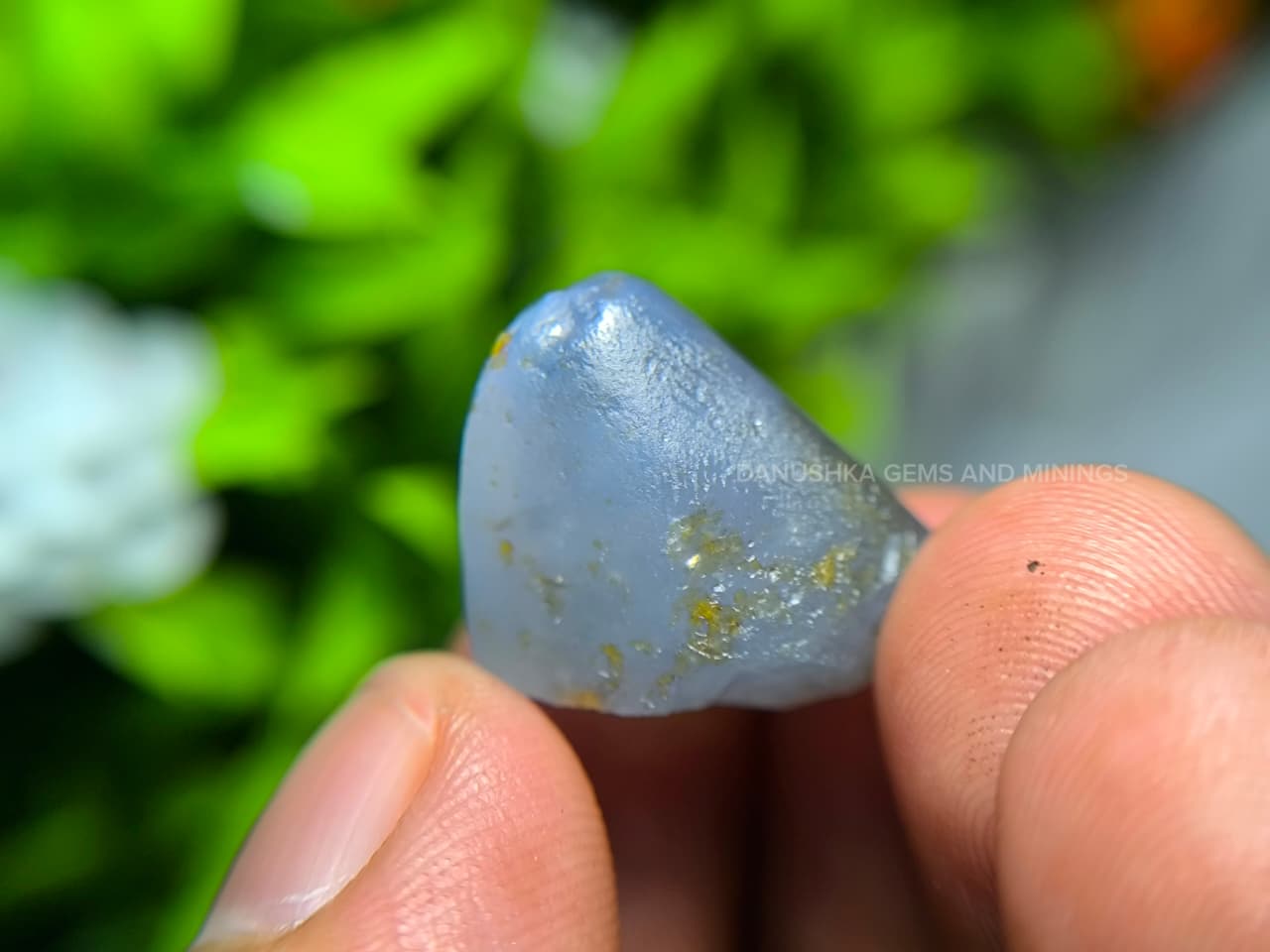
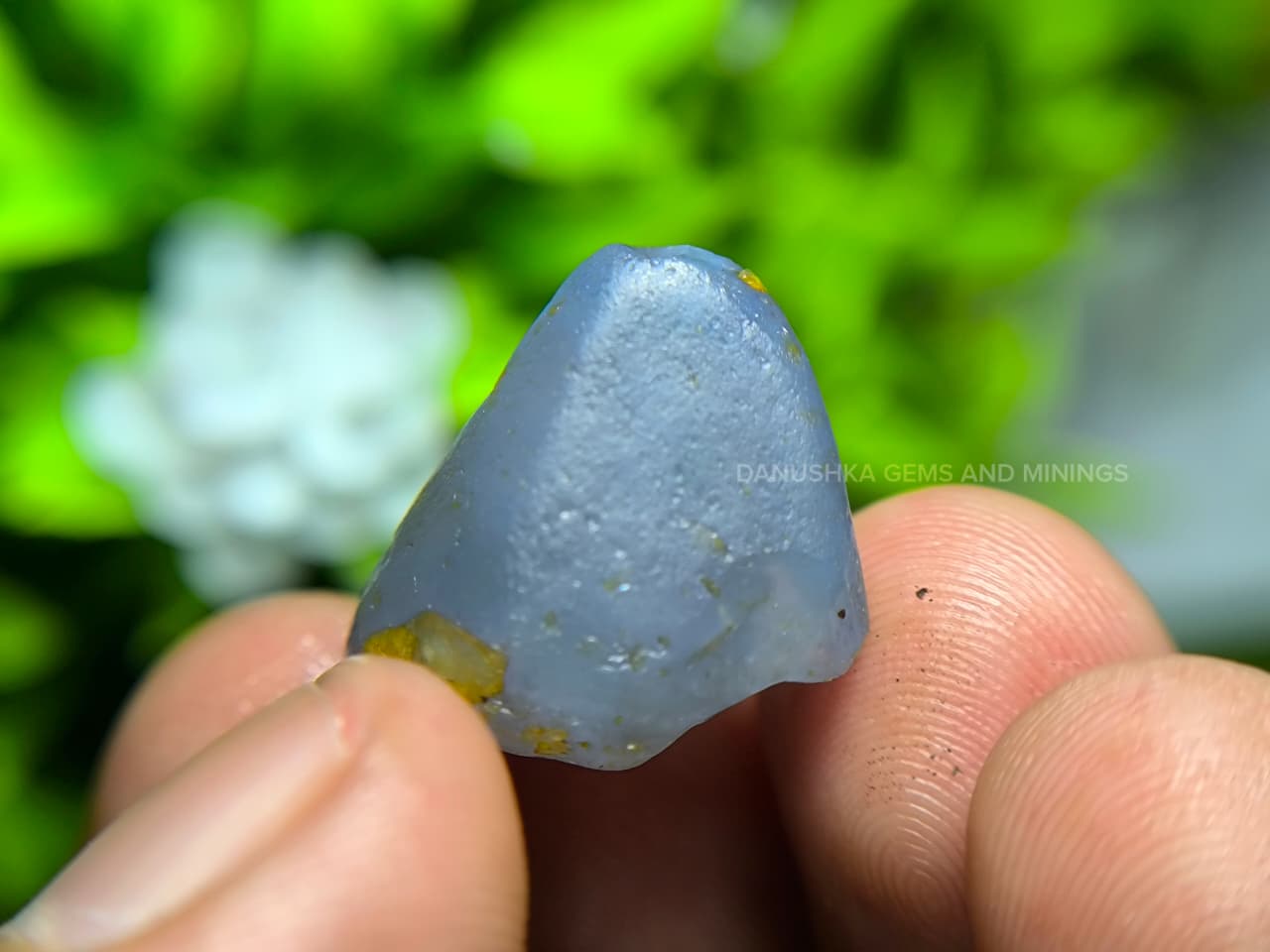
The stone show a soft blue to bluish-grey, milky body appearance. Under concentrated lighting, some areas appear more translucent, while others scatter light and retain a cloudy appearance.
Yellowish markings and irregular surface areas are also visible. These characteristics should be examined individually before cutting rather than being automatically classified as particular inclusions or minerals.
For star sapphire, the appearance of the finished gemstone depends on more than body color. The strength, position and movement of the star under a concentrated light source are important considerations.
A well-presented six-ray star generally displays three intersecting light bands, forming six rays that ideally meet near the center of the cabochon dome. The actual result depends on the stone’s internal structure and cutting orientation.
INTERNAL & EXTERNAL FEATURES
The rough has an irregular natural exterior with rounded areas, textured surfaces and a relatively broad, flat-looking face.
The photographs show visible yellowish features, smaller markings and differences in light transmission across the stone. Strong transmitted light also reveals internal-looking reflective features and areas of cloudiness.
Their exact identities cannot be determined from photographs alone. Some may be surface-related, while others may require closer internal examination.
In general, star sapphire asterism is commonly produced by light interacting with tiny, crystallographically oriented needle-like inclusions, often rutile silk. These structures can create intersecting rays when the stone is cut and illuminated appropriately.
The exact star-producing structures in this individual sapphire have not been independently identified.
CUTTING POTENTIAL – SIX-RAY STAR SAPPHIRE CABOCHON
The preferred cutting direction for this 32.10 ct rough is professional cabochon cutting, with the objective of developing a well-centered six-ray star.
Unlike ordinary faceting, which generally emphasizes transparency, proportions and light return, star sapphire cutting requires particular attention to the orientation of the structures responsible for asterism.
The cutter must examine the rough from different directions and determine the appropriate position for the cabochon dome.
The measured flat-edge face provides a useful area for initial assessment, but its relationship to the stone’s crystallographic orientation must be established. A broad face alone does not guarantee that it is correctly positioned for displaying a star.
Dome height and curvature also require attention. An unsuitable cutting direction may produce an off-center or weak star, even when the rough contains appropriate asterism-producing structures.
The cutter must balance available body depth, surface removal, dome design and weight retention.
A perfectly centered six-ray star, particular finished shape or recovery percentage cannot be guaranteed.
ORIGIN & SOURCE STORY
This sapphire originates from Bibilegama village around mining in Sri Lanka, within Sabaragamuwa Province.
Sri Lanka, historically known as Ceylon, has a long gemstone-mining tradition. Star sapphires and other asteriated gemstones have formed part of the country’s gemological heritage and have appeared in historical descriptions of Asian gemstones.
The local term “Aru Nul” reflects traditional Sri Lankan source-market knowledge. In the explanation supplied by the source trade, “Aru” means six, while “Nul” refers to threads or lines, describing the six rays of a star sapphire.
Danushka Gems & Minings works through Sri Lankan gemstone-producing villages, maintaining relationships with miners, mine owners and local source dealers.
This 32.10 ct material is presented with its stated Binilegama origin and its natural rough characteristics directly from the source.
TREATMENT / CUTTING / CERTIFICATION NOTES
Current treatment disclosure: Natural Unheated.
Professional heat-treatment evaluation is possible for some sapphire material. However, heating can alter the fine internal structures responsible for asterism, disappearing or weakening the star effect.
For this particular rough, the preferred recommendation is to preserve its unheated condition and evaluate its potential as a six-ray star sapphire cabochon.
Custom cutting and independent gemological certification may be arranged where suitable.
WHY THIS STONE IS INTERESTING
This sapphire offers an opportunity to study specialist star sapphire cutting rather than ordinary faceting.
Its 32.10 ct rough weight, broad measured face and available depth provide material for professional orientation assessment. The traditional “Aru Nul” designation also connects the stone with Sri Lankan gemstone knowledge.
For collectors, lapidaries and dealers, the main interest is the possibility of developing natural asterism through careful cabochon work.
SOURCE & ETHICAL POSITION
Danushka Gems & Minings emphasizes source-connected purchasing, careful individual evaluation, accurate origin information and transparent treatment disclosure.
We work through Sri Lankan gemstone-producing regions and consider each rough stone according to its natural characteristics.
For star sapphire material, preserving the structures responsible for asterism may be more important than maximizing transparency or cutting recovery.
Our approach supports professional examination, appropriate cutting and certification where suitable, without unrealistic promises about finished results.
Frequently Asked Questions
It is natural unheated six-ray star sapphire rough intended for specialist cabochon cutting evaluation.
It is a traditional Sri Lankan gemstone term referring to the six threads or rays associated with star sapphire.
Bibilegama village around mining in Sri Lanka, Sabaragamuwa Province.
Professional heating may be considered, but it can affect asterism. Preserving the natural unheated condition is the preferred recommendation.
The objective is a well-centered six-ray star, but final ray sharpness, symmetry and cutting recovery cannot be guaranteed.