| Weight | 12.12 ct |
|---|---|
| Dimensions | 12.8 × 12.6 × 8.5 mm |
| Color | Pale Bluish Appearance |
| Cut / Form | Natural Rough |
| Treatment | Natural Unheated |
| Variety | Six-Ray Star Sapphire |
| Species | Corundum |
| Origin | Marapana, Sabaragamuwa Province, Sri Lanka |
| Country | Sri Lanka |
| Product Type | Rough |
12.12 ct Unheated Ceylon Six-Ray Star Sapphire Rough – Marapana, Sri Lanka
12.12 ct unheated Ceylon six-ray star sapphire rough from Sri Lanka.
SKU
DG00858
Category Sapphire Rough
Tags Aru Nul Sapphire, Ceylon Star Sapphire, Six-Ray Star Sapphire, Sri Lanka Gemstone, Unheated sapphire
Spread the Love
Stone Identity & Quality
This 12.12 carat natural unheated Ceylon six-ray star sapphire rough originates from Marapana village around mining in Sri Lanka, within Sabaragamuwa Province.
Measuring 12.8 × 12.6 × 8.5 mm, the stone is presented as rough sapphire material intended for specialist star sapphire cutting and evaluation.
In the Sri Lankan gemstone trade, this type of material is locally described as “Aru Nul,” a term explained as referring to six lines or rays. The word “Aru” means six, while “Nul” refers to a line or thread in the local terminology.
This traditional description relates to the six-ray star pattern associated with asteriated sapphire.
Sapphire belongs to the mineral species corundum, chemically composed of aluminium oxide (Al₂O₃). It has a hardness of 9 on the Mohs scale and is widely used in both faceted gemstones and cabochon-cut star sapphires.
Unlike transparent faceting rough, star sapphire material is evaluated for the internal structures responsible for asterism and for the potential to display an attractive star after suitable cutting.
The stone is currently described as Natural Unheated, and the preferred cutting direction is to develop its six-ray star character rather than process it primarily for conventional faceting.
Color & Visual Characteristics
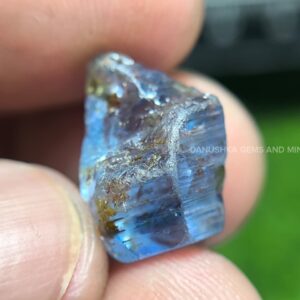
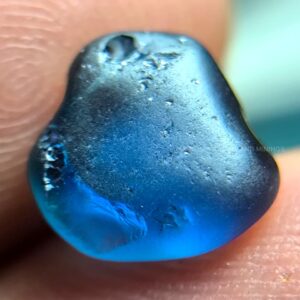
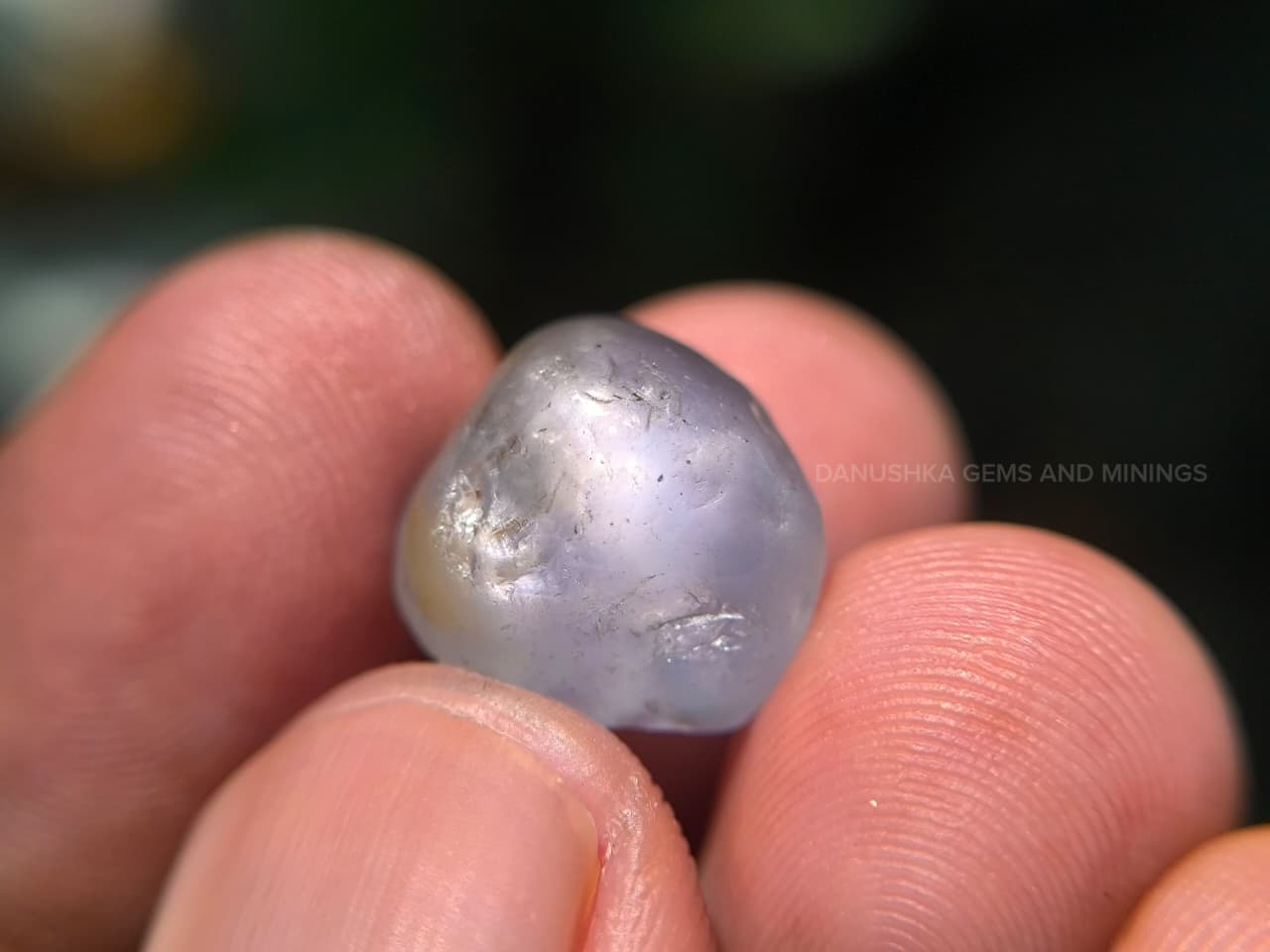
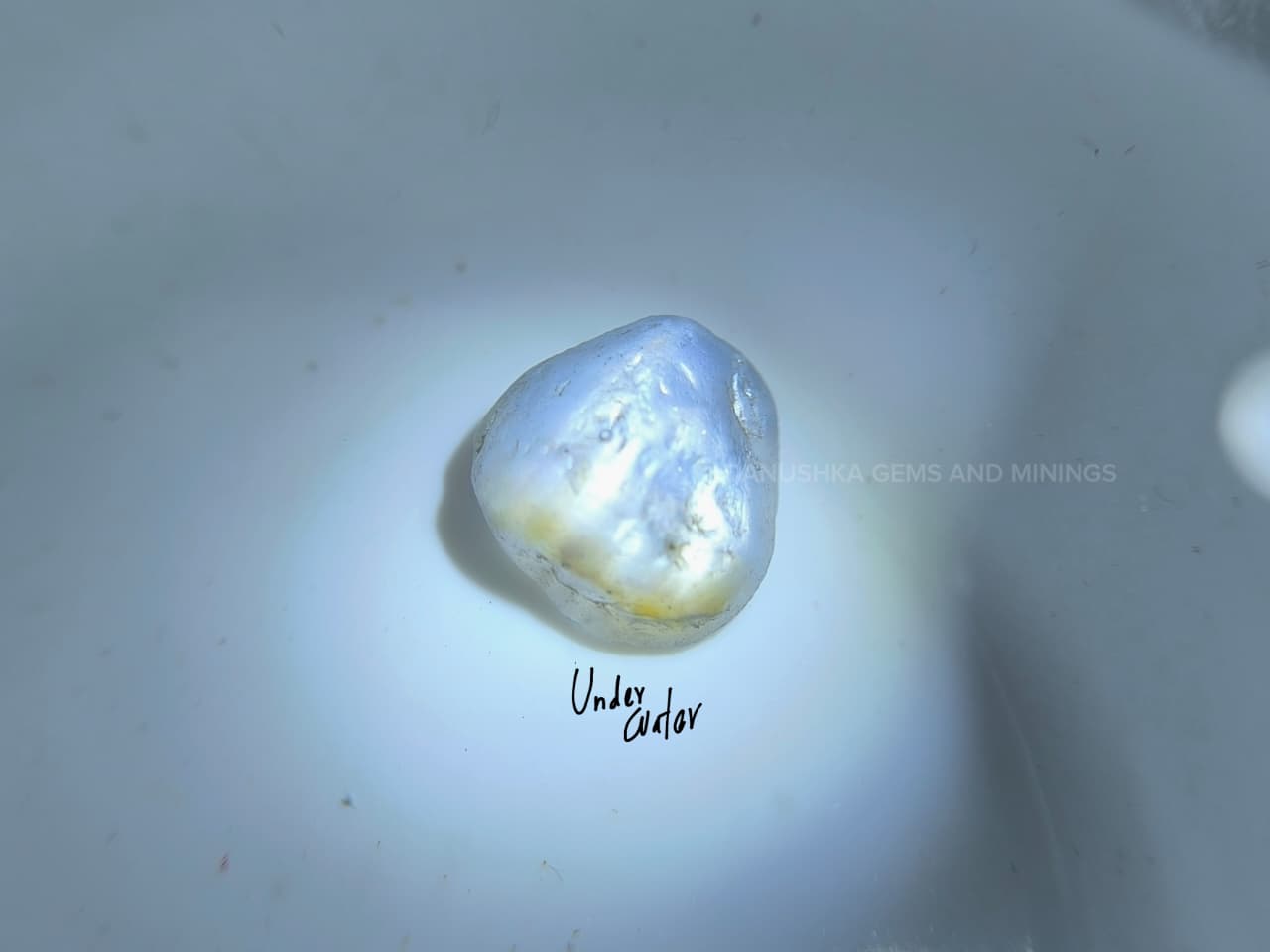
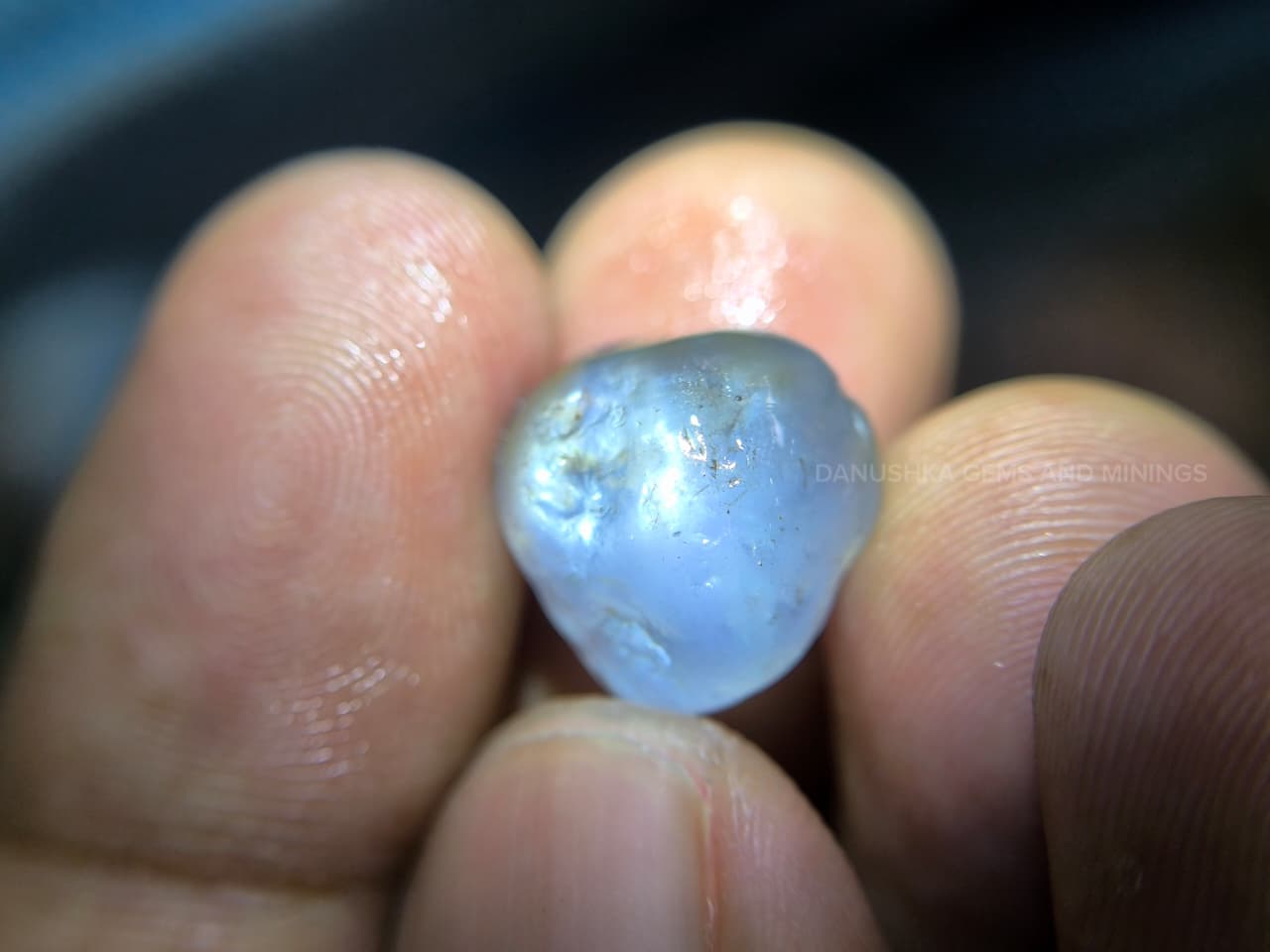
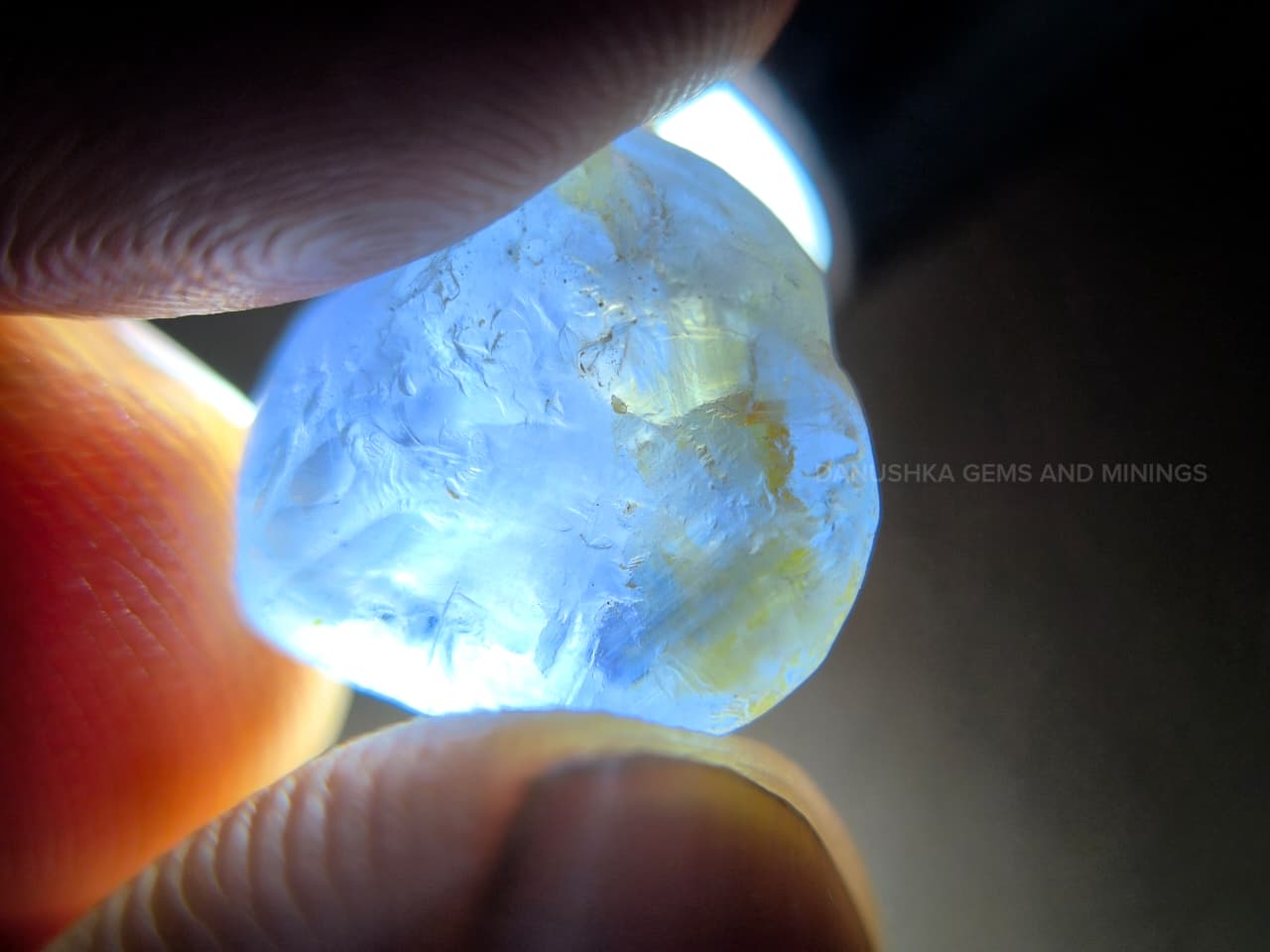
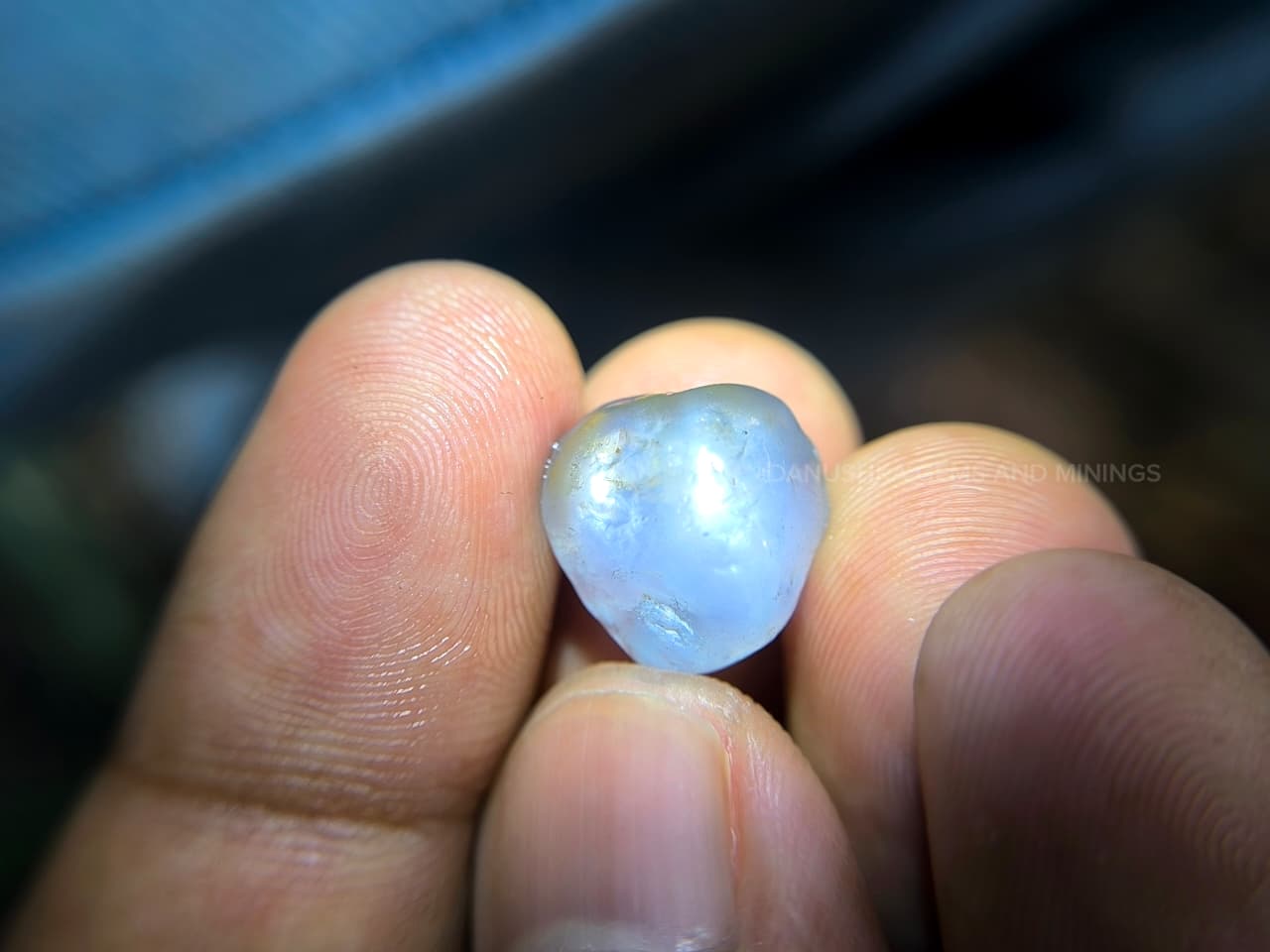
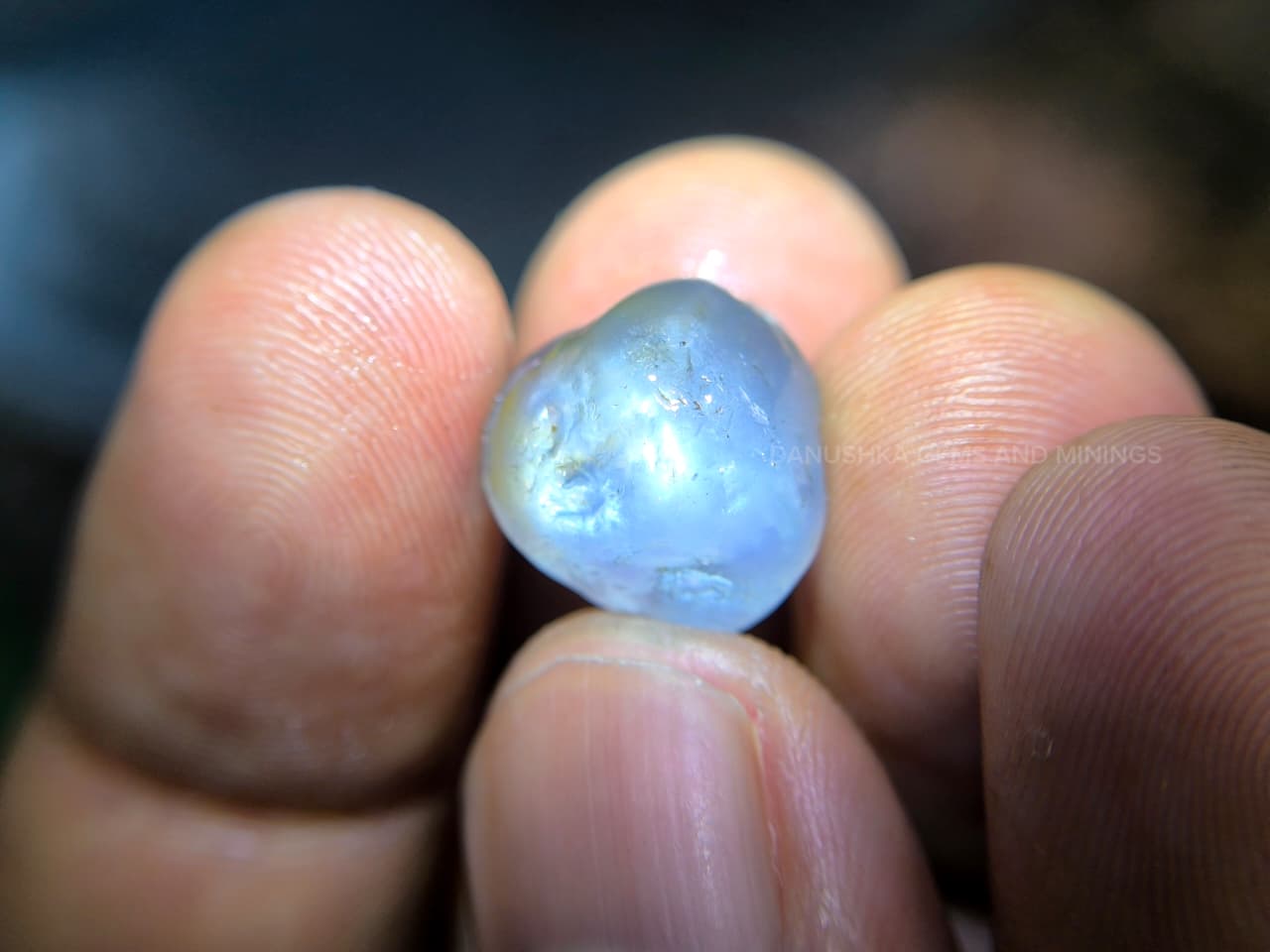
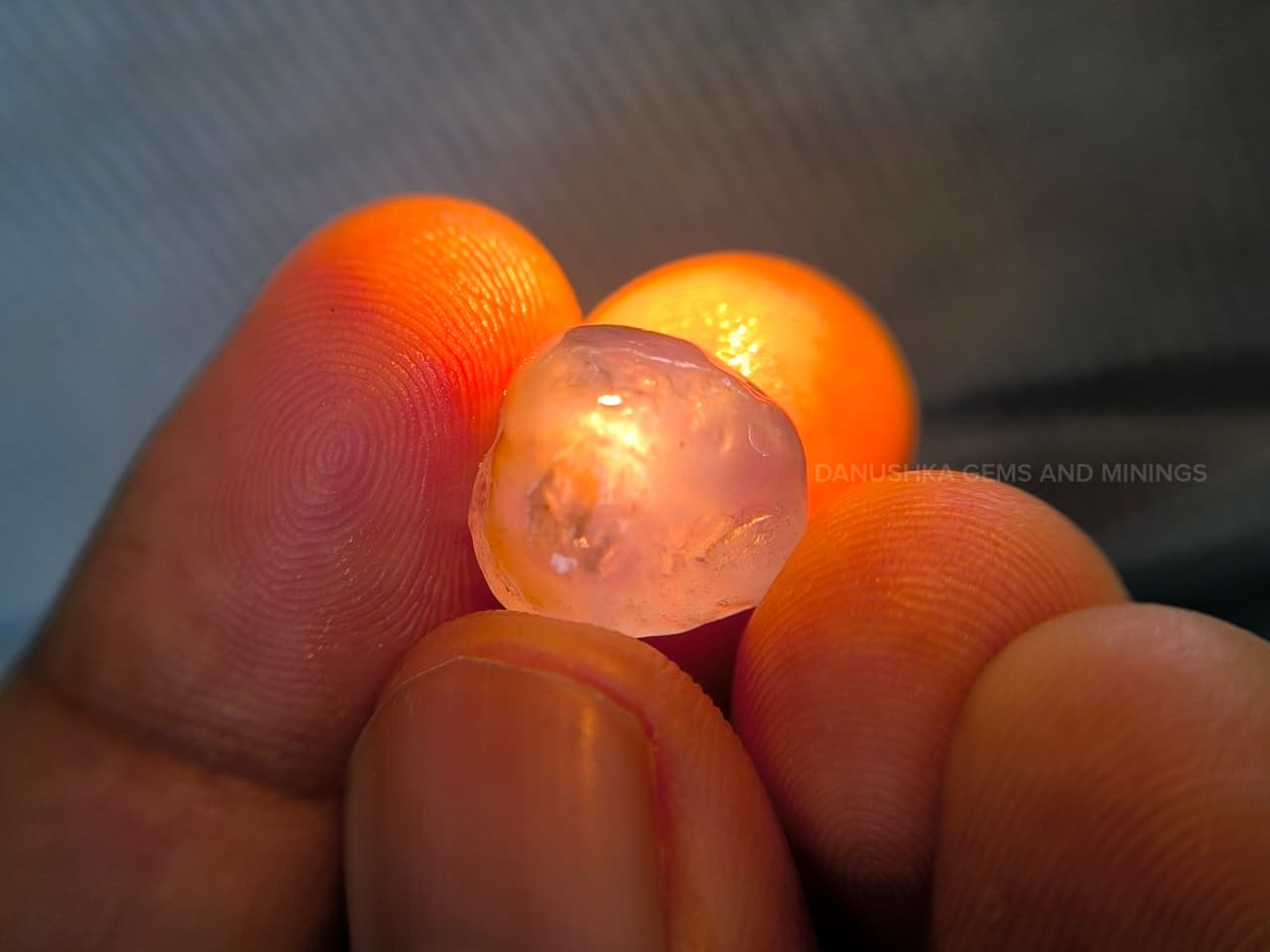
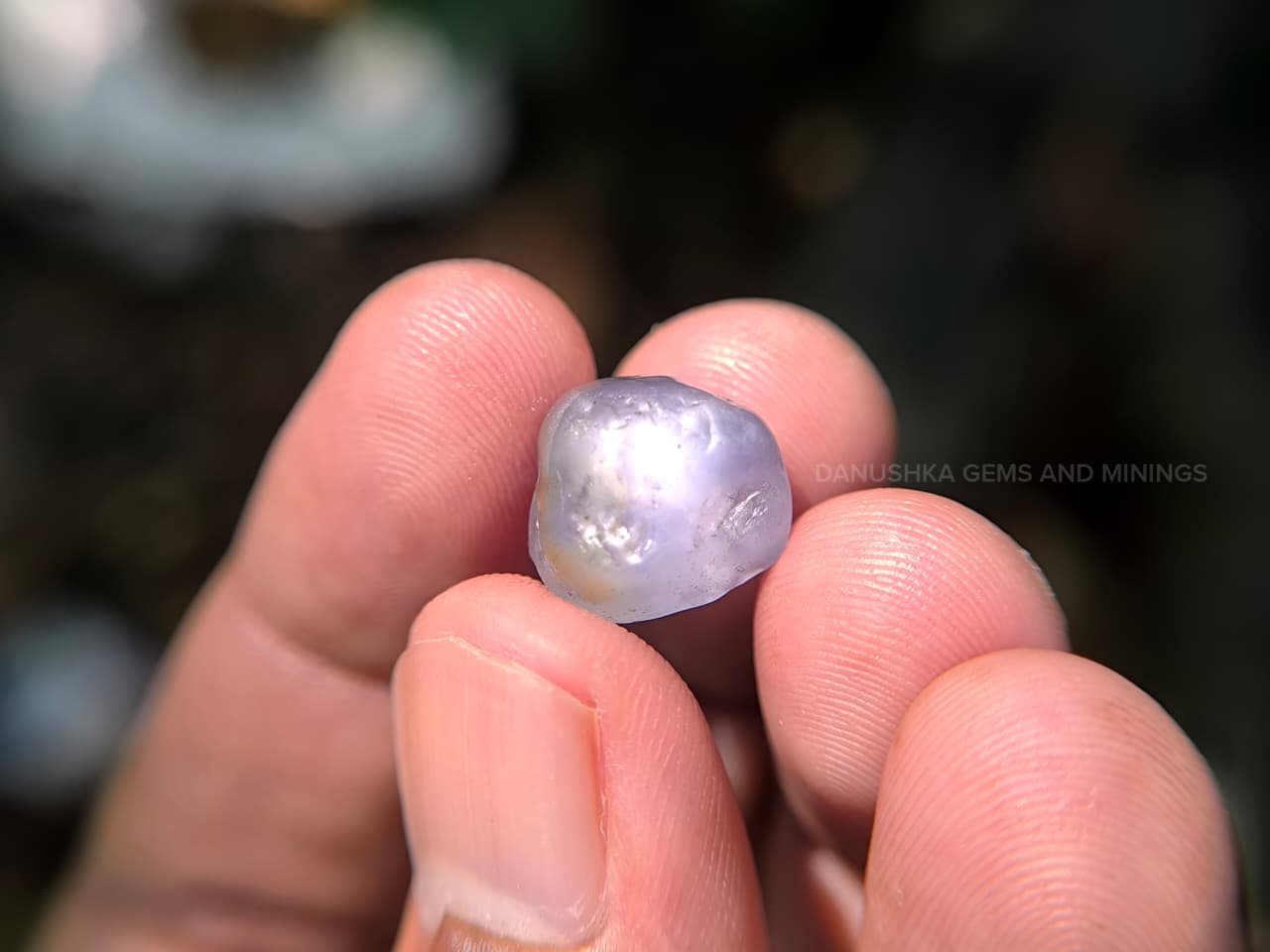
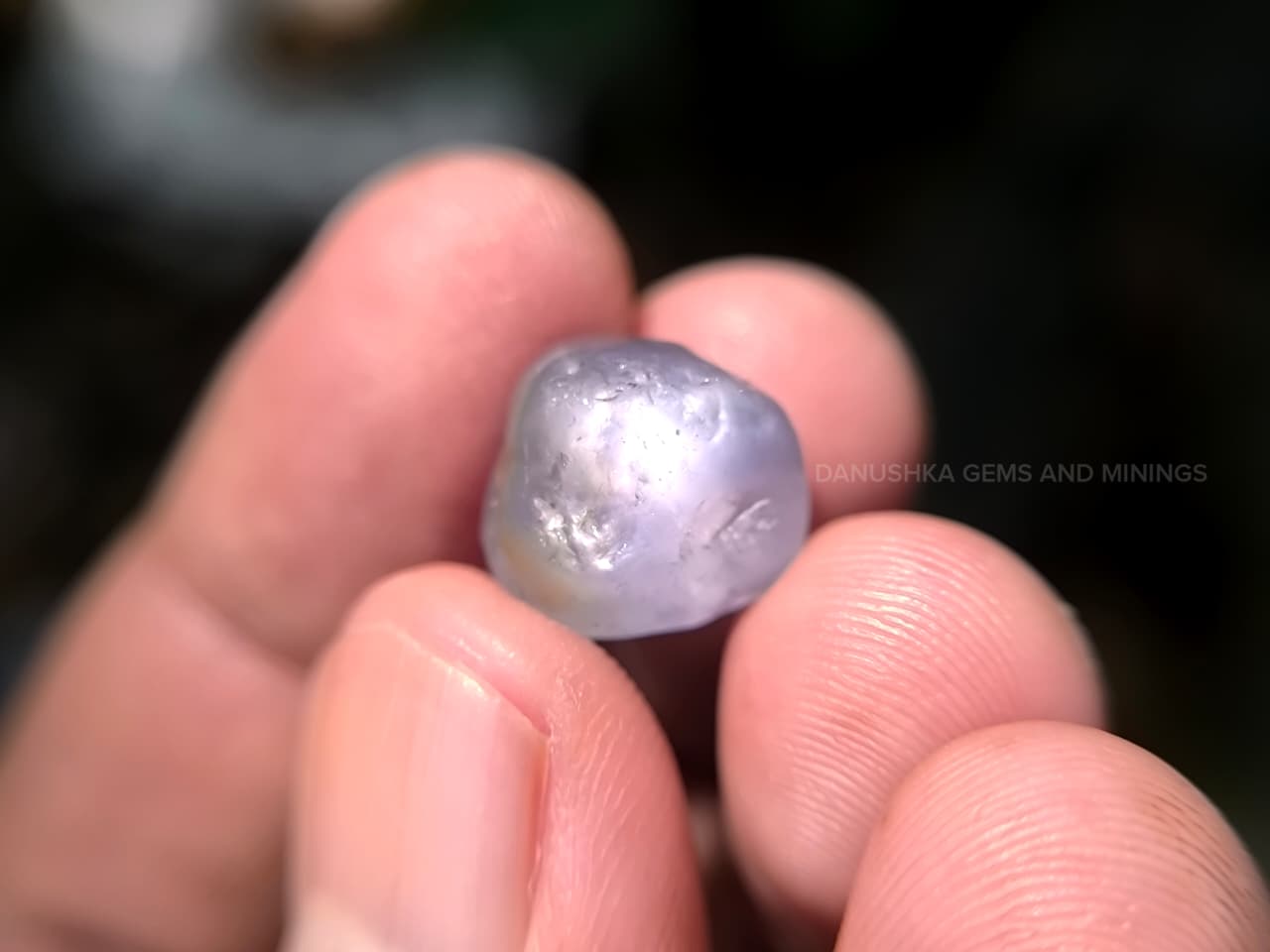
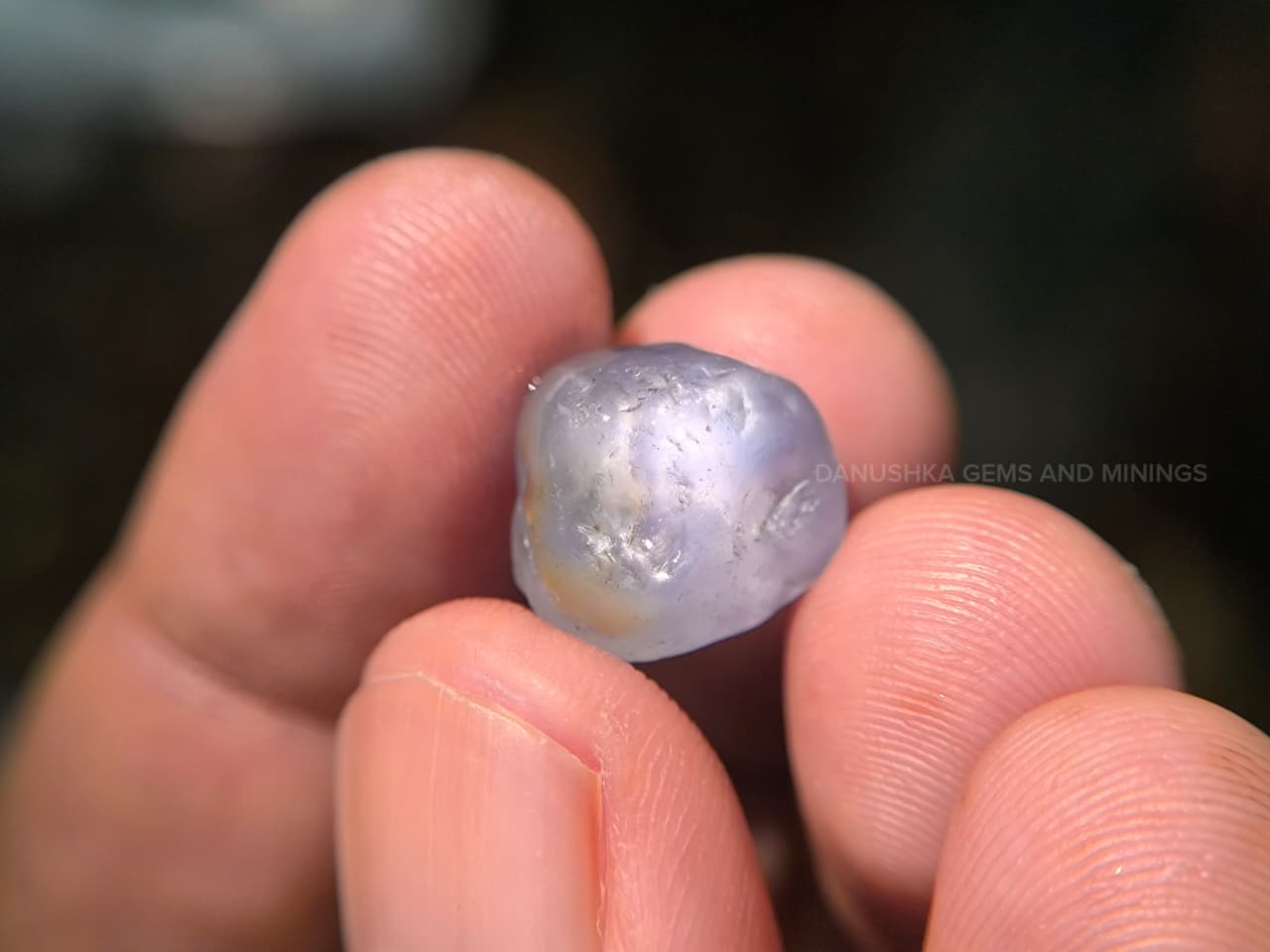
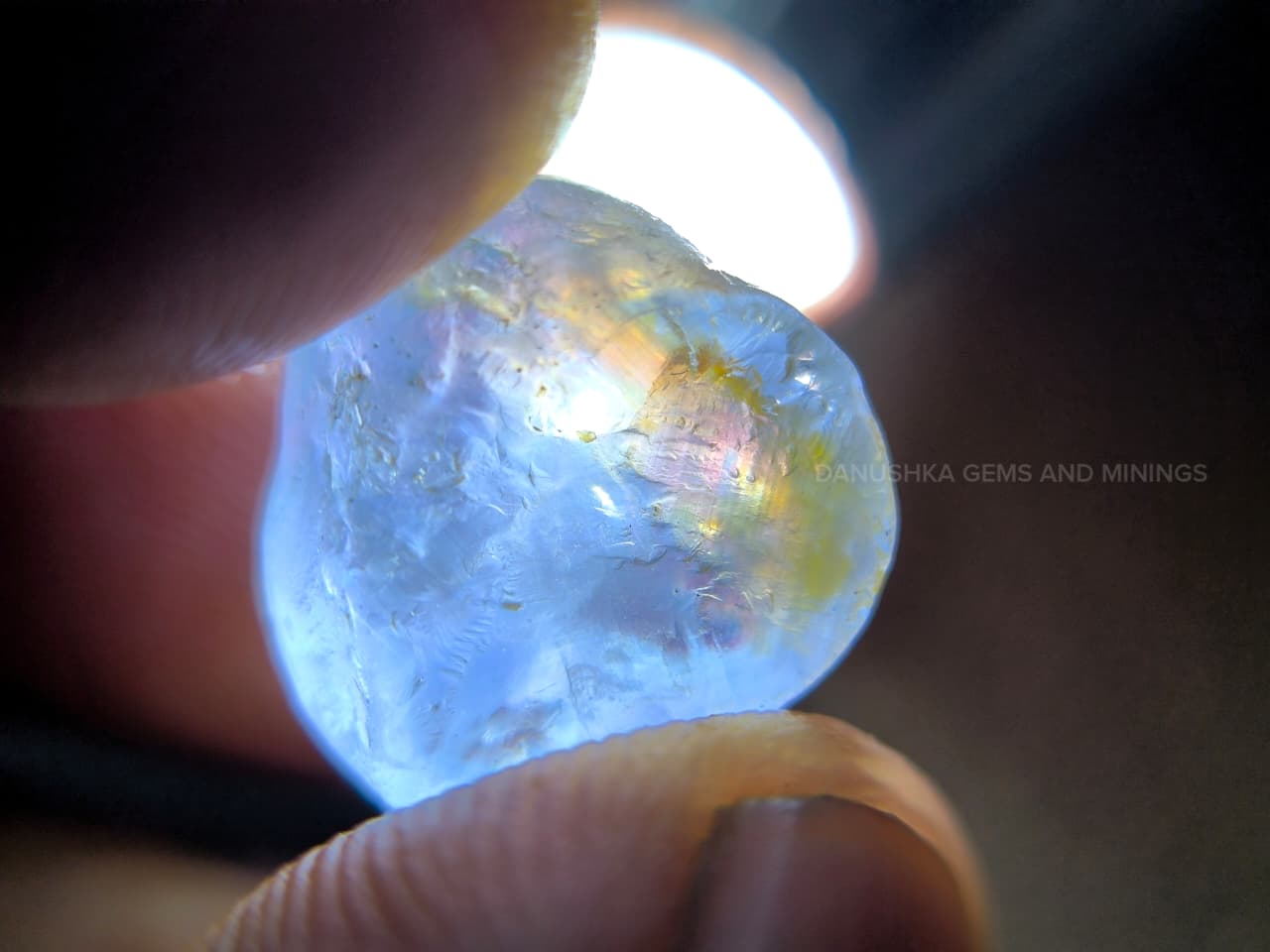
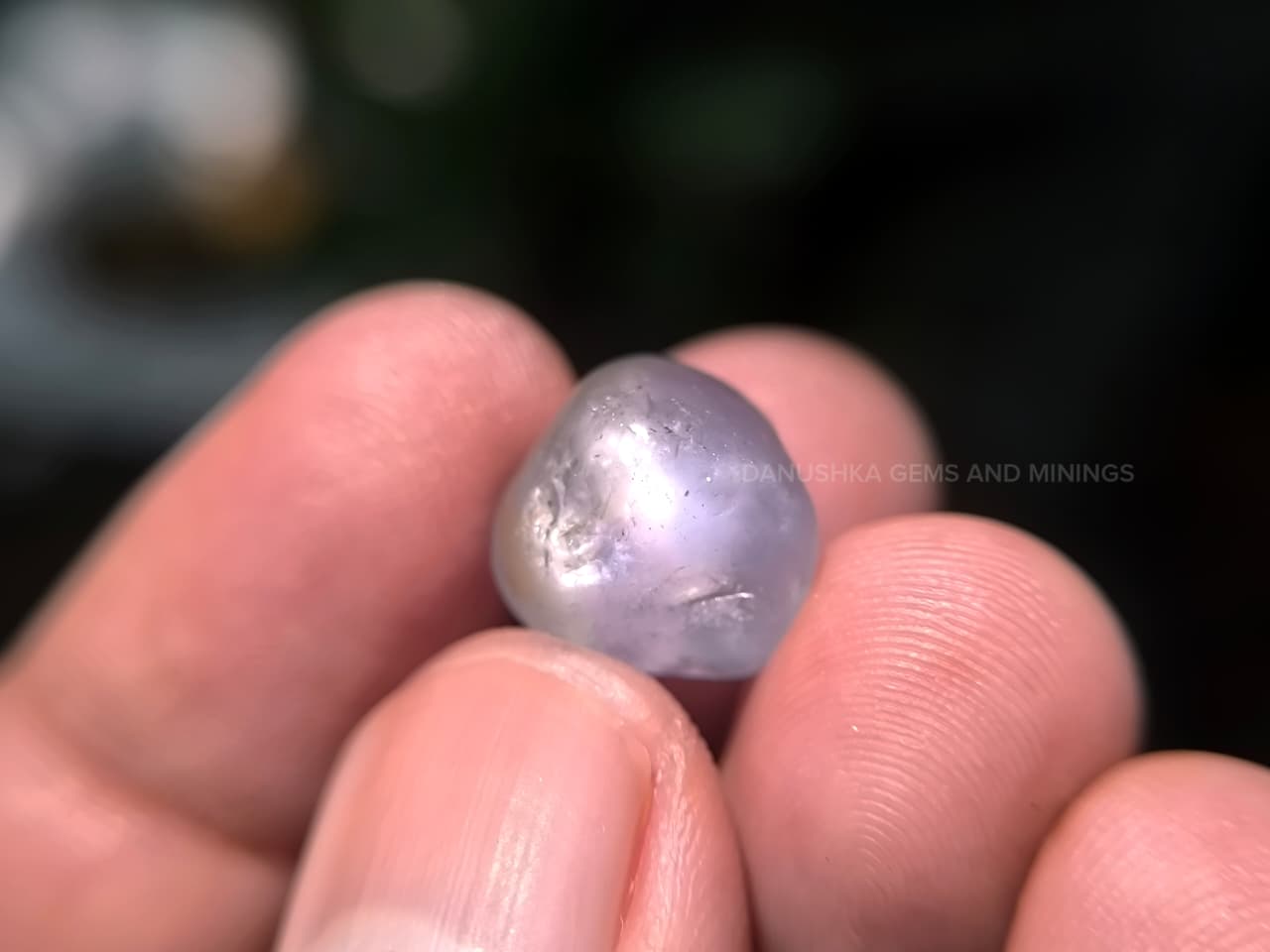
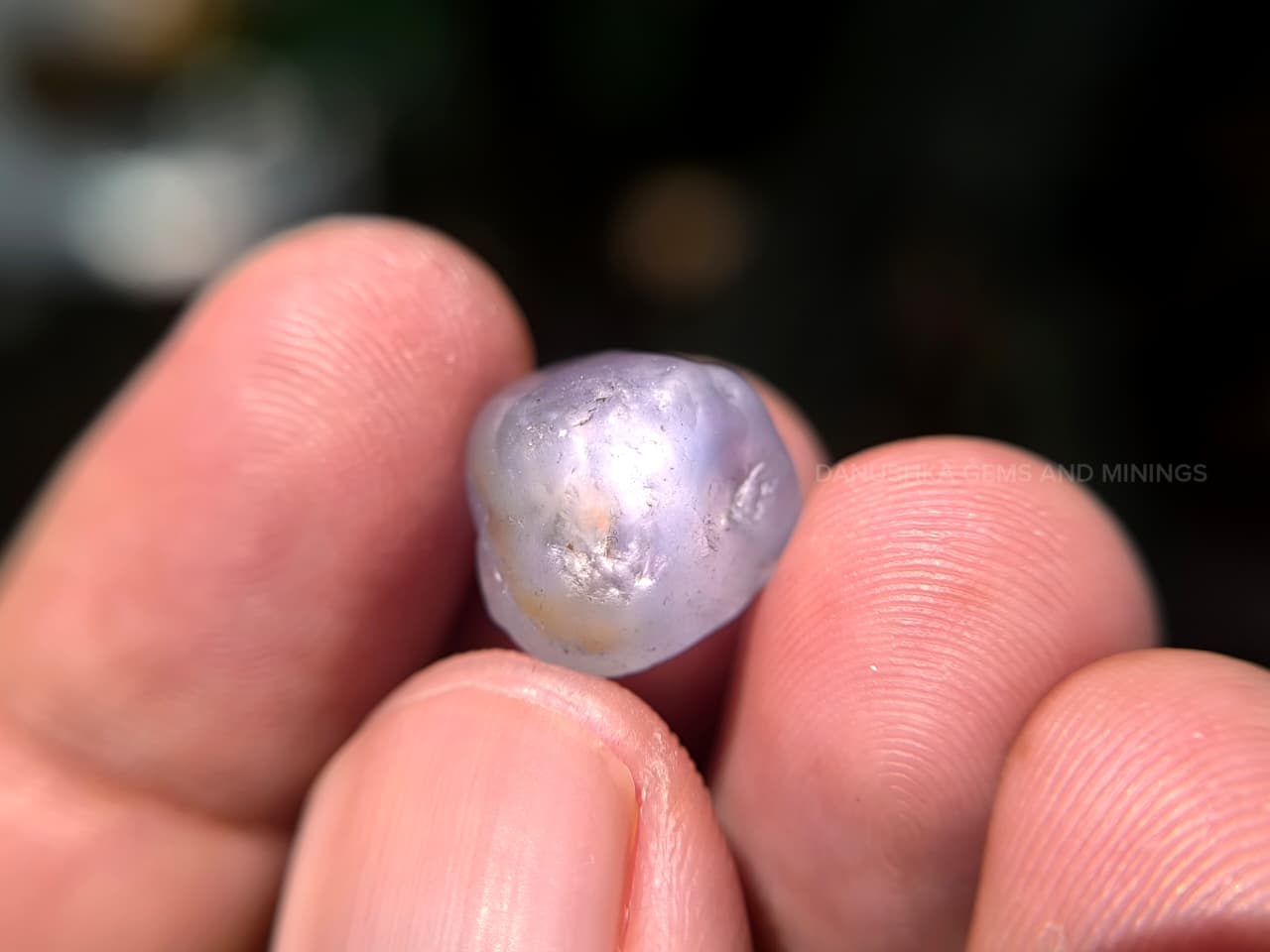
The supplied photographs show a pale bluish appearance, with some lighter yellowish areas becoming visible under strong illumination through the internal character near ther surface.
The perceived body color changes with lighting conditions, particularly between direct surface lighting and transmitted light.
In the photographs taken between the fingers, the rough shows a soft blue appearance, while transmitted lighting emphasizes its internal structure and uneven light distribution.
These observations should not be confused with a confirmed color-change phenomenon.
For star sapphire rough, the body color is only one part of the cutting evaluation.
The position, strength and alignment of the potential star rays are equally important.
A finished six-ray star sapphire is generally assessed by the visibility of its rays, their intersection near the center of the cabochon, the balance between the rays and their movement under a suitable concentrated light source.
The rough photographs do not establish the final strength, sharpness or centering of the star.
However, the material has been identified in the local gemstone trade as six-ray star sapphire rough, making professional asterism-oriented cutting the primary consideration.
Internal & External Features
The rough has a naturally rounded and irregular exterior, with visible surface marks and small uneven areas.
Under strong transmitted light, the stone displays internal light-scattering characteristics, including areas that appear cloudy or softly translucent.
Some surface irregularities and reflective features can also be observed in the photographs.
These visual characteristics are relevant when evaluating the stone for cabochon cutting, although individual inclusions and their exact mineralogical identity cannot be established from the images alone.
In general gemology, asterism in sapphire is commonly associated with oriented microscopic needle-like inclusions, often involving rutile or other suitable internal structures.
When these inclusions are arranged along appropriate crystallographic directions, they can scatter or reflect light to produce intersecting rays.
This explanation describes the general mechanism of star formation in sapphire; the precise asterism-producing inclusions within this particular rough have not been independently identified.
Before cutting, a lapidary should examine the stone under magnification and suitable directional lighting to evaluate its internal orientation.
The natural surface condition also needs to be considered during preforming, particularly when determining how much material can be retained while producing a properly positioned cabochon dome.
Cutting Potential – Specialist Six-Ray Star Sapphire Cutting
Cutting a star sapphire requires a different approach from cutting an ordinary faceted sapphire.
For a conventional faceted gemstone, the cutter generally concentrates on color, transparency, light return, proportions and weight retention.
For a star sapphire, the cutter must also understand the orientation of the internal structures responsible for the star effect.
The objective is not simply to create a polished gemstone, but to develop a cabochon in which the star appears properly positioned and visually balanced.
For this 12.12 ct rough, several considerations are important.
Understanding the star orientation
The cutter must first examine the rough to determine the direction in which the potential six-ray star can be displayed most effectively.
In corundum, the orientation of the asterism-producing structures relative to the crystallographic axis is important. A six-ray star is commonly best displayed when the cabochon dome is appropriately oriented relative to the c-axis.
An incorrect orientation can produce an off-center, uneven or poorly visible star.
Planning the cabochon dome
Unlike faceted sapphire, star sapphire is generally shaped into a smooth, rounded cabochon.
The height and curvature of the dome influence the appearance and movement of the star.
The cutter must balance the dome profile with the available depth and the position of the star-producing structure.
A suitable dome can help present the star clearly, but its final proportions must be determined through examination of the individual rough.
Balancing the six rays
The traditional “Aru Nul” description refers to the six-ray appearance.
A well-presented six-ray star typically consists of three intersecting bands of light that create six visible rays.
The cutter aims to position the intersection near the center of the cabochon and achieve a visually balanced appearance.
However, the sharpness and completeness of the rays also depend on the stone’s internal structure, not just the cutting technique.
Managing the original rough weight
At 12.12 ct, with measurements of 12.8 × 12.6 × 8.5 mm, the rough offers a body for cabochon planning.
Some material will need to be removed during preforming and polishing.
The final weight cannot be determined accurately without evaluating the stone’s orientation, internal structure, surface condition and required dome height.
Preserving the star effect should take priority over maximizing weight if the two objectives conflict.
Professional experience
Star sapphire cutting is a specialist lapidary process.
Experience in orienting asteriated corundum is particularly important because an incorrectly positioned cabochon may fail to display the star as intended, even when suitable star-producing structures are present.
For this material, experienced cutting aimed at a balanced six-ray star is the preferred recommendation.
Origin & Source Story
This natural star sapphire rough comes from Marapana village around mining in Sri Lanka, in Sabaragamuwa Province.
Sri Lanka has a long-established gemstone industry, particularly in and around the Ratnapura gem-producing region.
Ceylon sapphires are internationally recognized for their range of colors and gemstone varieties, including blue, yellow, pink, bi-color and star sapphires.
Within Sri Lankan source markets, local gemstone knowledge has developed through generations of miners, traders, cutters and gemstone families.
Traditional descriptions such as “Aru Nul” are part of this practical source-market vocabulary.
They reflect the way gemstone characteristics have historically been communicated among people involved in sourcing, evaluating and cutting rough material.
Danushka Gems & Minings maintains connections with gemstone-producing villages and local source markets throughout Sri Lanka.
Our work involves examining rough stones individually and considering their natural characteristics before deciding whether they are best suited for faceting, cabochon cutting, specimen preservation or further evaluation.
This 12.12 ct star sapphire is an example of material where understanding the intended cutting technique is particularly important.
Treatment, Cutting & Certification Notes
Treatment Status: Natural Unheated
This sapphire is currently described as natural unheated material.
Professional heat treatment can be considered for certain types of sapphire rough, depending on their internal characteristics and the desired treatment objective.
However, heating star sapphire material requires particular caution.
The microscopic structures responsible for asterism can be affected by thermal treatment, potentially changing the visibility, strength or quality of the star.
Depending on the material and treatment conditions, heating may weaken, alter or eliminate an existing asterism-producing structure.
The response cannot be predicted reliably from photographs alone.
For this particular 12.12 ct stone, the preferred recommendation is to retain its natural unheated condition and proceed with professional star sapphire cutting evaluation.
The objective would be to develop a balanced six-ray star through suitable orientation, preforming, cabochon shaping and polishing.
The final star appearance cannot be guaranteed before cutting.
Custom cutting and independent gemological certification may be arranged where suitable.
Any future laboratory findings would depend on the results of the laboratory’s examination.
Why This Stone Is Interesting
This 12.12 ct Ceylon star sapphire rough is interesting because its primary cutting objective is different from that of ordinary faceted sapphire material.
The local “Aru Nul” designation connects the stone with Sri Lankan traditional gemstone terminology and the specialist knowledge involved in developing six-ray star sapphires.
For lapidaries, the material presents an opportunity to study star orientation, cabochon design and the relationship between internal structure and optical appearance.
For gemstone dealers and collectors, it illustrates the importance of understanding the original rough before deciding how it should be processed.
The preferred approach is to preserve the stone’s natural unheated condition and evaluate its potential as a finished six-ray star sapphire.
Source & Ethical Position
Danushka Gems & Minings approaches gemstone sourcing through practical relationships with Sri Lankan gemstone-producing communities.
Our activities include visiting source areas, working with local gemstone traders and evaluating rough material according to its individual characteristics.
We recognize that different gemstones require different cutting and treatment decisions.
A transparent faceting sapphire, a geuda sapphire and a star sapphire should not automatically be evaluated in the same way.
For star sapphire material, the internal structure responsible for asterism may be more important than maximizing transparency or cutting recovery.
Our approach emphasizes accurate treatment disclosure, honest origin information, careful evaluation and realistic expectations about cutting outcomes.
Where appropriate, professional cutting and certification support can be arranged.
The objective is to present gemstones in a way that respects their natural characteristics and the knowledge involved in bringing them from Sri Lankan source areas into the gemstone trade.
Frequently Asked Questions
It is natural unheated six-ray star sapphire rough from Marapana village around mining in Sri Lanka, intended for specialist cabochon cutting evaluation.
According to the supplied local terminology, “Aru” means six and “Nul” means line or thread. The term refers to the six-ray appearance associated with star sapphire.
Star sapphire is generally cut as a cabochon to display asterism. The cutter must carefully orient the stone and shape the dome to present the star effectively.
Professional heating may be considered, but it can affect the internal structures responsible for asterism. Preserving this material for natural unheated star sapphire cutting is the preferred recommendation.
A centered six-ray star is the cutting objective, but the final appearance depends on the internal structure, orientation and cutting quality. A perfect result cannot be guaranteed.