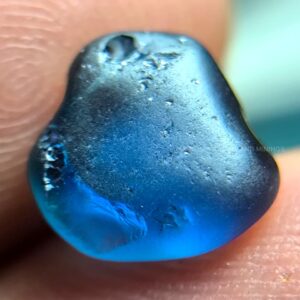
| Weight | 8.70 ct |
|---|---|
| Dimensions | 15.2 × 9.2 × 7.5 mm |
| Color | Deep Violet-Blue to Periwinkle Purple |
| Cut / Form | Natural Rough |
| Treatment | Natural Unheated |
| Variety | Purple Sapphire |
| Species | Corundum |
| Origin | Marapana village around mining in Sri Lanka |
| Country | Sri Lanka |
| Quality Grade | Facet Grade |
| Product Type | Rough |
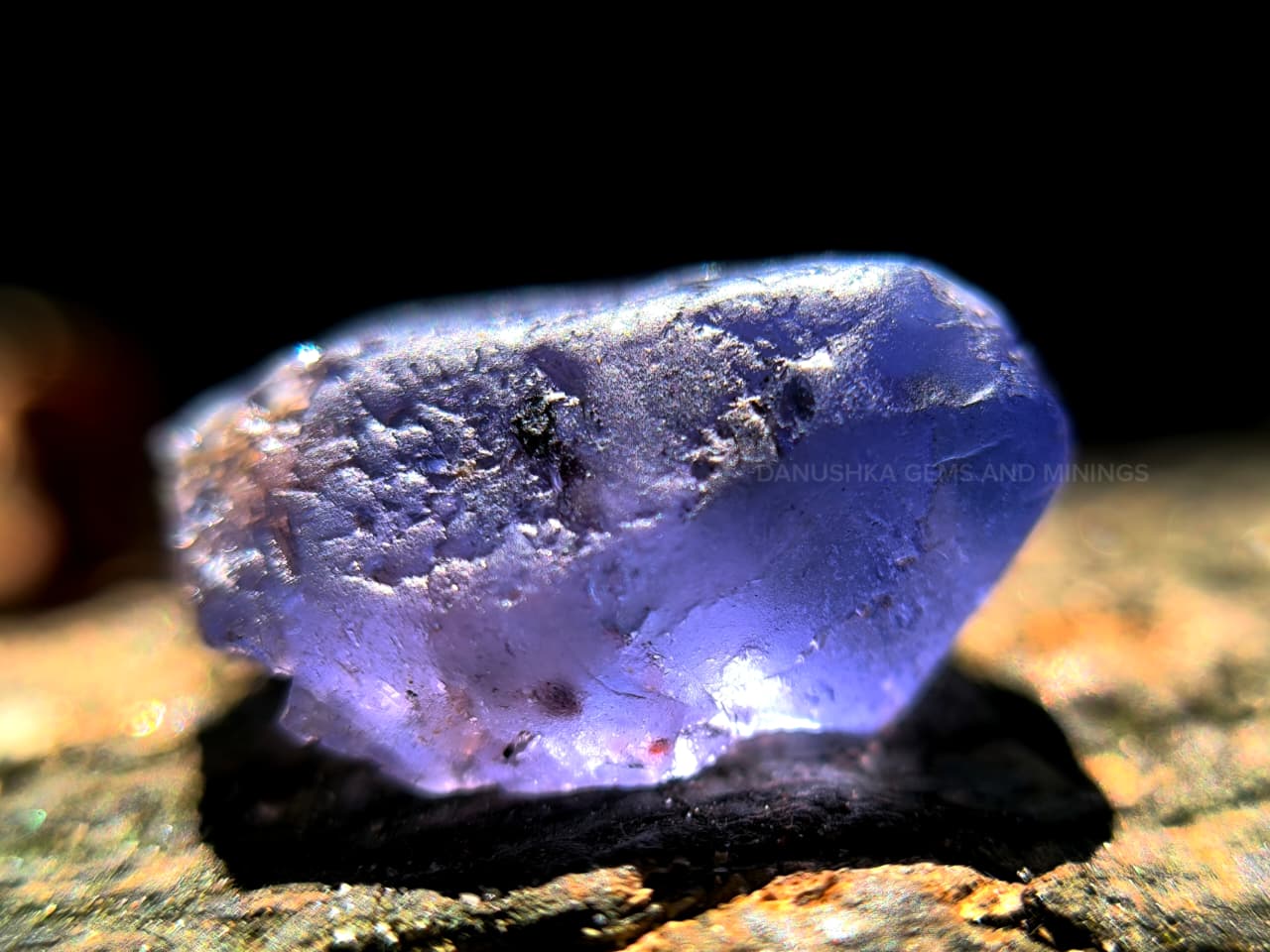
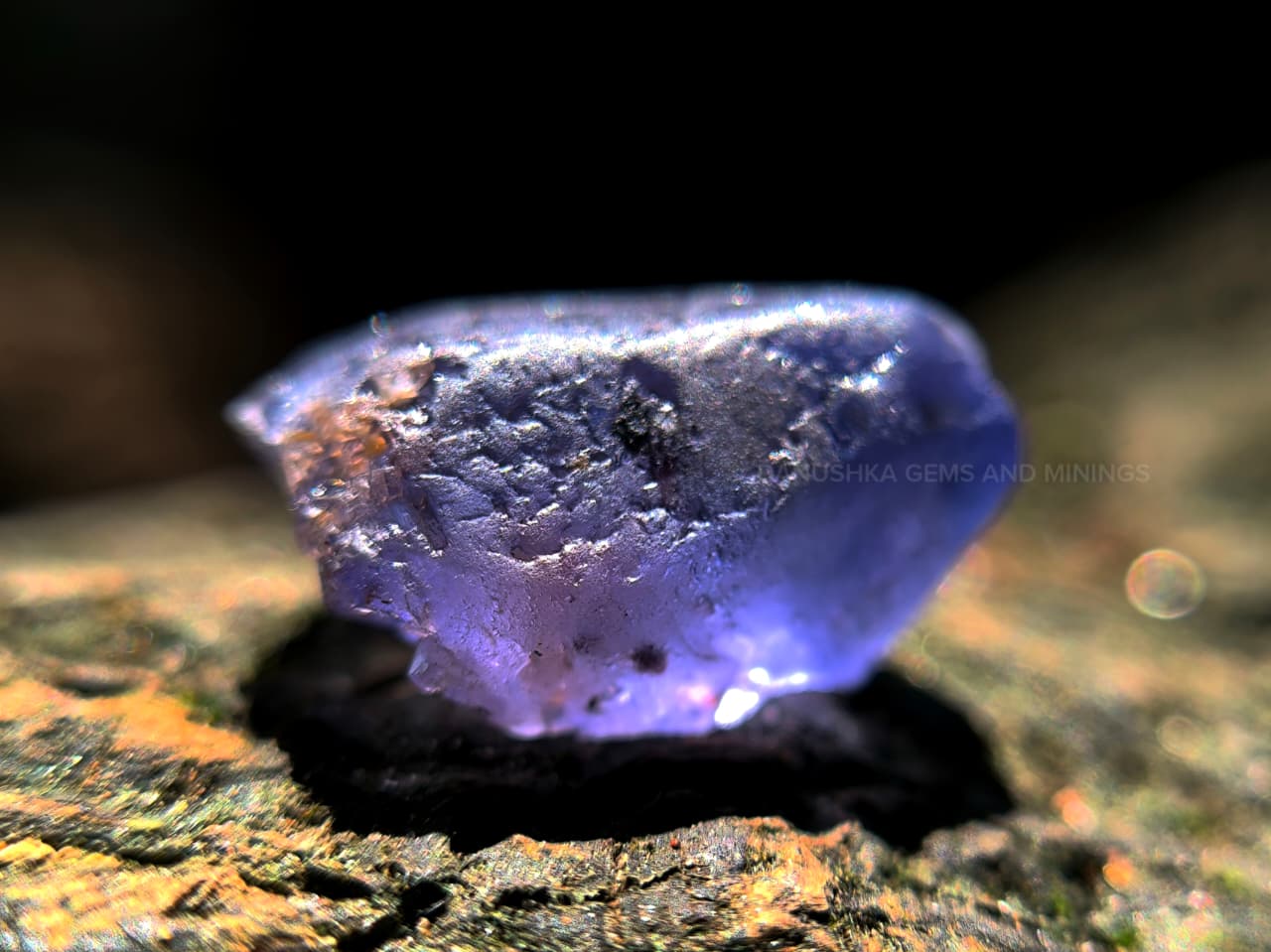
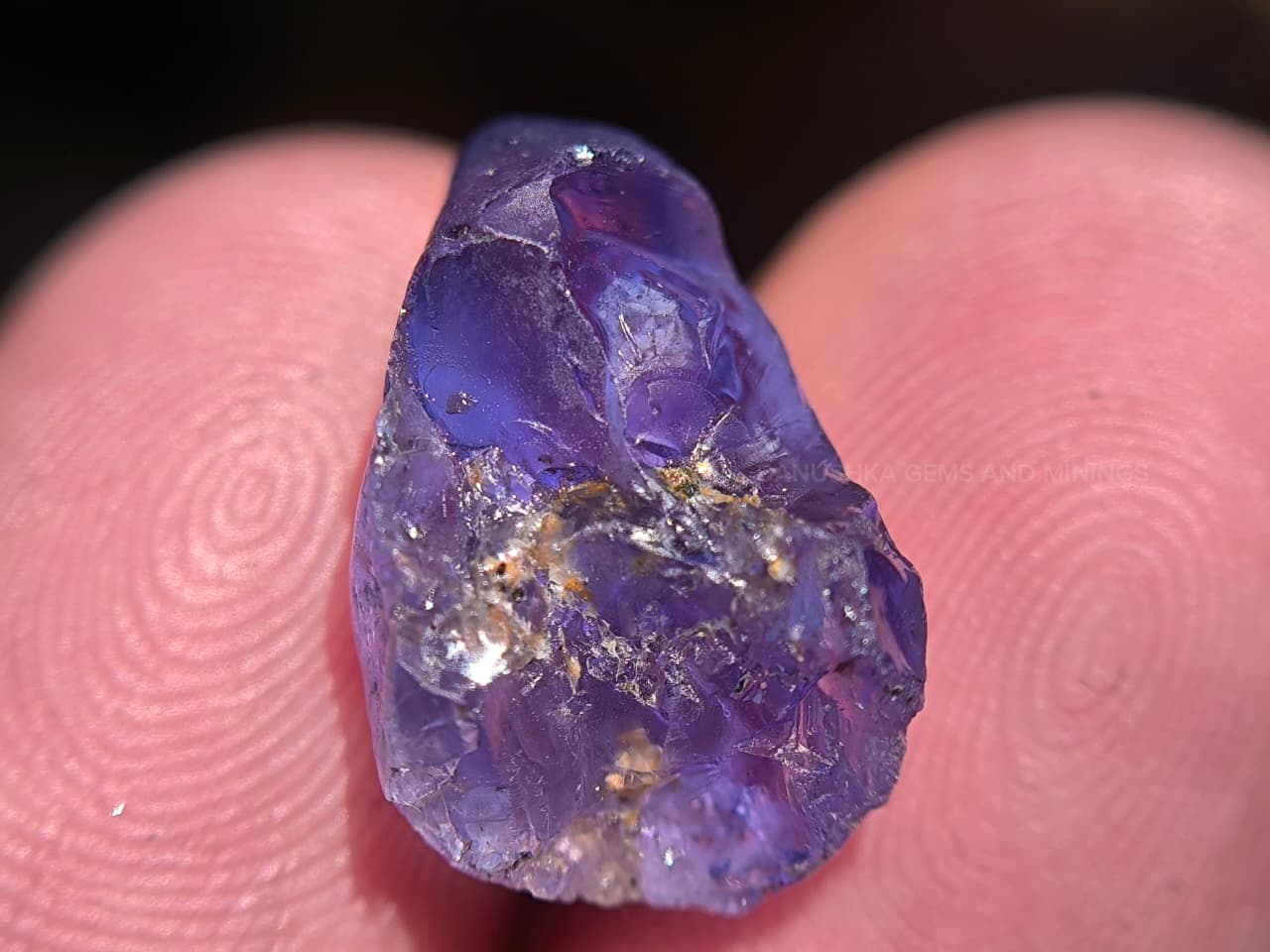
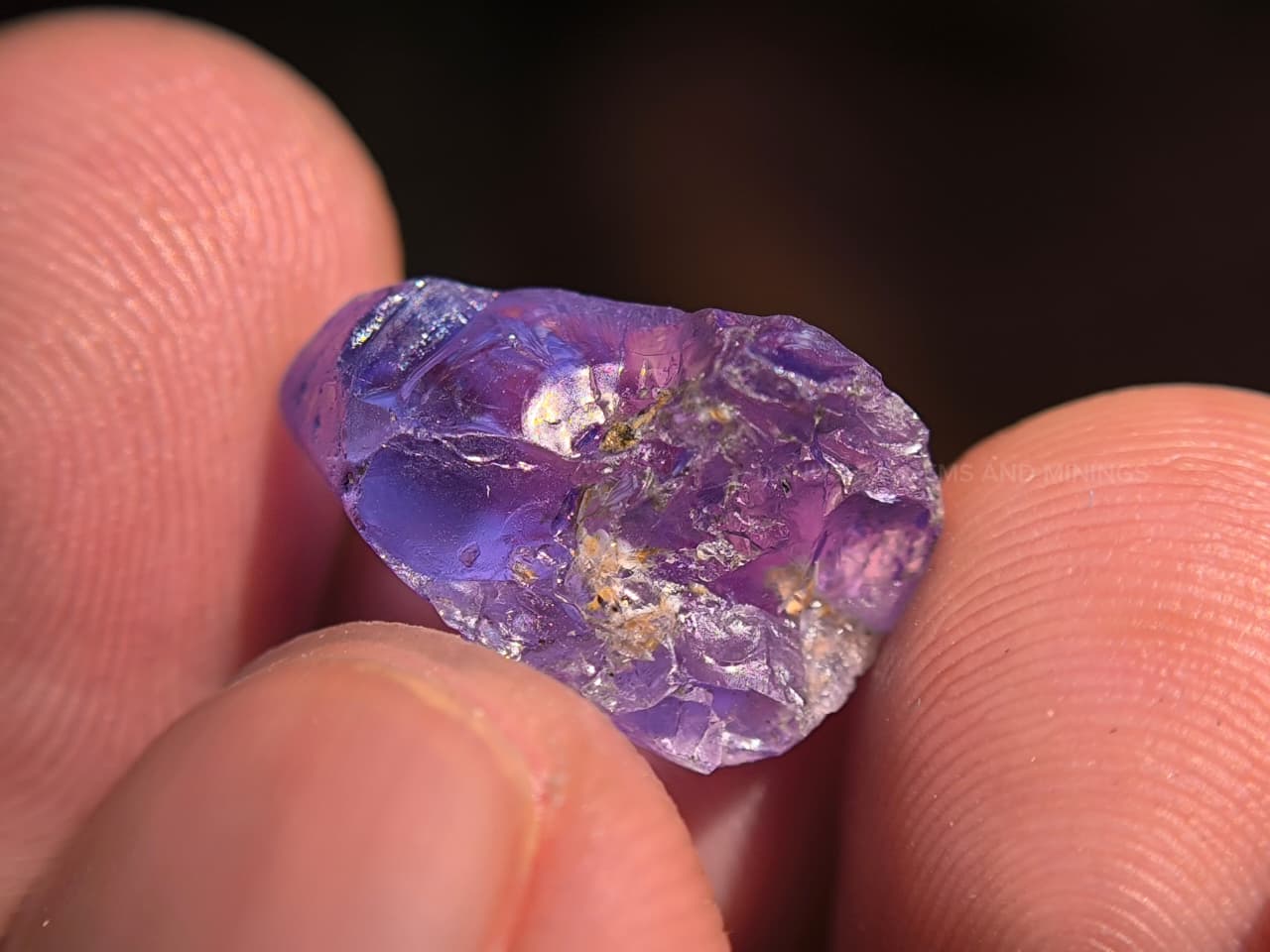
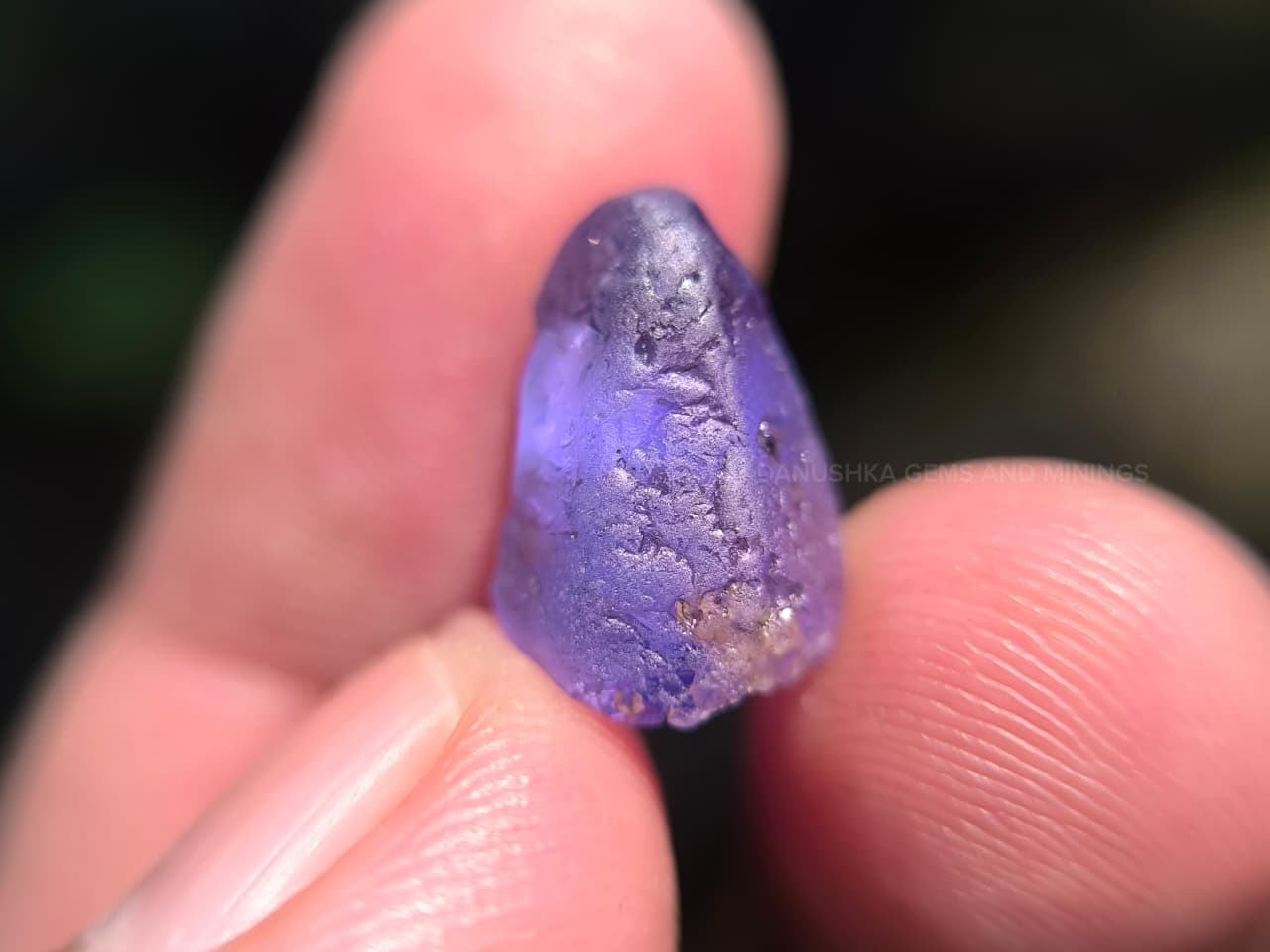
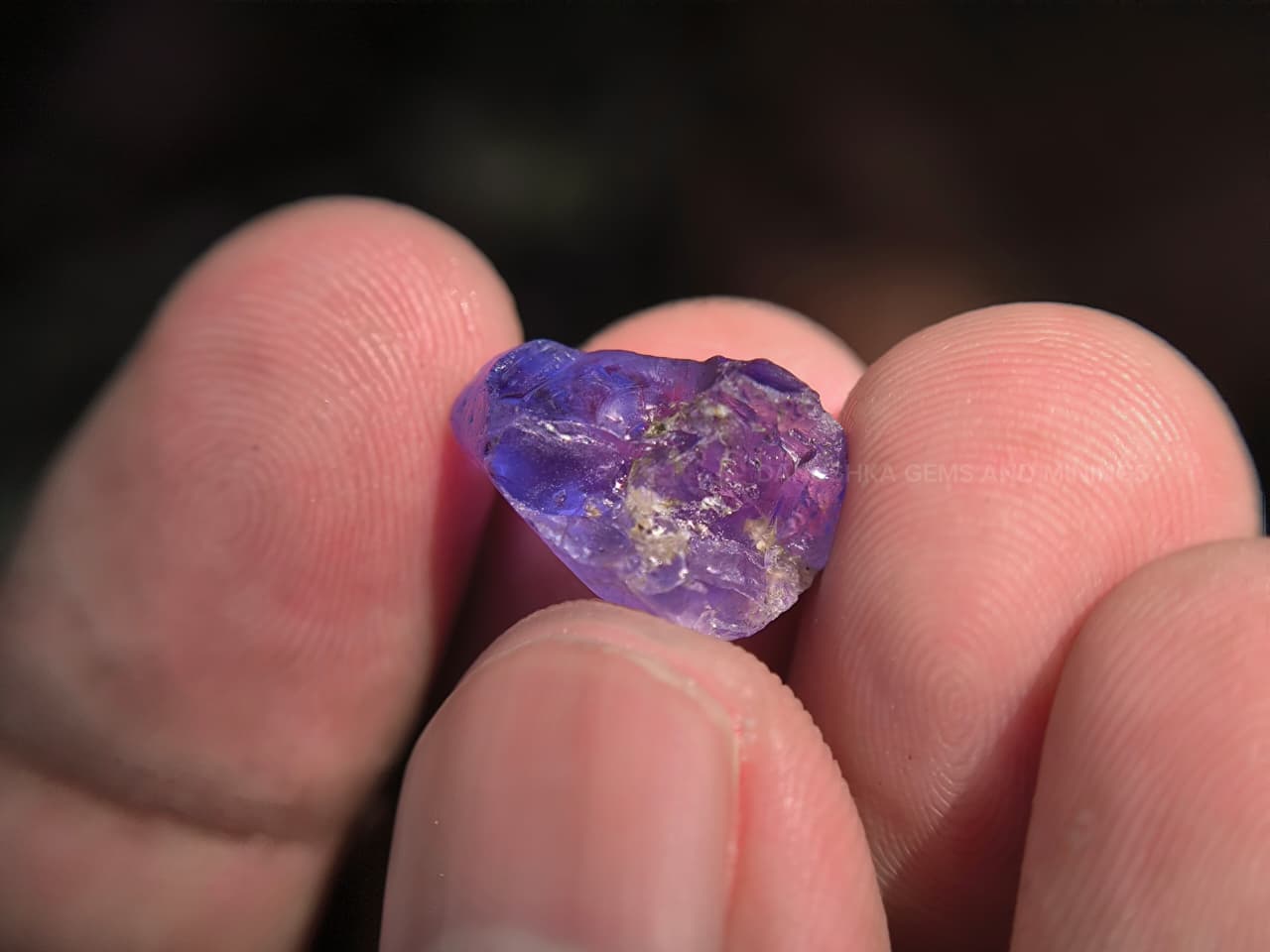
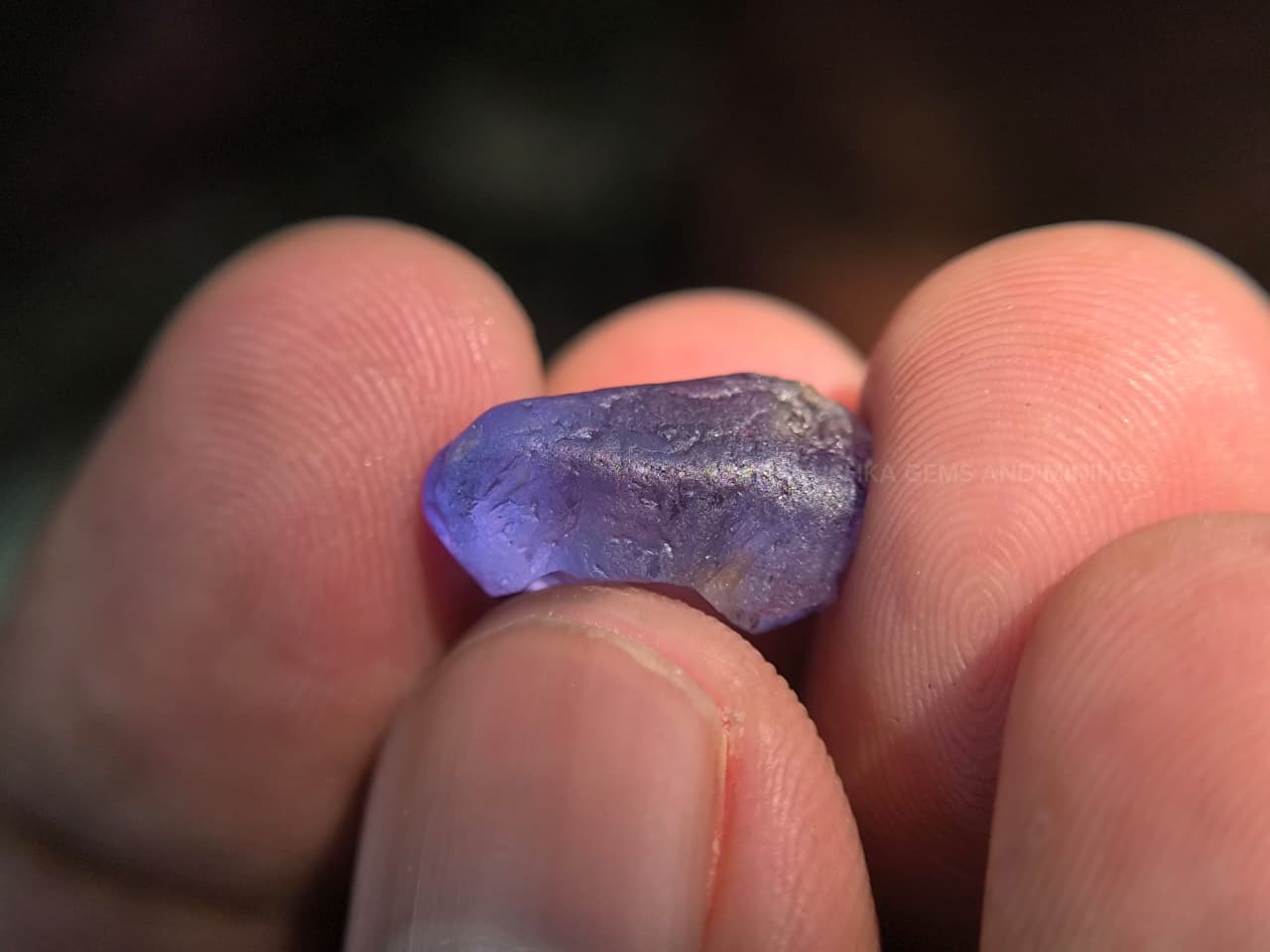
8.70 ct Natural Unheated Ceylon Purple Sapphire Rough – Violet-Blue to Periwinkle, Sri Lanka
SKU
DG00856
Categories Purple Sapphire, Sapphire Rough
Tags Ceylon Purple Sapphire, Facet grade rough, Natural Unheated Sapphire, Periwinkle Sapphire, Violet Blue Sapphire
Spread the Love
STONE IDENTITY & QUALITY
This 8.70 ct Natural Unheated Ceylon Purple Sapphire Rough is a facet-grade gemstone sourced from Marapana village around mining in Sri Lanka.
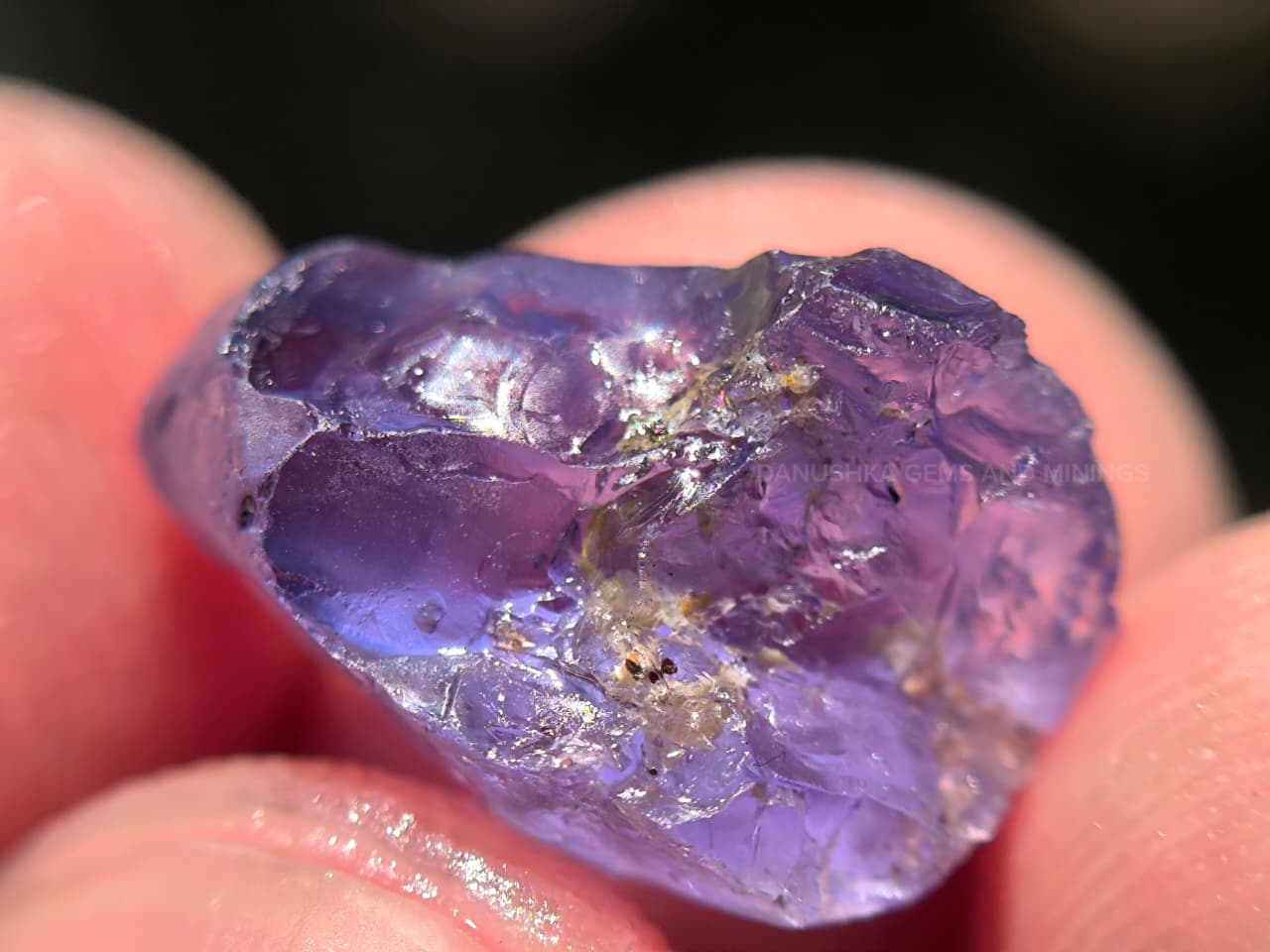
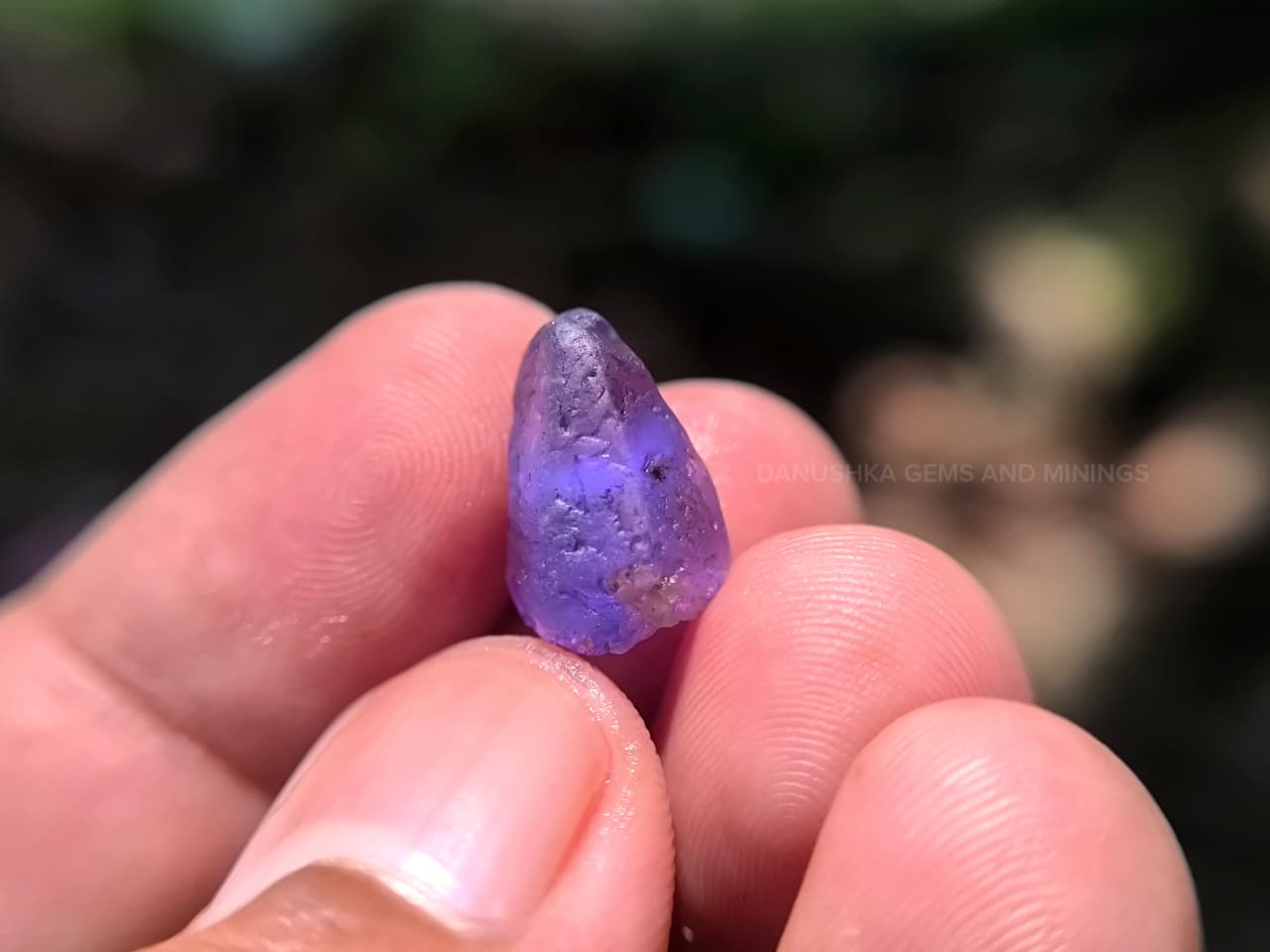
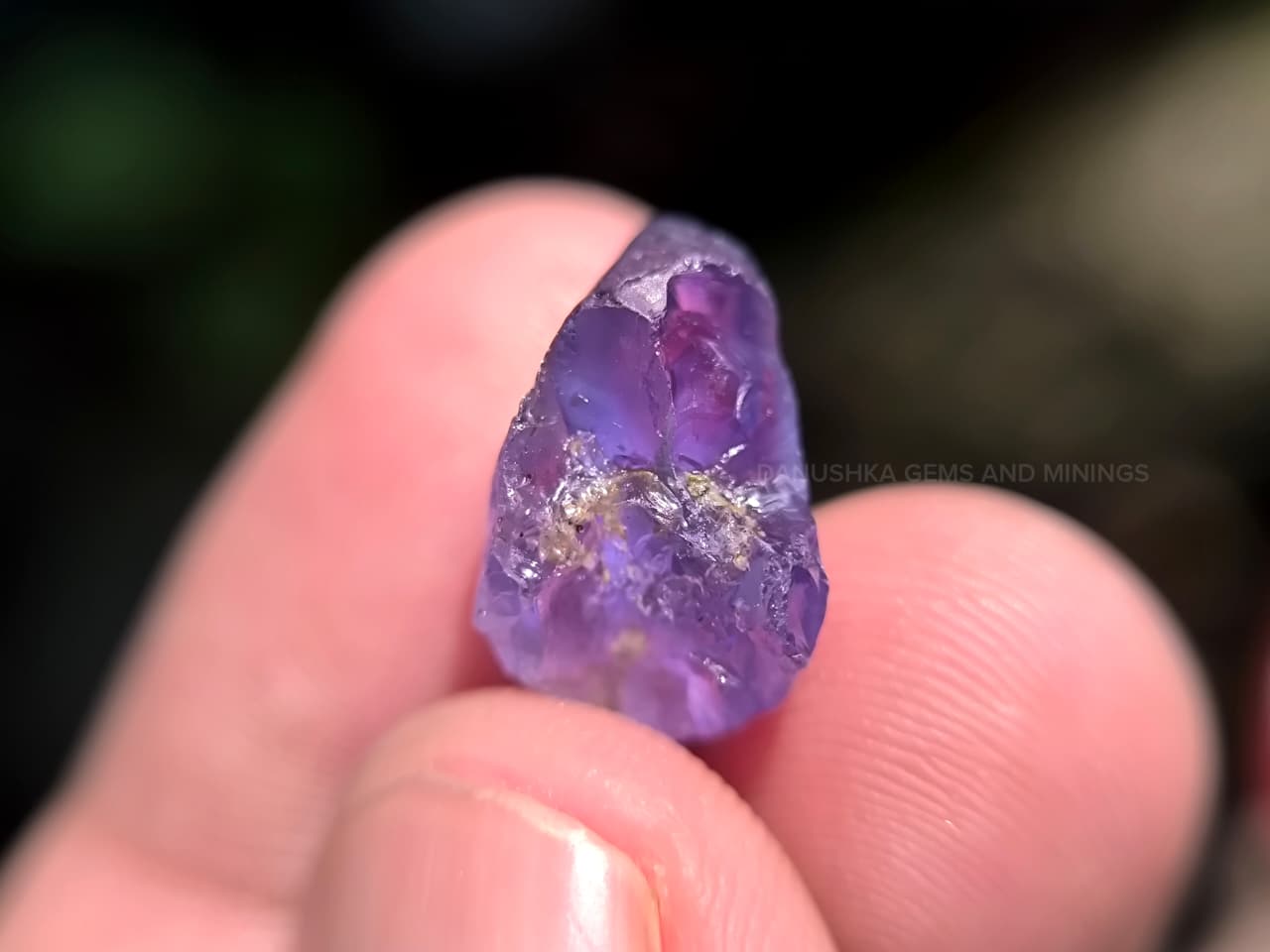
The rough measures 15.2 × 9.2 × 7.5 mm and displays a blend of deep violet-blue and periwinkle hues.
Purple sapphire belongs to the corundum mineral species, with the chemical composition Al₂O₃. Corundum crystallizes in the trigonal crystal system and has a hardness of 9 on the Mohs scale.
These are general mineralogical characteristics of sapphire and should not be interpreted as individual laboratory measurements of this particular gemstone.
The stone is presented as natural unheated rough based on the supplied treatment information.
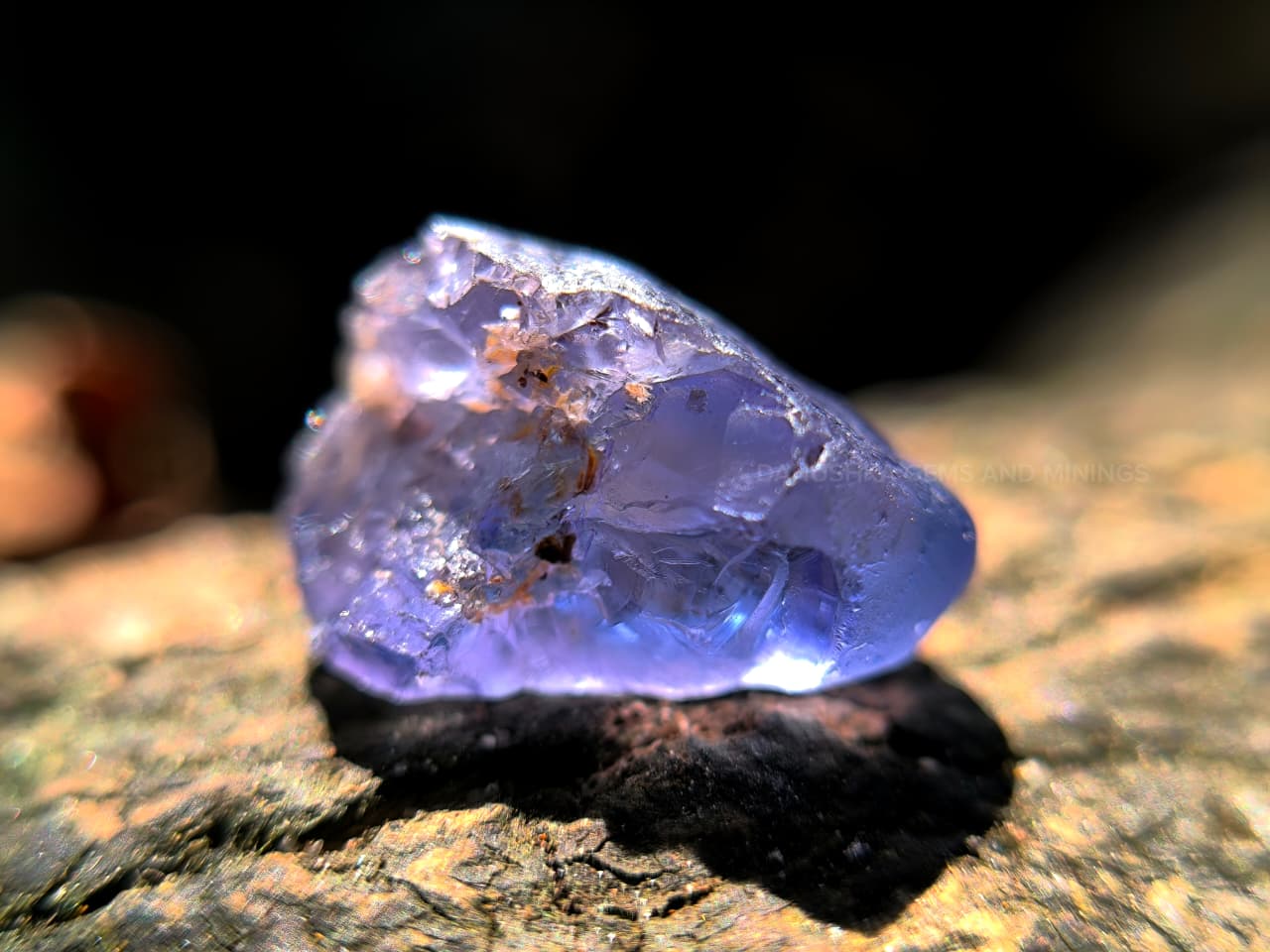
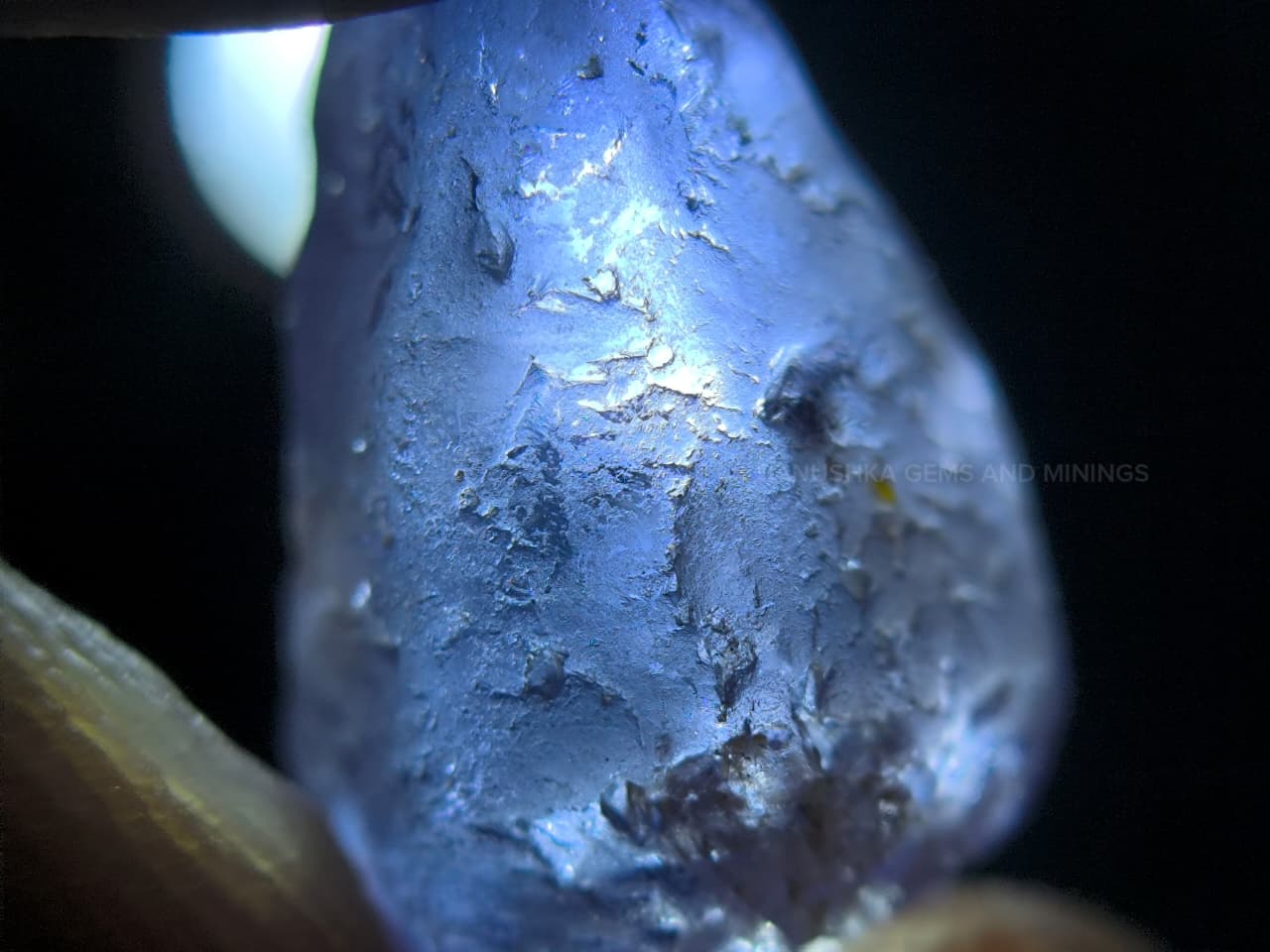
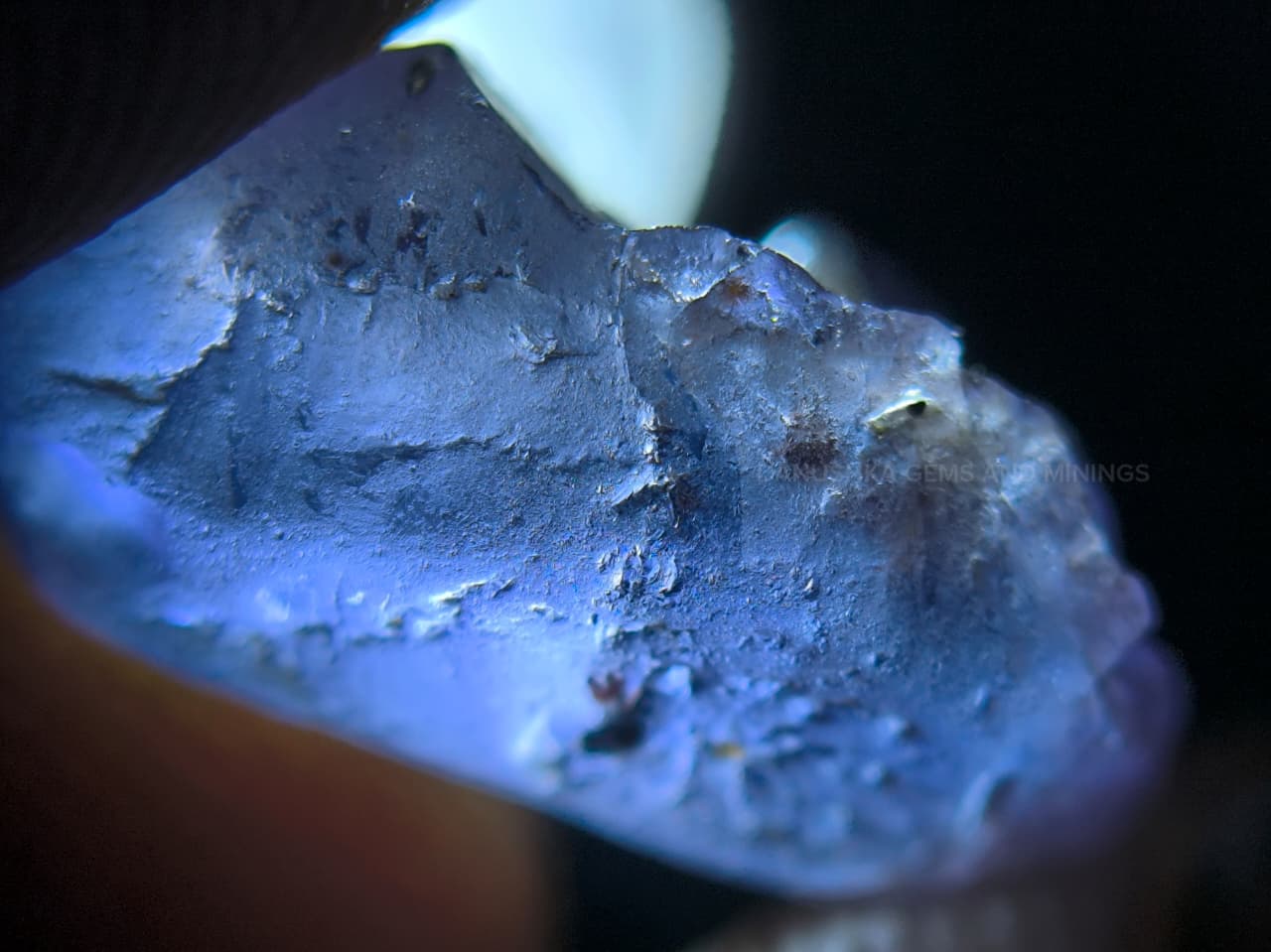
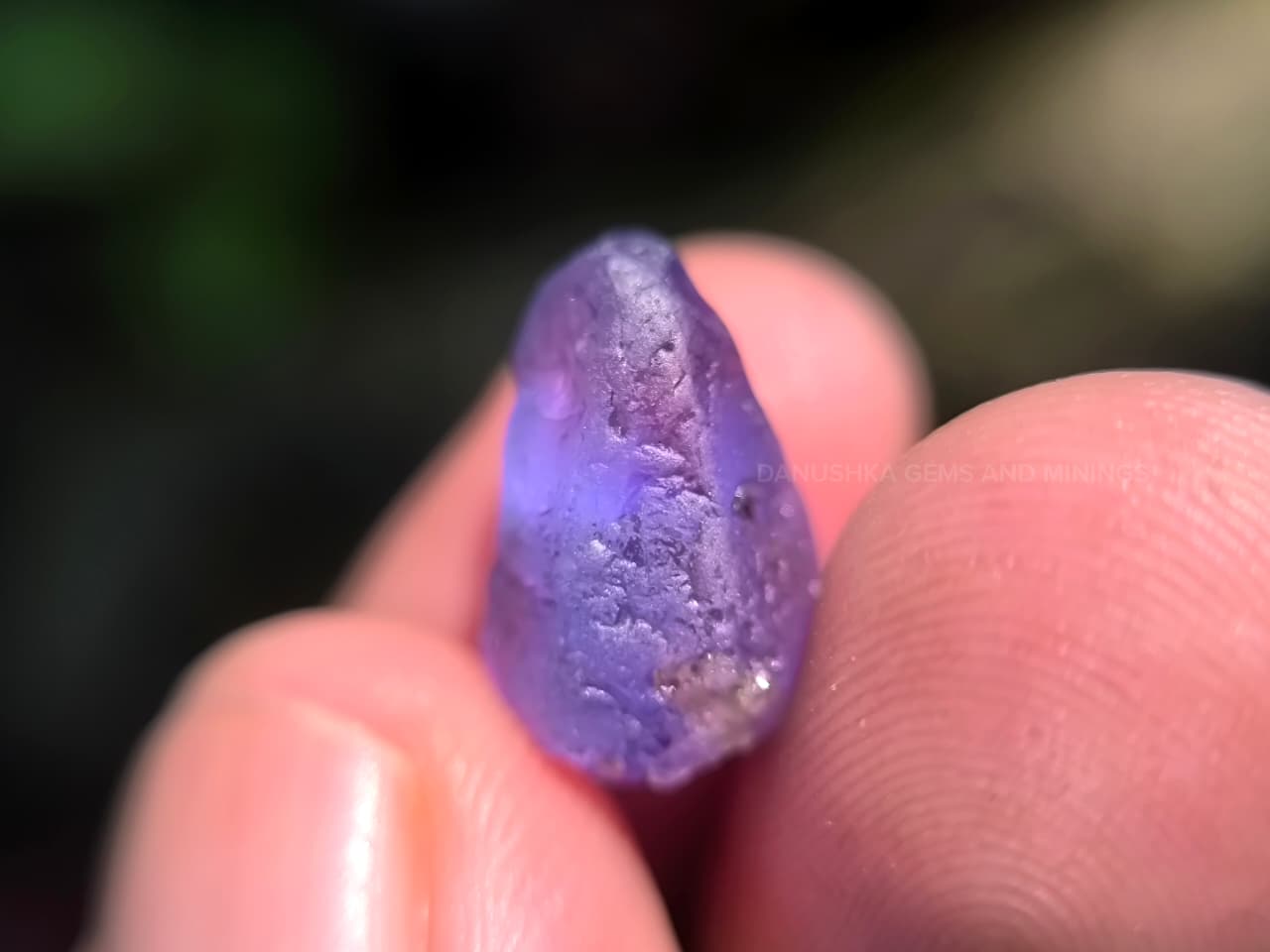
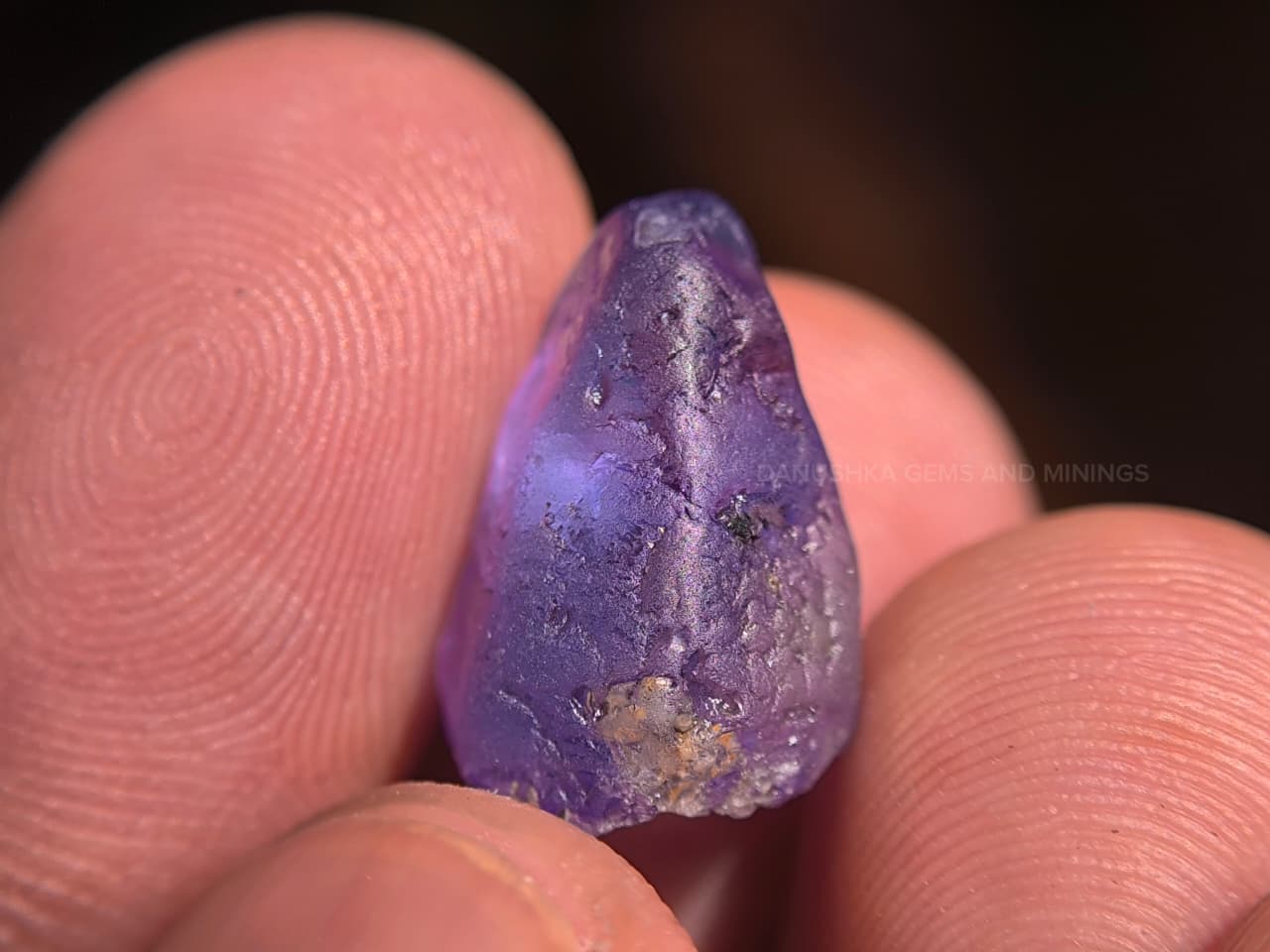
Its visible characteristics include an irregular natural rough shape, varying transparency, surface markings, and distinct violet-blue color areas.
The combination of color and available depth makes it relevant for professional faceting evaluation, although the actual cutting potential must be determined through examination of the individual rough stone.
COLOR & VISUAL CHARACTERISTICS
The main visual characteristic of this sapphire is its combination of purple and blue.
The rough displays deeper violet-blue areas together with softer periwinkle tones.
Periwinkle is commonly used to describe a color appearance between blue and violet, often with a slightly softer or lighter visual character.
In this gemstone, the different lighting environments influence which part of that color combination is more noticeable.
Under fluorescent lighting, the sapphire exhibits a stronger blue appearance.
Under incandescent lighting, its purple component becomes more prominent.
This lighting-dependent appearance is interesting because it allows the gemstone to present different visual impressions without changing the underlying material.
However, these observations alone should not be treated as a laboratory-confirmed color-change classification.
A formal evaluation under controlled lighting would be needed to establish whether the stone meets any particular gemological definition of color change.
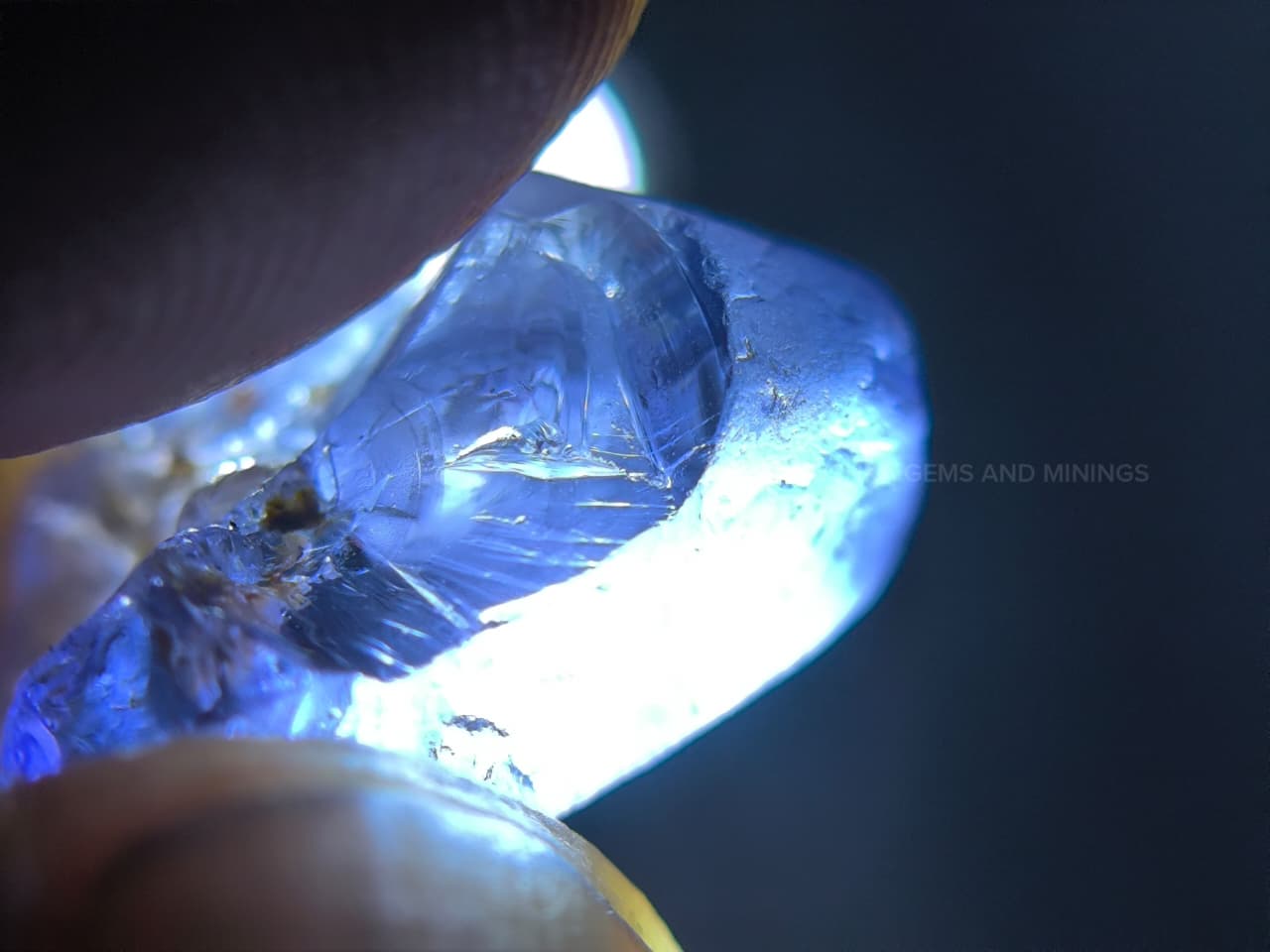
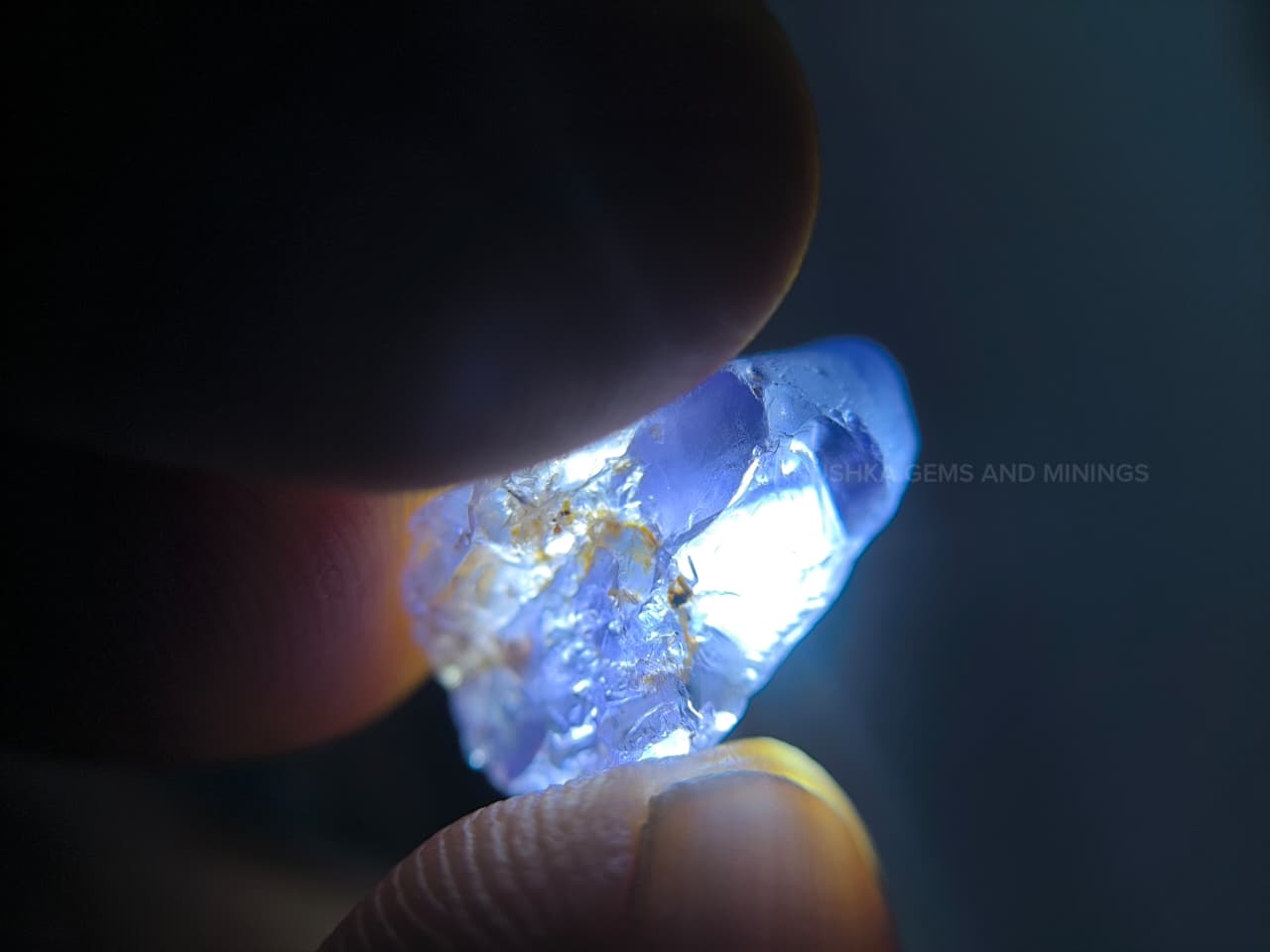
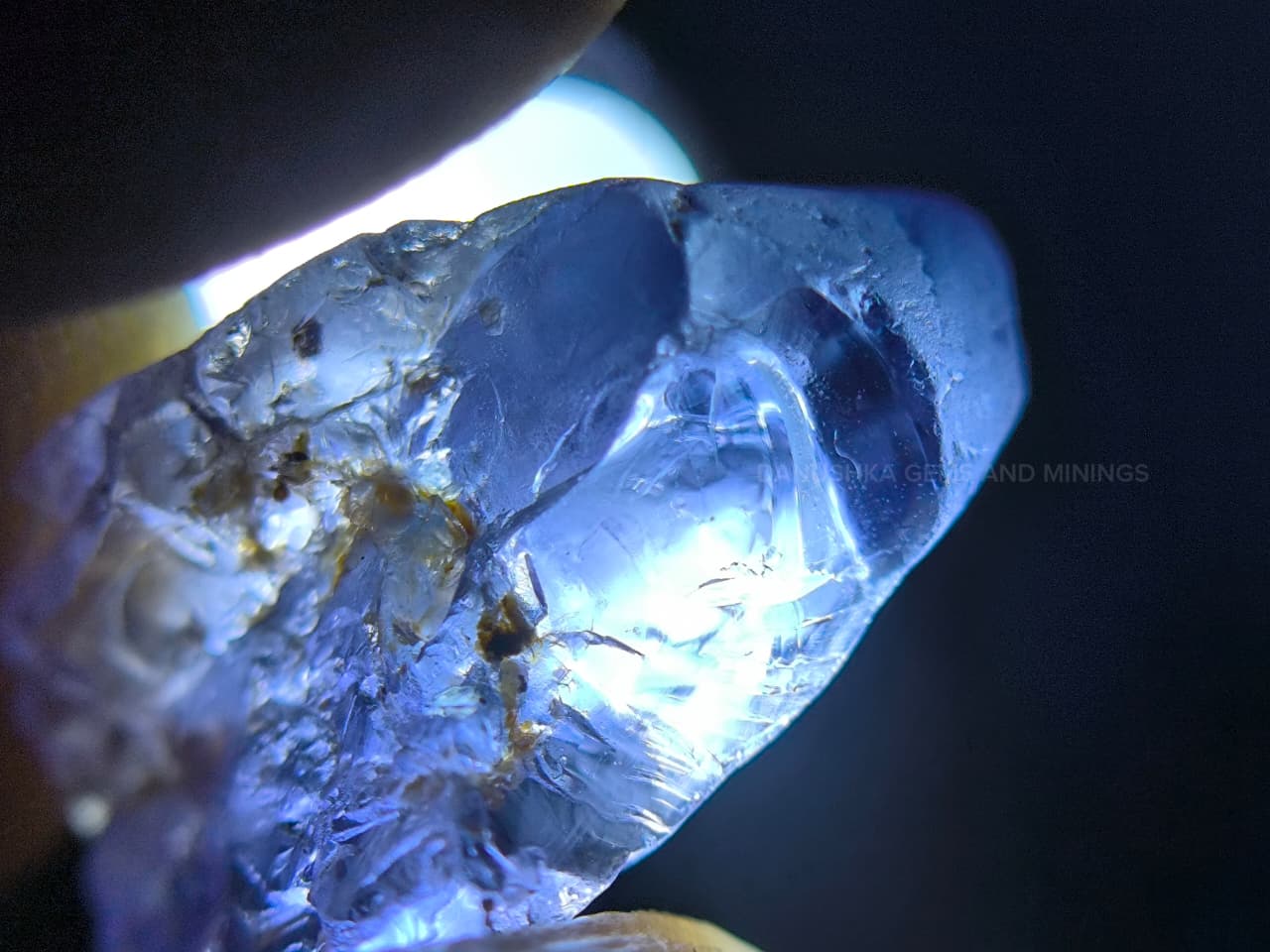
The supplied photographs also show that the apparent saturation and transparency vary across the rough.
Some illuminated areas appear brighter and more translucent, while other sections show deeper color and less light transmission.
A professional cutter would need to consider these differences when planning a finished gemstone.
The final color appearance cannot be determined solely from the rough photographs.
INTERNAL & EXTERNAL FEATURES
The supplied photographs reveal several characteristics of the stone’s natural rough condition.
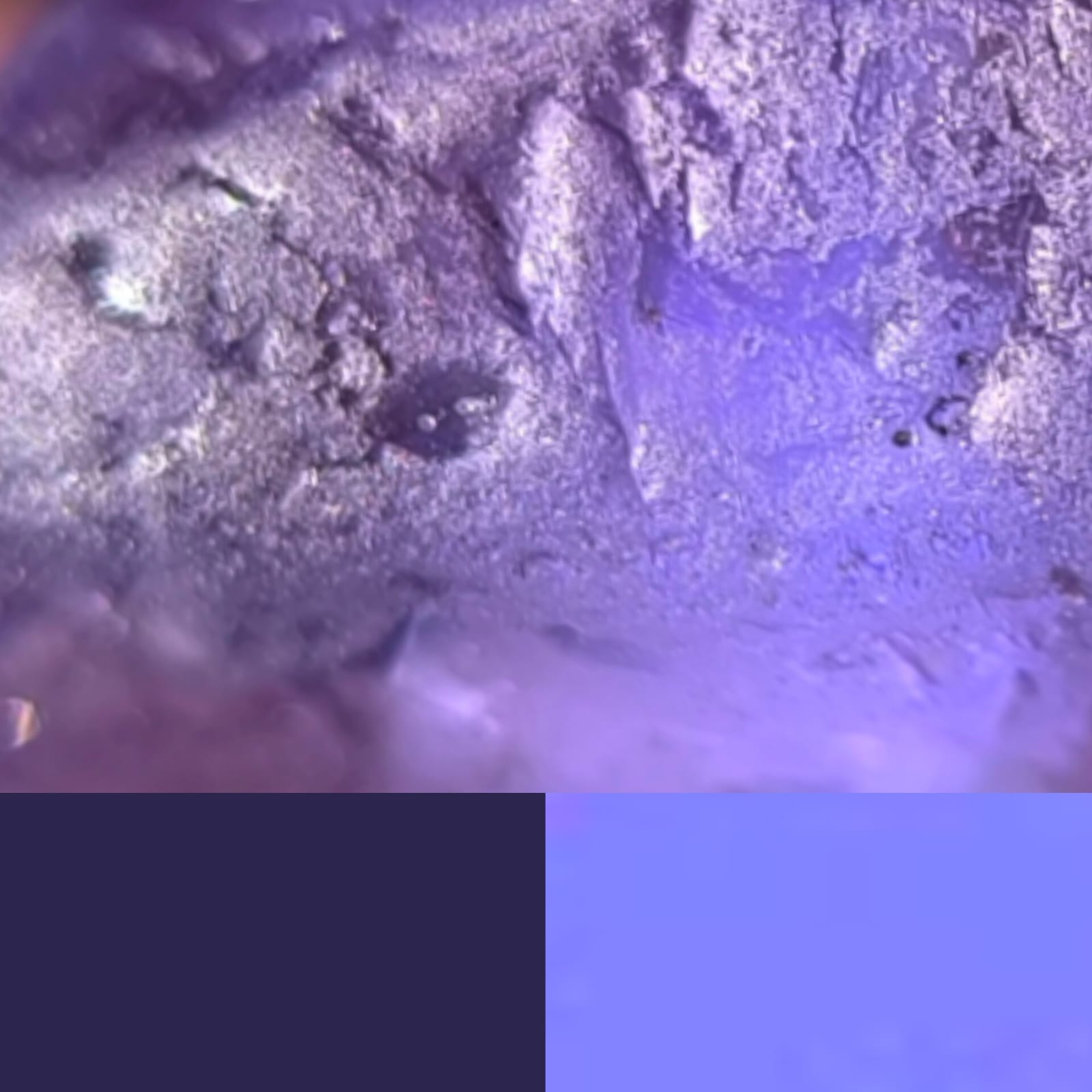
The surface is irregular, with visible uneven areas, natural markings, and darker features.
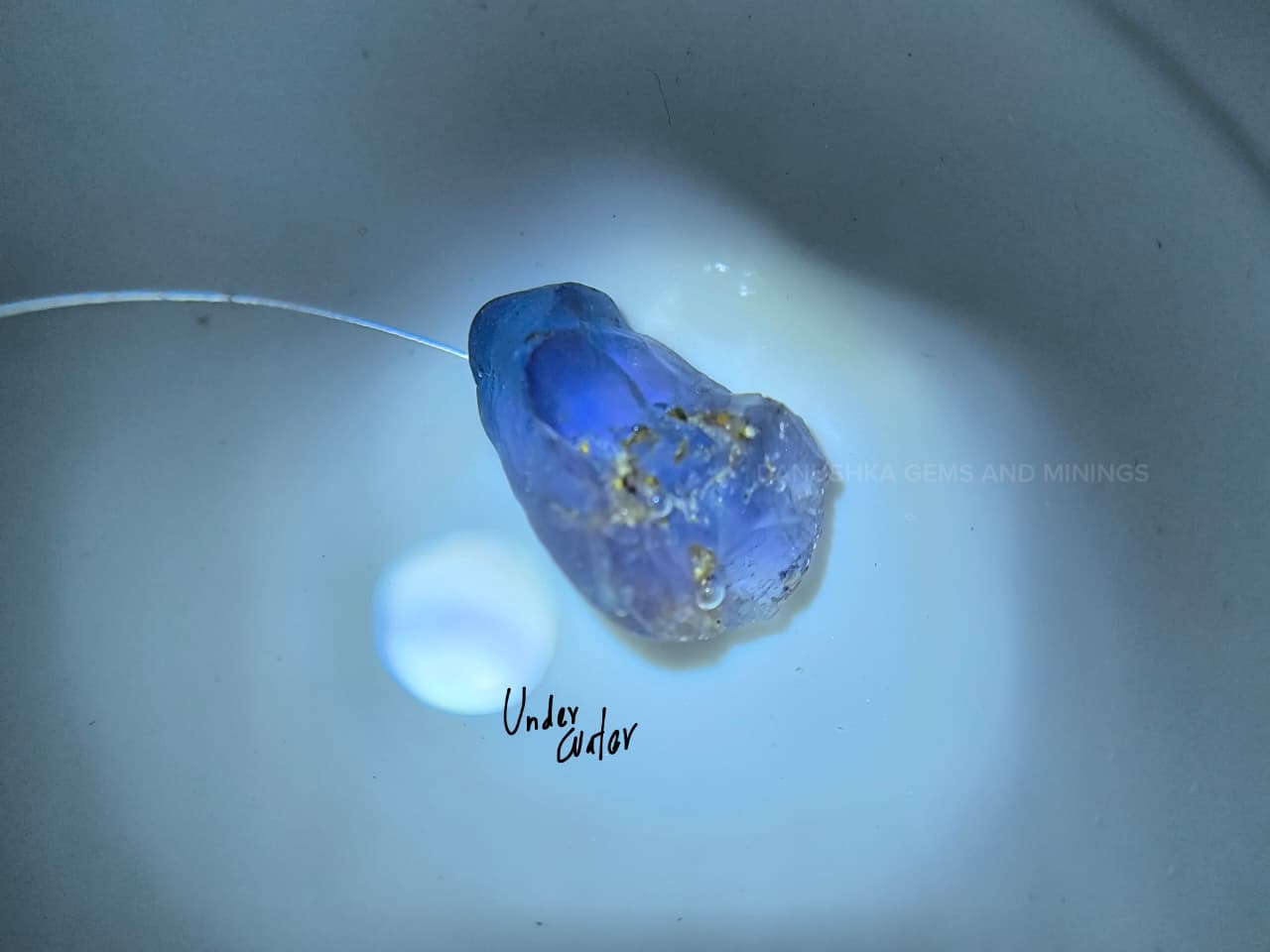
There are also visible internal or near-surface features that become more noticeable under transmitted light.
Some areas show stronger light transmission, while others contain darker patches or less transparent sections.
These observations are relevant to cutting evaluation because an inclusion or surface-reaching feature may influence the amount of material that must be removed during preforming.
The visible rough structure should be assessed from multiple directions.
Professional examination under suitable lighting and magnification can help identify the nature and position of any inclusions, fractures, surface-reaching features, or color concentrations.
It is important not to assume that all apparent surface markings extend into the interior or that every transparent-looking area will remain clean after cutting.
The sapphire should therefore be evaluated according to its actual internal structure before any cutting expectations are finalized.
CUTTING / SPECIMEN / FINISHED GEMSTONE POTENTIAL
This 8.70 ct purple sapphire is presented as facet-grade rough.
Its dimensions of 15.2 × 9.2 × 7.5 mm provide measurable length, width, and depth for an initial assessment.
However, the usefulness of those dimensions depends on the position of the internal features and the orientation of the available transparent areas.
A cutter should begin by examining the stone under transmitted light from different directions.
The primary objectives would be to identify suitable cutting areas, understand the distribution of violet-blue color, locate features that may require removal, and evaluate how the natural shape might influence a finished design.
Color orientation deserves particular attention.
Because the sapphire shows different proportions of blue and purple under different lighting conditions, the eventual cutting direction may influence how those colors appear in the finished gemstone.
The cutting plan should also consider how much rough material would need to be removed around the less suitable sections.
Depending on the position of the internal features, a cutter may choose to prioritize clarity, color, or weight retention.
A balanced cutting approach may be appropriate, but the final decision should be based on direct evaluation and preforming.
No particular finished shape, final clarity, carat weight, or recovery percentage can be guaranteed.
Custom cutting and further professional evaluation can be discussed where suitable.
ORIGIN & SOURCE STORY
This natural purple sapphire comes from Marapana village around mining in Sri Lanka.
Sri Lanka has a long history of sapphire production, with gemstone-bearing areas supplying a wide variety of corundum colors.
Although blue sapphire is particularly well known internationally, Sri Lankan sapphire material also occurs in other colors, including purple and violet.
Danushka Gems & Minings works through Sri Lankan gemstone-producing villages, maintaining relationships with miners, mine owners, local buyers, and source-area dealers.
Our sourcing approach involves regularly visiting gemstone-producing regions and evaluating material according to its natural characteristics, cutting potential, and buyer requirements.
Rather than relying exclusively on conventional gemstone markets, we work close to the areas where rough gemstones are recovered and traded.
This allows us to examine different types of material, from individual rough stones to gemstone parcels, as they become available through the sourcing network.
The 8.70 ct purple sapphire represents the type of individual gemstone that requires careful attention before being offered for professional cutting.
Its source information connects it to Marapana, while its violet-blue appearance and natural rough features provide the basis for its individual evaluation.
TREATMENT / CUTTING / CERTIFICATION NOTES
Treatment Disclosure: Natural Unheated..
The gemstone’s observed blue-to-purple variation under different lighting conditions is a visual characteristic, not a confirmed laboratory color-change classification.
Professional cutting should be planned after evaluating the internal structure and orientation.
No cutting recovery, finished weight, final clarity, or finished color appearance is guaranteed.
Certification and custom cutting arrangements may be discussed where suitable.
Any future laboratory findings should be communicated according to the actual report issued.
WHY THIS STONE IS INTERESTING
The main appeal of this sapphire is its combination of violet-blue and periwinkle colors, together with its noticeable difference in appearance between fluorescent and incandescent lighting.
For professional cutters, the stone presents an opportunity to evaluate color orientation, transparency, available depth, and natural structural features.
For gemstone dealers and collectors, it provides an example of an individual Ceylon sapphire rough stone with an attractive purple-blue appearance.
Jewelry designers may also find the color combination interesting when considering a future finished gemstone, depending on the cutting result.
Its significance lies in the characteristics that can be observed and evaluated rather than an assumed finished grade or guaranteed cutting outcome.
SOURCE & ETHICAL POSITION
At Danushka Gems & Minings, our gemstone business is built around relationships with Sri Lanka’s gemstone-producing communities.
We regularly travel through source areas, working with miners, mine owners, and direct dealers while maintaining a continuously changing rough gemstone inventory.
Every rough gemstone has different characteristics, and we believe those differences should be communicated honestly.
Our approach emphasizes careful evaluation, clear treatment disclosure, practical cutting considerations, and transparent communication about the limitations of rough material.
We also provide cutting, polishing, and certification support where suitable.
Source-connected purchasing is important to our business, but it should not be confused with independent ethical certification or laboratory verification.
Our goal is to present gemstones according to their known characteristics and help customers make informed decisions before cutting or purchasing.
Frequently Asked Questions
This is an 8.70 ct Natural Unheated Ceylon Purple Sapphire Rough, measuring 15.2 × 9.2 × 7.5 mm.
The gemstone was sourced from Marapana village around mining in Sri Lanka.
Different light sources can change the relative visibility of blue and violet components in a gemstone. This sapphire is observed to appear bluer under fluorescent lighting and more purple under incandescent lighting. A formal color-change classification has not been established.
The stone is described as facet-grade rough. Its orientation, internal features, transparency, and usable depth should be carefully evaluated before cutting.
It's is Natural Unheated.