
A gemstone journey does not always begin with a finished stone. Sometimes it begins with a piece of rough that asks several questions before the first facet is ever cut.
This natural Ceylon sapphire started as a 9.88 ct young geuda rough measuring 11.3 × 10.7 × 9.4 mm, sourced from Endana village around mining in Sri Lanka. The material was natural and unheated, with a pastel to medium blue appearance, slight silkiness, and the soft visual character commonly associated in the Sri Lankan trade with young geuda.
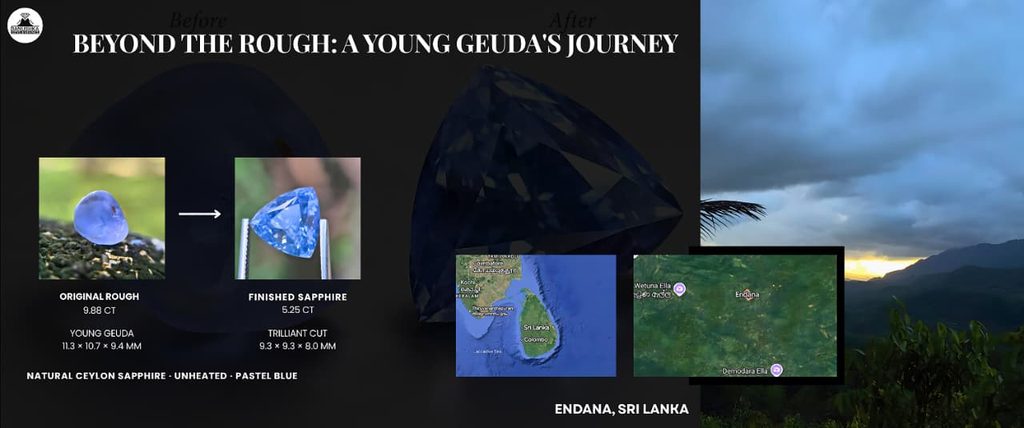
The final result became a 5.25 ct unheated trilliant sapphire measuring 9.3 × 9.3 × 8.0 mm, later certified by an authorized gemological laboratory as natural, unheated sapphire with the color described as pastel blue.
But reaching that result required far more than simply placing the rough on a cutting wheel.
Understanding Young Geuda Sapphire
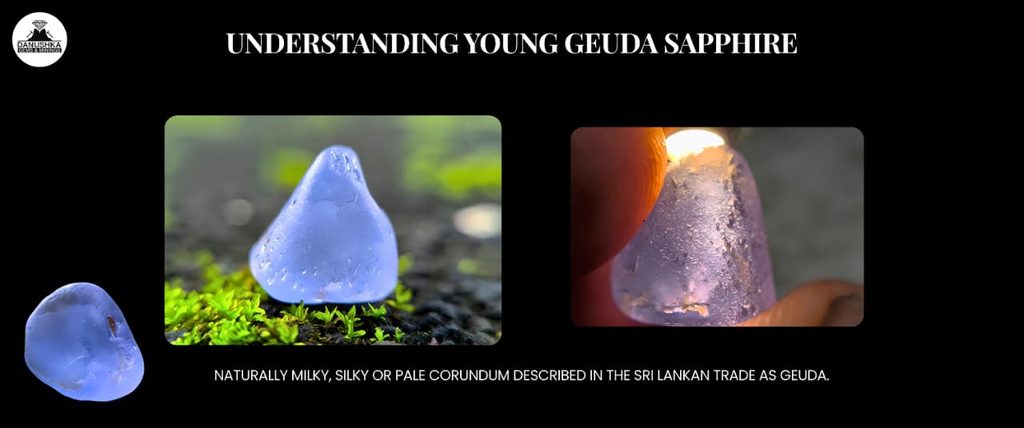
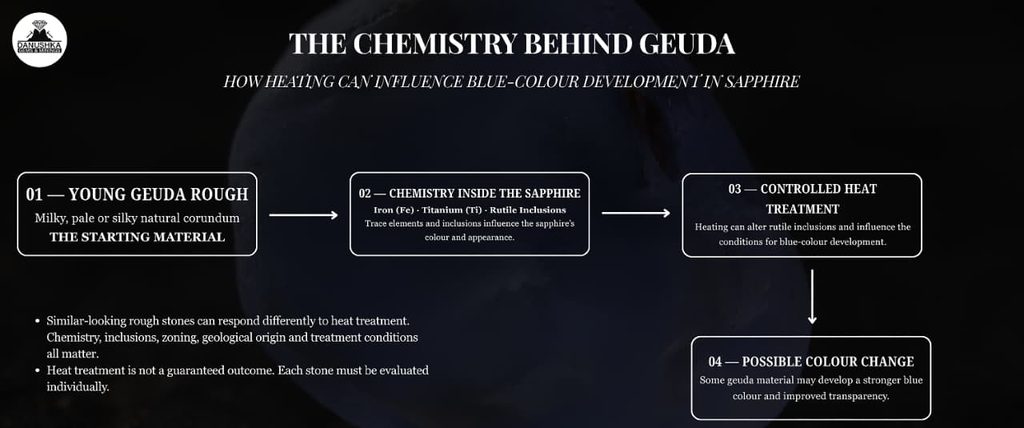
“Geuda” is a traditional Sri Lankan trade term used for certain corundum materials that may appear milky, silky, opalescent, pale before treatment. Some selected geuda material can develop stronger blue color and improved transparency through carefully controlled heat treatment.
Scientific studies on Sri Lankan geuda show that blue-color development during heating is closely connected with iron–titanium chemistry and changes involving rutile or “silk” inclusions. Heating can dissolve or alter rutile and change the way blue color is produced inside the sapphire.
However, heating is never automatic.
Two pieces of rough may look almost identical before treatment and still respond differently. Their iron and titanium distribution, rutile content, inclusions, zoning, structural defects, and thermal history can all affect the result.
This is why source information matters in practical Sri Lankan gemstone trading.
Experienced buyers, cutters and heat-treatment specialists often build long-term knowledge about material coming from particular mining areas. Similar-looking young geuda from two different source areas may behave differently in heating because the geological environment that formed the sapphire can influence its internal chemistry.
That does not mean every stone from one village will react the same way. Locality is useful context, not a guarantee.
For Danushka Gems & Minings, keeping track of where geuda rough comes from is therefore part of the evaluation process, especially when deciding whether a stone should remain natural and unheated or be considered for professional treatment.
Two Possible Paths: Heat It or Keep It Natural
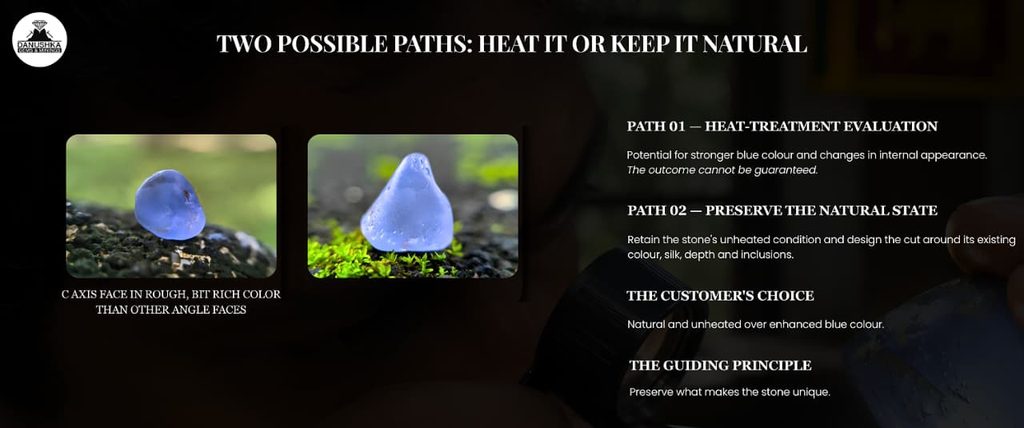
When this 9.88 ct sapphire was examined, there were two realistic directions.
The first was professional heat-treatment evaluation. Because it was young geuda material, there was a possibility that controlled heating could strengthen the blue color and change the internal appearance.
The second option was to preserve the stone in its natural unheated condition and design the cut around the color, silk, depth and inclusions already present.
The Australian customer preferred the second path.
For this buyer, the natural untreated state was more important than chasing a stronger heated blue.
That decision changed the entire cutting strategy.
The First Cutting Estimate
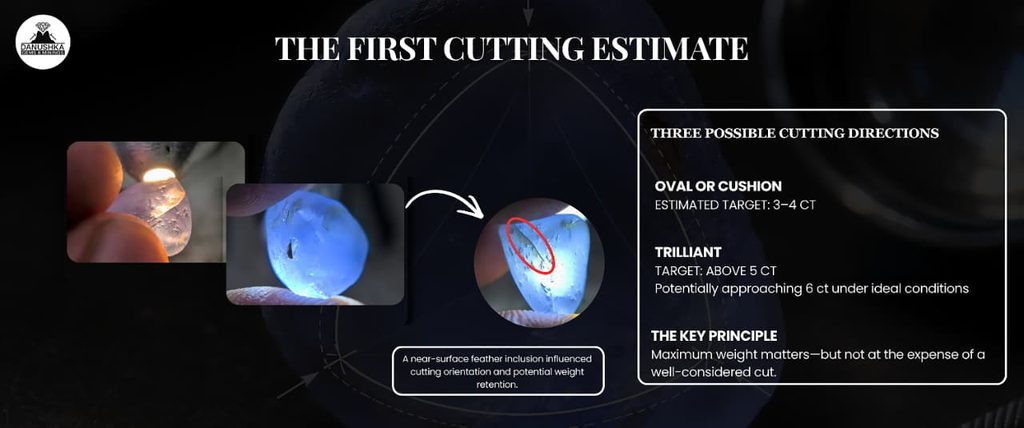
Before preforming, the rough was evaluated for several possible outcomes.
The minimum expected finished weight was around 3 ct.
A more realistic target was approximately 3–4 ct in an oval or cushion.
Because of the rough’s depth and outline, a trilliant design offered a possibility of retaining more weight, with a target above 5 ct and, under ideal conditions, potentially approaching 6 ct.
However, there was an important complication: a feather inclusion close to the surface.
That inclusion affected both orientation and weight retention.
If the feather had not been present, a different orientation relative to the sapphire’s crystallographic direction might have allowed the cutter to emphasize stronger face-up blue through pleochroism. Blue sapphire is strongly dichroic, and orientation is an important part of balancing color, shape and yield during cutting. GIA notes that cutters consider pleochroism, color zoning, rough shape and lightness or darkness when deciding the final orientation of a sapphire.
In this stone, however, color was not the only priority.
The feather needed to be managed.
Customer, Cutter and Source Dealer Working Together
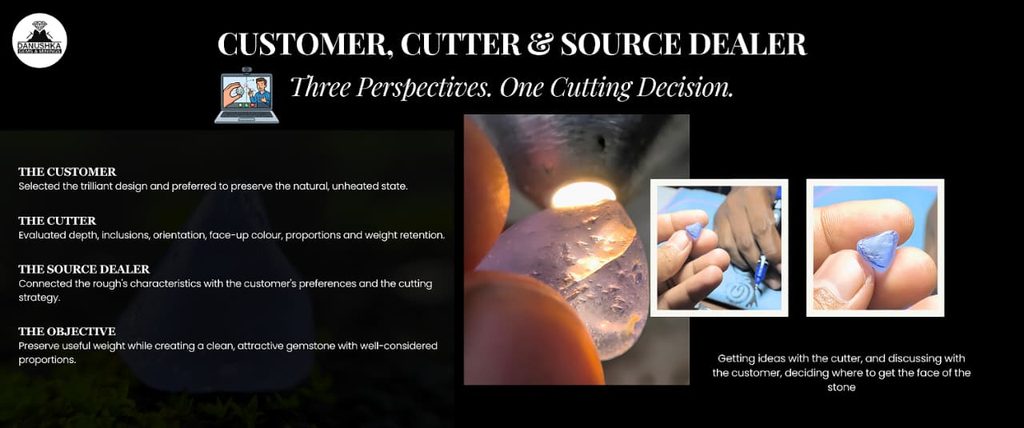
This is where custom gemstone cutting becomes different from simply buying rough and cutting whatever shape fits.
The customer preferred a trilliant.
The cutter evaluated the rough.
We discussed the inclusion position, depth, orientation, possible face-up color, weight retention and the customer’s preference to keep the stone unheated.
The goal was not simply “maximum carat weight.”
The goal was balance.
We needed to preserve as much useful weight as possible while producing a clean, attractive finished stone with good proportions and without carrying unnecessary damaged or included areas.
A gemstone can be cut heavier but less beautifully.
It can also be cut cleaner but lose unnecessary weight.
The work is finding the point between those two extremes.
Preforming: 9.88 ct to 6.25 ct
After the first major shaping stage, the sapphire was preformed to 6.25 ct.
Preform measurements:
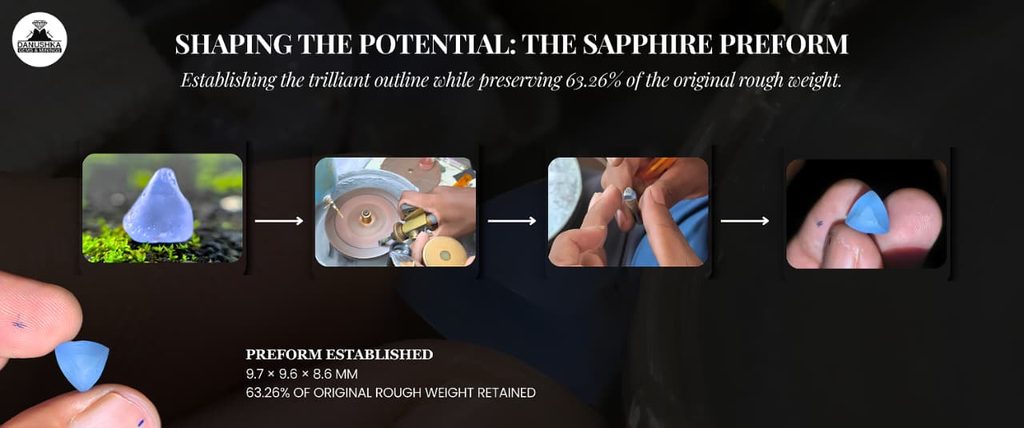
9.7 × 9.6 × 8.6 mm
At this stage, approximately 63.26% of the original rough weight remained.
The trilliant direction was now clearly established.
The preform showed that the original estimate of a 5 ct-plus finished sapphire was realistic, but the feather near the pavilion area still had to be considered carefully.
Almost 6 ct — Then One More Decision
During faceting, the finished stone came close to the 6 ct range.
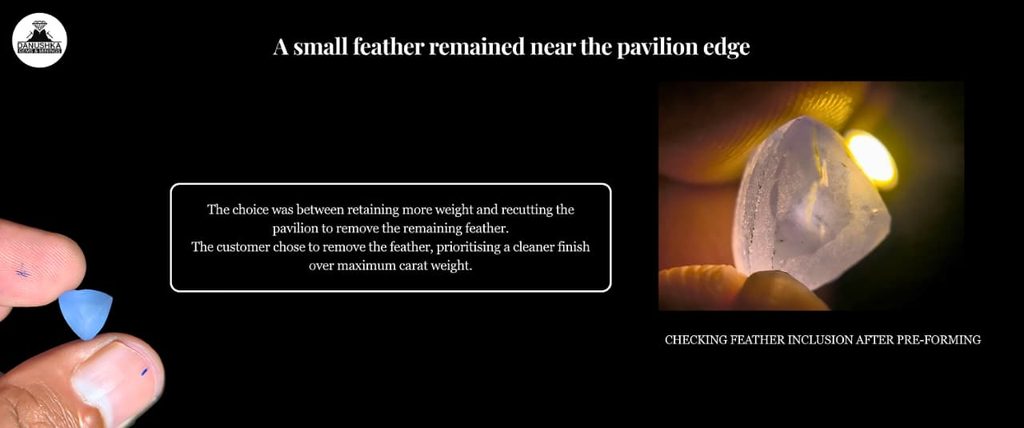
At that point, a small remaining feather was still visible close to the pavilion edge.
It was not considered a severe structural inclusion, and leaving it would have retained more weight.
But we discussed the situation again with the customer.
The customer preferred complete removal rather than keeping the additional weight.
So the pavilion was recut.
This is exactly the kind of decision that cannot always be made at the beginning of a cutting project. Some decisions only become clear after the rough has been opened, preformed and faceted.
The final line of the feather was removed.
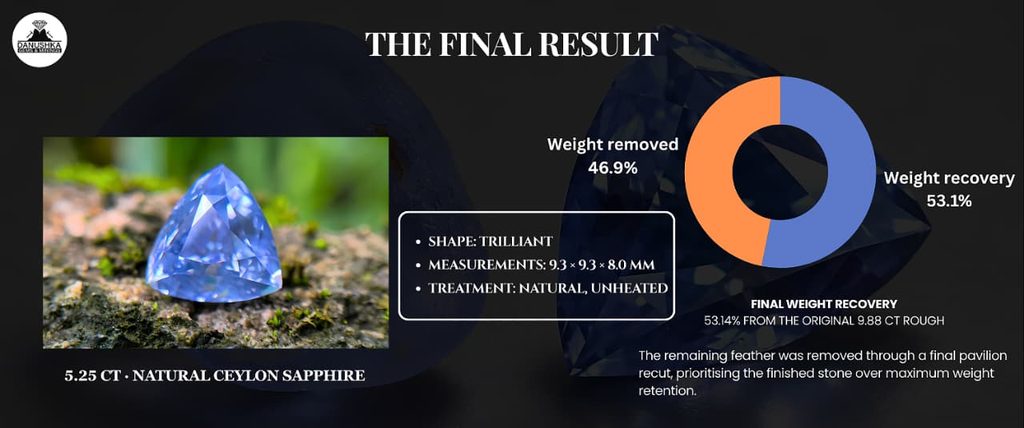
The finished weight became: 5.25 ct
Final measurements:9.3 × 9.3 × 8.0 mm
Final shape:Trilliant
Treatment:Natural, unheated
Final recovery from the original 9.88 ct rough:
Approximately 53.14%
That recovery is strong considering the inclusion removal, reshaping and the requirement to produce a clean final stone rather than simply retain maximum mass.
The Final Appearance
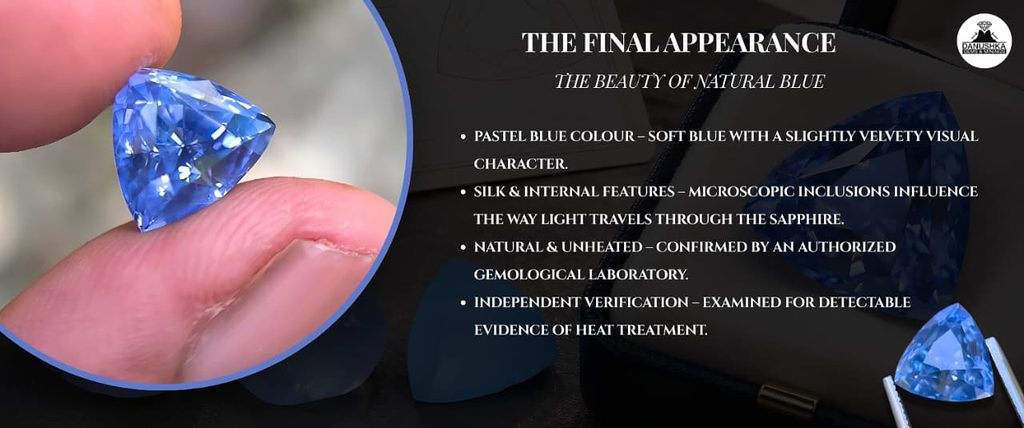
The finished sapphire retains the character that made the customer choose the unheated route in the first place.
Rather than becoming a strongly saturated heated blue, the stone shows a soft pastel blue appearance with a slightly velvety visual character.
That softer appearance is part of the identity of this young geuda material.
Silk and microscopic internal features can influence how light moves through sapphire, sometimes creating a softer visual texture rather than the sharper transparency seen in highly crystalline material.
The stone was later submitted to an authorized gemological laboratory.
The laboratory confirmed the sapphire as natural and unheated, with the color described as pastel blue.
Independent laboratory examination is especially important with sapphire because professional gemological testing can determine whether detectable evidence of heat treatment is present.
Why Some Buyers Prefer Unheated Sapphire
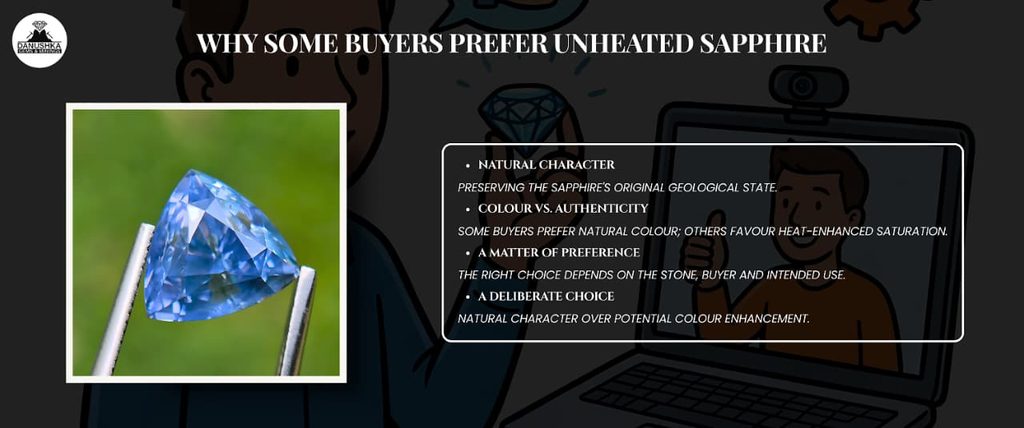
Heat treatment is widely accepted in the international sapphire market, and properly disclosed heated sapphires can be excellent gemstones.
But there is also a strong market for natural unheated sapphire.
For some collectors and buyers, preserving the original geological state of the sapphire is more important than maximizing saturation.
For others, heat-treatment potential is commercially more attractive.
Neither choice is automatically correct.
It depends on the customer, market, stone and intended use.
In this case, the Australian customer deliberately chose natural character over potential heat-induced color improvement.
That decision became part of the identity of the finished gem.
From Endana to Melbourne
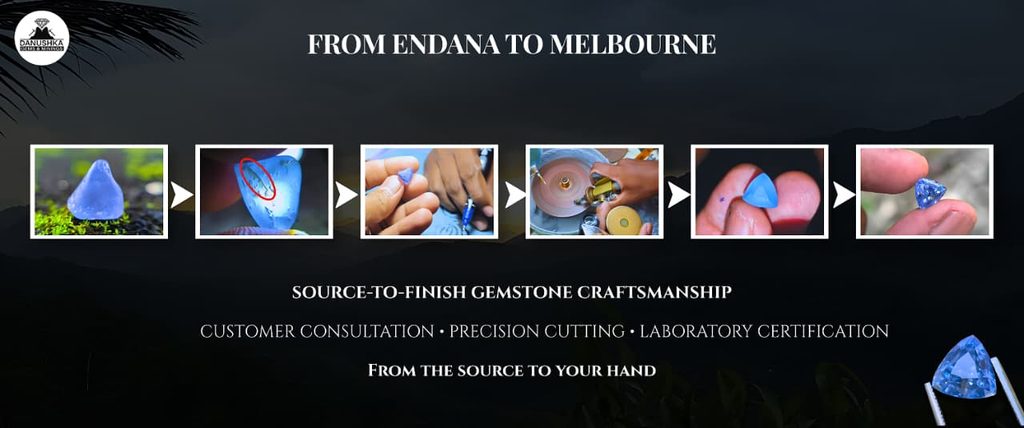
This journey began with a 9.88 ct piece of natural young geuda rough from Endana village around mining in Sri Lanka.
It passed through evaluation, orientation planning, customer consultation, preforming, inclusion management, faceting, pavilion recutting, polishing and laboratory certification.
It finished as a 5.25 ct natural unheated pastel blue trilliant sapphire.
The stone is now prepared for its next journey to Melbourne, Australia.
For us, this is what source-to-finish gemstone work means.
An international customer does not have to simply choose a finished gemstone from a photograph.
They can become part of the process.
They can choose whether the rough remains unheated.
They can discuss shape.
They can prioritize weight, clarity, color or proportions.
They can follow the transformation from rough gemstone to preform, from preform to finished cut, and finally to laboratory certification.
At Danushka Gems & Minings, the goal is not only to supply a gemstone.
It is to connect the customer with the decisions, people and source story behind it.
From Endana village around mining in Sri Lanka to Melbourne, Australia — from the source to your hand.
Frequently Asked Questions
Young geuda is a Sri Lankan trade description for certain sapphire rough showing silky, milky, opalescent or partly transparent characteristics. Some material may respond to professional heat treatment, but every stone behaves differently.
No. The customer specifically chose to keep the sapphire natural and unheated. The finished stone was later laboratory certified as unheated.
The original rough weighed 9.88 ct and measured 11.3 × 10.7 × 9.4 mm.
After initial shaping and orientation, the sapphire weighed 6.25 ct and measured approximately 9.7 × 9.6 × 8.6 mm.
The final finished weight is 5.25 ct, giving approximately 53.14% recovery from the original 9.88 ct rough.
A small feather remained near the pavilion edge. After discussing it with the customer, the decision was made to recut the pavilion and remove the remaining inclusion rather than preserve the extra weight.
The rough shape, depth, inclusion position, expected yield and customer preference all favored a trilliant. The design offered a better balance between weight retention and the customer’s preferred appearance.
Before cutting, the young geuda material could have been evaluated for professional heat treatment. The customer instead chose to preserve its natural unheated state.
It can. Heating response depends on the individual stone’s chemistry, rutile or silk, inclusions, zoning and structure. Experienced Sri Lankan traders also consider source locality because geological environments may produce recurring material characteristics, but locality alone cannot guarantee a heating result.
Yes. Suitable rough can be evaluated with the customer before cutting. Depending on the stone, customers can discuss treatment preference, target shape, weight priority, clarity, cutting style and certification before the project progresses.
No. Rough gemstones contain natural inclusions, fractures, zoning and structural variations that may only become fully visible during preforming and faceting. Finished weight can be estimated, but not guaranteed.
Independent gemological certification can document the stone’s identity, measurements, color and detectable treatment status. This provides additional transparency for international buyers, collectors and jewelers.