
A gemstone may eventually sit quietly inside a ring, pendant, collection box, laboratory report, or dealer tray. By the time most people see it, the stone looks complete.
But long before that moment, there is a road.
Sometimes that road runs through green paddy fields under heavy clouds. Sometimes it climbs through mountain country, crosses rivers, passes mining villages, workshops, markets, tea shops, cutting rooms, and small roadside meeting places. Sometimes the day begins before sunrise and ends long after dark.
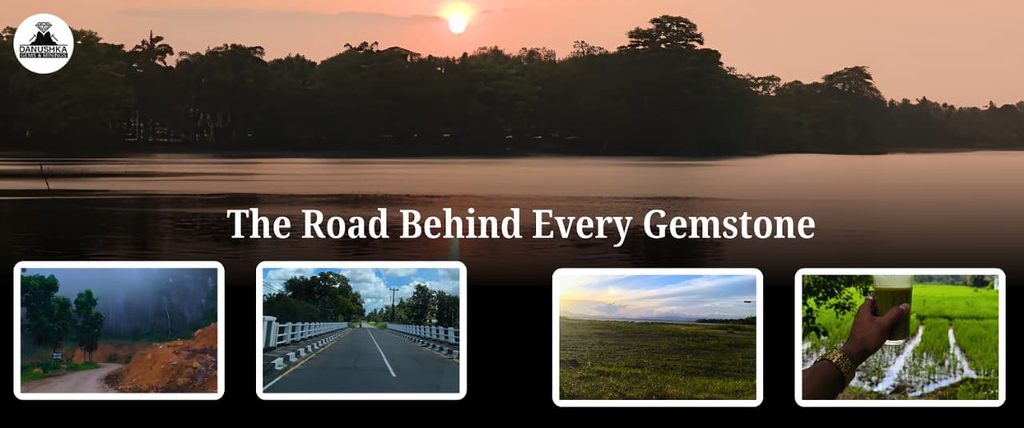
For us at Danushka Gems & Minings, that road is part of the gemstone itself.
We travel regularly through different gem-producing areas of Sri Lanka, meeting miners, mine owners, local buyers, source dealers, cutters, and people who have worked around gemstones for generations. Some days we are looking for a specific requirement. Other days we simply follow the opportunities that appear.
That uncertainty is part of the business.
A good stone does not arrive according to schedule.
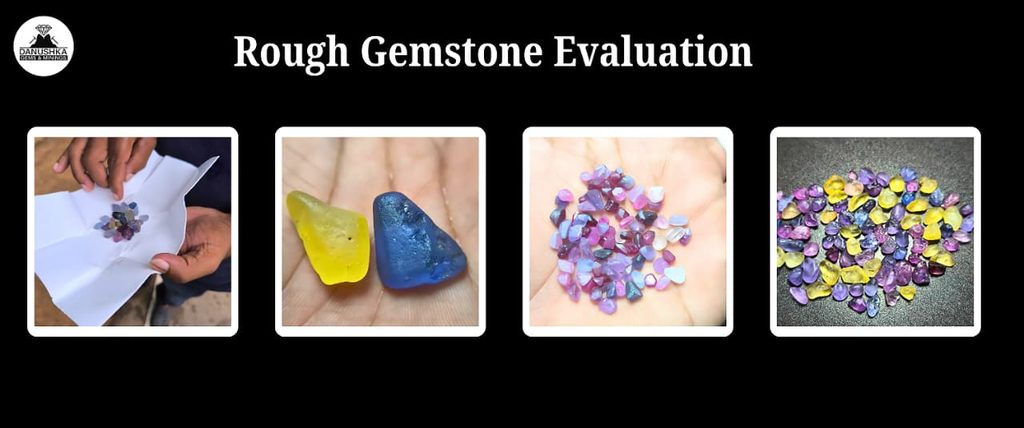
One morning we may find a clean sapphire rough. A few hours later we may be examining spinel, zircon, chrysoberyl, geuda sapphire, unusual crystal material, or a parcel that requires much more study before any decision is made.
And sometimes we drive a long distance and buy nothing at all.
That is also part of sourcing.
The Journey Before the Gemstone
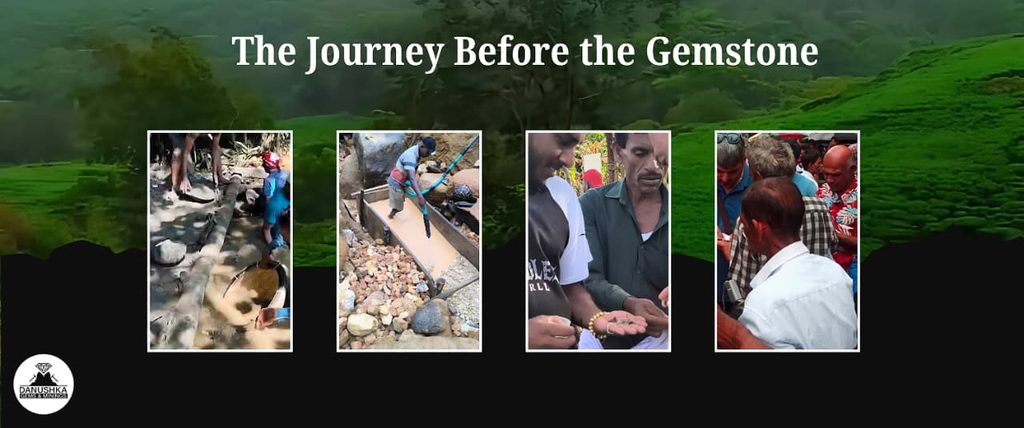
Sri Lanka’s gem trade has developed around one of the world’s best-known natural gemstone-producing environments. Alluvial deposits, weathered rock systems, river gravels, secondary deposits, and long-established mining areas have produced sapphire, spinel, chrysoberyl, zircon, garnet, tourmaline and many other gem minerals.
But knowing that a region produces gemstones is very different from knowing whether one specific piece of rough is worth buying.
Every stone has to be evaluated individually.
Color is only one part of the decision.
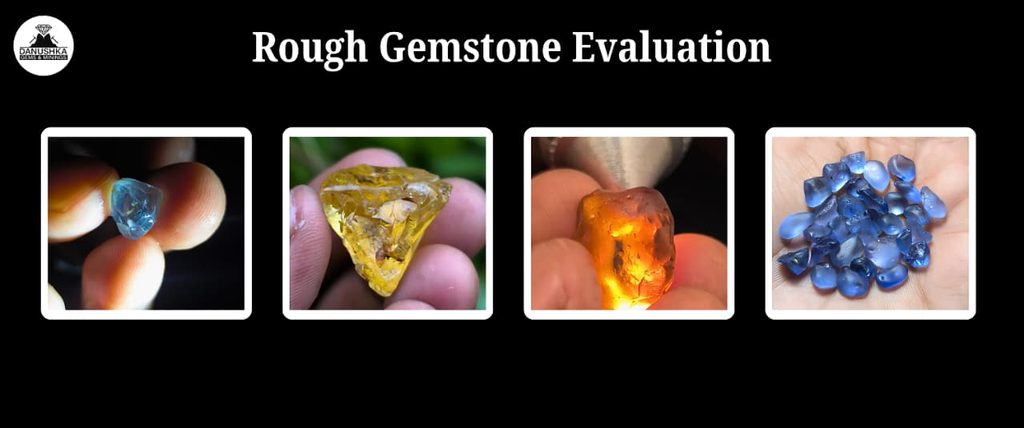
We look at transparency, internal inclusions, fractures, silk, crystal structure, color zoning, depth, natural shape, surface condition, potential orientation, and the likely relationship between rough weight and finished recovery.
A rough sapphire weighing 10 carats does not automatically become a 5-carat finished gemstone.
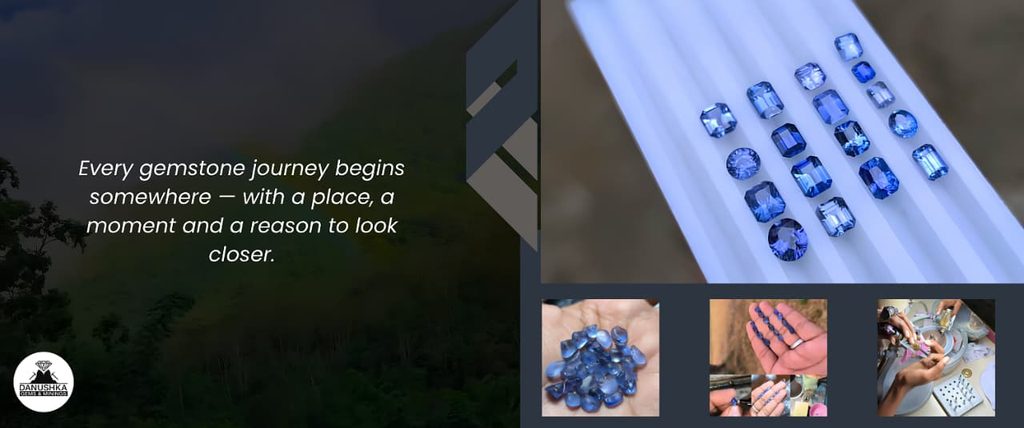
Sometimes it may recover more.
Sometimes much less.
A feather inclusion may determine the entire cutting direction. A strong color zone may need to be positioned beneath the table. A deep but irregular piece may require a completely different design from what the outside shape first suggests.
This is why rough buying is part gemology, part experience, part calculation, and part judgment.
From the Road to the Cutting Wheel
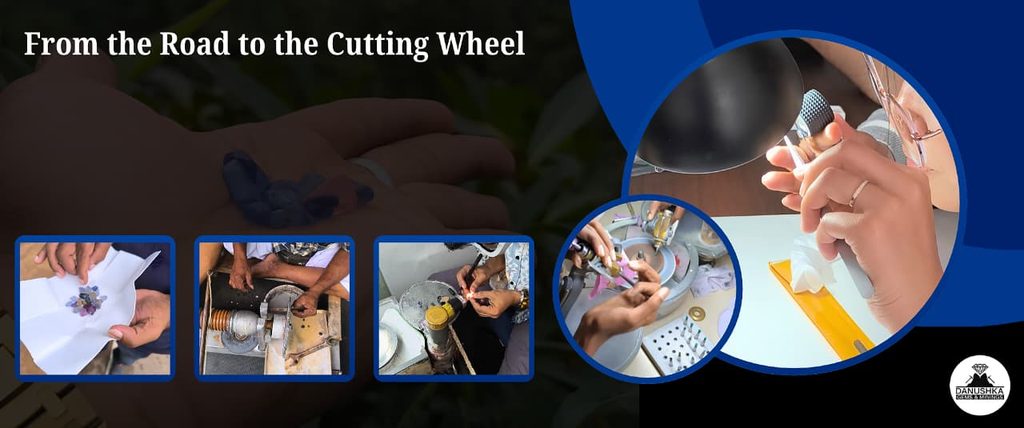
One of the most interesting parts of our work begins after a stone is purchased.
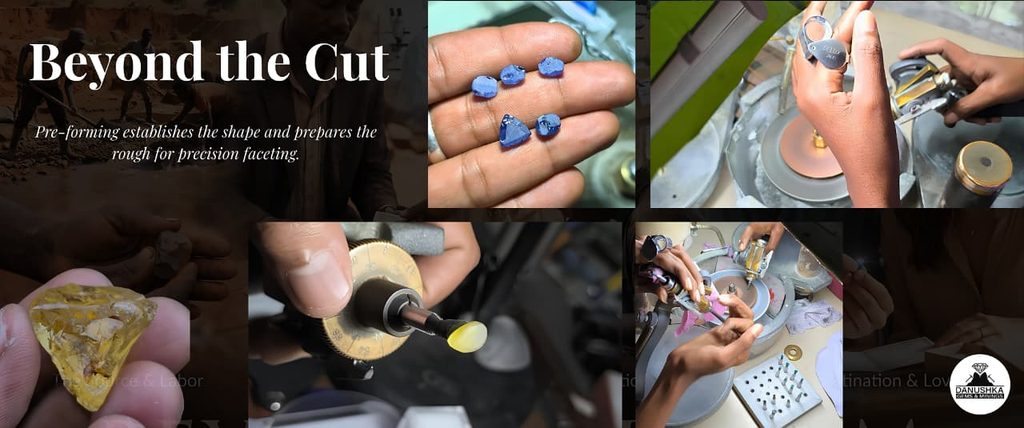
Before cutting, we examine the rough from multiple directions. Transmitted light can reveal internal structures that are difficult to understand in ordinary reflected light. A rough stone may look dark from one direction and surprisingly transparent from another.
Cutters must think in three dimensions.
The strongest color direction may not be the direction that gives the highest weight retention.
The cleanest direction may require removing too much material.
The largest possible finished stone may not produce the best brilliance.
So cutting is always a balance.
Weight.
Color.
Clarity.
Proportion.
Beauty.
Durability.
And sometimes risk.
Pre-forming removes damaged areas and establishes the first geometry. The cutter then begins creating the pavilion, crown, girdle, and final facet relationships that determine how the finished stone handles light.
For corundum such as sapphire, the process requires careful planning because the material is hard, but natural internal inclusions can still create local weaknesses. For spinel, zircon, chrysoberyl and other gemstones, each mineral behaves differently during cutting and polishing.
The final result is therefore not simply “hidden inside” the rough waiting to be revealed.
It has to be developed.
The Human Side of the Gem Trade
Behind every gemstone are people.
A miner who worked underground.
A local buyer who recognized the material.
A dealer who carried it from one area to another.
A cutter who spent hours making small decisions that may change the final value dramatically.
A laboratory that later examines the finished gemstone.
And eventually, a collector, jeweler, dealer or private buyer who chooses to give that stone a new purpose.
We believe this human side should not disappear from the story.
A gemstone can have scientific data, measurable optical properties, treatment status, weight, dimensions and laboratory identification.
But it can also carry a memory.
The village where it was found.
The road we traveled to see it.
The weather that day.
The person who brought it.
The conversation before buying.
The uncertainty before cutting.
And the moment when the finished stone is finally seen under proper light.
Those things do not replace gemology.
They give the gemology a real-world context.
Why Origin and Treatment Matter
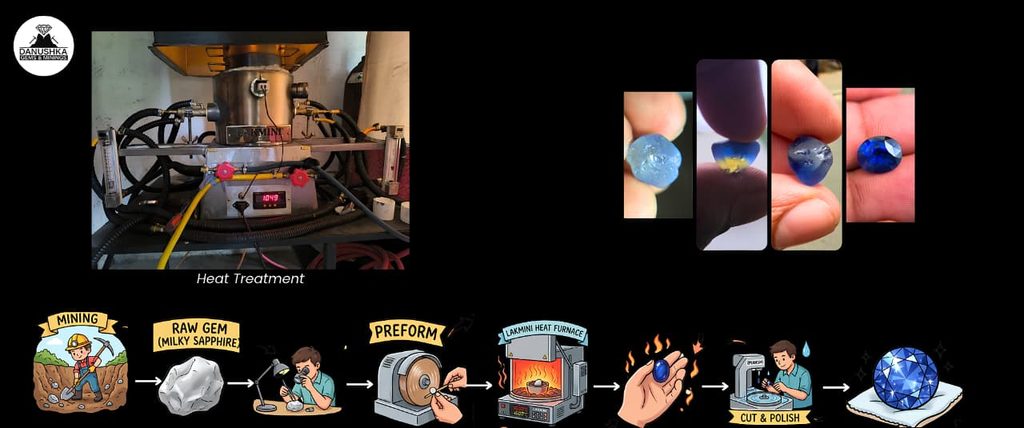
For professional gemstone buyers, clear disclosure is essential.
A natural sapphire may be unheated, conventionally heated, diffusion treated, fracture-filled, or subjected to other treatment processes depending on the material and market.
Those differences can significantly affect desirability, value and collector interest.
That is why we do not believe in casually describing a stone as “unheated” without proper basis.
When laboratory confirmation is required, certification becomes an important part of the process.
The same applies to origin.
Geographic origin cannot always be determined confidently from visual appearance alone. Laboratory origin opinions may use microscopic features, spectroscopy, chemistry and reference databases.
From a sourcing perspective, however, we can explain where we personally obtained the rough and the source area connected to that transaction.
That transparency matters.
The Difference Between Buying Rough and Buying Finished Stones
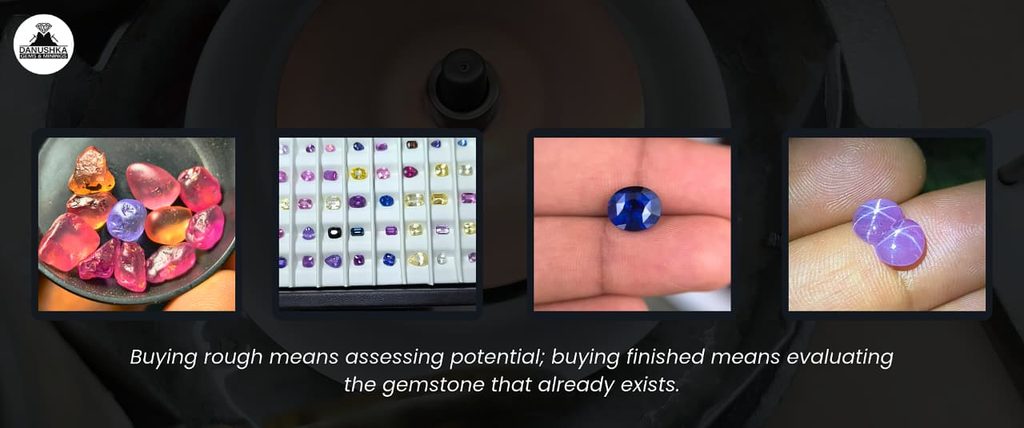
Buying finished gemstones and buying rough are two completely different experiences.
A finished gemstone allows the buyer to evaluate actual dimensions, face-up appearance, cut, clarity and weight.
Rough requires imagination and risk assessment.
That is why cutting estimates must always remain estimates.
A natural inclusion may become more important after pre-forming. A color zone may appear stronger or weaker as material is removed. A fracture may extend farther than expected. Sometimes the finished recovery is better than predicted. Sometimes the cutter must sacrifice more weight to protect the final quality.
For many collectors and buyers, however, this is exactly what makes the rough-to-finished journey special.
You do not simply buy a gemstone.
You participate in its development.
The Moments Between the Stones
Not every part of a sourcing trip is about business.
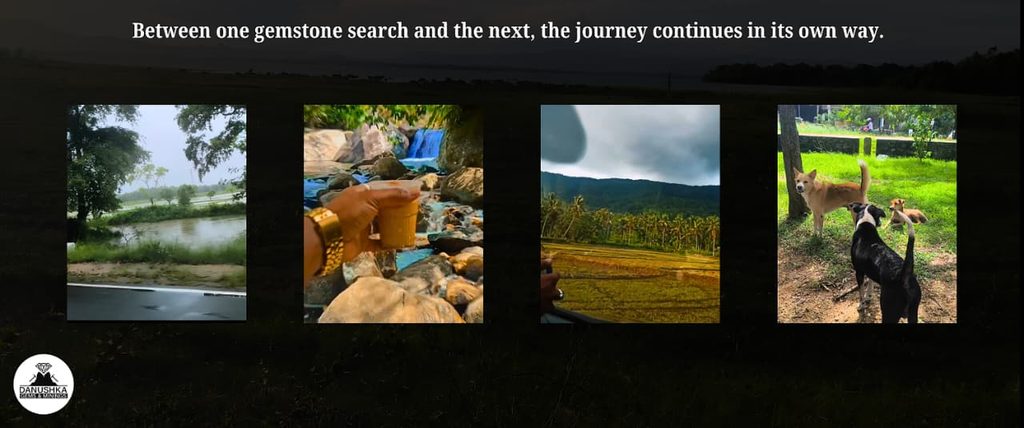
There are roadside meals.
Dogs under trees.
Sudden rain.
Long empty roads.
Mountain views.
Festivals.
Late-night driving.
Conversations with cutters.
Coffee while waiting.
A quick stop because someone says a new parcel has arrived.
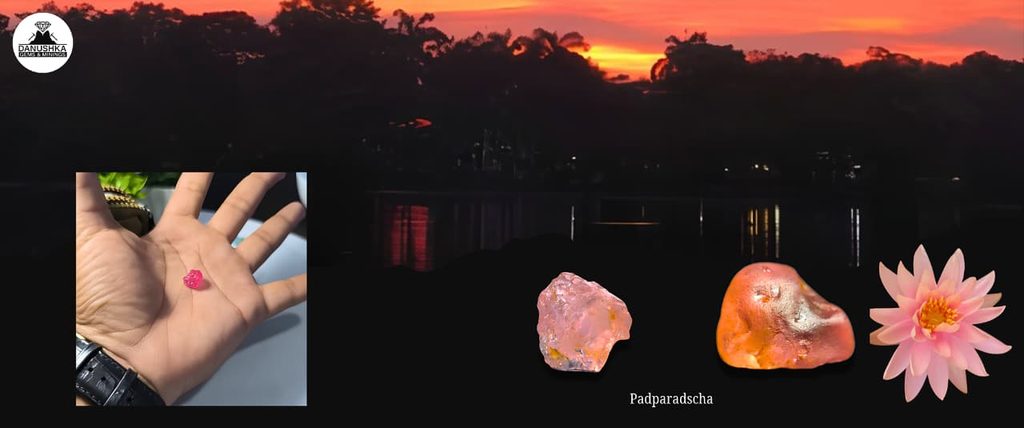
And sometimes a beautiful stone appears on a day when nothing was expected.
These are the moments that make gemstone sourcing feel less like a fixed commercial process and more like a continuing journey.
That does not mean the work is romantic all the time.
There are expenses, failed trips, difficult negotiations, unsold stock, cutting losses, laboratory costs, shipping problems and days when cash flow must be managed carefully.
That reality is important too.
A professional gemstone business is not built only on finding beautiful stones.
It is built on judgment, discipline, relationships, transparency, patience and the ability to keep moving.
From Source to Story
When we show a rough gemstone beside a road, mountain, paddy field, cutting table or finished stone, we are not trying to make the gemstone look more valuable than it is.
We are showing where the work really happens.
For us, sourcing is not only about arriving at the final polished gem.
It is about understanding the complete path.
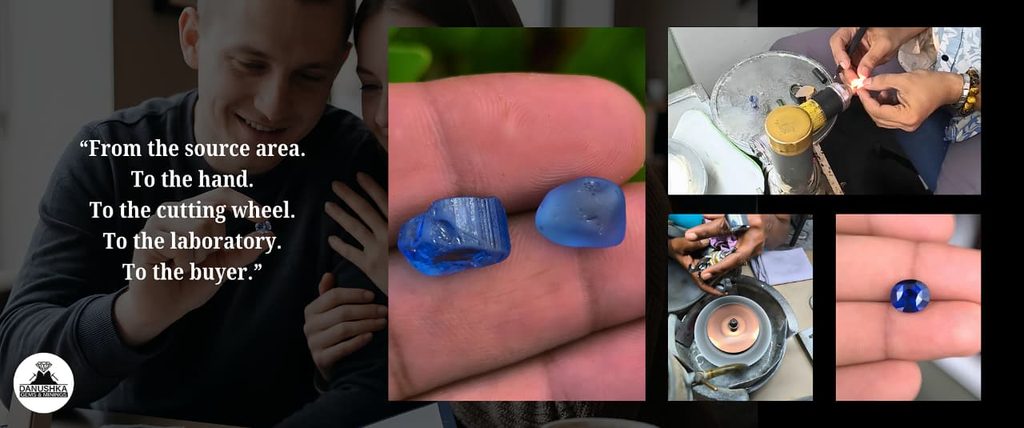
From the source area.
To the hand.
To the cutting wheel.
To the laboratory.
To the buyer.
And eventually to the person who will keep the gemstone for years.
Some days we find treasure.
Some days we find knowledge.
Some days we only find another road to follow.
But every trip adds something to our understanding of gemstones, people and the industry itself.
And sometimes, while searching for the next stone, the journey becomes the most valuable part of the story.
FAQ
1. Why does Danushka Gems & Minings travel directly to gemstone source areas?
Direct travel allows us to inspect material in person, maintain relationships with miners, mine owners, local buyers and source dealers, and better understand the real context of each gemstone opportunity.
2. Can the finished weight of a rough gemstone be guaranteed before cutting?
No. Finished weight can only be estimated. Internal inclusions, fractures, color orientation, depth, shape and cutting decisions can all change the final recovery.
3. Why are rough gemstones examined under different lighting conditions?
Different lighting and transmitted light can reveal color zoning, internal inclusions, transparency, silk, fractures and orientation features that may not be visible under normal reflected light.
4. Does a large rough gemstone always produce a large finished stone?
No. Rough weight alone does not determine finished size. A cutter may need to remove material to eliminate damaged areas, improve clarity, achieve proper proportions or orient the strongest color.
5. Why is treatment disclosure important?
Treatment can affect market value, rarity, durability and collector interest. Natural unheated gemstones and treated gemstones can both be commercially important, but the treatment status should be disclosed accurately.
6. What role does gemstone certification play?
A reputable gemological laboratory can help identify the gemstone, detect treatments, document weight and measurements, and in some cases provide an opinion on geographic origin.
7. What is the difference between buying rough and buying a finished gemstone?
A finished stone can be judged directly by its final weight, cut, color and clarity. Rough requires more evaluation and involves uncertainty regarding cutting recovery and the final appearance.
8. Why can two rough stones of similar weight have very different values?
Value depends on much more than weight. Color, transparency, clarity, treatment, origin, structure, cut potential, demand and final recovery can all affect value.
9. What makes Sri Lanka important in the gemstone industry?
Sri Lanka has a long history of gem mining and is internationally known for corundum and many other gem minerals, including spinel, chrysoberyl, zircon, garnet and tourmaline.
10. Can customers experience a rough-to-finished gemstone journey?
When suitable material and arrangements are available, customers can follow stages such as rough evaluation, cutting, polishing and certification, allowing them to understand how a natural gemstone develops from source material into a finished gem.