| Weight | 45.42 ct |
|---|---|
| Grade | Facet Grade |
| Variety | Natural Garnet, Natural Zircon |
| Treatment | natural, untreated |
| Mining Location | elahera village around mining in Sri Lanka |
| Color | pinkish-purple, magenta, wine-red and raspberry-pink tones |
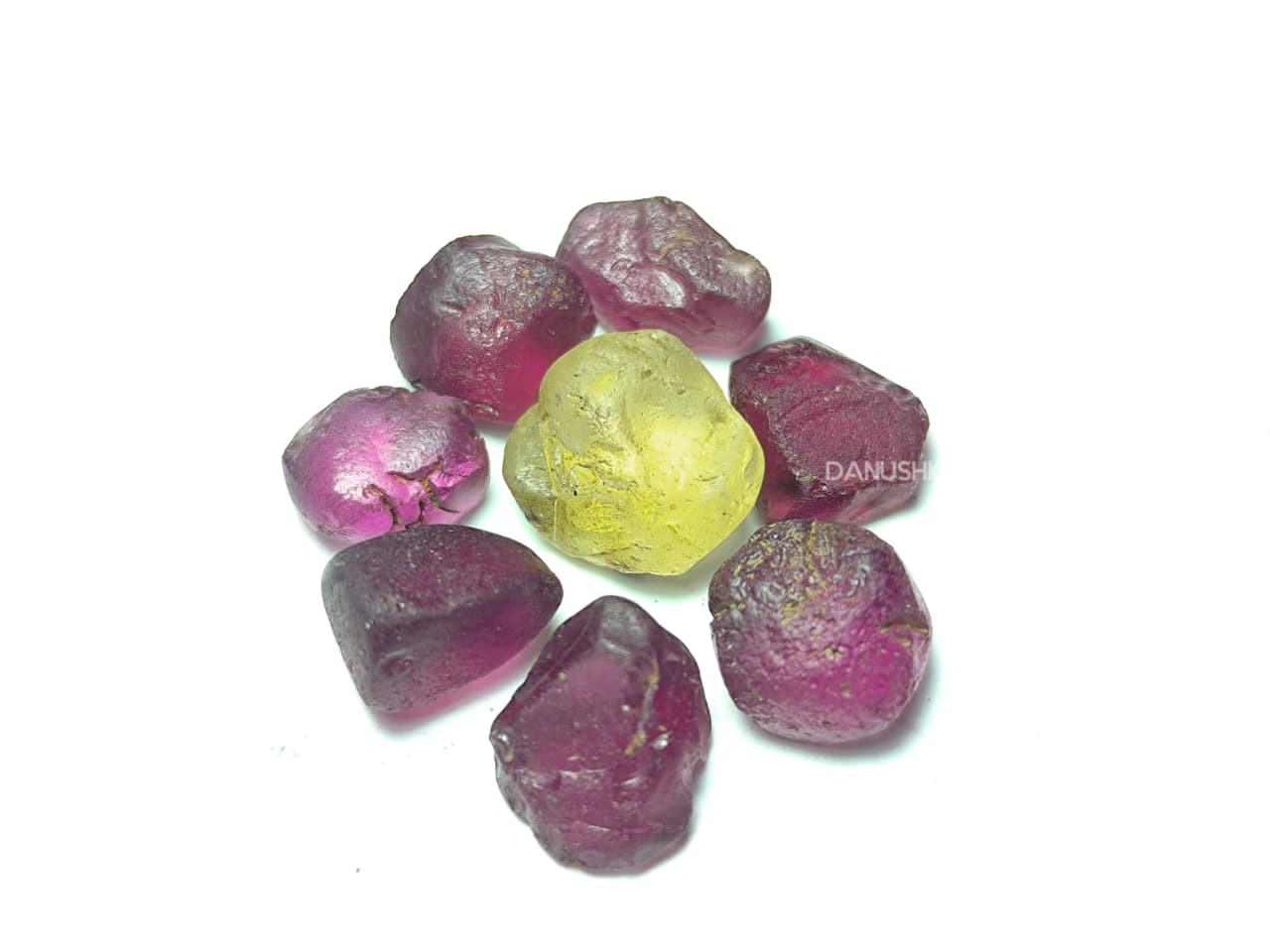
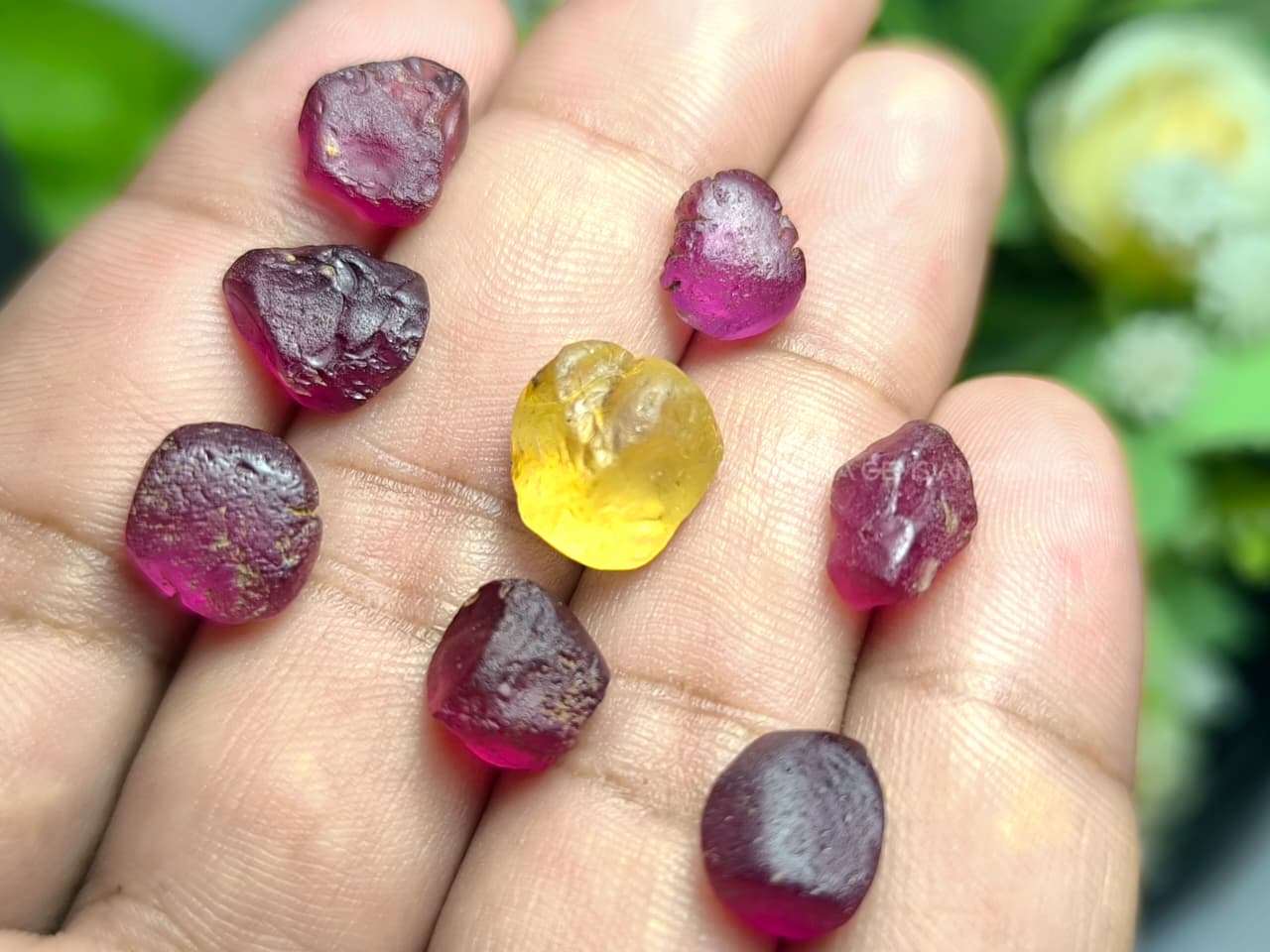
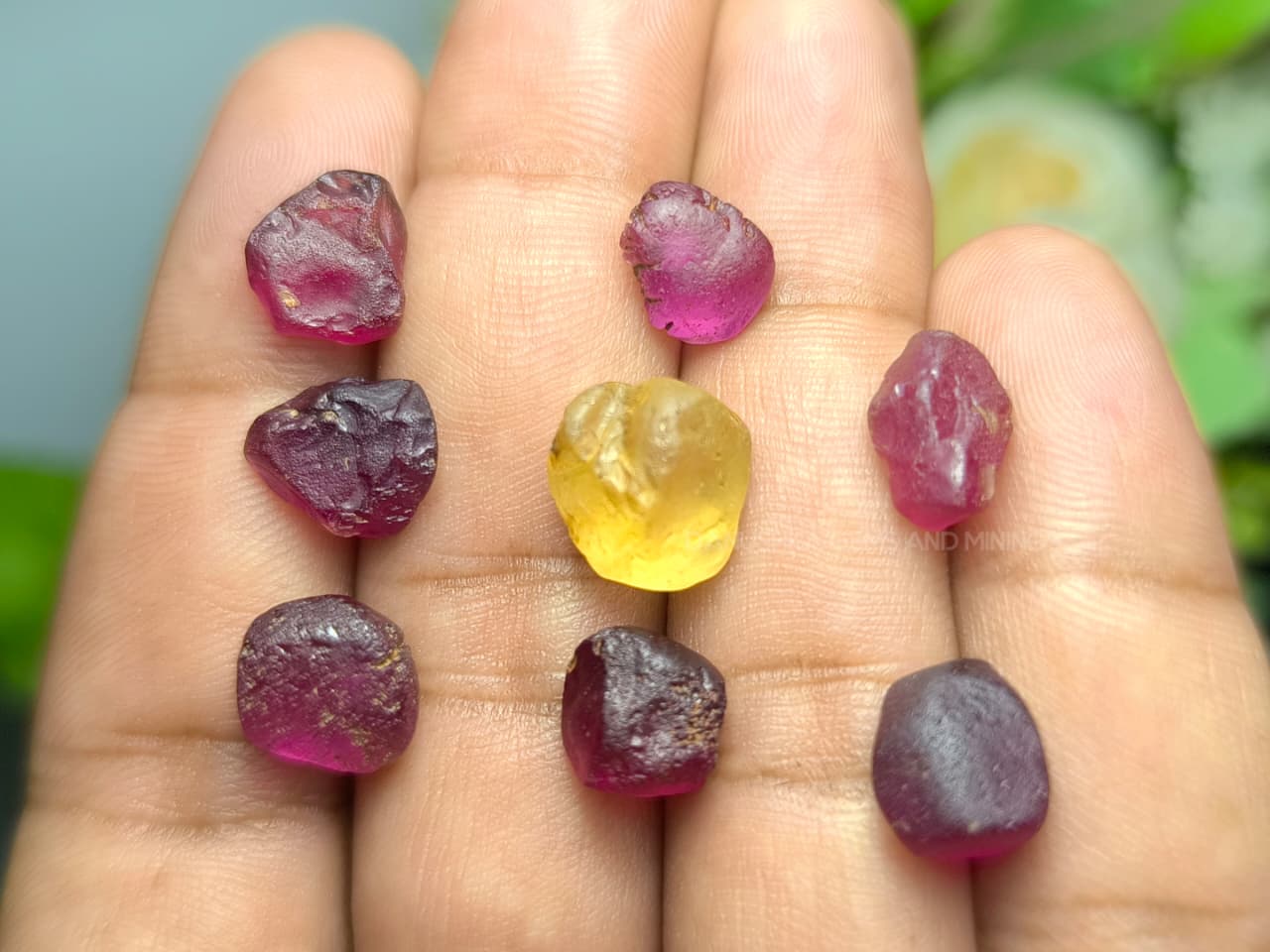
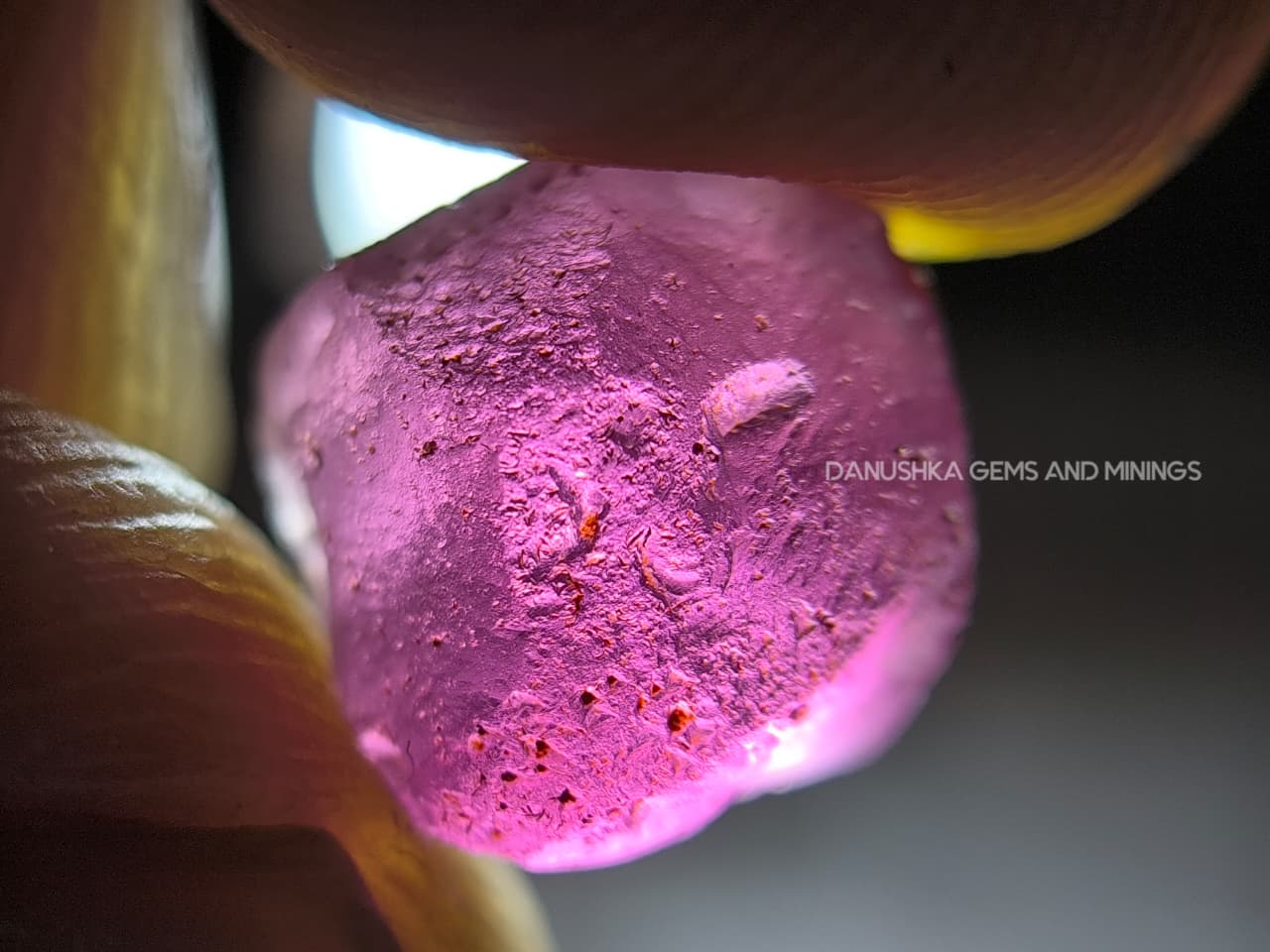
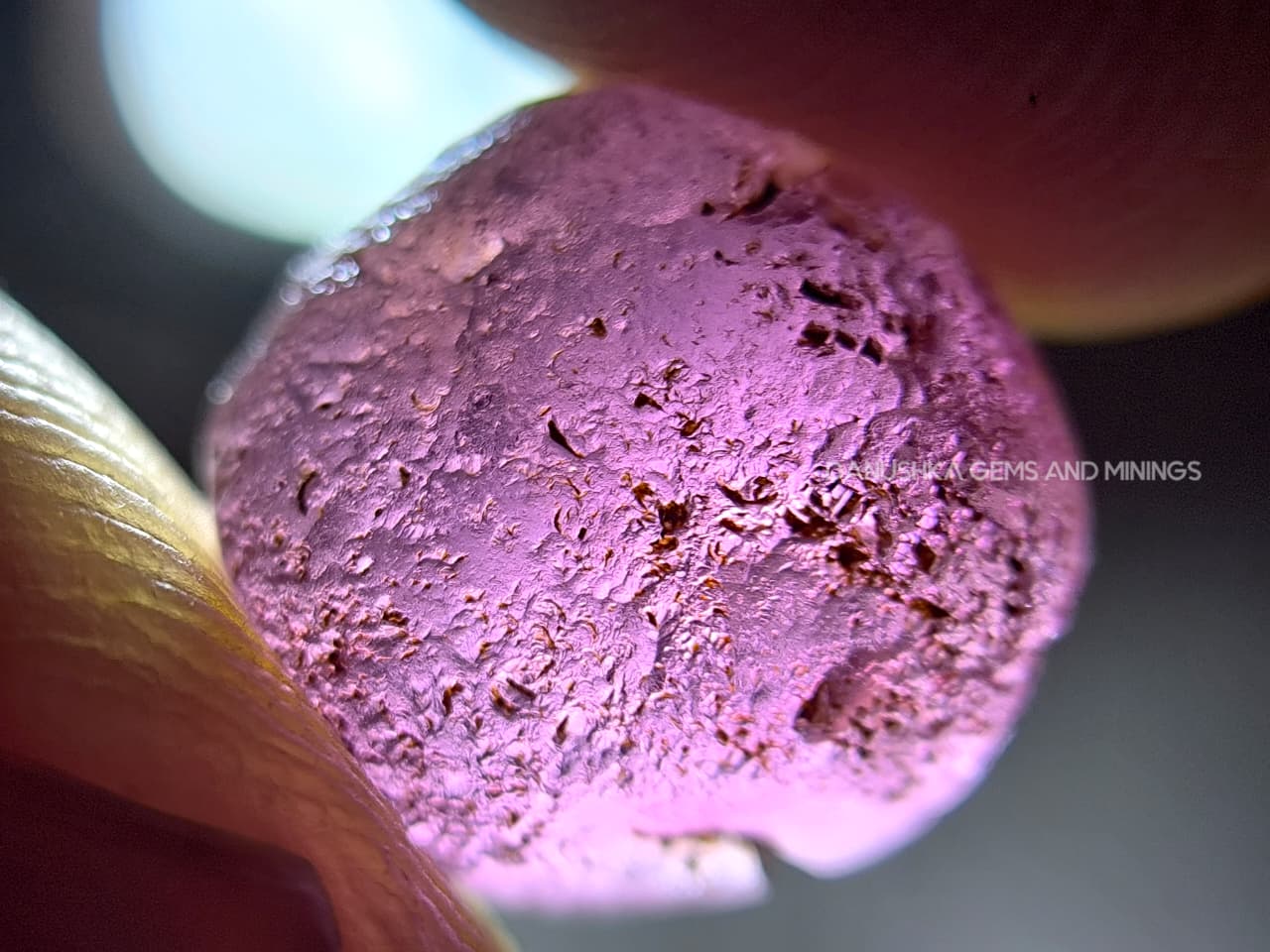
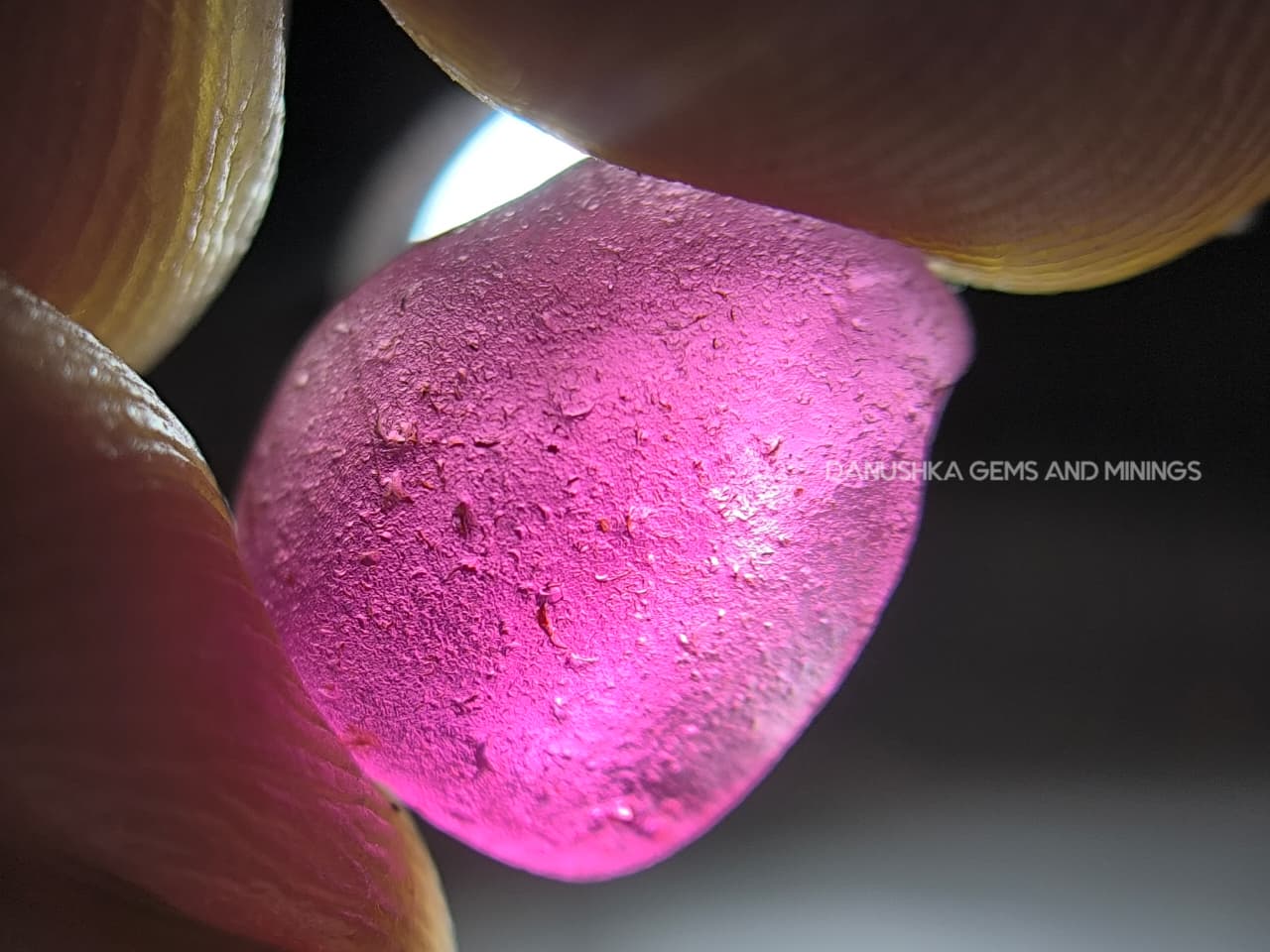
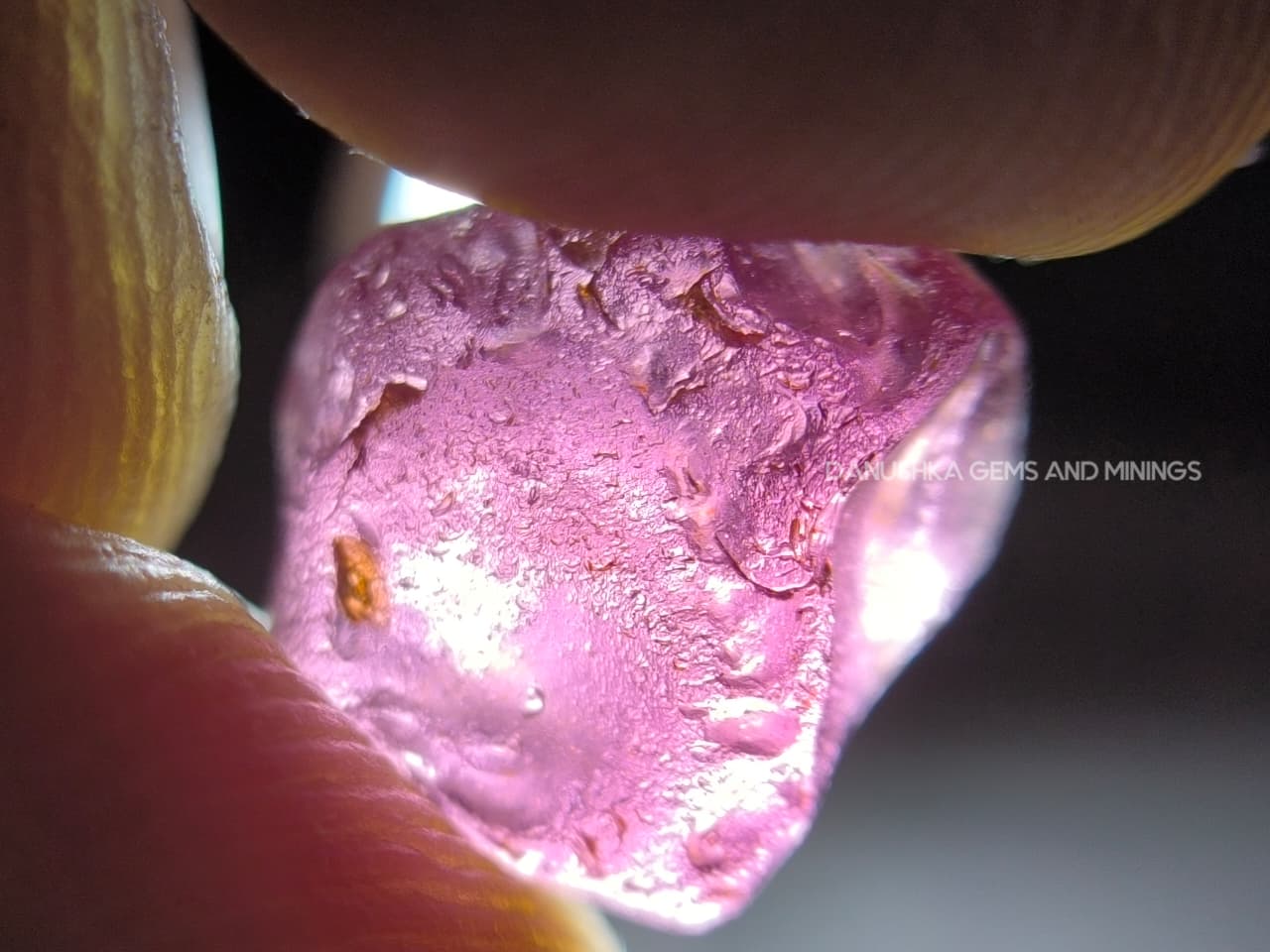
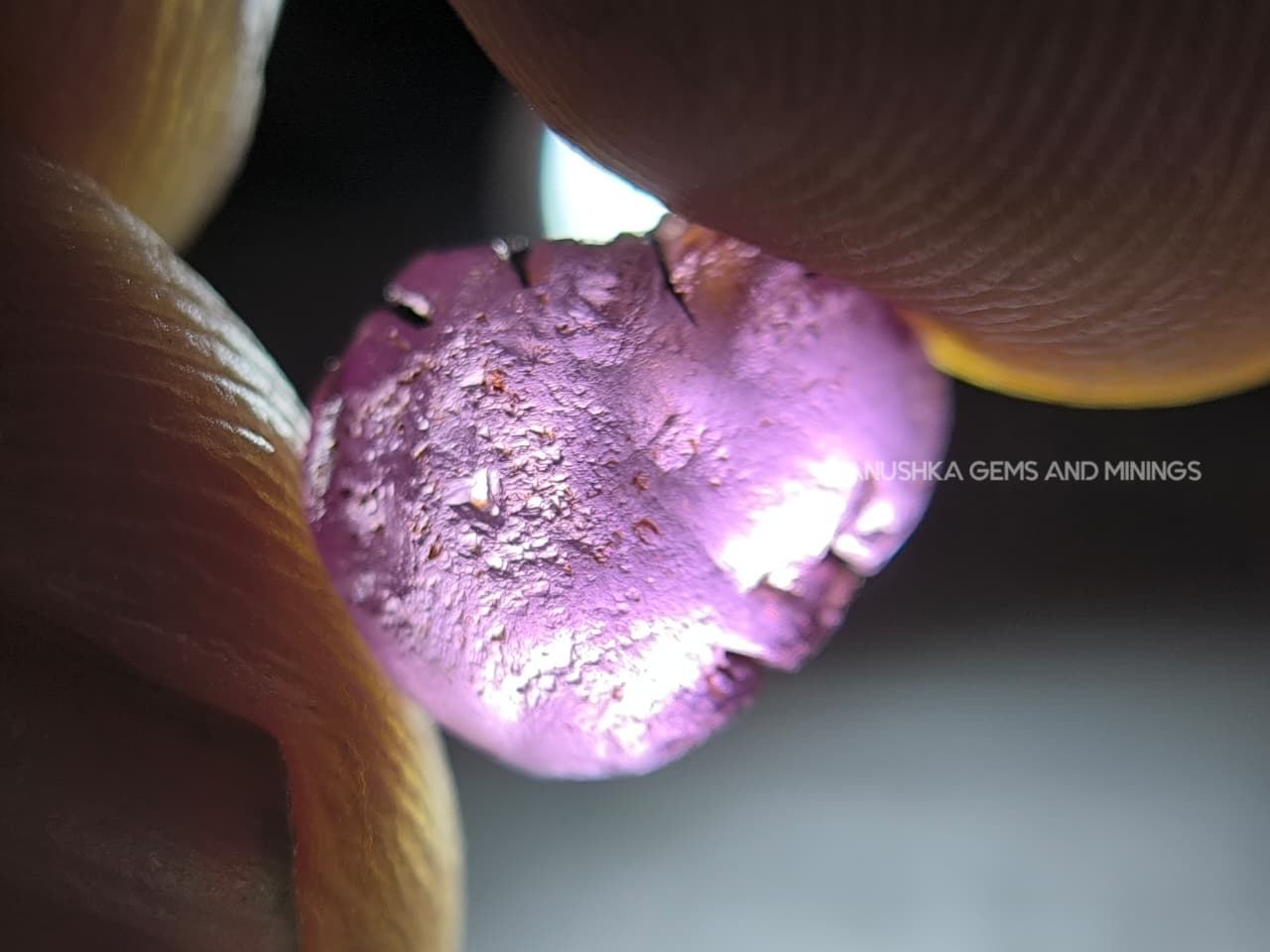
45.42 ct Ceylon Rhodolite Garnet & Traditional Heat-Treated Yellow Zircon Rough Collection – Elahera Sri Lanka
Spread the Love
Stone Identity & Quality
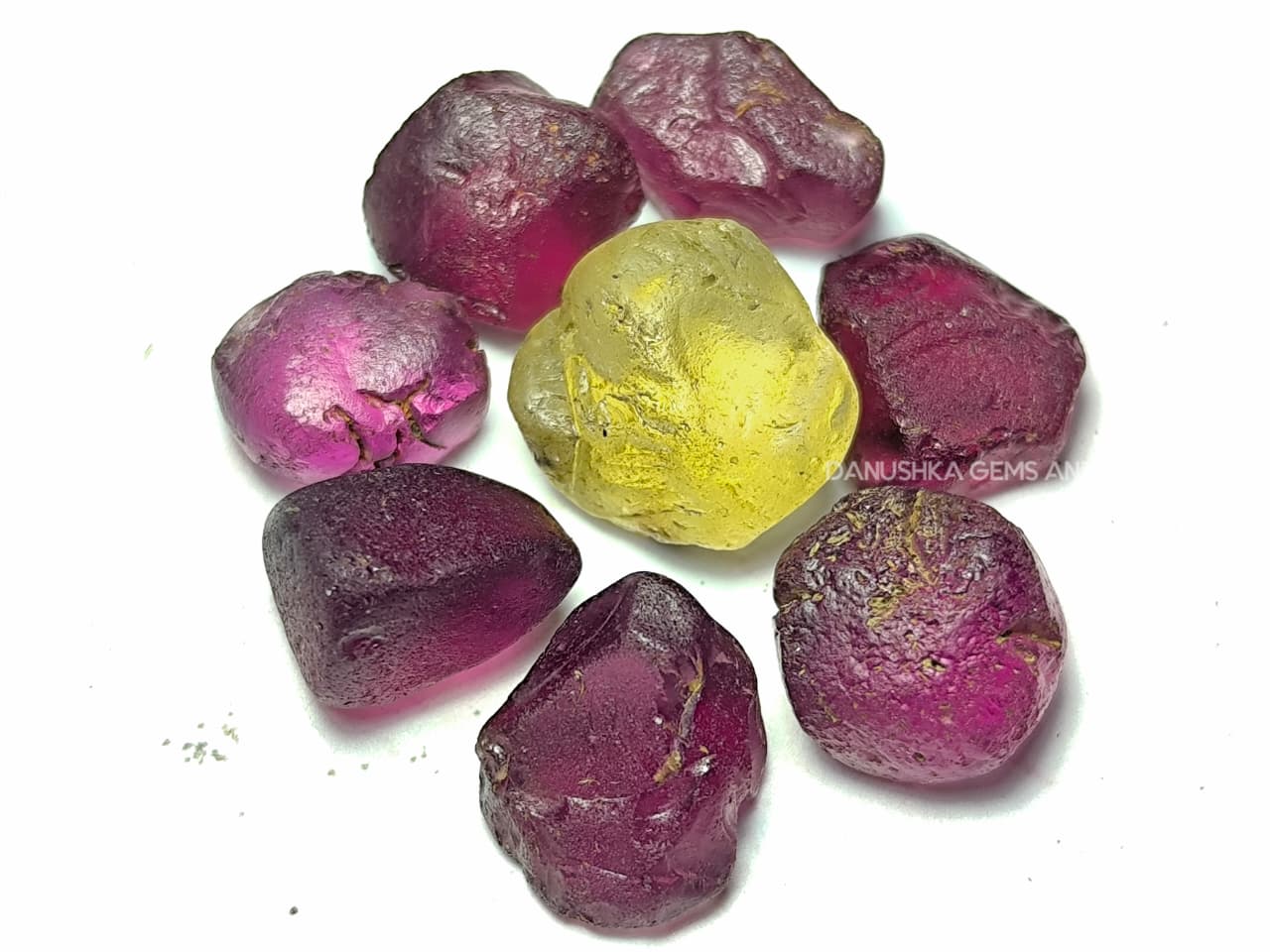
This is a 45.42 ct facet-grade Ceylon rough gemstone collection containing eight stones ranging from approximately 10.48 ct to 3.60 ct.
The collection consists of:
– 7 natural rhodolite garnets
– 1 natural zircon weighing 10.48 ct
All material was sourced from Elahera village around mining in Sri Lanka.
The rhodolite garnets are presented as natural and untreated.
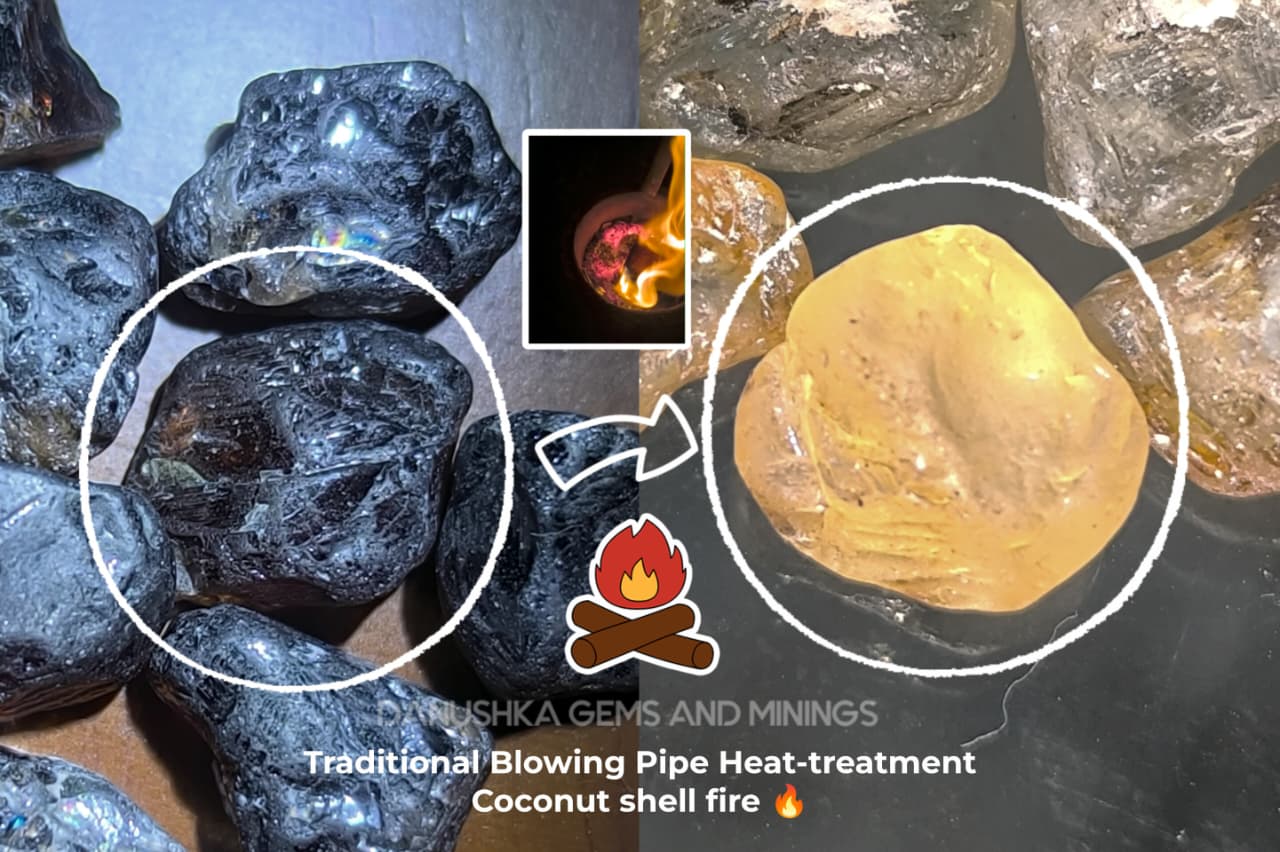
The zircon has a different treatment history. It was originally a darker zircon and was subjected to a traditional blowing-pipe heat-treatment using coconut-shell fire, resulting in its current pale-yellow appearance.
Color & Visual Characteristics
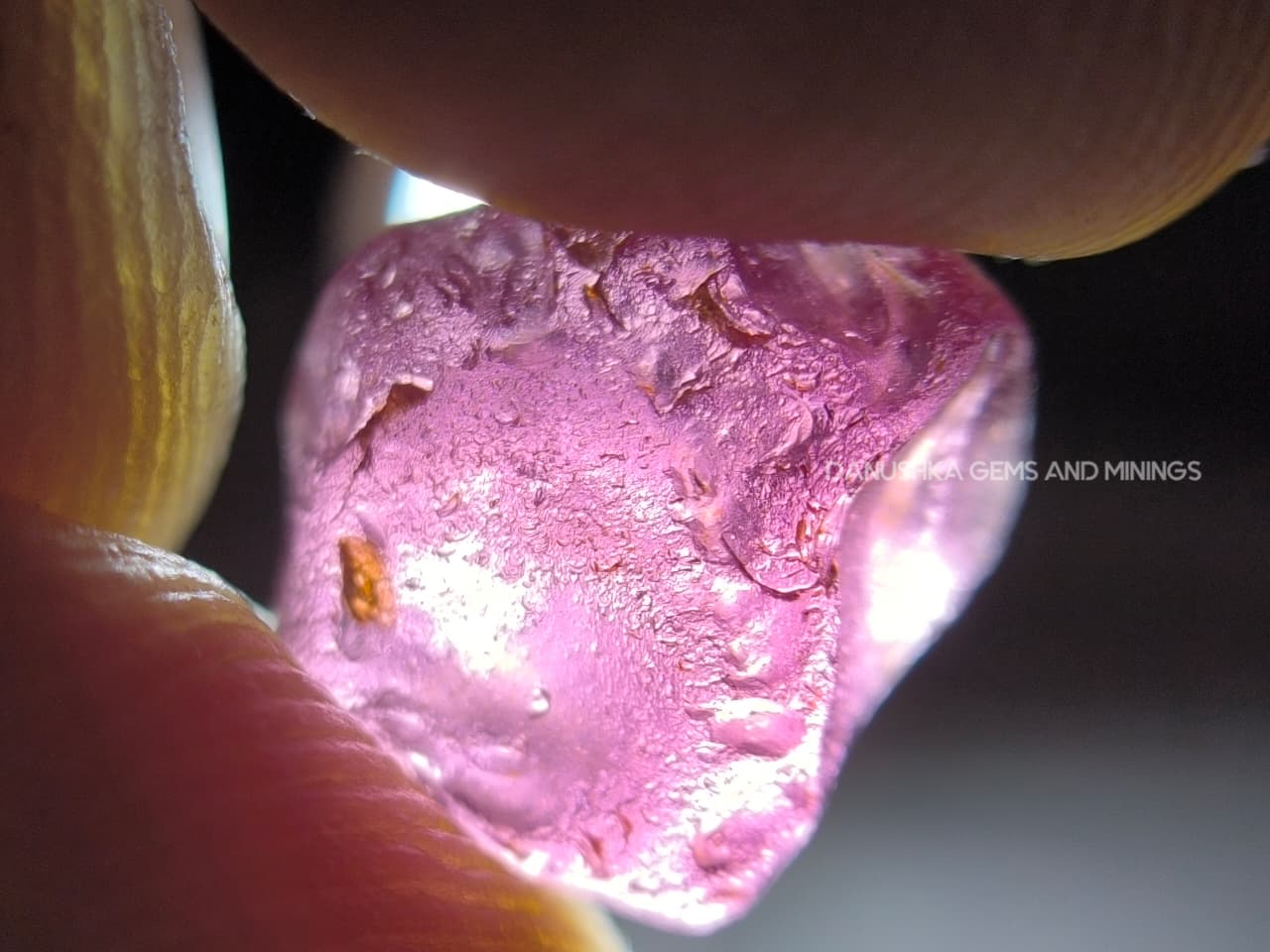
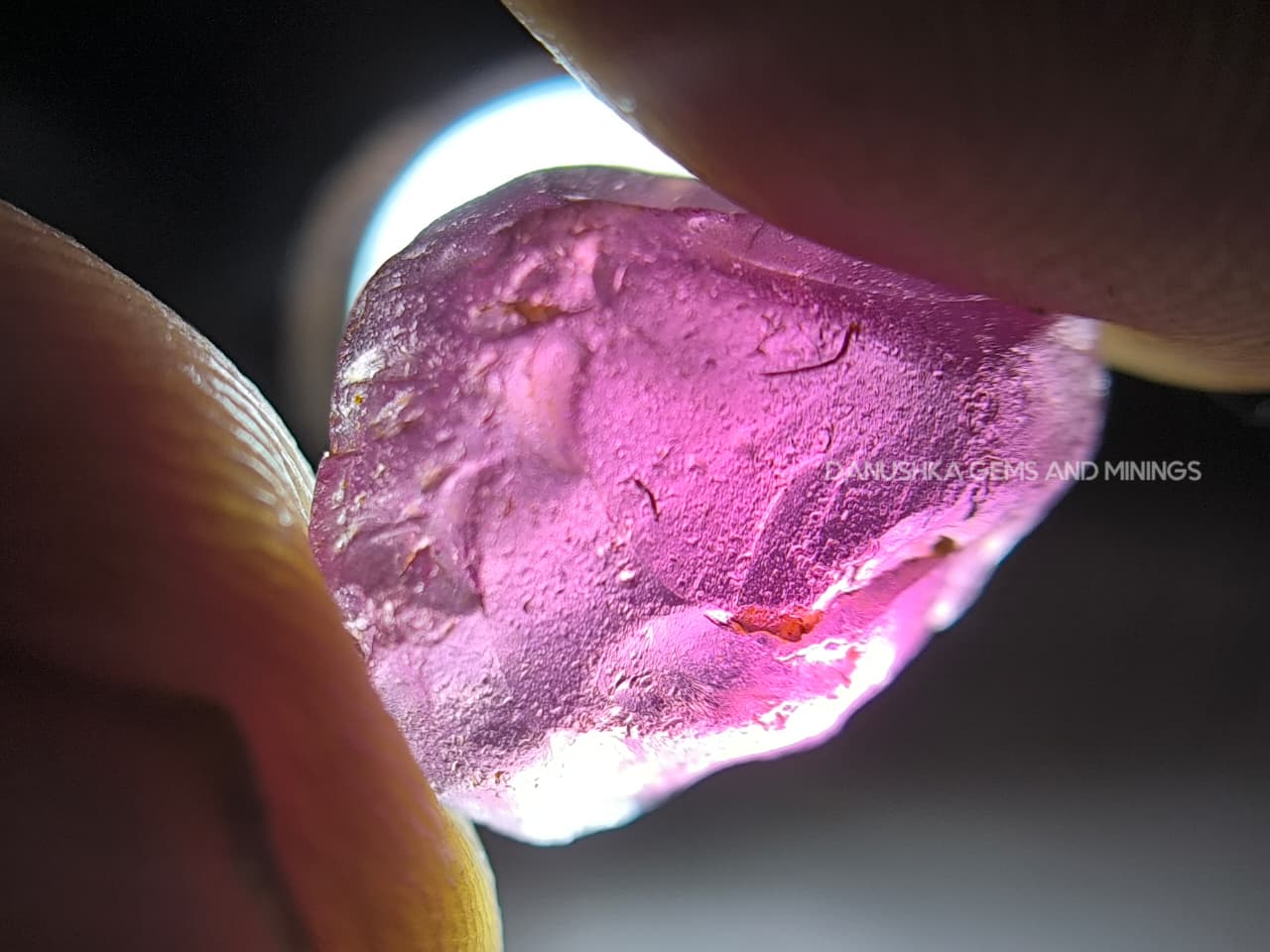
The rhodolite garnets display a broad family of red-purple colors.
Depending on thickness and lighting, individual pieces show:
– pinkish-purple
– magenta
– raspberry pink
– wine red
– deep grape tones
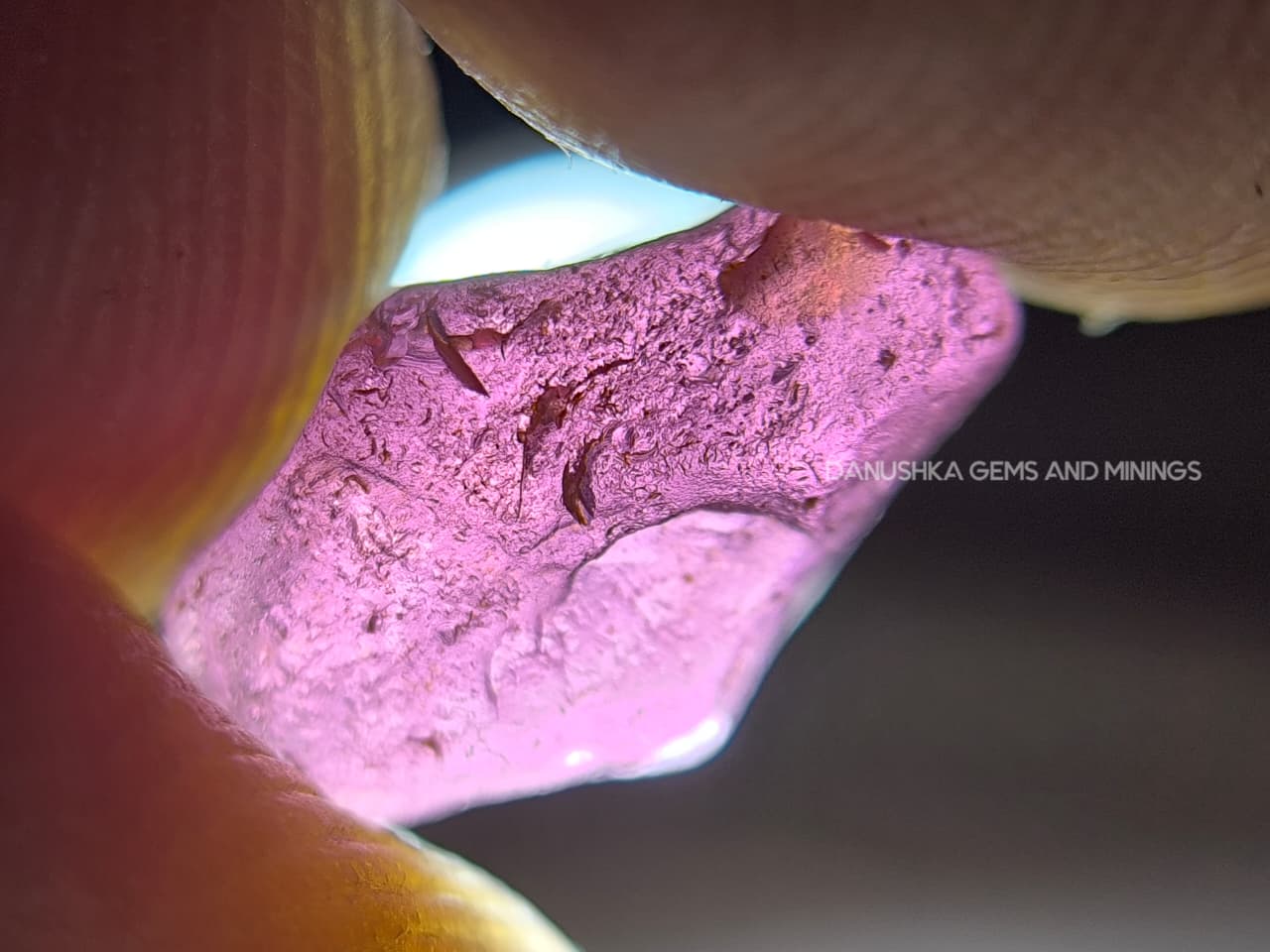
Some stones appear considerably darker when held normally in the hand because of their body depth and saturation. Under strong transmitted light, much brighter pink and magenta areas become visible.
This behavior is important when considering cutting orientation. A rough stone that initially looks dark can sometimes reveal brighter color through thinner directions, although the final face-up result cannot be guaranteed before cutting.
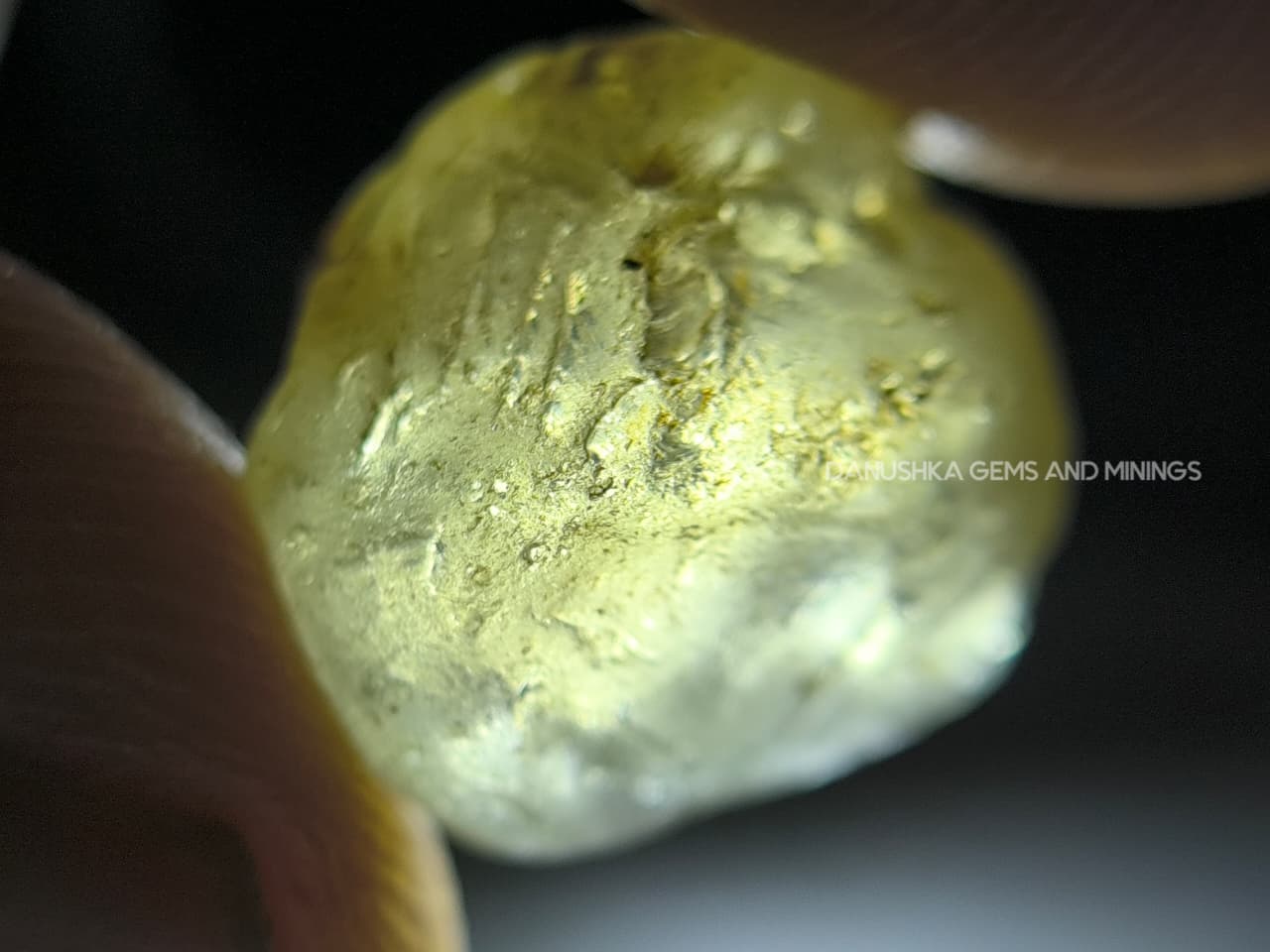
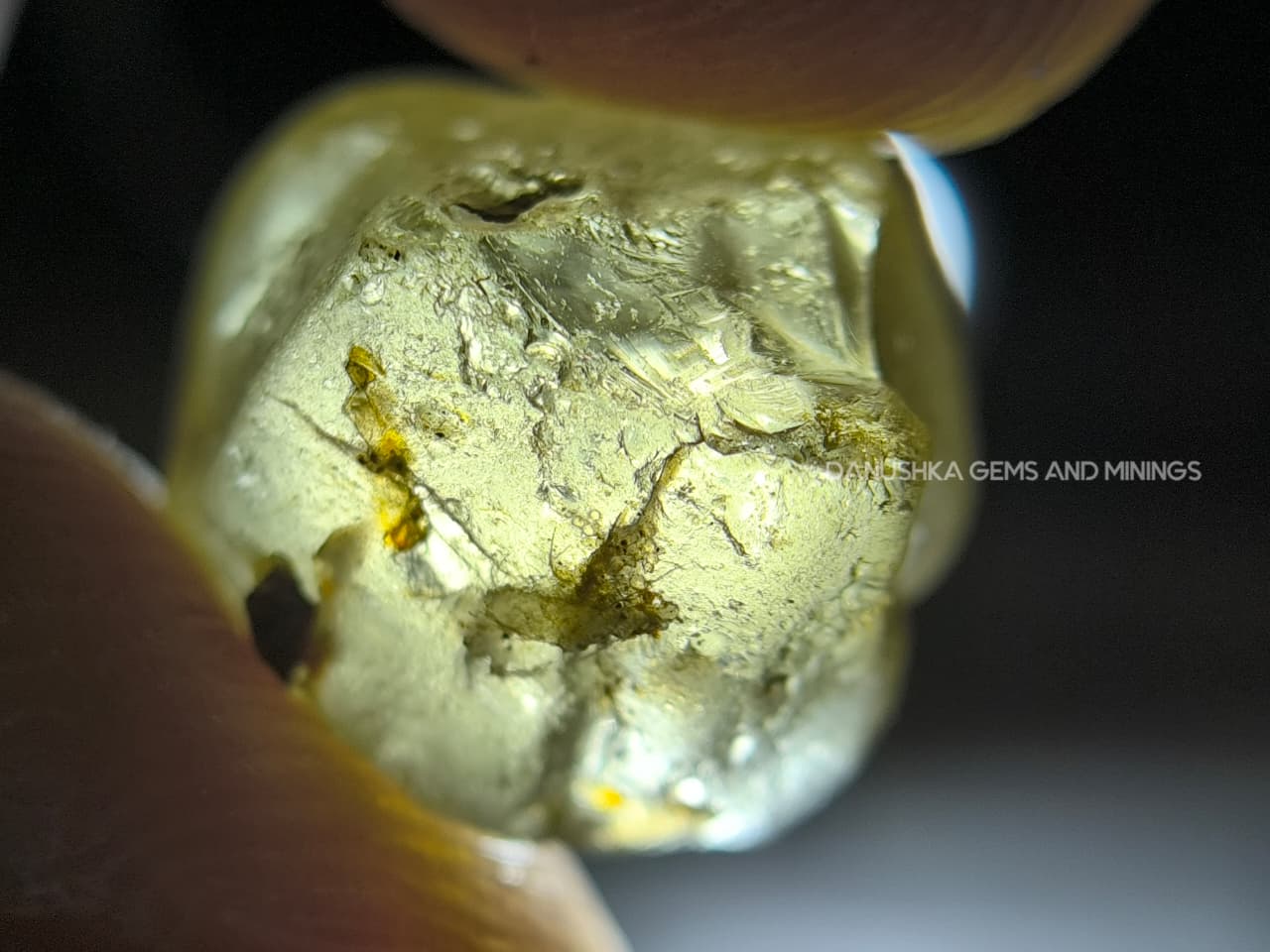
The zircon displays a pale-yellow body color following traditional heat treatment.
Internal & External Features
The collection preserves natural rough surfaces and individual source characteristics.
The rhodolites show variations in:
– transparency
– surface texture
– internal inclusions
– color concentration
– darker and lighter zones
– natural rough outlines
Strong transmitted light is useful for locating more transparent areas and understanding how the body color behaves through different thicknesses.
The pale-yellow zircon also shows natural internal features visible under magnification and strong illumination. These should be studied before selecting a cutting orientation.
Cutting & Treatment Potential
Rhodolite Garnets
The seven rhodolites are facet-grade material, but each stone should be planned separately.
A professional cutter should consider:
– color depth
– transparent directions
– inclusion position
– available pavilion depth
– clean zones
– likely finished dimensions
– weight retention
Because some pieces show deeper grape or wine tones in thicker areas, orientation can strongly influence the finished appearance.
No specific finished weight, clarity or color result is guaranteed.
Traditional Heating of the Zircon
The 10.48 ct zircon carries an interesting part of Sri Lankan gemstone tradition.
Before modern programmable gemstone furnaces became widely available, experienced local heaters sometimes used simple heat sources combined with a blowing pipe to alter certain zircon colors.
In this method, coconut shell or similar carbon-rich fuel is burned to create intense heat. A blowpipe directs additional air toward the fire, increasing combustion and allowing the operator to concentrate heat around the stone.
Unlike a modern furnace, where temperature ramps, atmosphere and cooling cycles can be programmed precisely, traditional heating depends heavily on the heater’s practical judgment.
Variables can include:
– intensity of the fire
– distance of the stone from the hottest zone
– air supplied through the blowpipe
– duration of exposure
– oxygen conditions around the stone
– rate of cooling
– original chemistry and structural condition of the zircon
– the mixture of the stone covering
Heating can modify color centers and structural defects responsible for zircon coloration. Depending on the particular stone and heating environment, a darker zircon may become lighter, yellowish, golden, blue or another tone.
However, the result is not predictable for every zircon.
This specific 10.48 ct stone changed from darker material to its present pale-yellow color after traditional coconut-shell-fire heating. It should therefore always be disclosed as heat-treated zircon.
The historical method itself adds an interesting source story, but the commercial value of the stone should still be judged primarily on its resulting color, transparency, clarity, size and cutting potential.
Source & Ethical Position
Danushka Gems & Minings works directly around Sri Lankan gemstone-producing regions, sourcing natural rough through miners, mine owners, local buyers and established source dealers.
Our approach is to present each stone with practical information rather than unrealistic promises.
For untreated material, treatment status is disclosed accordingly. Where a stone has undergone treatment—as with this traditionally heated zircon—the treatment is clearly stated rather than presenting it as untreated material.
Our focus is source transparency, realistic cutting evaluation and preserving the story behind Sri Lanka’s gemstone traditions.
Frequently Asked Questions
Seven natural rhodolite garnets and one 10.48 ct natural zircon.
The eight-piece collection weighs 45.42 ct in total.
No. The seven rhodolite garnets are presented as natural and untreated.
No. The zircon was traditionally heat-treated from darker zircon using a blowing pipe and coconut-shell fire.
Not exactly. Each rough stone needs individual orientation and internal examination before its likely finished weight, clarity and face-up color can be estimated.