
Introduction
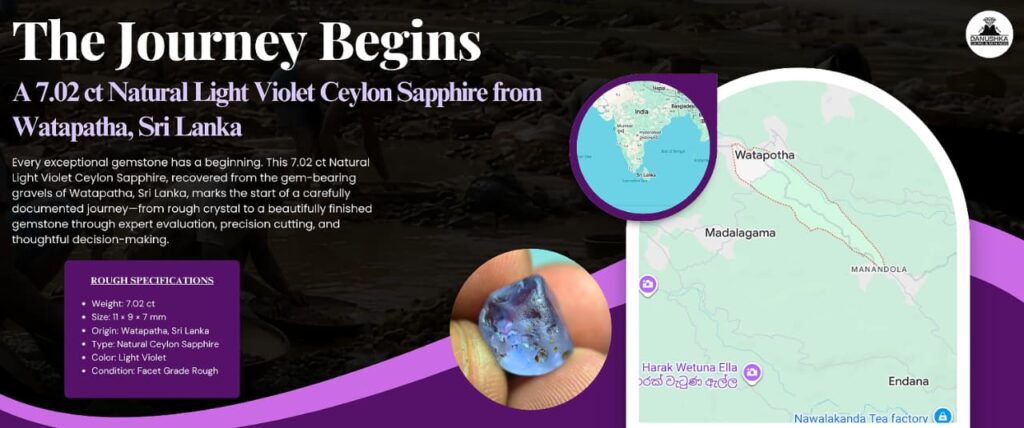
This gemstone journey began with a Facet Grade Ceylon Natural Light Violet Sapphire rough weighing 7.02 ct and measuring 11 × 9 × 7 mm. The stone was sourced from Watapatha village around mining in Sri Lanka, an area connected with natural Ceylon sapphire material and alluvial gemstone recovery.
At first view, the rough showed a beautiful light violet to light lavender body color, excellent vitreous luster, a glassy surface appearance, visible pink color zoning inside, and some small silky or geuda-like internal areas. Because of these internal features, the stone needed careful study before any cutting decision. This was not a simple “buy rough and cut” situation. It was a real source-to-finished gemstone journey involving the seller, the buyer, and the cutter, with every decision carrying some level of risk and responsibility.
The buyer, Mr. Muller from the Netherlands, purchased the stone as rough. Before cutting, we discussed the stone’s natural color, possible heat treatment consideration, internal silk, pink zoning, and the best way to bring out the final beauty. After proper examination, the decision was made to keep the sapphire in its natural unheated condition.
Rough Sapphire Details Before Cutting
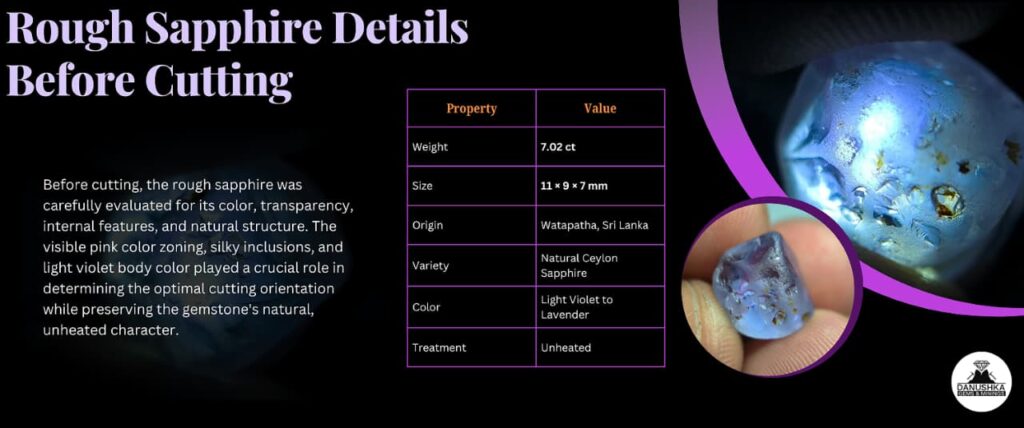
The original rough sapphire weighed 7.02 ct and measured 11 × 9 × 7 mm. It was an alluvial Ceylon sapphire rough with a rounded natural surface, strong luster, and a soft light violet to lavender body color.
The stone also showed a visible pink color zone inside. This was an important point during examination because pink zoning can affect the final face-up color of a sapphire depending on cutting direction, pavilion placement, table position, and final depth. The pink color zoning inside the sapphire may contribute to a more attractive color combination after cutting, depending on the final orientation and transparency of the stone. However, because the pink color band has limited transparency, the pink area may not become strongly visible in the finished gem. The final effect can only be understood after careful cutting and polishing.
The rough also showed some small silky or smoky internal areas, sometimes connected with geuda-like appearance in Sri Lankan sapphire. These areas can sometimes make gem dealers consider heat treatment, especially if the goal is to improve or modify blue color. However, heating results are never guaranteed. Heat response depends on the internal silk, rutile condition, chemistry, clarity, and overall structure of the stone.
For this sapphire, after discussion with the cutter and the buyer, the decision was made to keep the stone unheated. The small smoke-like area did not seriously affect the beauty of the finished gemstone. Instead, it contributed a very slight velvety character, giving the final stone a softer and more natural visual feeling.
Gemological Observations
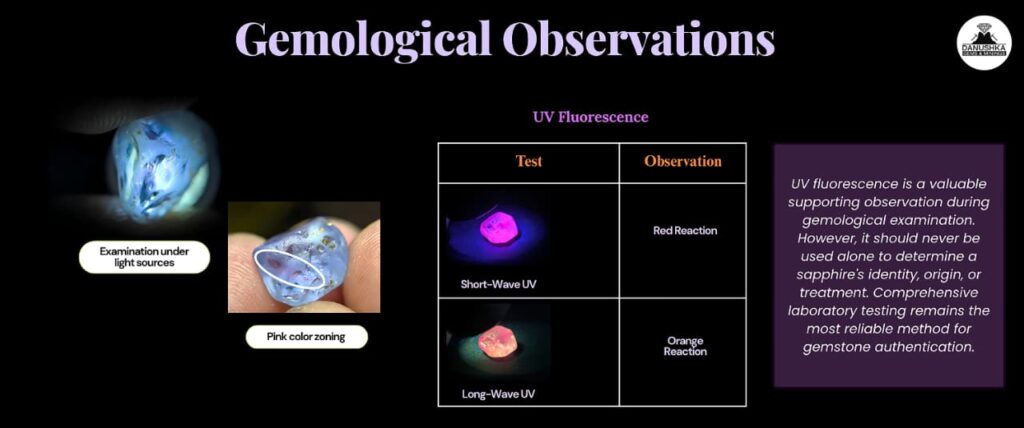
This sapphire showed several important gemological features during examination.
The body color appeared as light violet to light lavender, with visible internal pink zoning. The surface showed strong vitreous luster, which is a positive sign for corundum rough evaluation. Under light, the rough allowed the cutter to observe transparency, zoning, internal silk, and possible orientation.
The stone was also checked under ultraviolet light. It showed:
Short-wave UV: Red reaction
Long-wave UV: Orange reaction
UV reaction can be useful as part of gemological observation, but it should not be used alone to confirm identity, origin, or treatment. It is only one supporting observation. For final gemological confirmation, laboratory testing is always the best option, especially for international buyers and valuable sapphires.
Water Examination Before Cutting
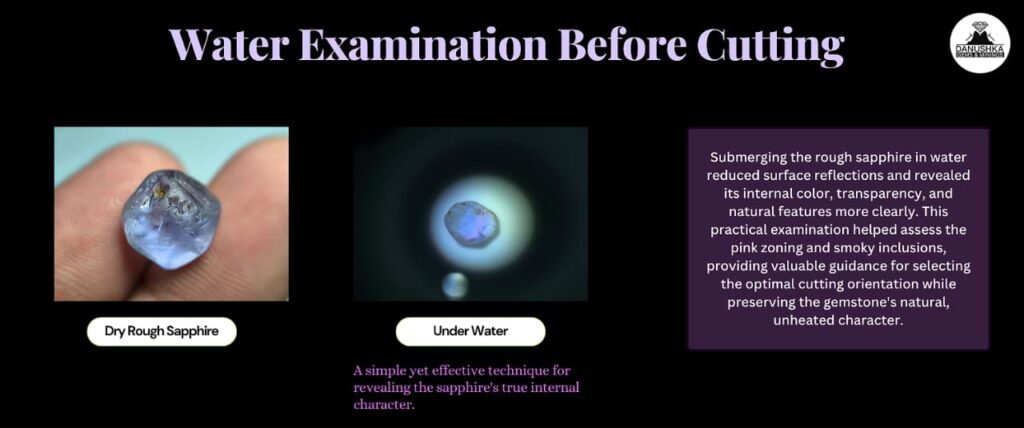
Before cutting, the rough was examined under water. This is a practical method used by cutters and rough dealers to reduce surface reflection and see the inner body more clearly. When rough sapphire is dry, natural surface texture can hide internal zoning, cracks, silk, or clarity areas. Under water, the cutter can better understand how the internal color behaves.
For this stone, water examination helped reveal the pink zoning, the light violet body color, and the internal smoky area more clearly. The purpose was to understand whether the pink zone would disturb the final face-up appearance or whether it could be balanced through cutting.
This step was important because the final stone was not only about maximum weight recovery. The goal was to create a beautiful, balanced sapphire while respecting the natural color and unheated condition.
Cutting Decision: Why Keep It Unheated?
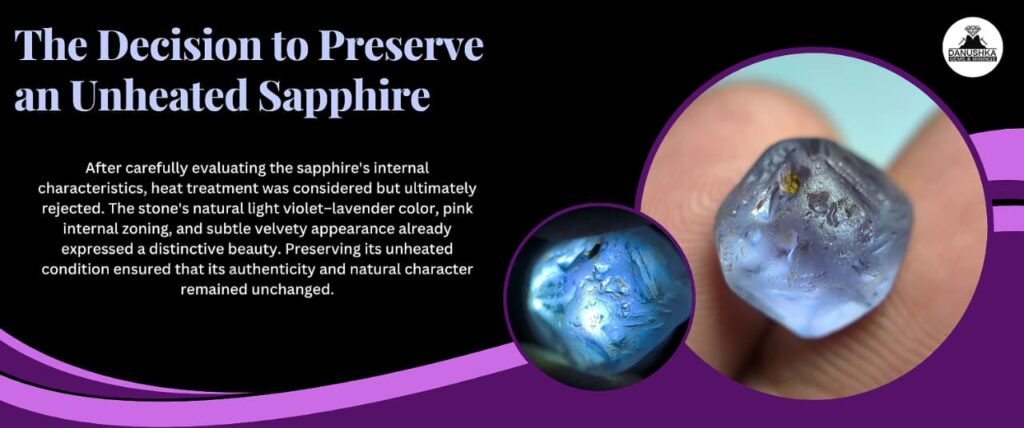
There was possible heat treatment consideration because of the small silky or geuda-like internal features. In some Sri Lankan sapphire rough, heat treatment can improve or change color when the internal structure is suitable. But this is never certain, and heating also changes the identity of the stone from unheated to heated.
After discussion with the buyer and cutter, the better decision was to keep the sapphire natural and unheated. The light violet-lavender color, pink internal zoning, and slightly velvety character already gave the stone a unique natural beauty. Heating could possibly change the color, but it could also reduce the special natural personality of the stone.
This is one of the most important lessons in rough sapphire cutting: the best decision is not always to chase stronger color. Sometimes the natural condition of the stone has more character, more honesty, and more collector interest.
Cutting Process and Practical Risk
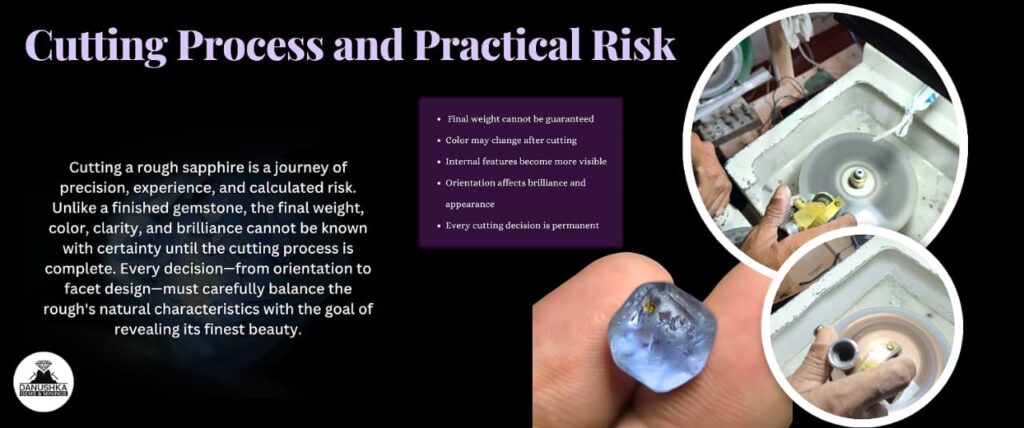
Cutting this sapphire took many hours of planning and careful work. Rough sapphire cutting is very different from buying an already finished gemstone. When a buyer purchases a cut stone, they can see the final shape, weight, color, clarity, and brilliance before paying. But when a buyer purchases rough, the final result is still unknown.
In a rough-to-finished journey, every person has responsibility:
The seller must describe the rough honestly.
The buyer must understand the risk of cutting.
The cutter must study the stone carefully and make practical decisions.
The final result depends on the natural structure of the rough, not only human planning.
For this stone, the cutter had to consider the pink zoning, smoky area, body color, depth, orientation, and shape. The final cutting style selected was an octagon princess cut, chosen to balance the stone’s natural shape, color, and weight.
Final Finished Sapphire Details
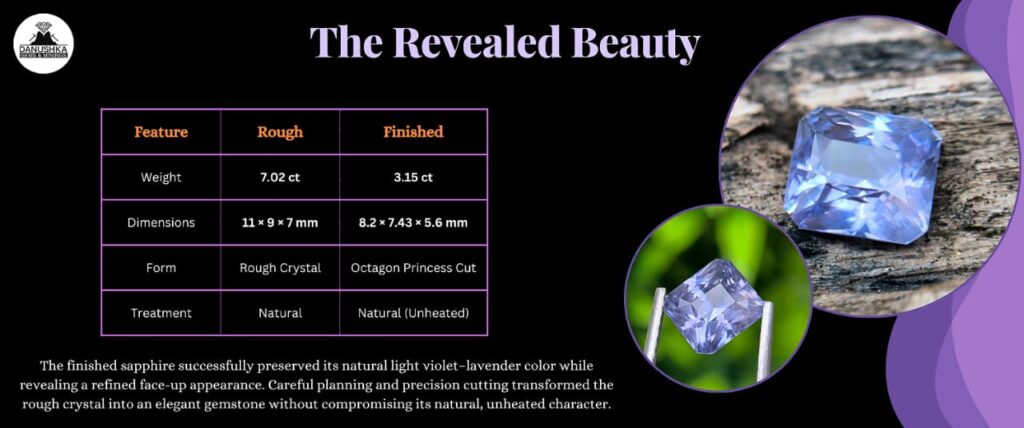
After careful cutting and polishing, the original 7.02 ct rough sapphire became a finished 3.15 ct octagon princess-cut sapphire, measuring 8.2 × 7.43 × 5.6 mm.
The finished stone shows a soft light violet-lavender appearance with a refined face-up look. The small smoky area did not damage the beauty of the stone. Instead, it gave a gentle velvety effect, adding a natural character to the final gemstone.
The result is a meaningful example of how careful rough planning can transform a natural Ceylon sapphire into a finished gemstone while preserving its original unheated condition.
Before and After Cutting Mathematics
Cutting Result Summary
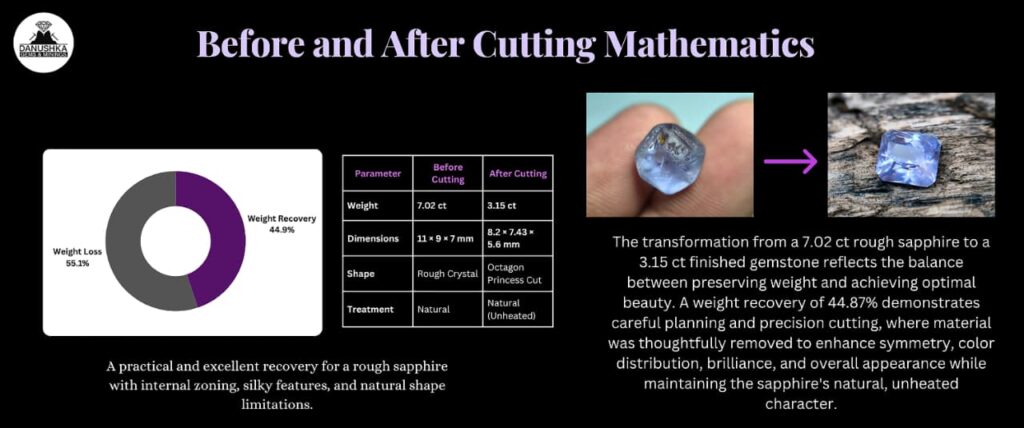
Before Cutting : 7.02 ct 11 × 9 × 7 mm
After Cutting : 3.15 ct 8.2 × 7.43 × 5.6 mm
Weight Recovery: 44.87%
Weight Loss: 55.13%
Final Shape Octagon Princess Cut
A 44.87% recovery is a practical and very good result for this sapphire rough with zoning, surface features, internal silk, and shape limitations. In rough cutting, weight loss is normal because the cutter must remove surface marks, orient the color, manage inclusions, create symmetry, and form proper pavilion and crown proportions.
Source to Final Owner Journey
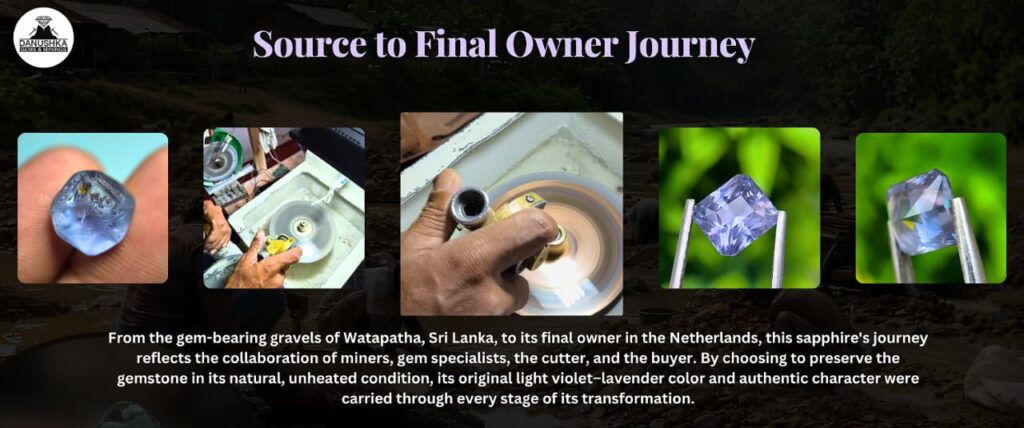
This stone’s journey started in Watapatha village around mining in Sri Lanka, where the rough sapphire was sourced through Sri Lankan gemstone channels. From there, it was evaluated by Danushka Gems & Minings as a natural unheated light violet sapphire rough with cutting potential.
The buyer, Mr. Muller from the Netherlands, purchased the stone as rough, understanding that rough sapphire cutting carries uncertainty. Before cutting, the stone was carefully discussed with the cutter and buyer. The main decision was whether to heat the sapphire for possible color improvement or keep it in its natural unheated condition.
The final decision was to keep it natural.
That choice allowed the sapphire to maintain its original identity, soft violet-lavender color, and natural character. The finished 3.15 ct octagon princess-cut sapphire is now ready for Mr. Muller, completing the journey from Sri Lankan source rough to a finished gemstone for an international client.
Why This Journey Matters
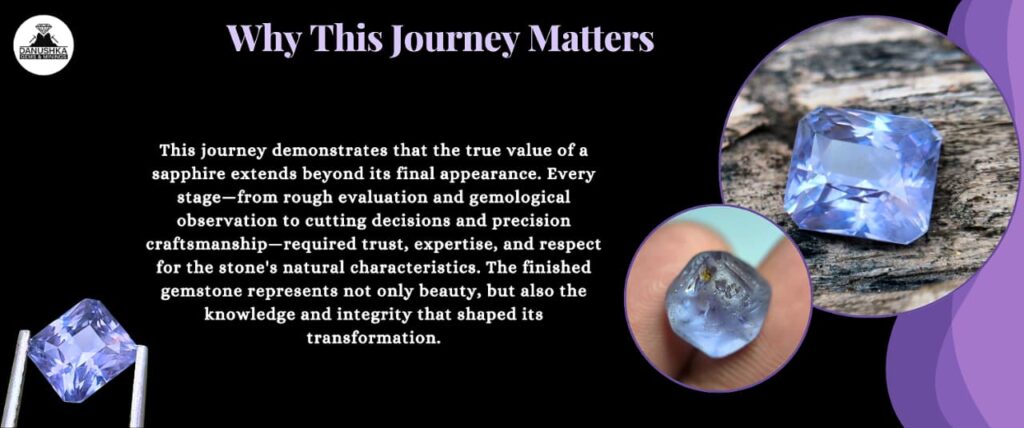
This kind of gemstone journey is important because it shows the real difference between rough sapphire buying and finished sapphire buying. Rough stone buying is not only about weight and price. It involves trust, gemological observation, cutting knowledge, patience, and shared decision-making.
A rough stone may look promising, but the final result depends on many factors: color zoning, depth, inclusions, silk, surface removal, orientation, cutting style, and polishing behavior. No honest gem dealer or cutter should guarantee exact final weight, clarity, or color before cutting.
In this case, the stone was handled carefully from rough inspection to final polish. The result is not only a finished sapphire, but a complete story of source connection, buyer trust, cutter skill, and natural gemstone character.
FAQ Section
1. What was the original weight of this sapphire rough?
The original rough sapphire weighed 7.02 ct before cutting.
2. Where was this sapphire rough sourced from?
This sapphire rough was sourced from Watapatha village around mining in Sri Lanka.
3. What was the final weight after cutting?
After cutting and polishing, the finished sapphire weighed 3.15 ct.
4. What shape was selected for the finished sapphire?
The final gemstone was cut as an octagon princess cut, measuring 8.2 × 7.43 × 5.6 mm.
5. What was the cutting recovery percentage?
The cutting recovery was 44.87%. This means 44.87% of the original rough weight remained in the finished gemstone.
6. How much weight was lost during cutting?
The sapphire lost 3.87 ct, which equals 55.13% of the original rough weight.
7. Was this sapphire heated?
No. The sapphire was kept in its natural unheated condition after discussion with the buyer and cutter.
8. Why was heat treatment considered?
Heat treatment was considered because the rough showed small silky or geuda-like internal areas. In some sapphires, these features may respond to heating, but results are never guaranteed.
9. Why was the stone kept unheated?
The buyer, cutter, and seller decided that the natural light violet-lavender color, pink zoning, and slight velvety character were attractive enough to preserve. Keeping the stone unheated protected its natural identity.
10. What color is the finished sapphire?
The finished sapphire shows a light violet to light lavender appearance, with natural internal character and a soft face-up look.
11. Did the smoky area affect the final beauty?
The small smoky area did not negatively affect the beauty of the finished stone. It gave a slight velvety appearance, adding natural character.
12. Why is cutting rough sapphire risky?
Rough sapphire cutting is risky because the final result is not fully known until after cutting. Internal features, zoning, hidden inclusions, and shape limitations can affect final weight, clarity, and beauty.
13. Who purchased this sapphire?
The rough sapphire was purchased by Mr. Muller from the Netherlands, and the finished gemstone is now ready for him.
14. Is rough sapphire buying different from buying a cut stone?
Yes. Buying a cut stone allows the buyer to see the final result before purchase. Buying rough requires trust, experience, and understanding of cutting risk.
15. Can all rough sapphires produce good finished stones?
No. Every rough sapphire must be studied individually. Cutting potential depends on shape, depth, clarity, color zoning, inclusions, and professional planning.