
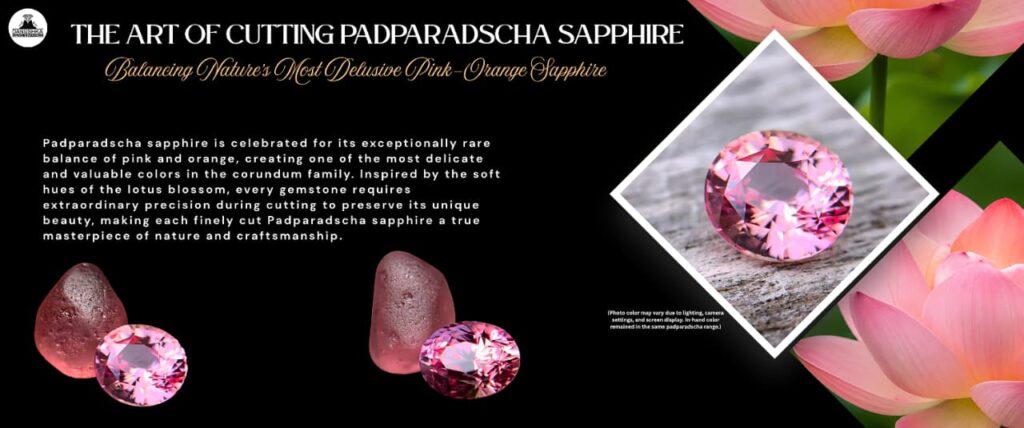
Padparadscha sapphire is one of the most delicate and difficult color varieties in the corundum family. It is not simply “pink sapphire” and not simply “orange sapphire.” Its identity comes from a sensitive balance between pink and orange, and that balance can change greatly depending on the rough orientation, depth, lighting direction, cutting angles, and final face-up appearance. This is why cutting padparadscha sapphire is always more challenging than cutting many other sapphire colors.
The name padparadscha is traditionally connected with the old word padmaraga or padmaragaya, often explained from padma, meaning lotus, and raga/ranga, meaning color. In simple gem trade language, it refers to the color feeling of a lotus blossom, especially the soft pink-orange tone associated with Sri Lankan lotus flowers. Historical gem references also discuss lotus-colored corundum under names such as padmaraga, showing that this color idea has deep roots in South Asian gem culture.
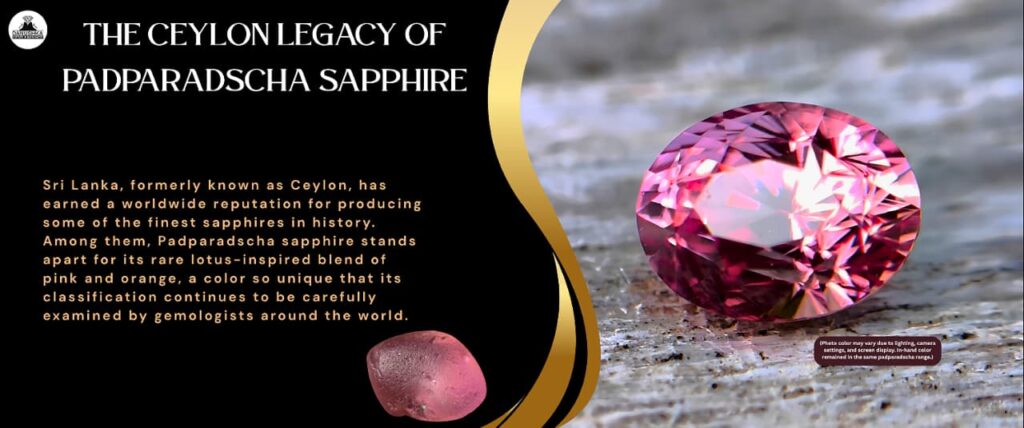
Sri Lanka, historically known as Ceylon, has long been one of the most respected sources for sapphire. Among Ceylon sapphires, padparadscha holds a very special place because the best examples combine natural beauty, soft warmth, and rare color balance. Modern gemologists still debate the exact boundary between pink sapphire, orange sapphire, and padparadscha sapphire, especially when the stone contains stronger pink, more orange, purple influence, or uneven zoning.
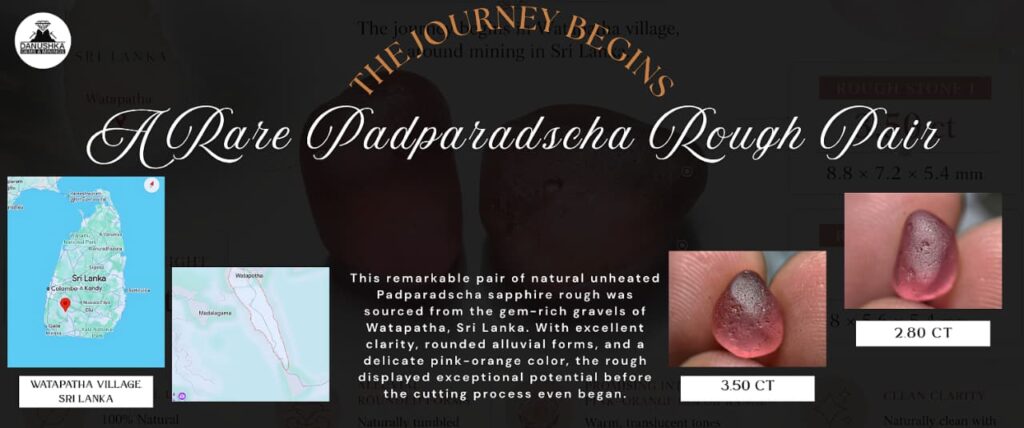
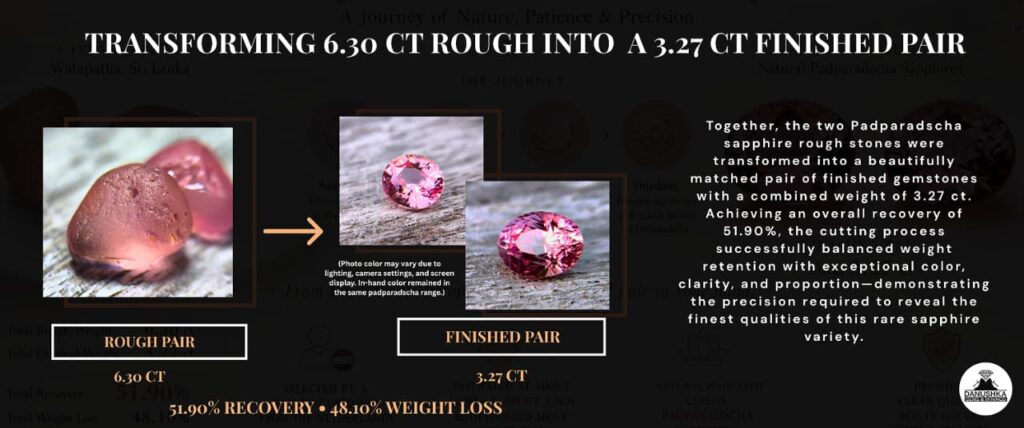
This journey began with a Facet Grade Ceylon Natural Unheated Padparadscha Sapphire Rough Pair, sourced from Watapatha village around mining in Sri Lanka. The pair had a total rough weight of 6.30 ct, including one piece weighing 3.50 ct and measuring 8.8 × 7.2 × 5.4 mm, and another piece weighing 2.80 ct and measuring 8 × 5.6 × 5.4 mm. Both rough stones showed clean clarity, alluvial rounded forms, and a promising internal pink-orange color range.
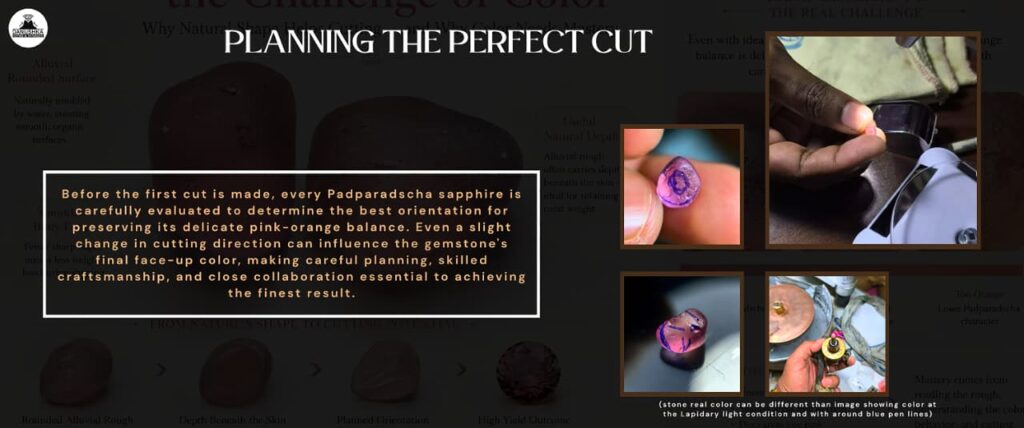
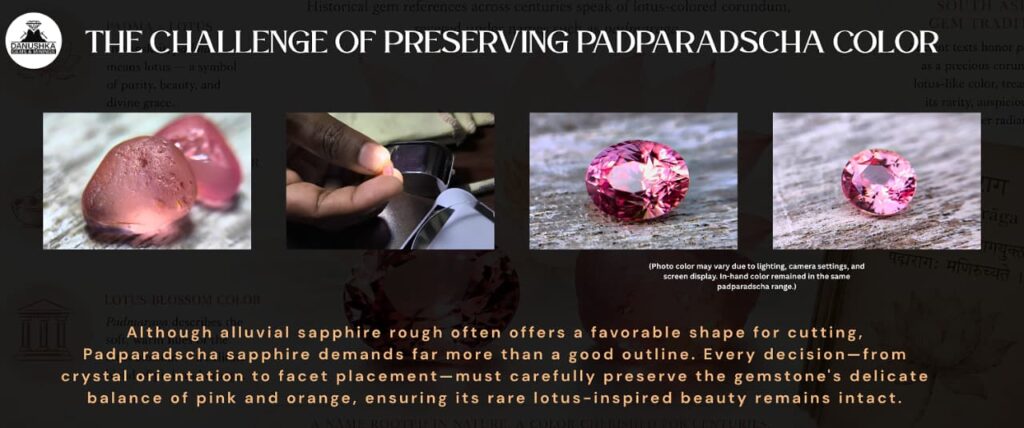
Alluvial rough is often very useful for cutting because nature has already softened the outer form through movement in gem-bearing gravels. Rounded surfaces can sometimes help the cutter understand body shape, depth, and possible yield more clearly than broken angular rough. But with padparadscha sapphire, a good rough shape is only the beginning. The real challenge is color management.
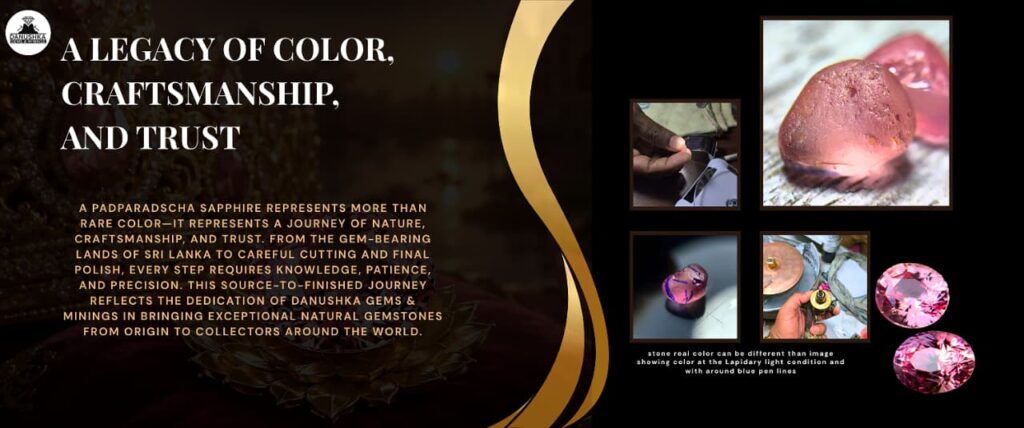
Before preforming, the stones were studied carefully with the cutter. Suitable areas were marked, and the cutting direction was discussed to balance the pink and orange color inside the stone. For padparadscha, a small change in angle can create a big difference in final face-up color. If the pavilion is placed in the wrong direction, one color may dominate too strongly, or the finished stone may lose the soft lotus-like balance that buyers want. This is why padparadscha cutting requires patience, experience, and honest communication between the source dealer, cutter, and buyer.
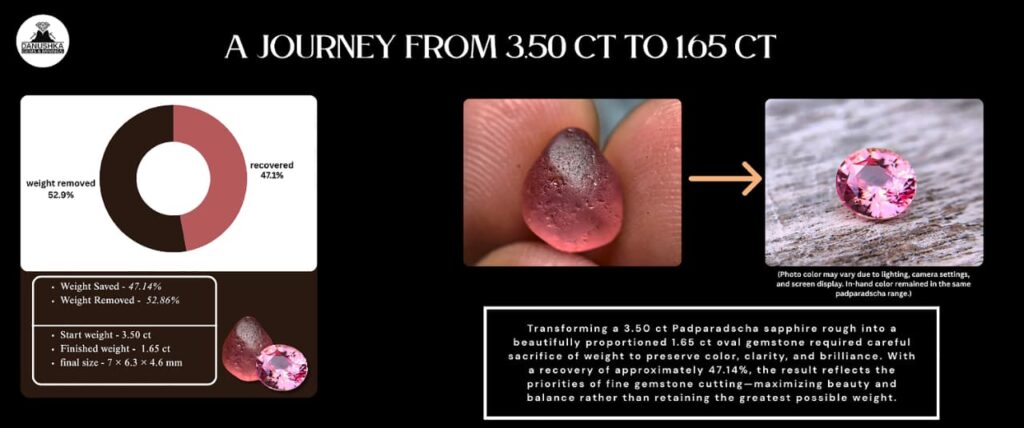
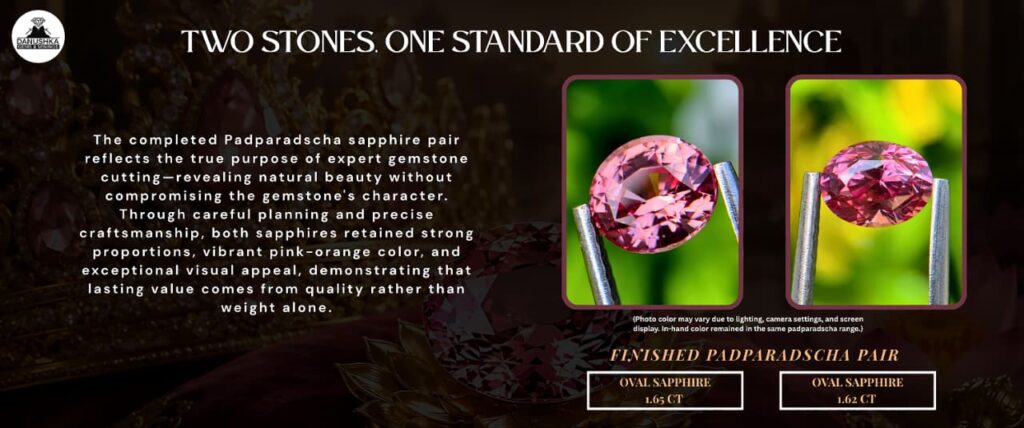
The first rough weighed 3.50 ct and was finished as a 1.65 ct oval sapphire, measuring 7 × 6.3 × 4.6 mm. This gives a final weight recovery of approximately 47.14%, with about 52.86% weight loss during cutting and polishing. For high-quality colored sapphire rough, especially padparadscha-type material, this is a practical recovery and achievement when the goal is beauty, clarity, color balance, and proportion rather than only maximum weight.
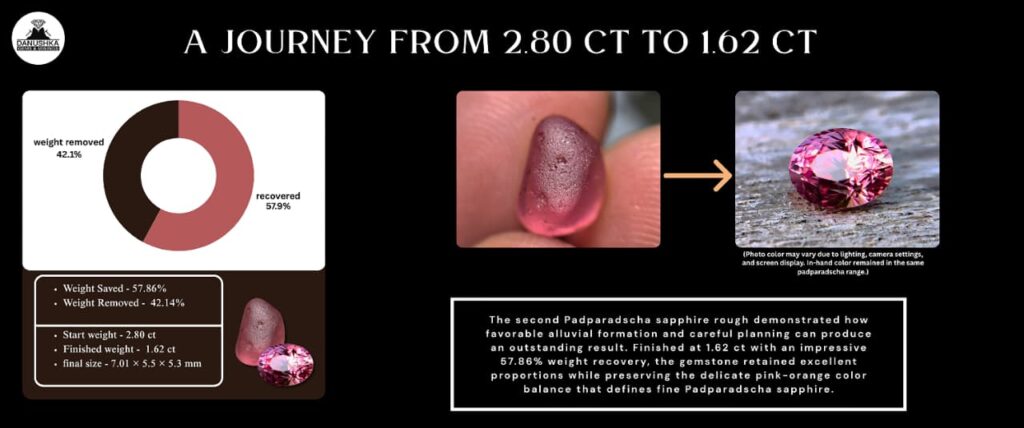
The second rough weighed 2.80 ct and was finished as a 1.62 ct sapphire, measuring 7.01 × 5.5 × 5.3 mm. This stone achieved an excellent weight recovery of approximately 57.86%, with about 42.14% weight loss. Because the rough had good depth and an alluvial rounded body, the cutter was able to save a strong finished size while still working toward a clean and balanced final appearance.
Together, the two rough stones weighed 6.30 ct and became 3.27 ct total finished weight. That means the overall recovery was approximately 51.90%, with about 48.10% total cutting loss. In sapphire cutting, especially for fine padparadscha material, this is a strong result because the finished gems retained meaningful size, clean quality, and attractive shape while protecting the delicate color balance.
The first finished stone, at 1.65 ct, shows a fine oval outline with a bright pink-orange appearance. The second, at 1.62 ct, also kept a strong finished weight and clean visual character. Both stones represent the real value of careful cutting: not forcing the rough, not chasing only weight, and not cutting without understanding the internal color direction.
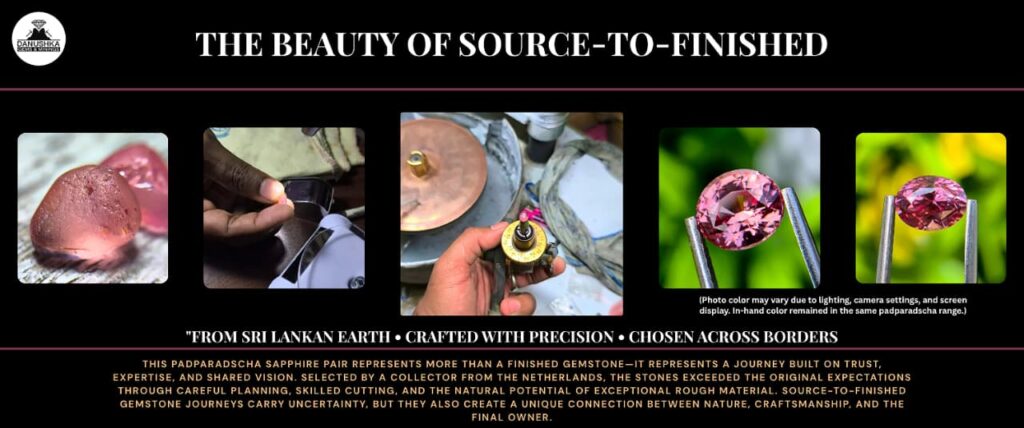
This pair was selected by one of our valued customers from the Netherlands, who understood the risk involved in working directly from rough. At the beginning, the estimated finished result was around 1.00 ct to 1.50 ct each, but careful planning and the quality of the rough allowed both stones to finish above expectation. This is the beauty of working source-to-finished: the result is not guaranteed, but when the rough, cutter, and planning come together correctly, the journey becomes meaningful.
Padparadscha sapphire is always a high-risk cutting project. A small color imbalance can change the appearance, certificate result, market value, and buyer perception. But when the color balance succeeds, the final stone carries something special: the feeling of lotus blossom, Ceylon origin, natural unheated identity, and a story from rough to finished gemstone.
From Watapatha village around mining in Sri Lanka to the cutter’s hand, from preform planning to final polish, this pair shows the way Danushka Gems & Minings works: direct source connection, honest rough evaluation, careful cutting discussion, and a complete gemstone journey from source to your hand.
Cutting Math Summary
Rough Stone 1: 3.50 ct → 1.65 ct finished
Recovery: 47.14%
Weight loss: 52.86%
Rough Stone 2: 2.80 ct → 1.62 ct finished
Recovery: 57.86%
Weight loss: 42.14%
Total Pair: 6.30 ct rough → 3.27 ct finished
Total recovery: 51.90%
Total weight loss: 48.10%
FAQ’s
1. What makes padparadscha sapphire different from normal pink sapphire?
Pink sapphire mainly shows a pink body color, while padparadscha sapphire needs a balanced pink-orange or orange-pink color character. The beauty comes from the soft lotus-like balance, not only from strong pink saturation.
2. What makes padparadscha different from orange sapphire?
Orange sapphire can show a clear orange body color, but padparadscha should not look only orange. It needs a visible pink component together with orange, creating a softer and more delicate mixed color.
3. Why is Ceylon padparadscha sapphire so respected?
Ceylon padparadscha sapphire is respected because Sri Lanka has a long history of producing fine sapphires and lotus-toned padparadscha material. The connection between Sri Lankan gem culture, the lotus blossom color, and natural sapphire history gives Ceylon padparadscha a special identity.
4. Why is cutting padparadscha sapphire more difficult than cutting blue sapphire?
Blue sapphire cutting mainly focuses on color direction, depth, brilliance, and clarity. Padparadscha cutting needs all of that, but also must balance pink and orange correctly thsn others. A small mistake in orientation can make the stone appear too pink, too orange, too light, or uneven.
5. Why can a small color difference change the value of padparadscha sapphire?
Padparadscha value depends strongly on color balance. If the finished stone loses the pink-orange harmony, the market identity may change from padparadscha to pink sapphire, orange sapphire, or fancy sapphire. That can make a major difference in buyer interest and final value.
6. Why is rough padparadscha always risky to buy and cut?
In rough form, color can look different from the final polished stone. The cutter must study depth, zoning, inclusions, surface skin, and color direction before cutting. Even good rough can change appearance after preforming, so no final color result should be promised before cutting.
7. Why was the alluvial rounded shape useful for this pair?
The rounded alluvial shape helped because the stones already had natural body form, depth, and smooth outer structure. This can sometimes support better yield planning compared with broken or flat rough. However, the cutter still needed to remove surface marks and orient the stones carefully.
8. Why did one stone recover 47.14% and the other recover 57.86%?
Each rough stone has a different internal structure, shape, clean area, and color direction. The 3.50 ct rough finished at 1.65 ct, giving 47.14% recovery. The 2.80 ct rough finished at 1.62 ct, giving 57.86% recovery. The second stone kept more weight because its shape and clean usable area allowed better yield.
9. Is 51.90% total recovery good for sapphire cutting?
Yes, for fine sapphire rough, especially padparadscha-type material, 51.90% total recovery is a strong and practical result. The goal was not only to save weight, but to create clean, well-shaped stones with balanced color and good final appearance.